Demis Hassabis on Biology And Medicine
Demis Hassabis sees biology as a complex information-processing domain where general AI can become a foundational tool for understanding proteins, accelerating drug discovery, and improving human health.
- He treats biology as an information-processing science that AI is unusually well suited to model.
- His goal is broader than one breakthrough: build general intelligence, then use it to advance science and medicine.
- AlphaFold mattered because protein structure is a foundational problem with huge downstream value across biology and health.
- He thinks AI’s best role in science is to find patterns in huge datasets and help scientists generate better hypotheses.
- He sees accelerating scientific discovery and human health as a central reason to pursue AI at all.
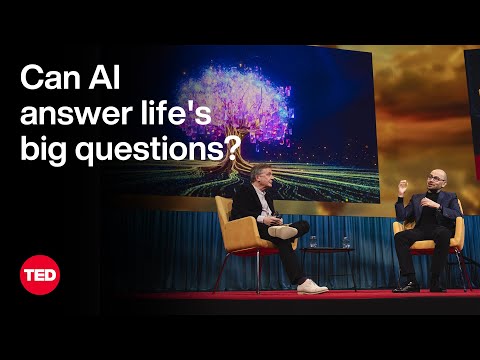
“And I think one of the uses of AI is to find patterns and insights in huge amounts of data and then surface that to the human scientists to make sense of and make new hypotheses and conjectures. So it seems to me very compatible with the scientific method.”TED interview at SXSW, 2024 · 1:49
Biology is a natural fit for AI
Hassabis’s core claim is that biology is not just a collection of lab facts but a deeply complex pattern-rich system, which makes it a strong match for machine learning. He repeatedly argues that AI can serve as a description language for biology in the way mathematics has served physics, because biological systems are full of structure, interaction, and information processing.123
This view sits inside a larger belief about learning systems: when nature contains discoverable patterns, AI can model them efficiently. That is why he sees biology as especially promising rather than marginal to AI’s future.45
Medicine matters because science is the real destination
Hassabis did not approach medicine as a side application after building game systems. His long-running mission is to build general intelligence and then use that capability on the hardest real-world problems, especially science and health.678
He presents this as the through line of his career: understanding intelligence well enough to create a general-purpose tool for discovery. In that frame, medicine is important not only because it is economically valuable, but because it is one of the most consequential places where better intelligence can help humanity.91011
AlphaFold was powerful because protein structure is a root problem
Hassabis highlights protein folding because it is a foundational biology problem rather than a narrow one. He describes these as root-note problems: if you solve one, many downstream areas benefit, from basic biology to drug discovery.1213
Protein folding also matched the kind of task he thinks AI can do best: a huge search space, a clear objective, strong datasets, and external benchmarks. That combination made it a high-leverage test of whether general learning methods could become serious scientific tools.414
For him, AlphaFold demonstrated more than speed or accuracy. It showed that methods developed through learning and search could cross over from games into biology and become practically useful to scientists at scale.16
AI should expand what scientists can discover
Hassabis’s model of scientific work is collaborative, not replacement-oriented. He argues that AI should surface patterns and insights from massive datasets so that human scientists can interpret them, form hypotheses, and design the next experiments.1718
This is why he sees AI as compatible with the scientific method rather than opposed to it. The aim is not just automation of routine tasks, but an increase in the range of questions scientists can ask and answer.517
He also draws confidence from earlier systems that found strategies their creators did not know in advance. That matters for biology and medicine because many of the hardest problems are exactly those where researchers do not yet know the right representation or solution path.1419
“And I think one of the uses of AI is to find patterns and insights in huge amounts of data and then surface that to the human scientists to make sense of and make new hypotheses and conjectures. So it seems to me very compatible with the scientific method.”TED interview at SXSW, 2024 · full transcript →
The biggest prize is better human health
Hassabis talks about scientific discovery and human health as the main justification for pursuing advanced AI. In his account, the highest-value outcome is not consumer convenience but faster progress against disease and a deeper understanding of living systems.1011
He also stresses broad access when a scientific tool becomes useful. In the AlphaFold case, he points to open and unrestricted availability as a way to spread benefits widely across the global research community, including work relevant to neglected diseases.1620
So his view of biology and medicine is both ambitious and practical: start with foundational scientific problems, build tools that many researchers can use, and let those tools compound into better therapies and health outcomes.520

“Yeah. We think about that a lot actually, and that goes back to some examples of that I can give is back to the AlphaFold question, where we folded all the proteins. We put that out on databases you could access from anywhere around the world. So these three million researchers come from 190 countries, just to be clear. It's pretty much every country, every researcher. And it means that they... And what was great, what we did actually in the early days of seeding some collaborations, what you could do with AlphaFold, we worked with the DNDi, Drugs for Neglected Diseases, part of the WHO in Switzerland, which work on diseases in the poorer places of the world that don't have good healthcare systems. And some of those diseases, Diseases are neglected, as you know, because the big pharma can't make money in those markets.”Stanford Graduate School of Business conversation at SXSW, 2024 · full transcript →
Hassabis on biology and medicine, in his own words
“…science is the most important, and the scientific method is probably the greatest invention humanity’s ever come up with.”
Where to watch
 Demis Hassabis on AI for Science: AlphaFold and the Future of Biology2024 · 29 min · full transcriptBest concise account of why biology fits AI and how AlphaFold turned protein folding into a practical scientific tool.
 Demis Hassabis on Scientific Discovery: AI for Biology2021 · 89 min · full transcriptBest deep explanation of why Hassabis thinks AI may be the right language for biology and how learning systems help discovery.
 Demis Hassabis on Artificial Intelligence: AlphaFold and AGI2024 · 24 min · full transcriptBest short interview on why he sees AI as the ultimate scientific tool, especially for biology and medicine.
 Demis Hassabis on Scientific Discovery with AI: From Games to Biology2024 · 64 min · full transcriptBest big-picture talk linking DeepMind’s mission, games, AlphaFold, and the move from AI research into biology.
 Demis Hassabis on AI in Science: A New Golden Age2024 · 80 min · full transcriptBest for understanding how he thinks AI changes the pace and reach of science, with implications for medicine.
Questions people ask
- How does Demis Hassabis think AI benefits should be distributed around the world?
- How does Demis Hassabis think AI can help scientific discovery?
- What did Demis Hassabis say about why AlphaGo changed his thinking about science?
- What did Demis Hassabis learn from AlphaGo and DQN?
- What did Demis Hassabis say AlphaFold's impact has been?
- Why does Demis Hassabis think AGI could help solve big global problems?
Sources
Every quote above, word for word from the transcripts. Numbers match the text.
“AI may be potentially the perfect description language for biology…”
“I think that AI is potentially the perfect description language for biology.”
“AI might be the right description language for biology, just the same way that math is the right description language for physics.”
“Any pattern that can be generated or found in nature can be efficiently discovered and modeled by a classical learning algorithm…”
“I believe it could be the ultimate tool to help with science.”
“…we started DeepMind in 2010 as an industrial research lab with a mission to build Artificial General Intelligence…”
“…step one, solve intelligence; step two, use it to solve everything else.”
“Step one, fundamentally solve intelligence, and then we feel if we were to do that then step two would naturally follow, use it to solve everything else.”
“AGI could end up being the ultimate general-purpose tool…”
“AI to accelerate scientific discovery and help with things like human health is the reason I spent my whole career on AI.”
“…science is the most important, and the scientific method is probably the greatest invention humanity’s ever come up with.”
“We call them kind of root note problems…”
“…step one, solve intelligence, step two, use it to solve everything else…”
“The promise of these systems is that they will be able to solve things we, as the designers, do not know how to solve yet.”
“AlphaFold is not only very accurate, but it's also very fast, and we quickly realized that it was fast enough to actually practically be able to fold all proteins known to science—so roughly over 200 million proteins that we know the sequences for and would love to know the structures for. So, over the course of the next year, on our computers, we basically folded all the 200 million proteins, we open-sourced AlphaFold, and we built the AlphaFold database with our fantastic colleagues at EMBL-EBI, the European Bioinformatics Institute, and we provided them free and unrestricted access for everyone to use all these predicted.”
“And I think one of the uses of AI is to find patterns and insights in huge amounts of data and then surface that to the human scientists to make sense of and make new hypotheses and conjectures. So it seems to me very compatible with the scientific method.”
“I would advocate doing it in a sort of collaborative scientific way…”
“That was, for us, really our first big 'aha' moment, watershed moment, at DeepMind. This is now from four or five years ago. We realised we were onto something with these kinds of techniques. It was able to discover something new that even the programmers and the brilliant researchers of that system did not know how to do. We hadn't thought about that solution to the game. More recently, a couple of years ago, we started work on what is probably still our most famous program, a program called AlphaGo. AlphaGo was a system to play the ancient Chinese board game of Go. This is what Go looks like, for those who don't know, and this is what they play in China and Korea and Japan instead of chess. Go is actually a very simple game. There are only two rules, basically, and I could teach you it in five minutes, but it takes at least a lifetime, some would say many lifetimes, to master the game.”
“Yeah. We think about that a lot actually, and that goes back to some examples of that I can give is back to the AlphaFold question, where we folded all the proteins. We put that out on databases you could access from anywhere around the world. So these three million researchers come from 190 countries, just to be clear. It's pretty much every country, every researcher. And it means that they... And what was great, what we did actually in the early days of seeding some collaborations, what you could do with AlphaFold, we worked with the DNDi, Drugs for Neglected Diseases, part of the WHO in Switzerland, which work on diseases in the poorer places of the world that don't have good healthcare systems. And some of those diseases, Diseases are neglected, as you know, because the big pharma can't make money in those markets.”
How this guide was made: drafted with AI from the full transcripts of the recordings cited, then checked: every quotation must match a transcript word for word and be the speaker's own words, and an independent review gates accuracy. Methodology and corrections.


