Demis Hassabis on AlphaGo
Demis Hassabis sees AlphaGo as proof that general learning systems can discover genuinely new strategies from first principles, and as the turning point that made AI for science feel possible.
- AlphaGo mattered because it learned powerful play rather than relying on hand-coded Go knowledge.
- For Hassabis, AlphaGo showed AI can discover novel, effective strategies that humans had not found.
- He treats games as the best proving ground for general AI because they offer clear goals, fast feedback, and scalable training.
- AlphaGo was a beginning, not an endpoint: it convinced him the same methods could be applied to science.
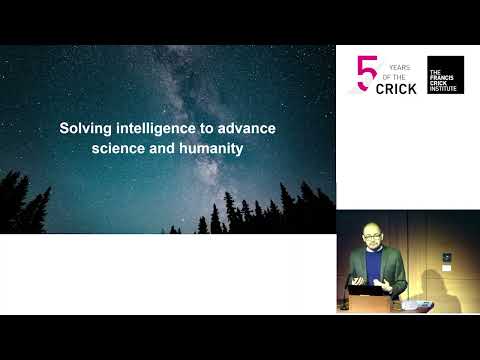
“Let's let the AlphaGo system itself learn its own evaluation function.”Crick Insight Lecture Series, 2021 · 17:37
AlphaGo was designed to test general learning, not to encode Go expertise
Hassabis consistently frames AlphaGo as part of a larger mission: build general-purpose learning systems that learn from experience instead of relying on handcrafted rules for one narrow task123.
That is why AlphaGo mattered beyond Go itself. The core idea was to let the system learn how to evaluate positions and improve through experience, rather than hard-coding human Go knowledge into it45.
In Hassabis's view, this is the important contrast with older AI styles. A strong system matters more when it learns from first principles than when it wins by carrying lots of programmer-supplied heuristics16.
“Let's let the AlphaGo system itself learn its own evaluation function.”Crick Insight Lecture Series, 2021 · full transcript →
Games were the ideal laboratory for building AlphaGo
Hassabis argues that games are unusually useful for AI research because they give clear objectives, measurable performance, and rapid feedback about whether an idea works78.
He also sees games as a practical shortcut for developing general intelligence. Virtual game environments are faster, cheaper, and easier to iterate on than messy real-world domains like robotics, so researchers can run huge numbers of experiments and improve learning systems much more quickly8.
That is why AlphaGo sits in a sequence with Atari and other game systems in his thinking. Games were not the final destination; they were the proving ground for methods that might later transfer to harder scientific problems93.

“Games are the perfect proving ground for AI systems.”SXSW lecture, 2024 · full transcript →
What surprised Hassabis most was AlphaGo's originality
For Hassabis, AlphaGo's deepest significance is that it produced strategies that were not merely strong, but new. He treats this as evidence that learning systems can generate useful novelty rather than just recombine known human ideas1011.
The emblem of that claim is AlphaGo's famous unexpected move in the Lee Sedol match. Hassabis presents that move as creative because it was both original and consequential: it changed the game, and later analysis showed its value rather than exposing it as random noise12.
This is why he draws such a sharp distinction between AlphaGo and earlier milestone systems. In his formulation, Deep Blue closed out one era of brute-force game AI, while AlphaGo opened a new era of systems that learn, generalize, and surprise their creators1314.

“The key thing about what AlphaGo did here is that it played this move, and the thing about Go is, in Asia, it's considered to be like an art form, but it's sort of objective art, because, you know, later on any one of us could come up with an original move. We could just play a random move, and it might be original, but the key thing is whether, did it make a difference and impact the game, the result of the game? That's what determines whether it's a beautiful and truly creative move. And in fact, move 37 did exactly that, because you'll see the two stones here that I've outlined in the bottom left, they're surrounded by white stones, so they're in big trouble, but later on, about 100 moves later on, the fighting that was going on in the bottom-left hand corner spilled out into the centre of the board, ran all the way across the board, and those two stones down the bottom left ended up joining up with that move 37 stone, and that move 37 stone was in exactly the right place to decide that whole battle, which ended up winning AlphaGo that game.”Royal Society lecture, October 2016 · full transcript →
AlphaGo changed his confidence about AI's use in science
Hassabis says AlphaGo was the moment that made him believe the underlying algorithms were ready to move beyond games. Once a learning system could master Go and invent new strategies in a domain studied for centuries, he took that as a signal that similar methods might help with scientific discovery1015.
That shift fits his long-running two-step vision: first build intelligence, then use it to solve important problems across science and medicine31611. AlphaGo was the bridge between those two steps because it showed that the system could do more than optimize inside a toy benchmark10.
From there, he connects the same broad approach to biology. His larger claim is that AI can help find patterns, surface insights, and support hypothesis generation in domains too complex for hand-built rules alone171819.
The lesson of AlphaGo is augmentation, not just automation
Hassabis does not present AlphaGo mainly as a machine replacing human thought. He presents it as a demonstration that AI can expand the space of ideas available to people by uncovering strategies humans did not already know1019.
That is why AlphaGo matters to practitioners outside games. The practical lesson is to build systems that learn from data and feedback, then use their discoveries to inform human judgment in difficult domains120.
He also pairs this optimism with responsibility. As these systems become more capable and general, he argues they should be developed and used in ways that benefit everyone, because the same generality that makes them powerful also raises stakes far beyond board games2122.

“Deep Blue was the end; AlphaGo is a beginning.”Public AI forum talk, Wuhan, February 2023 · full transcript →
Hassabis on alphago, in his own words
“Deep Blue was the end; AlphaGo is a beginning.”
“The key thing about what AlphaGo did here is that it played this move, and the thing about Go is, in Asia, it's considered to be like an art form, but it's sort of objective art, because, you know, later on any one of us could come up with an original move. We could just play a random move, and it might be original, but the key thing is whether, did it make a difference and impact the game, the result of the game? That's what determines whether it's a beautiful and truly creative move. And in fact, move 37 did exactly that, because you'll see the two stones here that I've outlined in the bottom left, they're surrounded by white stones, so they're in big trouble, but later on, about 100 moves later on, the fighting that was going on in the bottom-left hand corner spilled out into the centre of the board, ran all the way across the board, and those two stones down the bottom left ended up joining up with that move 37 stone, and that move 37 stone was in exactly the right place to decide that whole battle, which ended up winning AlphaGo that game.”
“Let's let the AlphaGo system itself learn its own evaluation function.”
“Games are the perfect proving ground for AI systems.”
Where to watch
 Demis Hassabis on Intuition and Creativity: AlphaGo and AI2023 · 32 min · full transcriptBest short overview of why Hassabis sees AlphaGo as a beginning and as evidence of AI creativity.
 Demis Hassabis on Scientific Discovery: AI for Biology2021 · 89 min · full transcriptBest for understanding how AlphaGo's learning setup worked and why it convinced him AI could solve problems beyond the designers' prior knowledge.
 Demis Hassabis on AI for Scientific Discovery: From Games to Science2016 · 84 min · full transcriptBest for the original DeepMind-era framing of AlphaGo within the mission to solve intelligence and apply it to science.
 Demis Hassabis on Scientific Discovery with AI: From Games to Biology2024 · 64 min · full transcriptBest for the concise games-to-science arc and why games were the proving ground for these systems.
 Demis Hassabis on AI for Science: AlphaFold and the Future of Biology2024 · 29 min · full transcriptBest for seeing how Hassabis connects AlphaGo directly to AlphaFold and the broader AI-for-science agenda.
Questions people ask
- What did Demis Hassabis learn from AlphaGo and DQN?
- What did Demis Hassabis say about why AlphaGo changed his thinking about science?
- What does Demis Hassabis mean by learning systems versus handcrafted AI?
- Why does Demis Hassabis use games to train AI systems?
- How does Demis Hassabis think AI can help scientific discovery?
Sources
Every quote above, word for word from the transcripts. Numbers match the text.
“…learning systems: systems that learn directly from their experience or from raw data…”
“…we wanted to go sort of beyond this kind of narrow AI and work on this kind of general-purpose learning system…”
“…step one, solve intelligence; step two, use it to solve everything else.”
“Let's let the AlphaGo system itself learn its own evaluation function.”
“Everything else is learned completely from scratch, from first principles.”
“So, the first and probably most important one is the idea of learning systems: systems that learn directly from their experience or from raw data, versus handcrafted heuristic systems. So, systems where they've been specifically pre-programmed with a particular solution to a problem. So, there's learning versus handcrafted. The second dimension is the idea of generality versus a special casing or specific purpose. So, what many systems are is they're handcrafted and they're built for one particular purpose in mind. What we're interested in at DeepMind is the idea of generality: one system that, out of the box, can do a wide range of…”
“Games are the perfect proving ground for AI systems.”
“Games are a much more efficient way to test out the capabilities of your AI systems than, say, using something like real-world robotics, which are much slower and messier and more expensive to deal with. So we're very interested in robotics as an application, but we don't usually use it as a development platform; we use these virtual environments. And you can see why they'd be much more efficient, because you can obviously run millions of simulations at once in the cloud and train your algorithms on a much more fast iteration. So it gives us much quicker feedback as to whether these algorithms are working. Another important thing about games is that when you're on a very long-term mission like we are—you know, multidecade mission—then it's even more…”
“That was our first real aha moment.”
“So I carried that around with me for, I guess, nearly 20 years until we did AlphaGo. And then, as you said, the day after AlphaGo, I felt we'd reached the pinnacle of games AI. That was always the holy grail, is like, can you build a system that's learning, that's general, to win at Go, the most complex game we've ever invented. And not only did it win, it also invented new strategies, new Go strategies that had never been seen before, even though we played Go for hundreds of years. And then that, to me, was the signal that we now have enough interesting algorithms we can apply it to science, which was always the real goal, right? And then protein folding as the first big problem we tackled. So going back to this conjecture then and taking again…”
“Step one, solve intelligence; step two, use it to solve everything else.”
“The key thing about what AlphaGo did here is that it played this move, and the thing about Go is, in Asia, it's considered to be like an art form, but it's sort of objective art, because, you know, later on any one of us could come up with an original move. We could just play a random move, and it might be original, but the key thing is whether, did it make a difference and impact the game, the result of the game? That's what determines whether it's a beautiful and truly creative move. And in fact, move 37 did exactly that, because you'll see the two stones here that I've outlined in the bottom left, they're surrounded by white stones, so they're in big trouble, but later on, about 100 moves later on, the fighting that was going on in the bottom-left hand corner spilled out into the centre of the board, ran all the way across the board, and those two stones down the bottom left ended up joining up with that move 37 stone, and that move 37 stone was in exactly the right place to decide that whole battle, which ended up winning AlphaGo that game.”
“Deep Blue was the end; AlphaGo is a beginning.”
“That was, for us, really our first big 'aha' moment, watershed moment, at DeepMind. This is now from four or five years ago. We realised we were onto something with these kinds of techniques. It was able to discover something new that even the programmers and the brilliant researchers of that system did not know how to do. We hadn't thought about that solution to the game. More recently, a couple of years ago, we started work on what is probably still our most famous program, a program called AlphaGo. AlphaGo was a system to play the ancient Chinese board game of Go. This is what Go looks like, for those who don't know, and this is what they play in China and Korea and Japan instead of chess. Go is actually a very simple game. There are only two rules, basically, and I could teach you it in five minutes, but it takes at least a lifetime, some would say many lifetimes, to master the game.”
“It was a pretty incredible moment, actually.”
“Step one, fundamentally solve intelligence, and then we feel if we were to do that then step two would naturally follow, use it to solve everything else.”
“I think AI might end up being the perfect description language for biology…”
“I think that AI is potentially the perfect description language for biology.”
“And I think one of the uses of AI is to find patterns and insights in huge amounts of data and then surface that to the human scientists to make sense of and make new hypotheses and conjectures. So it seems to me very compatible with the scientific method.”
“The promise of these systems is that they will be able to solve things we, as the designers, do not know how to solve yet.”
“It's a dual purpose technology…”
“…we must make sure that it’s used ethically and responsibly and for the benefit of everyone…”
How this guide was made: drafted with AI from the full transcripts of the recordings cited, then checked: every quotation must match a transcript word for word and be the speaker's own words, and an independent review gates accuracy. Methodology and corrections.