Demis Hassabis on AI Governance
Demis Hassabis sees AI governance as a fast-moving, international coordination problem: strengthen sector rules now, test frontier systems carefully, and build shared institutions before race dynamics outrun safety.
- AI governance must be adaptive because the highest-risk systems keep changing.
- The central policy problem is a race to the bottom, where faster release can beat safer release unless governments and norms change incentives.
- He favors broad, multi-stakeholder governance with international dialogue rather than leaving decisions to labs alone.
- He has advocated a CERN-like model for advanced AGI work to reduce rivalry and increase scientific rigor.
- He treats AI as dual-use and wants careful deployment, stronger evaluations, and bounded testing environments such as hardened sandboxes.

“I wouldn’t be surprised if we had AGI-like systems within the next decade.”Dwarkesh Patel interview, 2024 · 24:15
His starting point is that AI governance is urgent because AGI may arrive soon
Hassabis does not talk about governance as a distant issue. He connects it to the possibility that AGI-like systems could emerge within roughly the next decade, which means institutions cannot wait for perfect definitions or complete technical certainty before acting.1
He also sees AI as a general-purpose technology with enormous upside, not just a source of risk. That is why his governance view is two-sided: society needs to protect against harms while preserving the chance to accelerate science, medicine, and problem-solving at a civilizational scale.4
“I wouldn’t be surprised if we had AGI-like systems within the next decade.”Dwarkesh Patel interview, 2024 · full transcript →
The core governance problem is the race dynamic
Hassabis repeatedly returns to competition as the hardest institutional challenge. His concern is that safer development usually takes more time than shipping quickly, so individual actors can gain an advantage by moving faster and taking more risk.5
That creates a prisoner's-dilemma structure: even labs that want to act responsibly can be pressured by rivals, which pushes the whole field toward weaker caution. He has said he worried about this dynamic long before the current boom and thinks it has now materialized.56
This is also why he does not think governance can rely on goodwill alone. He credits major labs with trying to be responsible, but he still argues that incentives and institutions need to change so the safest actor is not the loser.57
He favors adaptive regulation, not rigid rules aimed at one model generation
Hassabis argues that AI changes too quickly for static regulation written around a single technical paradigm. In his view, rules drafted for the systems of five years ago would not fit today's generative models, and the biggest risks five years from now may come from agentic systems instead.8
So his near-term recommendation is practical: strengthen existing regulations in domains that already matter, such as health and transport, and update them for AI just as societies updated rules for the internet and mobile technologies. At the same time, policymakers should maintain a close watching brief on frontier systems and test them carefully as capabilities change.8
This approach reflects a broader preference for scientific iteration. Rather than pretending the final governance framework is already obvious, he wants institutions that can learn alongside the technology.8

“If you'd regulated AI five years ago, you'd have regulated something completely different to what we see today, which is Gen AI. But it might be different again in five years. It might be these agent-based systems that are the ones that carry the highest risk. So right now, I would recommend to beef up existing regulations in domains that already have them-- health, transport, so on. I think you can update them for an AI world just like they were updated for mobile and internet. That's probably the first thing I'd do, while doing a watching brief on making sure you understand and test the frontier systems.”Google DeepMind podcast, 2023 · full transcript →
Frontier governance needs evaluation, containment, and controlled deployment
Hassabis's governance view is not only about laws. It also includes technical and operational controls for advanced systems. He points to the need for better analysis of what systems are learning, stronger understanding of their concepts and goals, and bounded testing environments before wider deployment.910
A key idea here is the hardened sandbox: a protected simulation environment with cybersecurity measures designed both to keep the AI inside and to keep attackers outside. That allows more aggressive experimentation without exposing the public directly to immature or poorly understood capabilities.10
He also ties safety to system design. In his view, more reliable world models, planning mechanisms, and grounding in the real world matter not just for capability but for whether systems can pursue goals in a stable, understandable way.1112
Governance should be international and involve society beyond AI labs
Hassabis does not think a handful of companies should decide how powerful AI is used. He argues for a broad collaboration including civil society, academia, and governments, and says the whole of society should help determine what these systems are deployed for and what boundaries they should have.13
He views recent international discussions as an important start because they bring more stakeholders into the room before the technology gets even more capable. For him, governance is not only about formal regulation but about building shared legitimacy and common understanding across countries and institutions.13
This internationalism fits his scientific worldview more generally. He has said he would advocate pursuing AGI in a collaborative scientific way, which suggests governance should reward openness to scrutiny and collective oversight rather than isolated competitive escalation.14
His strongest institutional proposal is a CERN-like model for advanced AGI
Hassabis's clearest long-run governance idea is a CERN-like institution for the most advanced AGI work. The logic is straightforward: if AGI is too important and too risky to be governed only through competition between firms or states, then the world needs a place where top researchers can work together, critique each other, and apply rigorous science under shared rules.156
This proposal is meant to counter exactly the race dynamics he worries about. A shared research institution could reduce duplication, slow the rush to deploy, and create stronger norms around evaluation and safety before systems are released into the world.6
At the same time, he is not naive about misuse. He treats AI as dual-use, has supported cross-industry efforts such as the Partnership on AI, and has said there should be clear red lines around applications like military and surveillance uses that he sees as bad for society.161718
On openness, his stance is cautious rather than absolutist. He has suggested open models may make sense if they lag the frontier, giving time to assess what cutting-edge systems can do before releasing equivalent capabilities widely.19
Hassabis on ai governance, in his own words
“If you'd regulated AI five years ago, you'd have regulated something completely different to what we see today, which is Gen AI. But it might be different again in five years. It might be these agent-based systems that are the ones that carry the highest risk. So right now, I would recommend to beef up existing regulations in domains that already have them-- health, transport, so on. I think you can update them for an AI world just like they were updated for mobile and internet. That's probably the first thing I'd do, while doing a watching brief on making sure you understand and test the frontier systems.”
“I was very worried about—15 years ago, 10 years ago, about this race dynamic happening as more and more people, more and more companies, more and more ambitious tech leaders realized what I had known for 20-plus years of how important this technology was going to be. And we talked about some of this in the room about the dangers of this kind of race dynamic. And unfortunately, we've ended up, because of the way the technology's gone, so. If I could have waved the magic wand, what I would have done was build AGI, the general technology, more in a research facility, perhaps like a CERN, maybe all the best minds helping critique each other's ideas and making sure we were rigorous with the scientific method and the testing of it and understanding each step that we took.”
Where to watch
 Demis Hassabis on AGI and Society: From AlphaFold to Governance2024 · 25 min · full transcriptBest short statement of his CERN-like proposal and his society-level view of governing AGI.
 Demis Hassabis on Frontier AI: AGI, science, and society2024 · 57 min · full transcriptStrongest discussion of dual-use, race dynamics, and why AI governance must match the scale of the technology.
 Demis Hassabis on AGI Scaling and Alignment: Planning, Safety, Governance2024 · 62 min · full transcriptBest for the link between frontier capability, safety research, evaluations, and broader governance.
 Demis Hassabis on AI and Scientific Discovery: Knowledge, Risk, and Institutions2024 · 58 min · full transcriptShows his preference for collaborative scientific institutions and how that extends into governance.
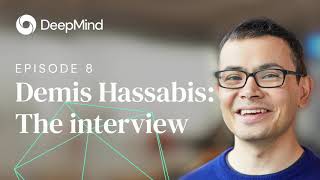 Demis Hassabis on Artificial General Intelligence: Building It Safely2019 · 37 min · full transcriptUseful for his earlier thinking on AGI safety, values, and institutional responsibility.
Questions people ask
- What did Demis Hassabis say about AGI safety and bad actors?
- What did Demis Hassabis say about regulating AI?
- What did Demis Hassabis say about who should govern advanced AI?
- What does Demis Hassabis say about DeepMind’s role in AI ethics and safety?
- What did Demis Hassabis say about open source and frontier AI models?
- What did Demis Hassabis say about using AI for military and surveillance?
Sources
Every quote above, word for word from the transcripts. Numbers match the text.
“I wouldn’t be surprised if we had AGI-like systems within the next decade.”
“And I would be quite pessimistic about some of the problems we are facing as a society, like climate change and sustainability or inequality. I think these are going to get exacerbated in the next few years. And I’d be pessimistic about our ability to solve that if there wasn’t something like AI on the way, in the near future. I think in order to solve some of these big problems, challenges society has, we either need an exponential improvement in human behaviour, more cooperation, less selfishness, more collaboration, or we need an exponential improvement in technology, and unfortunately the way politics is going right now, I don't really see much evidence of the former and um you know we don’t seem to be able to get our act together globally to do something about climate anywhere near fast enough to deal with the problem and so I think we have to double down on a technical solution.”
“The problem is we're in a kind of prisoner's dilemma where, By definition, if you take more time to release something or make something safer, that's harder than just putting it out there and and letting it see what happens. So a defector has some advantage. This is the classic problem with the race to the bottom dynamic, And we've got to change that somehow, and I think urgently. And I think part of that is some form of government involvement. The hard part there, of course, is that anything to do with regulation, it's too slow. Like, this is every week there's something new. If we were to regulate something two years ago, it'd be just like, it's like ancient history now.”
“I was very worried about—15 years ago, 10 years ago, about this race dynamic happening as more and more people, more and more companies, more and more ambitious tech leaders realized what I had known for 20-plus years of how important this technology was going to be. And we talked about some of this in the room about the dangers of this kind of race dynamic. And unfortunately, we've ended up, because of the way the technology's gone, so. If I could have waved the magic wand, what I would have done was build AGI, the general technology, more in a research facility, perhaps like a CERN, maybe all the best minds helping critique each other's ideas and making sure we were rigorous with the scientific method and the testing of it and understanding each step that we took.”
“DEMIS HASSABIS: I don't know. I mean, I hope not. Most of the main labs are pretty responsible. We try to be as responsible as possible. That's always something we've-- as you know, if you followed us over the years, that's been at the heart of everything we do. Doesn't mean we'll get everything right, but we try to be as thoughtful and as scientific in our approach as possible. I think most of the major labs are trying to be responsible. Also, there's good commercial pressure, actually, to be responsible. If you think about agents, and you're renting an agent to another company, let's say, to do something, that other company is going to want to know what the limits are and the boundaries are and the guardrails are on those agents, in terms of what they might do and not just mess up the data and all of this stuff. So I think that's good because the more kind of cowboy operations, they won't get the business because enterprises won't choose them.”
“If you'd regulated AI five years ago, you'd have regulated something completely different to what we see today, which is Gen AI. But it might be different again in five years. It might be these agent-based systems that are the ones that carry the highest risk. So right now, I would recommend to beef up existing regulations in domains that already have them-- health, transport, so on. I think you can update them for an AI world just like they were updated for mobile and internet. That's probably the first thing I'd do, while doing a watching brief on making sure you understand and test the frontier systems.”
“We’re cognisant of some of the technical questions around AGI - making sure that they do exactly what we want, how do we programme in our values, how do we specify our goals? So these are all the theoretical and technical questions around AGI that people like Nick Bostrom are worried about, and so we and Shane leads our safety team that works on a lot of these questions from a research and technical perspective, and I think there’s a lot more work that needs to be done there. And I think that’s what we’re going to see over the next decade or two.”
“There are also ideas of using AI, not general learning ones but maybe narrow AIs that are specialized for a domain, to help us as the human scientists to analyze and summarize what the more general system is doing. So there’s narrow AI tools. I think that there’s a lot of promise in creating hardened sandboxes or simulations that are hardened with cybersecurity arrangements around the simulation, both to keep the AI in and to keep hackers out. You could experiment a lot more freely within that sandbox domain. There’s many, many other ideas, including the analysis stuff we talked about earlier, where we can analyze and understand what the concepts are that this system is building and what the representations are.”
“I think that’s a super promising direction. We’ve got to carry on improving the large models. We’ve got to carry on making them more and more accurate predictors of the world, making them more and more reliable world models. That’s clearly a necessary, but probably insufficient component of an AGI system. On top of that, we’re working on things like AlphaZero-like planning mechanisms on top that make use of that model in order to make concrete plans to achieve certain goals in the world.”
“I think if it’s not properly grounded, the system won’t be able to achieve those goals properly. In a sense, you have to have some grounding for a system to actually achieve goals in the real world. I do actually think that these systems, and things like Gemini, are becoming more multimodal. As we start ingesting things like video and audiovisual data as well as text data, then the system starts correlating those things together. I think that is a form of proper grounding. So I do think our systems are going to start to understand the physics of the real world better.”
“I think it has to be a big collaboration with many stakeholders from civil society, academia, government, etc. The good news is that with the popularity of the recent chatbot systems, I think that has woken up many of these other parts of society to the fact that this is coming and what it will be like to interact with these systems. And that’s great. It’s opened up lots of doors for very good conversations. An example of that was the safety summit the UK hosted a few months ago, which I thought was a big success in getting this international dialogue going. I think the whole of society needs to be involved in deciding what we want to deploy these models for? How do we want to use them and what do we not want to use them for? I think we’ve got to try and get some international consensus around that and also make sure that these systems benefit everyone, for the good of society in general.”
“I would advocate doing it in a sort of collaborative scientific way…”
“I've always felt the best way to do this is that, um, as we got closer to AGI, sort of around now, you know, maybe what I would be advocating, what I have advocated for, is we create a kind of a CERN…”
“It's a dual purpose technology…”
“We’re only one company but we are the biggest probably group anywhere in the world, and we you know are definitely one of the world leaders and acknowledge as so. So that gives a powerful platform to set an example. We can create initiatives, like we helped create the Partnership on AI, which is a cross-industry initiative to talk about some of these issues in products, and we’ve also sponsored a lot of academic groups, we’ve given them money for post-docs and other things at arm’s length to study this, we have close contacts with a lot of the institutes that work on these things, like the Future of Humanity Institute which is just down the road in Oxford, we talk with them all the time, and we ourselves as leaders at DeepMind, we’ve always talked about ethics, and I’ve always had that in mind, and the reason we have from the beginning of DeepMind is that we plan for success, so if we’re planning all these ambitious things for AI to do, then we also need to think carefully about what would that mean, and so we’re doing a lot of things behind the scenes, and I think by sort of being an example, that will influence everybody else I’m hoping, given that we’re in the lead technologically, so, for the moment.”
“I think there are ways of minimising that. I think we’ll have to think carefully about that. Like, at the moment, we are at the stage where these systems are still quite nascent. They can do impressive things like play Go, but they are not yet properly general purpose, or, you know, you couldn’t use them for anything very dangerous or in the real world. So, we’ve committed that we won’t do certain applications, you know, obviously like things like military and surveillance, so which we think would be bad for society. We don’t think AI should be applied to those things, and we certainly wouldn’t do it ourselves. But if you publish some great algorithms, you have to think about the indirect impact of that if other people - bad actors and so on around the world - potentially use your algorithms for things that you would not have agreed with. We have to use this time now to think about what principles need to be put in place, whether that’s carefully thought out regulation, whether that is technical solutions to these problems, mathematical proofs, more engineering solutions. So, like one of the projects we have here, we call it the Virtual Brain Analytics Project and it’s inspired by what we do in neuroscience with FMRI machines to brain scan people while they’re doing tasks to see what parts of the brain light up, so we can understand what the brain is doing better. And we should be doing the equivalent of that with our virtual brains, our artificial neural networks. So, I think there’s both sort of behavioural, there’s experimental understanding and then there’s mathematical understanding of these systems, and we should do all of those. And what I’m hoping is that we will eventually, in the next few years, have a much better understanding of these systems than we have today, and we may even have some mathematical proofs about…”
“So I think that's probably the approach that we'll end up taking is we'll have open source models, but they'll be lagging maybe one year behind the most cutting edge models, just so that we can really assess, out in the open by users, what those models can do-- the frontier ones can do.”
How this guide was made: drafted with AI from the full transcripts of the recordings cited, then checked: every quotation must match a transcript word for word and be the speaker's own words, and an independent review gates accuracy. Methodology and corrections.
