Bill Gates on Pandemics
Bill Gates sees pandemics as one of the gravest global risks, and argues that preparedness, fast testing, isolation, vaccines, and international coordination can sharply reduce the damage.
- Pandemics are among the most likely events to cause catastrophic loss of life.
- The world had clear warnings but still failed to prepare adequately for COVID.
- In an active respiratory pandemic, the immediate priorities are organized testing and strong isolation.
- Vaccines and therapeutics matter, but early surveillance and rapid response determine whether outbreaks can be contained.
- Pandemic protection is a global problem that requires shared funding, manufacturing, and cooperation rather than national retreat.
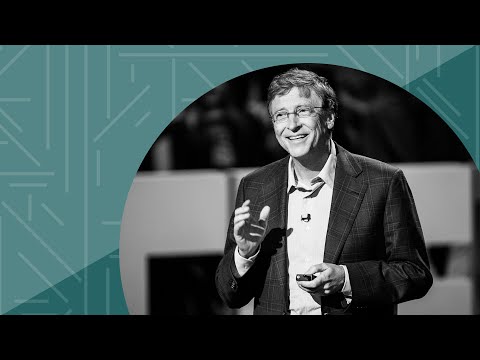
“Science is on our side. The fact we can be ready for the next epidemic, it's very clear how to do that. And yes, it will take tens of billions, but not hundreds or trillions of dollars. So it will be tiny compared to the economic cost. I remember when I did that presentation 2015, I put up, "Hey, a big flu epidemic could cost four trillion," and I thought, wow, that's a big number, do I really think it's that big? And I went and looked up numbers and thought, yeah, well, that's big. This epidemic will cost that much to the economy. So in the short run, we are going to have more pain and more difficulty and people are going to have to step up to help each other.”TED Connects interview, April 2020 · 43:39
Pandemics are not a side risk; they are a top-tier global threat
Gates treats epidemics and pandemics as one of the most serious dangers facing humanity. His core view is that a naturally caused outbreak or an intentionally caused one is among the likeliest paths to truly catastrophic death tolls, which means pandemic preparedness should be handled with the seriousness usually reserved for major security threats.1
He also frames outbreaks as contests between human systems and fast-moving biology. When disease spreads before institutions can detect it and respond, the result is not just a public-health failure but a civilizational failure of planning, readiness, and coordination.23
His main criticism is simple: the world knew the risk and still stayed underprepared
Before COVID, Gates had already been warning that the world was not ready for a major epidemic. After COVID began, his argument became less about whether a pandemic could happen and more about how much preventable harm came from failing to invest in preparedness when the threat was already clear.45
He does not present preparedness as mysterious or unattainable. He argues that science already gives humanity the tools to be far more ready next time, and that the cost of building those systems is small compared with the economic and human losses from a real pandemic.4
“Science is on our side. The fact we can be ready for the next epidemic, it's very clear how to do that. And yes, it will take tens of billions, but not hundreds or trillions of dollars. So it will be tiny compared to the economic cost. I remember when I did that presentation 2015, I put up, "Hey, a big flu epidemic could cost four trillion," and I thought, wow, that's a big number, do I really think it's that big? And I went and looked up numbers and thought, yeah, well, that's big. This epidemic will cost that much to the economy. So in the short run, we are going to have more pain and more difficulty and people are going to have to step up to help each other.”TED Connects interview, April 2020 · full transcript →
During a pandemic, testing and isolation are the core emergency tools
For Gates, the first job in a severe respiratory pandemic is to drive transmission down fast. He repeatedly emphasizes that there is no easy halfway strategy: governments must organize testing, prioritize who gets it, and pair it with serious isolation measures, because those are the main tools for getting infections under control before vaccines arrive.567
He is blunt that isolation is socially and economically painful, but he sees delay as worse. His logic is that earlier, tougher action shortens the crisis and makes it possible to return to normal sooner, whereas weak or inconsistent action lets the disease outrun the response.67
That same view also explains why he highlights countries that acted early and forcefully. His emphasis is not on perfection but on speed, organization, and the willingness to use testing and targeted restrictions before spread becomes too broad to manage.67
Preparedness depends on surveillance, vaccine platforms, and fast scientific execution
Gates sees surveillance as one of the most important missing pieces in pandemic defense. His point is straightforward: if the world cannot detect dangerous outbreaks early, even strong tools may arrive too late to stop large-scale spread.3
He is optimistic about vaccine science, including faster platforms, but not complacent about it. New approaches are promising in his view, yet he stresses that major questions remain about performance, durability, manufacturing, and deployment, so preparedness has to include both research and practical delivery capacity.38
He also argues that vaccines should be judged by what best helps humanity overall, not by national prestige or who develops them first. That means data sharing, neutral evaluation, and enough manufacturing capacity to reach the whole world rather than only wealthy countries.8

“You're absolutely right, and I should have mentioned surveillance as another area where the needs are quite dramatic.”Munich Security Conference, 2017 · full transcript →
Pandemics are global problems, so nationalism makes them harder to solve
A consistent part of Gates's thinking is that no country can fully protect itself alone. He argues that pandemic response requires cooperation across governments, funders, health systems, and manufacturers, because outbreaks cross borders and the weakest health systems can become sites of extreme suffering and continued spread.910
He is especially worried about poorer countries during large outbreaks. Where hospitals, equipment, and staffing are already limited, surges can raise deaths not only from the pandemic disease itself but also from the broader breakdown of care for everyone else.10
That is why he pushes against inward-looking responses. In his view, the right goal is shared scientific work, broad vaccine access, and delivery systems that reach everyone, because retreating into fear or treating pandemic tools as rich-country assets undermines the global response.811
Gates on pandemics, in his own words
“You're absolutely right, and I should have mentioned surveillance as another area where the needs are quite dramatic.”
“Thank God we have testing, if we use it properly. We are doing therapeutics, which will help with the death rate, but in terms of keeping the infections below one percent of the population, it really all depends just on the two things: isolation and testing. CA: So to quote a question from my Twitter feed this morning for you Bill: If you were president for a month in the US, what would be the top two or three things you would do? BG: Well, the clear message that we have no choice to maintain this isolation and that's going to keep going for a period of time, you know, probably in the Chinese case, it was like six weeks, so we have to prepare ourselves for that, and do it very well.”
“Science is on our side. The fact we can be ready for the next epidemic, it's very clear how to do that. And yes, it will take tens of billions, but not hundreds or trillions of dollars. So it will be tiny compared to the economic cost. I remember when I did that presentation 2015, I put up, "Hey, a big flu epidemic could cost four trillion," and I thought, wow, that's a big number, do I really think it's that big? And I went and looked up numbers and thought, yeah, well, that's big. This epidemic will cost that much to the economy. So in the short run, we are going to have more pain and more difficulty and people are going to have to step up to help each other.”
Where to watch
 Bill Gates on Pandemic Response: Testing, Isolation, and Vaccines2020 · 52 min · full transcriptBest single overview of Gates's COVID-era thinking on testing, isolation, and the path to vaccines.
 Bill Gates on Epidemic Preparedness: Why the World Is Underprepared2017 · 15 min · full transcriptShows his pre-COVID framework: pandemics as a major global risk requiring surveillance and coordinated preparedness.
 Bill Gates on Global Health Philanthropy: Spending Down the Foundation2024 · 61 min · full transcriptExplains the partnership model behind vaccine and health delivery systems that matter in pandemic response.
 Bill Gates on Global Health Funding: Why Aid Still Matters2019 · 15 min · full transcriptAdds his case for sustained global health funding and why stopping early lets disease surge back.
Questions people ask
- What did Bill Gates say about preparing for the next pandemic?
- What did Bill Gates say about testing and isolation during COVID-19?
- What did Bill Gates say about the risk COVID-19 posed to poorer countries?
- What did Bill Gates say was the main way to keep COVID-19 infections under control?
- What did Bill Gates say about global cooperation on vaccines during the pandemic?
- What did Bill Gates say people can do at home to help during the pandemic?
Sources
Every quote above, word for word from the transcripts. Numbers match the text.
“I think an epidemic, either naturally caused or intentionally caused, is the most likely thing to cause, say, 10 million excess deaths…”
“…smallpox scored one and humanity scored zero.”
“You're absolutely right, and I should have mentioned surveillance as another area where the needs are quite dramatic.”
“Science is on our side. The fact we can be ready for the next epidemic, it's very clear how to do that. And yes, it will take tens of billions, but not hundreds or trillions of dollars. So it will be tiny compared to the economic cost. I remember when I did that presentation 2015, I put up, "Hey, a big flu epidemic could cost four trillion," and I thought, wow, that's a big number, do I really think it's that big? And I went and looked up numbers and thought, yeah, well, that's big. This epidemic will cost that much to the economy. So in the short run, we are going to have more pain and more difficulty and people are going to have to step up to help each other.”
“There is no middle course on this thing.”
“So the testing thing to me, it's got to be organized, it's got to be prioritized, that is super, super urgent. The second thing is the isolation that, you know, various parts, just focusing on the US, some parts are doing that in a fairly strong way and other parts not yet, and it's very hard to do, it's tough on people, it's disastrous for the economy. But the sooner you do it in a tough way, the sooner you can undo it and go back to normal.”
“Thank God we have testing, if we use it properly. We are doing therapeutics, which will help with the death rate, but in terms of keeping the infections below one percent of the population, it really all depends just on the two things: isolation and testing. CA: So to quote a question from my Twitter feed this morning for you Bill: If you were president for a month in the US, what would be the top two or three things you would do? BG: Well, the clear message that we have no choice to maintain this isolation and that's going to keep going for a period of time, you know, probably in the Chinese case, it was like six weeks, so we have to prepare ourselves for that, and do it very well.”
“There are vaccine projects all over the world, and those should be evaluated on a very neutral basis, to which one is the best to help humanity. And make sure the manufacturing capacity isn't just for rich countries, that it's scaled up, very low cost stuff for the entire world, and that's the spirit of GAVI, is getting vaccines out to every person. So in the science side, and data-sharing side, you see this great cooperation going on. Unfortunately, whenever you have disease, this sense of other and foreign and "Oh, stay away from me," you know, that sort of pulling inward is reinforced. And we have to avoid that.”
“…we can't do it ourselves…”
“I'm very worried that there will be a massive number of deaths in those poorer countries, because the health systems just aren't -- you know, the number of respirators, hospitals, and of course, when you overload that system, your deaths are not just COVID deaths, but everyone else who's trying to access a system that will be somewhat in chaos, including with health workers who are getting sick.”
“We need to keep doing that.”
How this guide was made: drafted with AI from the full transcripts of the recordings cited, then checked: every quotation must match a transcript word for word and be the speaker's own words, and an independent review gates accuracy. Methodology and corrections.

