Tony Robbins on Parenting and State Management: Change Your Focus

What Robbins talks about
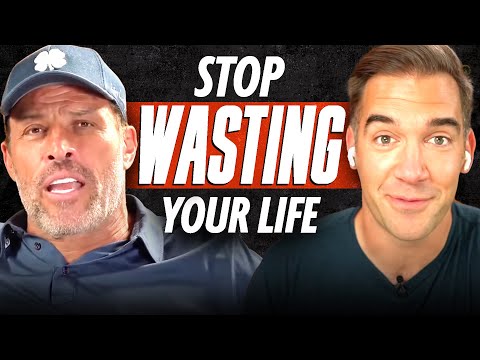
Tony Robbins joined Lewis Howes for an interview in 2021 about changing your focus, parenting, emotional regulation, relationships, money, and fulfillment.
Also known as: Tony Robbins MASTERCLASS On How To CHANGE YOUR LIFE Today!; Lewis Howes and Tony Robbins.
Tony Robbins argues that the past only shapes your future if you keep living in it, and he uses his own childhood to show why biography is not destiny. He says people change when they stop blaming and start choosing what to focus on.
A major thread is parenting: how to give children love, balance, and a value system oriented toward contribution rather than entitlement. Robbins also ties healthy parenting to emotional regulation, gratitude, and not being overly judgmental of yourself or others.
He widens the conversation to self-esteem, relationships, money, and fulfillment, saying progress, service, and hunger matter more than comfort. Throughout, he pushes listeners to become the “chess player” rather than the “chess piece.”
Lewis Howes interviews Robbins throughout, with occasional brief host interjections and questions.
In his words
“The past only equals your future if you live there.”
“If you're using a rearview mirror to guide yourself, you're gonna crash.”
“Life is not about me; it's about we.”
“You can't be grateful and angry simultaneously.”
“The one power we have is the decision to change anything.”
Key points
- The past only becomes destiny if you keep reliving it.
- Parents should focus on a few core values: love, balance, and contribution.
- Self-esteem comes from what you stack through experience and service, not from praise.
- Gratitude and appreciation are practical tools for changing state and reducing suffering.
- People should stop blaming and instead choose what they can control.
- Hunger, modeling, and growth keep success alive over time.
- Money and wealth should be used as leverage for adding value to others.
Full transcript: Tony Robbins, Lewis Howes interview (2021)
I said, "Look where I am right now," because I wouldn't assemble the story that my past equals my future. The past only equals your future if you live there. If you're using a rearview mirror to guide yourself, you're gonna crash. So, what you've been through is horrific. What you've been through is unjust. I'm on your side, but if you hang on to it, I think you gotta have a dream. The School of Greatness. Yeah, please welcome. Every time I get the chance to interview—this is interview number four now for the show with you—the last three interviews have done over 6 million views and changed millions of people's lives. We've done them on your plane, we've been in hotels, and now we're virtually here, and every, every time I get to interview you, I, I—
have a ritual. You may not remember, but I've told the story of how I first saw you in person, so I want to tell it really quickly, so I set the context here. About 22 years ago, my dad bought myself and my mom tickets to an event that he used to host, that was like a big three-day conference, success. All these great speakers came. Actually, Trump was there, Larry King was there, all these great football coaches. It was in Saint Louis, Missouri, and you came down on stage at one point. I'm sitting about halfway back in the arena on the floor level, and you came off stage and walked down. I remember vividly there was a song, "Don't Worry Be Happy," that was playing. I don't even know if you remember this part of your experience. You remember that? Yes.
You came down. I mean, I'm sure you, you had this story at all your events, but you came down off this song. It came down, you stopped right next to me. I'm probably 50-yard line back in the arena, so halfway back. You stop right over me. You don't look at me, you look out. You say something to the crowd; I have no clue what you said, but I remember the energy you poss—you possessed in that moment, and I was like, "I want to have that confidence one day and that energy," and that, that's that moment has stuck with me for the last 22 years. So, I want to acknowledge you for constantly being an inspiration to not only myself, but millions of people around the world from your way of—from your way of being, the way you open your heart, and the way you see other people. So, I really, really appreciate your consistent—your consistency.
Over the four plus decades of work. And my, my first question is, what is it like being a father of a daughter? Yes. I, I'm 61, which I can't even believe—I'm 61—but thank God I feel better than I did when I was 30 physically, and I've trained harder, I'm stronger, and psychologically better. So, yes, I just have a brand new daughter. I have five grandkids that are older than my daughter, and I've got five kids in total. My oldest is 54, and my youngest now is four weeks tomorrow. So, it's, uh, it's beautiful. She's the greatest gift, and she's a rainbow baby. We tried so many different ways, so we're just so, so grateful to have her. And, um, we're keeping her life out of social media. I'm certainly mentioning her, but we don't show her pictures and don't
talk about her name, just to give her a little bit of space from what the world is like, where everybody's trying to get likes for something. I don't want my daughter to have that habit, so we're going to give her a little space there. But it's very kind of you'd ask, and there's no greater gift. I'm, you know, anybody who's a father or a mother out there knows there's nothing, anything else you experience in life, nothing comes close. What, and what's the biggest lesson she's taught you in these first few weeks? Well, she's already restructured my life like no one else has. I mean, I can sit there and hold her and obsess about her, and I'll be like 40 minutes have gone by and I'm just staring into her eyes. You know, it's that kind of thing. So, she's put a little balance in me, that's for sure, and, and, you know, also, you know, I've—I like you—I'm obsessed with being fit and strong and alive, is required for what I do and to do it at
the quality I want to do for 44 years plus, and I'm planning to do it for a lot longer. So, but, you know, when I start thinking about her life, I'm 61. I remember telling my wife I said, "I'm not having a kid after 50." I said, "I'm not going to be, you know, 80 years old with the kid's high school graduation," and so forth. But now it's like for me to see her at 30 plus, I got to be 90 plus. So, um, I'm, you know, I'm well on my way to making sure that happened, but it's giving me even greater incentives. I love that. Uh, for all the, the young people here who are maybe they're, they're just having their first kid and they're in their late 20s, early 30s, around that range, what are the three habits or skills you wish you would have known then that you wish all of them start to learn at this
age in their life? It's a tough one because I think at every stage of your life, you look at life differently, so it's hard to tell someone in their 20s how they should be until they've experienced certain things. There are certain things they'd just be words. But if I was going to give a couple habits, I'd say the first habit is to not judge yourself too hard, because I think that's what young people do a lot. And I think people do of all ages, you know, when you're 61 years old and you've lived as much life as I have, a little less judgment of myself in this area, uh, you know, it's not making everything life and death, because then the kid feels that, and it isn't all life and death, you know. Uh, well, I've got to be honest, I thought when my daughter's crying is like, I hate anybody in pain, you know, if I was going to just pierce me and make life so difficult. But fortunately, never. When she doesn't cry, she's like, I told my wife, "I don't know how this kid came from us, because this kid is so zen. She cries when she's got to go to—"
The bathroom, and there's got a diaper. She cries when she's hungry, but otherwise she's pretty zen. But the cry even then is different for me now, so it's not life and death. I'm not hyper judgmental of it. And then the third thing is decide what's most important that you want for your child: the two or three most important things. For me, it's that the child feels so incredibly loved, and for me, not yet, but as the child develops, it's developing a sense that life is something that's calling to you to give something, not to get something. I think if I could give any lesson to my child, it's the lesson of contribution, which makes life so meaningful, the depth of relationship that comes from having such a deep love. I think those two things are the minimum, but you've got to decide: what do you want for your child? Because you know they're their own being. You're gonna have your plans how you think they should be, and then they're gonna be how they are, right? And
but what you can shape is their value system, and not every individual value, but the global values that you know, that life is a balance. That, of course, you're gonna go to extremes, but balance is how the body maintains. It's how life gets imbalanced is like, look for that. It's like life is not about me; it's about we, that life is calling to you to give something. Don't ask what your country is asking for you. As you know, a democratic president once said, "What do you do for your country?" We kind of lost that theme, not only in our country but in our parenting. And so I see a lot of kids today that are like, "They're, what is my parent doing for me?" I could never imagine that thought in my life. My whole thing was like, not one of my, "What can I do for my parents?" was my focus. You know, "What can I do?" And all those little patterns lead to a life that is more meaningful and fulfilling.
But I don't think over controlling is going to get you where you want to go based on my history, because this isn't my first rodeo. I got four children before that, three of which I adopted. So I was 24 and had a 17-year-old son instantly, an 11-year-old, a five-year-old, and one on the way. So you learn to grow differently. And, you know, my former spouse, who had those kids, she'd been married twice before me, so they were from different parents. And so I adopted them all and brought them into my life. Probably got some of the greatest growth in my life from that experience of parenting. And for those that grew up and don't feel like they got the love they wanted, or the love they deserved, or the love they were supposed to have, or whatever, and people haven't learned how to love themselves, whether it be because they didn't get it from their parents. So
they didn't learn it. How can they learn to love themselves later in their life when they never really felt it? I think this idea of loving yourself as a cultural obsession has no basis in reality. Here's the challenge: when you're born, what do you got to do to be loved? Nothing. Because your mother's on drugs, natural dogs, oxytocin. So you look like a lizard and she thinks you're beautiful, right? You know, you're fat, you're all over, you throw up, and you're still beautiful, right? For a while you're unconditionally loved, and thank God. We wouldn't have survived otherwise. I'm so, I love women so much, I have so much respect for women, even more so going through birth again. No man will ever fully appreciate what a woman does or what a baby demands of a mother. If you're breastfeeding and the energy and the no sleep, I mean, it's just
it's amazing what women do in our lives. But the point is, in the beginning, you're gonna do nothing, and then the oxytocin wears off, and suddenly you do the same scream or yell or throw your food. Now you get yelled at or hit, or the worst one of all, you get ignored. And then fear enters your body, and then the rest of your life you're looking for how can I get this unconditional love. And I remember in the beginning asking myself, because, yeah, I studied all animals and what the level of dependency they have. And, you know, human beings have the longest period of dependency for survival of any creature other than other primates. Whales will be dependent for a year, birds for a few weeks, and boom, get your house out there and fly. You know, it's a different world. We have this long dependency; it's just the nature of how we are. And I thought to myself, so why? Why don't we just have unconditional love all the
time? And I think my answer is because then you never grow or give anything to life. You think everything is about you. Unfortunately, there are a large population of kids that are raised in a generation of parents that were helicopter parents that thought everything should be about the child. And they wonder why they're selfish today, or why they, you know, don't seem to have great relationships. Where you got to be with somebody else, you got to put somebody else out of you. That's what love is. Love is putting somebody else ahead of yourself. Loving yourself usually comes from most human beings by starting to have a value and just appreciating people, not because of what they do, not because of what they have, just because you feel their essence. And it's easier to do that with somebody you love than it is with yourself. But when you start to with somebody else and you're not judging, you're truly loving.
Them, then it's much more natural because you're already doing the loving. You're not getting it from somewhere else. Someone may say something, look at you a certain way as a trigger, but all love is self-love. This: "I don't love myself." If you've ever been someone who felt loved, you loved yourself. They didn't love you. They said something, needed something with their eyes, and you use that as a trigger to release love inside of you. But loving yourself every moment, all the time, is not the secret to success. Having appreciation for yourself is different than constantly loving. Now, in the Bible, it says, "Love thy neighbor as thyself," so I think it's a worthy goal and it's useful. But most people are obsessed with it and I think get on about living a life that's meaningful and you'll love yourself. As long as you focus on you, you're not going to love you because the human
brain is always looking for what's wrong, what to protect, what needs to be changed. It's a survival instinct, and so it's looking for things to fight or flight or try to freeze or pretend or not there about yourself. But when you're in a bit of service, when you're trying to search something more than yourself, that's when the higher part of your consciousness is there. That's when your heart is flowing, and when you're doing that, you're not thinking about you and therefore you feel love. And I can tell you my own experience: I've—I don't have to, no one else has to earn love with me. But my strategy has been, I got to earn my own love, right? I got to be worthy of my own love. I don't do that somebody else. How do you do that? Well, by helping millions of people for 44 years now. I'm finding the stage. Well, yeah, I love myself. I'm not there, right? I enjoy myself or appreciate it
but along the way, I've always earned it. Now, I don't think that's necessarily healthy or not, but I like what it's done with me. If I know people that just think they're God's gift to creation and they don't add anybody to any other human being, and they're to be around, they love themselves. So I just, I would challenge that whole belief system. I'd say it's appreciating yourself, it's loving the people around you, and the more you can unconditionally love others, the more you'll unconditionally love yourself. But try to start with yourself. When you're not doing with others, forget it. It'll never happen. Was there ever a moment where you didn't unconditionally love yourself and if so—and if so, when did that shift where you stopped that and you started saying, "Okay, I appreciate myself because of my contribution and my service and who I am"?
What was that shift? I don't think it was ever, "I just didn't love myself." There were times obviously, be angry with yourself or frustrated yourself or thinking, you know, "I'm not doing enough." I mean, I can remember my birthdays, to be honest with you, probably up to my 40th birthday, including my 40th birthday. You know, you have a birthday with a zero on it once you're over, past 30. You know, 35, sometimes five years on it as well, people look at their life differently culturally and I just think it was. But sure enough, I would do it. I remember turning 40 and I was really, really unhappy. I was like, "Jesus, I've not done enough. I've not helped enough people." I know tens of millions of people at that point already, all over the earth in a hundred-plus countries at that point, but it was still kind of stuck in my head. So I would earn the love by over-delivering change
somebody's life. Like, I don't get it because somebody says, "Oh, I love you, Tony." I mean, I appreciate that or "Oh, you're the greatest." It's got to be my standard. My standard's higher than their standard for me, right? So when I get up and someone's going to kill themselves and it's they're suicidal and boom, turn around—they're no longer—not going to kill themselves, but they're transformed, their life is there, you know? That's when I'd go, "Okay, you know, now we've hit the center of what I'm made for. Now, you know, I deserve to feel this euphoric feeling within myself and appreciation." And even then, I still know it's God coming through me. I don't have the delusion it's just me. But I think sometime after 40, I finally saw the stupidity of it. I accumulated enough that I looked at life with fresh eyes and I could say, by the time I turned 60 a year ago, I noticed it was interesting, because my birthday, I
didn't have an ounce of it. I was just like, you know, "How could I at this stage of my life when I've had the privilege of serving so many humans in so many contexts? You know, from turning around, you know, guys going to kill themselves with PTSD, to helping kids turn around, to getting kids off cocaine or adults, to you know, help people build multi-billion dollar businesses from nothing." And when I've lived this long, I can't go by without hearing half a dozen stories a day or dozen stories a day from people telling me how something I did changed their life. So it's not that I'm so smart now, it's just I've stacked it. By the way, though, stacking is the way you can do things. Most of us stack the negative. If you are really angry, it's not usually because it's just the moment. It's that it happened again. You know, it's like if you've ever
lost it or overreacted to your kid or to a friend or business or even within yourself, it's because it happened again. We hit this one, two, three, many point and then our nervous system overreacts. But what I've learned is you can stack the good. And but, for example, if you go into a state of really strong anger for more than five minutes, your immune system is suppressed between an hour and a half to two hours. That's a physiological fact. But no one had done any study. I started stacking good, like, okay, let me stack a dozen great memories, feel them, see them, experience them. And I felt this biochemical change that didn't just last a half hour, an hour, or 10 minutes—it went on for a day or two. And so I think I've learned to stack the good. So just having the experience is not enough. You got to stack the good to be able to
Appreciate it, but I think just come back to the main point here from my perspective, which could be completely just my perspective, so I want to point that out. I think the more you find unconditional love for others, the easier it is to find in yourself. And I think the focus is serving and loving, and that's what will get you to the point where you start doing it. But if you want to speed it up, stack all the good you've done. You'll feel great about yourself. I already know all the comments that have come through, thousands of comments tell me, but what about my family that's toxic? What about my partner who is toxic? And how do I love someone unconditionally when they don't respect me? I can't trust them. What about situations? All those reactions are natural human reactions from ego because it's all about you, me.
Me, me, what I'm not getting, what I'm not doing, and that's why you're in pain. And so, don't—I'm not telling you, like, I haven't done this, but I've done it too in the past. But it's an old pattern I don't really do anymore, and it used to affect me. Now, not a dominant one. I wouldn't have become who I become. Early in my life, I developed this belief that life is calling not to give me something. Life is calling for me to deliver things, for me to bring something to life. And I felt the joy that came from not getting but giving, and I got hooked on that core pattern. And then the pattern of learning, so I'd have something to give, which I know one thing I respect about you, Louis, is that you have that same pattern in you. You're always trying to learn more because underneath it all, you also want to give it. You want it, you want it for
You want to share it, right? And so those patterns help me not be what they're not giving. And all this language—language today, people don't understand the power of their language. Like, "toxic," what the hell are you talking about? You've been watching too much social media and thinking about yourself, or somebody raised you to constantly judge your views. We live in a culture now where people, you know, you're evil or you're like me—that's basically how it is, right? The whole world: everybody else does it more, unless they do what you do, think what you think, experience you think. I mean, being a liberal—I was a liberal, right? Being a liberal growing up meant I would fight for your ability to say and believe whatever you want, different than me. Today, now everybody wants everybody to think the same thing. Otherwise, they're...
Evil or otherwise, they could hurt me. Whatever happened to sticks and stones will break your bones, and words will never hurt me? We have this whole thing that words are evil, words are action. Word, it’s bullsh— and all it does is make you incredibly weak as a human being. And you’re more than that. We all are more than that. But, you know what, like a kid that’s never broken their bones, definitely afraid of breaking the bone. But if you’re a kid and you’re rough and dumb, you broke multiple bones. They heal. You don’t have any fear of it. There’s so many kids that have been raised to be safe and secure every moment. Anything that’s insecure or unsafe, they don’t want to be a part of, including language. And what it does is make you incredibly weak and fearful. And that’s why there are so many people that are abundant that are angry all the time, because they’re angry because they’re not growing.
So don't get me wrong. I know some people are not a good influence; I'm not denying that. I'm just saying you're more than somebody's influence unless you obsess about it every moment and make them wrong so you can make yourself feel superior morally, psychologically, or spiritually. That's stop the pattern. We've all done it. Catch yourself because if you want joy, happiness, and freedom, and an extraordinary life, it will not come from blame. Never. There's no pride that comes from blame. I don't mean fake pride where you make to feel good; I'm talking about real pride. Pride is something you earn. Like, people tell me, "Oh, I have no self-esteem because my parents used to say this," or, "They'd say that." I'd say, "That's such—I’m not saying it's both—they didn't say that," I said, "That's why you need self-esteem. Self-esteem does not come."
From what people say about you, self-esteem comes from what you experience about yourself. See, someone tell your whole life you're a piece of crap, and part of you goes, "You're full of it. I'm going to show you." Lots of people have done that. They never bought it. Or someone tells you you're beautiful your whole life, you go, "I'm not really beautiful." So what people tell you doesn't matter at all. It's what you stack, it's what you assemble, it's what you create. It's the habit of what you put in your head. And today, I don't blame you because we got a whole culture that's always blaming somebody else for something in their life. But blame is not a strategy for pride. That's why you're listening. Blaming people, they're all angry all the time. Listen, if I wanted to blame, I grew up in an environment I didn't even share it to my mom past. Then, even then, I didn't share. I grew up in a pretty rough.
Environment. My mom was a beautiful soul, but when she drank alcohol and she mixed it with prescription drugs, it was a different creature, and it was a violent creature. And I have a younger brother, five years younger, and a younger sister, seven years younger. And my mom would get nuts, and I didn't want them to get hurt. So I was 5-1 in high school. She grabbed me about the hair and smashed me against the wall until I bled. Now, I never shared this, and I'm not denigrating her in any way. I only shared it like four or five years after she died. Um, because I was talking to a group of kids in New York City, all without fathers, um, 80% African-American, about 20% Hispanic out of their group, roughly no white kids, and I'm talking.
About your biography is not your destiny, and it doesn't matter what you've been through. What you decide now is what's going to control your life, what you decide each day going forwards inside your life. And I look at them, seeing me, I can read their minds: this big tall white rich guy is going to tell me biography doesn't matter. So I said, you know, let me tell you my story, and I told them the whole story, way more than I'm telling you. And everyone was crying their eyes up. When they're done, I said, look where I am right now, because I wouldn't assemble the story that my past equals my future. The past only equals your future if you live there. If you're using a rear view mirror to guide yourself, you're gonna crash. So what you've been through is horrific, what you've been through is unjust. I'm on your side, but if you hang on to it you have no future and you have no
one to blame but yourself. And these kids, to their credit, man, they just responded to the challenge because they first cried their eyes out hearing all the stories. My mom would think I was lying, and I wasn't lying. She poured liquid soap down my throat till I threw up, and I wasn't lying. So it's not the physical abuse, it's the fact that this is the person you love most that's trying to hurt you that messes with your head. So I could have been messed up for life but I didn't because something inside me says I'm responsible for this life. And part of that's because I started reading when I was 13, 14, biographies of people, the greatest people in history and reading their lives and finding out, guess what, their lives were far from perfect. Some of them had worse lives than I had. But when you have no reference, and all you just go online you talk to other
people making everybody else toxic and I'm like this and they didn't do that. Then you get to have the life just like those other people. Why are they online so much? Because they don't have a life, right? Don't be one of those. Free yourself from the chains of your past. I'm not saying your past doesn't matter, but listen, my mother, I tell people this all the time, and it's the truth: If my mother had been the mother I wanted to be, the mother she should have been, I would not be the man I'm proud to be today because I had to become a practical psychologist way before any schooling, figure out when's she gonna go in the mood, how do I change your state, how to protect it from the kids. What are we? I mean it was felt life and death and it was, to some extent,
so I developed skills at such a young age. Then when I learned things I just added to my skills, but I had a core sense of certainty I could turn anybody around because it started with my mother, and thank God for her. And she encouraged me in so many ways, she did so many great things, and she loved me even though it didn't look like it at times. So right, but if your parents, if the people around you said all the things you thought they should have, if they had just not been toxic, if they'd encouraged you, you wouldn't have any muscle. And right now you don't have any muscle because you're using that as an excuse. If you're thinking that, and I'm not attacking you, brothers and sisters, I'm calling to you because I know you're more, otherwise I just keep my mouth shut. We're just, you've been hypnotized by a culture of weakness. Now having said that, I'll say one last thing, I know you haven't got other
questions, but it's so important what you asked. Yes, there are people that you don't want to hang out with that will not serve you. But then move on, don't sit there and talk about it constantly, don't waste your time. And you say, but what if it's family? Tony, mine was family too, and you learn to grow, you grow there. In my life, if someone can get your goat, if someone can piss you off, if someone can make you feel less than, that's God coming to you saying grow. You need some spiritual growth. There's got to be some change in your perception, your belief, your emotions, your spiritual look of life so that can't happen anymore. And when it happens, like at 61, I've been through so many of those things and I like do things in mass. I took on
big challenges so I'd have to grow more, but then life throws them at you too. When they come, you just go, okay, it's gonna have me until I grow what needs a shift in me so that no longer has an impact. But you know Jim Rohn used to say, my original teacher, he used to say, Tony, what happens if I've got a cup of coffee here? And he'd say, what if your worst enemy drops sugar in your coffee? What's going to happen? And I go, well, you have sweet coffee. And he goes, what if your best friend, your mother, your father, your brother, your sister, your loved one drops one drop of strychnine? I said you'd be dead. He goes, that's right. Life is most sugar and strychnine, so watch your coffee. This whole thing was stand guard at the door of your brain. But some people take they go, oh my God, you can kill me. It was a metaphor. These people are not so toxic, they're toxic because you give them energy.
So if your mom's crazy and constantly criticizing you and it drives you nuts, just go, that's my mom, that's her way of showing love. And I find a new perspective, and no matter what she does, just stay in a beautiful state and love on her, and think, boy, think of all that she cares and feels for, all that she's frustrated in life, or all that she's going through that's made her this way. And think, I don't have to go through this, I can love her. It's like your growth is the only limit to your happiness. If you're not happy, you're not growing in some area. And usually it's a place where you're blaming your point in the finger. I don't care if it's government, don't get me wrong, people can be unfair, unjust, that's for sure, happens, but you can't control that, you can't make it not happen. What you have to do
is become stronger than any of it so you're free. Freedom comes from growth; freedom does not come from control because control is an illusion. You can't control everybody no matter how hard you try. You can't control what they think or feel, and not everybody's going to be fair and just. And you, my dear friends, and I have not always been fair and just, whether we admit it or not. It's just the nature of being a being, a human being. But we can make the largest pattern fair and just and loving and powerful and serving and growing until it becomes the dominant thing inside you. And then you experience life as being great, not your great, life's great because you're living a great path. It seems like what I'm seeing and hearing from a lot of people is that this past year everything has fallen apart for them.
Their health, their relationships, their finances, their mission or purpose, and these, their spiritual awareness, like every area of life has been in breakdown mode for some people, not everyone. Some people have had incredible lives and have stepped up to the occasion and broken through on all these things. But I'm seeing a pattern of a lot of people breaking down in many areas. Hypothetical scenario, let's say you could only focus on one thing to get you started. You only have the time and energy to focus on one of these areas: your health, your relationships are all breaking down, your finances, you're failing, failing everywhere. Where should people lean into first to kind of create that foundation so that everything else can start to rise as well? I think before you answer what to do, you're going to answer why you're there. It is not because of the pandemic. I
remember when 9/11 happened, and people tell, "Oh my God, my life was destroyed because of 9/11," and there were people in the same building who turned their life around, grew spiritually closer to their family, made their businesses larger, and the same building burned down, right? I know in my case, you know, 9/11 comes. If you can imagine, you know, I'm fortunate to have now more than 80 companies in all these different industries, and obviously, you know, I've done pretty darn well, but by most people's standards of business and life. But my core mission is what I do for a living. That's why I'm here talking to you right now. It's getting people to be free and alive and have the level of fulfillment that they deserve to have. I know they desire it, but I also believe they deserve to have it. But to deserve to have it, you gotta do certain things, right? And so you're not in the place of being
overweight because you lost your job. So stop the bull. Blame. Blame is not a strategy for a meaningful life. Blame is not a strategy for greatness. So you gotta resolve that, number one. And then your question was, what's the one thing to focus on if you only focus on one? I think it's smart to focus on one thing primarily. Focus on too many can be overwhelming for other people. It's good to focus on multiple things, it depends on your personality, so I wouldn't presuppose. But then the answer would be whichever thing you're most desirous of changing, whatever thing is giving you the most pain. So if it's your relationship, I'd go full force on that. Now, in the world we're in today, you know, you don't usually have the privilege of going, "Okay, I want to work on just being happy." Well, I continue to be happy while hell's breaking those. You can sit in this chair
and be totally euphoric, but if you do that in a western culture, people come and take your furniture, right? So you probably have to work on both your business or financial side and some personal side. I would be working on both. And to me, the way to attack that, if you're not sure which area is to start with, the body. And I know you can relate to this, Lewis, because you and I both share this in common. It's like I always teach physiology first, as you well know. If you change the body, you'll change the emotions, if you change the emotions, you'll change your decisions, you'll change the quality of your life because the quality of life is your emotions. It's not what you get. You have a billion dollars and commit suicide, people have done it, right? You can have beautiful relationships and commit suicide. You can have people loving you and be sad all the time.
Our pattern of emotion is our home, and you have to upgrade your home. You have to train it, and one way to train it is the emotion comes the way you move, the way you breathe, the way you speak. So if I said to your listeners, "There's a depressed person behind the curtain over here, and I'll give a hundred thousand dollars to their favorite charity if they had to describe their body, their posture," and they're depressed, you tell me. I'll just use the example. What does that person look like? They're slouched down, they're looking down at their feet, they're not looking upward, their shoulders are over, they are, are they breathing full or shallow? Do you think they're shallow? Are they talking fast or slow? They're talking pro-, if they're depressed, they're probably talking fast because they're not calm. Well, no.
That's usually stressed. Depressed is different than stressed. They slow, they're probably talking low volume, slower than, and all those physical characteristics change your biochemistry towards this feeling of being depressed. And in a depressed state you won't do anything. When I used to be depressed, I don't get it anymore. I just took it out of my life. I even took the language of it out of my life because the words you create create a biochemical response. But when I did that decades ago, because I was like having those thoughts like is there a reason to still be here, that kind of crazy in your head, I got out of it by using anger originally. I'd much like sometimes if somebody's really sad or depressed, I'll make them angry and be like, what's he doing to make him angry because angry is much more resourceful than depressed. From anger, I can get into laughter, I get, you know, taking action. I so and then gradually I got what I
Didn't need anger. It was about growth. It was about contributions, about meaning. So there's like stages to go through. But to answer your question, they should work on both their business side of their life and personal one of each. And in order for either one of those to work, you need to be in a strong emotional state. And if you start with your body, like you know, I start every morning, and my cold water start morning with my workout. I start every morning on feeding my mind, right? So there's certain things you got to do physically so you're strong enough to remember the truth. Because remember, fear is physical. You feel you throw to your gut. So's courage. Courage doesn't mean you're not afraid. It just means you're strong enough you push through in spite of the fear, right? And courage feels different in the body. So when you go lift or you go for a sprint or a strong run or you jump in that freezing water, when you push your mind to go beyond what's
comfortable, you feel a strength inside you. And that strength will help you to change your body, your emotions, your relationships, whatever. But then the other thing I want to say is model someone who's successful. Don't just do this by trial and error. Like find somebody who has what you want, ideally maybe more than one person, two or three, and see, God, what are they doing different than you in their relationship? What do they believe different than you about relationship? If it's their body, what are they doing? They're not lucky; they're doing things differently. You might be slightly biochemically different, but there's patterns there that you can see. And so instead of learning by trial and error, which can take decades, you may never learn. Jim Rohn taught me, "Success leaves clues." Man, find someone's got what you want, study what they do every aspect of it, and then add yourself
to it. And that's the pathway to speed of transformation. So now, like you know, I've done it. I'm not the only person. There's so many companies that went from worse off than they'd ever been in their history to the best off because they found a way to pivot. But that required a psychological piece of not blaming. So maybe it's time for you to think for yourself and model what works instead of just what you're told. That's something to consider for yourself. It's one of the reasons you've got millions of people that model after you just like myself in many areas of my life. I've got three final questions. Is that okay? To ask your final question? Okay. Want to be respectful of your time since we're at the top of the hour. Just want to make sure I'm good. Um, you mentioned I had, uh, you know, I had the opportunity to go to
Fiji with you and Dean Graziosi and a group of people about a year and a half ago, and you mentioned that winter was coming. This was in 2019, I guess, or, yeah, right before 2020. And you mentioned, "Winter is coming." I don't know how, where, what type of crisis is happening, but something's going to happen. It may be in six months, and maybe in the next few years, but something is happening. And from people that went through 9/11 to the housing crisis of 2008, 2009, to then 2020, what would you say if people want to prepare themselves to create more financial abundance over the next 10 years
with winter coming, maybe again sooner than later? What should people be focusing on in order to earn more and invest more so that they're not overwhelmed financially with the next winter? Well, first of all, I want to acknowledge that every generation—if there's a book every once you read, it's called The Fourth Turning. It's not a great read, I'll be honest with you in advance. I read it 25 years ago. One of the most seminal books I've ever read, because what it will show you is that every generation goes to different stages: a wintertime, a really, really rough time, a springtime—like after the rough times, we usually see this easy growth, you know, a summer where, God, I'm working hard, it doesn't seem the reward, and then a fall where all the rewards show up in a major level. But those
seasons, which maybe 10, 20 years, are a way of thinking for some people. Those seasons happen in their youth, some midlife, some later, because there's a cycle of history. It's a thousand years of history you can study. It's fascinating. I'm not gonna try to explain it to you right now, but if you want perspective, it's there. The generation you're speaking of, the Millennial generation, very special generation. I don't mean special like you're so special special, because they have a unique place in human history. They've experienced certain shocks at a certain time. They are an archetype of one of the four seasons of life. The last one was called the Great Generation. Think about this: if you were born in the year say 1900, 1901, 1902, something like that, when you're coming of age, 20 years old, when you want to think about your life and where it's going and all that stuff
right, I'd say 1910, excuse me. When you're coming of age—if you're born in 1910—the stock market crashes, the biggest depression in human history, at least that we're aware of, modern history happens. You know, 50 percent of people seem to be losing their jobs. There seems to be no hope whatsoever, right, as you're coming to your early prime gonna make things happen. Oh, so that's 1929. What happens a decade later when you're about to turn 30? Another seminal time in your life: World War II breaks out. Holy sh— the whole world likes it's going. We're talking about world war all over the earth, and it looks like Hitler's gonna win and that we're gonna have Nazism everywhere, and countries are dropping like flies, and the economy is going through the floor.
And you just turn 30. But guess what? At 40, the greatest bull market in the history of the world began for that generation. But they were so tested and so strong from everything they'd been through. But then they were tested by their own kids, who didn't have to go through that suffering, who thought life should be easy for them and said, "Look at you, you're not balanced, you aren't fair to women." And they weren't right, but they were busy fighting wars to get to the point where you'd have time to do that. It's like, see, people say, you know, "Art for art's sake is for the well-fed," right? You know, it's like, you know, these people have a different... So it's not like challenges disappear, but they're called the great generation because they found their way through those things.
Because it was a generation that was not taught to look for excuses. I think the millennial generation is the next great generation, if they play their cards right. And I think there's enough great people in that generation to help lead a new direction for it. And I think there's technology that allows them to connect in new ways. But technology, unfortunately, also pits them against other people, because if you've seen The Social Dilemma, you know there are people manipulating your brain and your biochemistry and your dopamine right now. So, but I think they'll figure that out. I think they really will. Now, the answer to your question—I want to give that context because without the context, all this is about survival or doing okay for yourself. And I think you're not going to feel a great life just trying to take care of yourself. Don't get me wrong. It's like, if you know the Indian
tradition in India, that they teach these four aims of life. The first aim is Artha, Artha, and what that means is prosperity and security, that it's important to take care of that because when that prosperity and security is there, it's not like that's not spiritual. Taking care of yourself and your family is part of life, and so you need to do that. And then the next level of development, the next aim of life, is Kama, K-A-M-A, and that means pleasure. And it's good to find pleasure, and like, if you found good work that serves more than yourself, you're going to prosper. But then, do you enjoy it? And do you enjoy your life, and do you appreciate things? And it's like finding that appreciation. It isn't just sensuality or sexuality, it's music, it's art, it's family, it's all these things, it's the history of your own country, and finding the good
right. And then the third level, for that most people have heard of, is Dharma, which is, you know, your purpose or your truth. But notice you really don't have a real clear Dharma, most people, unless they got some level of prosperity, security, some level of enjoyment of life, that they get to the point of thinking broader. Now, some people early on are trying to find their purpose: "What's my purpose? What's my purpose? I gotta find my ultimate purpose." Who said there's one freaking purpose? Where did you get that delusion? And why does it have to be so huge? I know, like, when I was a young kid I had this purpose statement: "The person in my life is to be a passionate, loving, incredible creation of what God shows is possible by serving all of humanity and lifting them." And I mean, it went on and on and on. Now, like, what's my purpose? How can I help?
I mean, serving is what my purpose is. I don't need all this. And that means I can do it when I introduce, when I say hello to the mailman. I can do it in front of 50,000 people. I can do it with my child, right? And there's lots of different purposes as you go through your life. But most people try to get that; they haven't figured out what the hell they're going to do. They haven't even figured out to enjoy their life. Your purpose will unfold if you do the right thing. So now, to answer your question precisely and specifically, in short order, you need to put yourself in a position, if you're going to be successful, to have ideally your own business or a business where the more value you add, the more you earn. You can work for someone else and do that if you have stock options, you could do that if you've got
bonuses. But to me, autonomy, if you really want an extraordinary life, I believe this is just personal preference. This is my opinion; this isn't the truth for everyone. Is if you can find yourself in a place where the more value you add, the more you can grow mentally, emotionally, spiritually, and financially, then you can write your own ticket, right? And so owning your own business, to me, is one of the ways to do that or partnering with somebody in a business or working for somebody but where they treat you as a partner—you get a piece of the business. So you don't have to be only on your own. But if you're going to grow, you need to make whatever business you're part of, even if you work for somebody else, you got to think like an owner because if you do, you become one. And if you think like an owner and you're going to succeed, then you've got to model the people that are successful. It's like why we put this challenge together. It's not just me.
We've got about a dozen of the best people in the world, all different ways, because they're like, "Oh, Tony can do this, but what about where's Jenna Kutcher with her camera and what she's doing, making a couple million dollars a year, being a mom, enjoying her life?" Right? So they get to meet them all and not just be inspired, but this is specifically how to do it, because you know, and I know there's—you get to have that, I didn't have 20 years ago or even 15 or five years ago, some of it, but certainly not 30 years ago. It cost the fortunate stuff; everything's for free now. You put up a podcast and reach millions of people—that was impossible in the stage of my life. So there are ways to leapfrog because of technology that you want to take advantage of. So you want to model somebody that's incredible. But then what's going to make that business work or not is...
Two things: Do you understand who your ideal client is? You can't be a client to everybody. You got to know who's mine. You can help everybody, but who's your ideal client? Who's the client that's going to stay with you when the economy gets bad? Because, as you said, winter always comes. I was saying winter came then because I knew we'd had a bull market so long that we're going to have to have a bear market. We usually have one every five years. We have this unbelievable long period of time without having one, and I wanted people prepared because when things go down is your greatest opportunity. Right now, your greatest economy, your life is happening because we're coming out of winter, and we're not fully in springtime yet. Although the economy is heating up, and it's artificially heating up, they're going to pour so much money into it that you can be an idiot and do well in this economy.
But you want to take advantage of this time because when it goes back again, because it will, we can't just keep printing dollars forever or putting ones and zeros in computers without inflation. We're already starting to see it, and most of you don't know what inflation is. I remember buying my first house at 18 years old, a triplex at 18. Interest, it's hard to make money at 18. Yeah, now you got like two and a half for people right now. It's different universes, so you got to be prepared for whatever is coming. And the way you do that is know who your ideal customers are, who you can add value to. Fall in love with them. What do they need? What they want? What they hate? And not fall in love with your product. Fall in love with them so you can keep meeting their needs and then come up with an irresistible offer. If you have those two things, you're going to win. I mean, I remember, I saw there's a great little series out right
now on, um, I think it's the History Channel. They've done these series in the past; you may have seen them, Louis, like the, the, you know, the people that shaped America, and they show like all the, you know, the guys that built Standard Oil, like the Rockefellers and so forth. They're doing one right now called The Food That Built America, and it's fascinating. And so one of those stories was about the pizza business, and I won't run it for you, but one of those was such a perfect example was Domino's Pizza. He was going bankrupt. He couldn't figure out what the hell to do. He couldn't make any money no matter what, and then one day he had a problem delivering something and somebody was pissed off, and they go, "I will not accept this pizza if it takes more than 30 minutes," and he heard it. And then he tried on every call, "Domino's Pizza, we
deliver within 30 minutes or your pizza is free." He made an irresistible offer, not just that we'll deliver by 30 minutes, but I will be penalized. You will get it for free if you don't. That offer turned Domino's from a losing company to one of the most dominant pizza companies in the history of the world. Having an irresistible offer and knowing who his client was — he went for kids in college. He targeted them because they ate more pizza, and you could deliver more to the same dorm with more people. So he knew his ideal clients. You know who else he wanted to serve? He came up with the irresistible offer. Done deal. Unbelievable business. And this is one of the things you guys are teaching in the Own Your Future Challenge, which, if I want everyone listening or watching to sign up for this, it's completely free. You can go to lewishaus.com
future. It'll take you right there. You guys are doing this week-long challenge, you and our friend Dean Graziosi, talking about how to build and scale an irresistible offer, talking about how to build a business, a side hustle, whatever it is, using your knowledge and information to build something to earn something on the side that eventually you could take. What's unique about this challenge, and it's not just me, is that it's a bunch of people. We're going to use technology each step of the way, each day, so you start to build a business that you could start to launch at the end because there's technology you can do in minutes that used to take months or years. And or if you already have a business, how to grow it dynamically, so it's not just going to be sitting back with philosophy. We're going to be calling you. There's no charge for the program. The charge is you got to take
uncomfortable action each day using a little bit of technology we'll show you how to do, and then you're going to have something really at the end, not just inspiration. I love it. Yeah, I want everyone to sign up for this. It's completely free, lewishaus.com future. There's gonna be a lot of great content. A lot of my mutual friends are gonna be on there teaching, sharing some of their greatest strategies about how they've built and scaled their businesses and brands. So make sure you sign up for that. Final two questions. This is a question I've asked you before. You probably don't, probably remember. I think last time my interview was four or five years ago, but it's called the three truths, and I'd like to make a spin on this question. It's a hypothetical scenario: Imagine it's your last day on Earth, many years away. You get to accomplish and live as long as you want to live, but eventually you got to turn the lights off.
And for whatever reason, Tony, you've got to take all of your work with you: your written words, your audio, the video. No one has access to your content anymore. They steal the books out of people's homes, and it goes with you to the next place, hypothetically. But you get to leave behind three things you know to be true: the three lessons you would share with the world. And this is all we would have from your information. What would you say are those three lessons that you would share with your daughter or to the world if this is all we would have to remember you by? Life is not about me. Life is about we. The quality of life is the quality of relationships, and relationships are grown by giving, not by demanding, not by judging, um.
I'd say, secondly, uh, love is the answer. With strength, you have to have love and strength together. If those two resources, anything can be transformed, anything can be accomplished, because with love and strength, you'll have a larger vision. Um, if it's true love—I don't want to have a love in a sense of just trying to get something—I mean true love, which is about how can I give something but still having strength also so you're not run over. And I'd say, um, I'd say constant never-ending learning will make life not only interesting but the meaningfulness will come because you'll have something to give and that will tie back to the first piece that I described. So I mean, there's so much, it's hard to reduce to three things, but I've thought that those would be my first three. I love those. And Dean, uh, Graziosi said—
One of the greatest lessons you've taught him is about love and relationships. And he said that you told him you feel love when you give it rather than when you receive it, and also in relationship, never keep score. And so I just wanted to mention that as something that has been impactful for him and so many of your, your friends that you've taught this to, especially myself, and in relationships and understanding relationships. Uh, before I ask the final question, I want to acknowledge you, Tony, as I, uh, as I've done many times before and I will continue to do for as long as you're alive, for constantly being a symbol of inspiration to so many people, for constantly showing up. You don't have to do this stuff anymore. You've done a million times over the work of helping so many people.
And the, the ability, the amount of growth that you continue to have and wanting to serve at a higher level continues to inspire me like you'll never know. And so I want to acknowledge you for leading the way, for constantly serving so many people that will never know that you touch their lives directly because you're doing it not for them to know, you're doing it on every area of life. I really appreciate who you are as a human. And my final question is: what is your definition of greatness? I think greatness is service. I think great service is a great life. I think, um, you know, as you live your life—and I'm fortunate enough to uncover this earlier in my life—not because I'm such a good person, I think just because I love people and because I then attracted really—
Brilliant people 20, 30 years my senior who had been through all the patterns. In the end, it's not what you get that's gonna make you happy, it's who you become and it's who you've been able to touch. And, um, you know, so I think greatness is service. I think greatness is finding the way to do more for others than anybody else, uh, because that'll also come back to you in spades from the standpoint of your own sense of internal pride, not external, but your own sense. Like, people could take away everything I have. They can't take away who I become as a man by my service and by my growth. So I think, um, I think purpose and having a sense of progress are the two things that create a great life. If you've got a higher purpose than yourself, that's going to give you the—
Motivation and the energy to drive when everybody else is exhausted and you're exhausted. And if you're making progress, you'll feel the rewards that come from that. I think those two are twin powers in a great life. Tony Robbins, thanks for all your service and generosity, my friend. I'm so grateful, and thanks for being here. Thank you. It's great to see you again. So just finished up this amazing interview with Tony Robbins, and I was reflecting on some of the things he talked about. I've had the chance to be around him a few different times. We've had three previous interviews that were all incredible. I think got over six million views on those. I've spent some intimate time in some mastermind meetings with him. I've been to his live event. So I've, I've had the opportunity to be able to be around him a few times. I have a lot of mutual friends who are very close to—
Tony. And I just wanted to share some of my big takeaways from this interview and also what I've learned from him since I've really been aware of him as a kid growing up. And one of the things that he mentioned here was a lot of people struggle, especially after a breakdown in life, whether it be this pandemic or some type of breakdown, and lots of things have broken down: your finances, your relationships, your health, your purpose, your mission, you're not clear on what you want to do next. He really said, you know, focus on these different areas but make sure your body is strong. When your body's strong, then you have the energy, the presence, the power to make better decisions, to have the focus to work on those relationships, to give the attention and the creativity to launch your business. All these things stem from the—
Foundation of your body, and I can speak from personal experience that when my body is really out of shape and I'm not moving, and I'm not working out, and I'm eating horrible for weeks or months on end, and it's really, I've just kind of lost my physical body in that sense, I feel less—I feel like I don't believe in myself as much. I feel less confident. I don't feel as good in my relationships. I don't feel as confident in business. And it really stems from having the energy, the clarity, the focus. And make sure you put the attention on taking care of your body. Make sure the nutrition, the sleep, the physical activity—you are making this a priority. You're putting this in your calendar, scheduling.
It first on a daily basis. What are you going to do to set yourself up to win? He talked about making sure you set yourself up to win by finding the right model of people on how they do it. There are a lot of busy people out there who've got kids and families and businesses and responsibilities who are also able to take care of their physical body and their health. So modeling those individuals, I think, is really important. To find a personal advisory board—Tony talked about this towards the end where he's always finding his mentors who are 20 years senior, right? He's finding people who've been there, done that so he can accelerate that time and that learning curve. Something I've learned from him that I think is extremely important: to find the model of success. He mentioned finding three people, so why not find your own personal advisory
board of individuals who have the health, or the physical body and the physical activity and the nutritional side of their life figured out? Find people who have the financial side figured out. I'm doing this on a consistent basis. I've got more than three people in every area. I've got coaches and therapists and, you know, billionaire friends and physical specimens that I'm always trying to learn from. And then he said, focusing on one thing at first—like, focus on this, get it under control so you have the energy to do more things. I think when you schedule that priority, the thing that's the biggest pain right now, and scheduling it on a daily basis, this becomes a non-negotiable for you. That's when you can really start to see results and
changes when you're taking that consistent action. So that was one thing I took away. Number two is stacking positives. You know, think about it. We've got, you know, neuroscientists and psychologists who've come on the School of Greatness say that there's, what, 50,000 or 80,000 thoughts a day that a human being has on average? And who knows what the actual statistic is, but most people will agree in the science world that our thoughts are on repeat. So if we're having negative thoughts consistently and we're having them on repeat consistently, then we're stacking negative thoughts. And this has been used to protect us and to make sure we're looking out for what's harmful and things that are bad and all the things we can fix. But he said
stacking the positives. And he said he removes the language of depression from him. He's like, "I'm not going to get depressed." First it was depression, then I said no, I'm just going to get angry because anger will give me energy. It'll give me something to at least work towards and take action on. Maybe it's not the best action, but it's better than the depressed action, which is nothing. So stacking the positives and rewarding yourself. "Oh, I had lots of great thoughts today. I had lots of good memories today. I didn't focus on the negative thoughts and the negative memories. I'm stacking the positive." You may piss people off by just being a positive human being. And I'm not saying suppress your feelings and hurt and pain. You can still feel and work through those but then get back to a positive state.
You know, the world makes room for passionate positive people. You don't want to be around negative people with a bad attitude that don't take action, that doesn't inspire you in an intimate relationship, a partnership, in your business, hiring someone for your team that doesn't inspire you. The world makes room for positive, passionate people. And so figuring out, how can I make it a game in my mind where I'm training myself to stack positivity, stack positive good thoughts, quality thoughts—not negative suffering thoughts. That was another thing that I really loved: stacking positivities. And again, you may piss people off because they're not in the mood and they're negative and you're positive, but I'd rather you piss people off for being
positive than piss people off for being negative. The next thing that I said that he's talked about, which I thought was really fascinating, is loving others is when you'll truly love yourself. And really the key to success is to be in service and to learn how to love and contribute to other people. And I love this perspective because I think a lot of people are in this mode of wanting, and "I need someone else to love me," and "I need my family to love me and see me for who I am," and "I need my partner to love me the way I want to be loved." And I'm all for the five love languages and actually just learning how to communicate and give and receive love, but I like his perspective in saying, you know what, it's not—it shouldn't always be about me, me, me and what I need, but how can I serve? How can I love others?
Unconditionally, which is really hard when someone isn't receptive or when someone's defensive or when someone doesn't receive your love. Um, but that's when you can really elevate yourself to another level. It's when you can learn to love someone else and not need it in return. But in return, you love yourself because of how you're giving love to other people. Just that perspective shift, I thought, was interesting. I'm also a big fan of just learning to accept yourself. Accept yourself through your past, your pain, your hurt, your shame, the things you've done to hurt other people, all that stuff. Like, accept yourself and then make a commitment moving forward on how you're going to show up differently to create a new positive attitude for yourself, a new energy, a new
contract with yourself in the world. So love yourself by loving other people. I love that he said loving yourself is not the secret, but really loving other people. He also mentioned "we, not me" as one of his truths, and I'm a big fan that we're all in this together, that you're in this together with the world. But also, it's we, not me in an intimate partnership. It's we, not me in a business. It's we, not me in a team, a sports setting. It's we, not me in everything and friendships. It needs to be about we, not me. And for most of my life, I'll admit it, I was about what can I do for me. How can I
gain a leg up? How can I look better than others? How can I be the winner and someone else be the loser in every context of life? And that didn't work. It made me have a surface level of fake confidence. It made me feel a little bit better for a moment, but then at the end of the day, just more and more suffering, less fulfillment, and really less confidence when I was coming from that place. But when you are in a position to say, you know what, I'm here to shine the light on you, I'm here to lift you up, I want to be of service to you, it'll always come back. It may not come back directly in that moment, but it'll always come back around when you're focused on how can I serve, how can I show up to help someone else succeed, how can we all win together, how can we all grow
and improve together. And that's really a key in my mind: is coming from a place of we, not me. And it's really hard when you lack. It's really hard when you're suffering, you're struggling, you don't have any money, you don't have the love you want, all those things. When you're coming from that place of I don't have, then you are going to be in a much more miserable environment because you're keeping company that is not positive and it's focused on me, not on how can I serve, not on how I can contribute, how I can give, how I can lift others up. I think it was Zig Ziglar who said, if you want to accomplish all your goals in your life, help everyone else accomplish their goals. You know, we learn through other models of success
that those who help the most people in a business become billionaires, typically—the ones that have the biggest followings of users on apps or customers—and they are in service to those customers. They help them solve the biggest pain point or problem. Those are the ones that are rewarded financially because they were in service for others, not about themselves. And then the last thing that he mentioned, which was building an irresistible offer. I think when you can create an irresistible offer in your business or in your personal life, that you show up in such a way that is so irresistible that you get the partner you want of your dreams, that you get the friends you want of your dreams, that you attract the team members
the colleagues, the—you know, all these people are attracted to you like a magnet because you are irresistible and you're creating an irresistible offer to be around you. The people that want to be around you because you're a magnet. You're attracting them. And again, you become irresistible when you are able to go beyond your pain, go beyond your fears, your doubts, your insecurities, your lack of confidence. You become irresistible to everyone around you. You become a magnet of opportunities, of love, of attraction, of all these things by your energy, your way of being, of how you show up for other people. You're not a magnet, you're not irresistible when you are a taker, when you are negative, when you're blaming, when you're
doing all these other things. You're not irresistible. So create an irresistible offer in your business and you'll be financially abundant. Become irresistible in your life and you'll create abundance in your life. You'll feel love, support, guidance, friendship, connection that you've never felt before when you show up being irresistible. And that takes working on yourself. That takes developing skills. That takes overcoming your challenges, your pain. That takes being vulnerable. It takes being uncomfortable in so many different ways. It takes taking care of your body, which we talked about in the beginning. It takes a lot of different things. But greatness doesn't come to everyone who just
shows up and says, I'm negative, give me everything I deserve it. Greatness comes to those who are willing to look within and see all the different pain and shame and frustration that they might feel and they learn to use that pain and to heal it, embrace it, overcome it, and really be of service for other people in the gifts and talents that they develop within themselves. That's what this is all about. I've learned a lot of lessons from Tony Robbins over the years. This is just some reflection right after this interview that I wanted to share with you. We've got so many other big lessons that we've learned from Tony and some of our previous three interviews and what I want to do is share some of
Those best moments with you right now, because these moments blew me away when I was sitting across from Tony and he shared these stories and these insights. So I want you to watch these right now, and before we get into it, make sure you check out the challenge, the Own Your Future Challenge. If you go to lewishouse.com/future, you can sign up for free. You can get opted in to go through this experience and learn about how to create an irresistible offer, how to build and scale your own business by Tony Robbins, Dean Graziosi, and many other of my friends who are top business leaders and digital marketers in the world. So make sure you go to lewishouse.com.
Future right now, sign up. It's absolutely free. I want you to get this information, and now let's dive into some of the most mind-blowing moments with Tony Robbins. (music) I feel like I've done a pretty good job of earning a lot of money over the last few years. Yes, before, I never knew how to make money. Yeah, I was an athlete. I was trying to make it to the NFL. That was my only focus was playing sports. I didn't never learn about how to make money. Yeah. So when I was able to dive into this and really learn the ins and outs of making money, but actually allowing money to make money for you... Exactly, make money while you sleep. Make money while you sleep. It was so interesting, and I feel like I've done a good job of making money over the years, but there's so much more in here that I'm
like fascinated by. Oh, it's interesting because I did the same thing. You know, I come from a very poor background, and we had no money for food at times, quite literally, and it was rough. So I want to make sure money wasn't an issue for my future family. So I figured how to make money, and I figured when I was, I don't know, 23, I figured how to make a million dollars in a year. I went from 38,000 to a million, and you don't do that by some new strategy. There's a psychological shift as well as a strategy shift, right? But then I made the same amount of money for seven straight years, even though I built a dozen more companies. I had more people than ever, but it was like unconsciously, "Well, you want more than a million dollars? What are you, you know, greedy?" And I was. I was actually staying where? I was in, um, I was in Milwaukee, Wisconsin, and I arrived at two o'clock in the morning on my birthday. I didn't have a private plane, so I had
to go like four different connections from where I was, and I get in this place and it's a horrible place. And I call my kids, and I'm talking to this woman on the phone named Maria, used to run my house and take care of my kids. I said, "You know, Maria, I'm sorry it's so late, but I want to talk to my kids. Oh, happy birthday, excuse me," this whole thing. And then she walks me to Mr. Robbins, you know. She says, "I never dreamed I'd live in a castle because I had a place called," and I just want to thank you. I feel like a princess." She goes, "Last night I was sitting in jacuzzi looking out at the water and thinking, 'Oh, look!' " Yeah, but I'm in the Ramada Inn in those days looking at this moose head going, "This woman is really rich." So I finally decided, "Listen, if I can make them, you know, 38,000 million, it's not about money. It's like growth." So I went, "I'm gonna make 3 million, but I want to make more of it while I sleep." But then I really began to realize it doesn't matter how much money you make.
It's really your capacity to take your creativity and stop trading time for money. It's the worst trade in the world. Everybody's a financial trader; they don't realize they're traders. They're trading time, and you can't get more time. So this book is how to take anybody, an average person, a millennial just getting out of college with a bunch of debt and saying, "How do I really make this work?" or a baby boomer saying, "How do I still retire?" And the way I did it was I said, "I want to interview 50 of the most brilliant financial people in the world." Most people don't know that I've been working with Paul Tudor Jones, one of the top 10 financial traders in history, for 21 straight years, and he hasn't lost money in one year in 21 years, right? We made money. And the tech, you know, blow up that happened in 2000 and 9/11, in 2008, when the market was down 51% from top to bottom, he made 28% positive, right? Incredible. So
every day, literally he emails me. I monitor him. I come see him. I work with him, and he pays me seven figures a year to be able to do this. And I've been able to continually help him go to the next level. But quite frankly, I've learned more from him, I think, than I could ever teach him, right? And he helped me open these doors. So this book is the best from every self-made billionaire that I could find. Carl Icahn, I mean, I'm sitting down with this guy. He just made two billion dollars in the last 18 months off a 30 million investment off Netflix. He sent an email or a tweet out—a tweet out about Apple saying it was undervalued—and became two hours later was worth 17 billion more by a tweet. So the people I've got to hang with over the last three, four years have been... I've got a PhD in finance from the people controlling the world's finance, and what I'm trying to do is the reason
They did that is make it simple, bring it so I could train anybody else, because in this business, what you don't know will hurt you financially. So I want to know how to protect people and how to help people maximize, and that's why I did the book. It's incredible. And what I want to know is, why weren't we taught these things growing up? Me too. Tell me, right? So if they were like, "Okay, Tony, we're giving you the key to the education system," yeah, how would you apply what teachings would you apply, about finances, learning about this, how to generate wealth as opposed to trading time for money but really leveraging it and investing the right way? What would you start implementing? Well, the first thing you want to teach anybody, a child, a kid, anybody, is that you'll never earn your way to freedom. You just don't. You look around and you see, you know, Curt Schilling if you remember from Boston Red Sox. Yeah, in a hundred million dollars a year he's
broke, bankrupt. Asked Warren Buffett, "So what made you the wealthiest man in the world?" and he smiled and he said three things. He said, "Living in America has great opportunities, having good genes so I lived a long time," and he said the last thing is compounded interest. And we all know about compound interest, but I give an example in the book of this guy Theodore Johnson, worked for UPS, never made more than $14,000 in income in his entire life in a year, and in old age was worth 70 million dollars. And how do you do it? All he did was he took a percentage of his income. His percentage was 20. Now his family said, "You can't, we can't save any money," but he met a friend who said, "If you pretend there's a tax and the tax just took the money away from you and you never see it, the money just comes out of your account, goes an investment account, you'll be financially free." So he was disciplined.
He didn't look at it. It happened. 70 million dollars by compounding. So people's mistake is, and kids don't know this, adults don't know this, that you won't earn your way there, but you can compound your way there. What I want to do is say, where do you put that money? Now that's the trick, right? Well, the first trick is actually doing it. Almost nobody does, right? The second trick is you really have to understand where you're going to get hurt because the fees, the fees just destroyed people. You have a whole chapter about the fees. I was like, this is incredible. Isn't it wild? It's nuts how do you lose so much money just on the fees? Well, just so people have an understanding: 96% of all mutual funds never match the market. I mean, they never beat the market. So I was just on a morning show this morning and Michael Bloomberg's one of his guys that has some of his money. So why... I'm, you know, this is the only industry I
know of where people think they can be a doctor, they think they could be a financial planner. And I said to him, I said, "Well look, the statistics Warren Buffett taught me this, you said Ray Dalio told me this, David Swensen who took Yale from 1 billion to 24 billion in two decades, these people telling me nobody beats the market except a couple unicorns that nobody has access to, and I said I didn't say you're not one of them." Said, "Here's the truth: 96% of mutual funds don't match the market." That means 4% succeed. Now what are your chances of picking the right mutual fund? People don't know what they're doing. They put their money in a 401k, they pick a mutual fund not knowing what it is. If you play blackjack and you and I play and you get two face cards, and your inner idiot says, "Hit me, I wanna, I wanna go," one chance in a million. Whether you're ace, you have an 8% chance of winning, right? If
you try to get a mutual fund, you got the 4% chance of winning. So what I show people is not only do you not get the result thinking logically, if I hire someone else to do it, they'll do better than me, but in addition, you pay around $2,000 more than it's worth, meaning you get the same exact product, the same stocks if you own the index, right? You want a piece of all of America's best companies, say the Vanguard 500 Index, 500 top companies that cost 0.17%, like less than two tenths of a percent, versus the average mutual fund is 3.17%. That's incredible compounded over there over, but first just hear that so you understand. It's like if the average car sold in America is a Honda Civic, it's $20,000. You get the Honda Civic for $20,000 or you can pay $350,000. That's the difference between
0.17 and 3.17. But if you look at it over a period of like, how old are you? 31. 31. Okay, so let's assume you and buddies at 35 manage to put aside 100 grand and you manage not to add any more money but to grow it at 7%, despite ups and downs in the market, and you're 65. How much money do you have? Well, if you paid 1% in fees over those 30 years, 100 grand became $574,000 bucks. Not bad for never adding another dime, right? If you had 3% of fees have the same growth but 3% of these, you now have $324,000. Almost half as much, quarter million dollars, 77% less money, and you have the same return. It was just the fees. So the world, most people you ask them, what are your fees? They have no clue, right? So I've created a site where
People can go, they can type it in, you find exactly what your fees are and what you should be paying, and it just, it's highway robbery. Where in the world would you pay two thousand dollars, two thousand percent more for the same exact product? You can only do it because the financial industry makes things so opaque, so convoluted, and people feel overwhelmed and hard to understand, very understanding. That's why I try to come in here and go, look, time to become the chess player, not the chess piece. Let me teach you so you understand what's going on. It's not that complex. They use all these big words, yeah, but when you know what's going on, you don't get screwed, and more importantly, you take advantage of the system instead of letting the system take advantage of you. (music) With all the tools you've learned and this wealth of information over 39 years, almost four decades, yeah.
Strategies to break people through, to help them overcome their challenges. If you can only have, if you have to strip them all away, you can always use one strategy or one thing to use, what would that be? I wouldn't. Okay, part of why I'm effective is because I don't buy that. Uh, I'm always looking for more strategies because one strategy will work with one person, not with another. Um, but philosophically, I would say that, uh, the capacity to strengthen and increase your hunger is the one common denominator amongst the most successful people. You know, uh, you know, Richard Branson's a good friend of mine, and Peter Guber, Steve Wynn, all these guys, they've never lost their hunger. Most people are hungry.
To achieve a certain amount, make a certain amount of money, and then they get comfortable and relax, or to get a certain level of fitness and then they relax. But, you know, Richard is as driven today as when he was 16 years old starting. I mean, he's like on fire, and he's 65 years old. Warren Buffett is 85 years old. He's as driven today as when, you know, he began the journey, right? And so people that have that hunger, I believe intelligence—I love people that are wickedly smart, and I work to be wickedly smart by educating and training myself and so forth and training my brain, but intelligence—there's a lot of intelligent people who can't fight their way out of a paper bag, right? Absolutely. Hunger is the ultimate driver because if you're hungry, you can get the strategy, you can get the answer. If you can't model it, you can find it. So.
Hunger, modeling would be maybe the next best skill, knowing that success leaves clues. Like, why reinvent the wheel if someone took the J, this plane, uh, was, uh, Mickey's plane, who owns the Miami Heat and owns Carnival, right? I mean, you can learn so much from them, like Mickey, blow your mind what this man has been able to do in his life. And so why would I go learn by trial and error and maybe take 10 or 20 years when I can learn from somebody in a few weeks or a few months or a few hours something that could save me a decade? That's what it is. That's why, that's why I read 700 books in the first seven years because I was like, if somebody takes 10 years of their life, they pour into a book and I can read that in an hour, two or three or four, why wouldn't that? So how does someone continue to stay hungry?
Or re—you know, rediscover what they're hungry about? The best way is get around where it's better and things will hit you. Say it again: get around where it's better and things will hit you. Who you spend time with is who you become. So, you know, when I started coaching all these billionaires, you know, there's a part of me that said, I, you know, I'm smart in certain areas as they are, I gotta step my game up. It's not about the money, it's about how can I take the invisible and make it visible? How can I find a way to add more value to other people to such an extent where economics are not a question whatsoever? And then I can take those economics and do even more. Where I'm not there, I look at money as portable power. I can leverage my money to do things for people even when I sleep. Now, I love doing these for people, and I work 18, 20-hour days still, but.
It's really nice to have the leverage of that as well. Sure. Um, in a few sentences, what would you say is your current vision for life? What's, what's the vision you have and what's the legacy that you want to leave behind? I saw, uh, have you seen Hamilton, the play in New York? I hear it's incredible; everyone is raving about it. You've seen it, right, Nick? Yeah, it's amazing. It's extraordinary; it's amazing. Yeah, I loved it. I thought it was a lot—might be a lot of hype, but it was as good as the promise. There's a line in Hamilton that I thought was really interesting. It says, "Legacy is planting seeds in a garden that you'll never see." And that was really interesting. Um, but so for me, I know, what's the garden you want to create you'll never see? Yeah, for me it's human lives. For me it's, it's, I love my life is about being a blessing in the.
Lives of the people I meet. I hope that whoever decides to watch your video, um, I hope something here will strike them and they can say, you know, I gotta get in proximity, or I gotta raise my standard, or I'm gonna go master my damn money. I'm not gonna dabble. I hope that it stimulates someone in a way where it becomes a blessing in their life. And my legacy is the lives that I've touched, and my legacy is the institutions that I'm building right now that, when I'm gone, will continue to touch people, my foundation, the work that I'm doing with mentoring with kids, I mean, the ability to touch another generation. But my heartfelt prayer every day is be a blessing, and you know, it's interesting sometimes you're a blessing just by giving somebody a few moments, just by loving on them, just being with them. Sometimes you're being a blessing because you coach them or you intervene with them. You can be a blessing in so many ways, but that's.
My daily focus, and it's not what I'm going to build for the long term, it's really what am I going to do right now. Why is that? And why do you want to create that legacy? Um, again, it's less about legacy than it is about doing what I'm made for while I'm here and maximizing, you know, I want the end to have me. I want to be climbing them out when I die, not sliding. So to me, it's about growth and it's about giving, those are the only things that fulfill human beings. I always tell people, if you want to be happy, it's one word: progress. If you can make progress, and if your progress is not only within yourself but it's actually doing something of value for more than yourself, you're going to be a damn fulfilled person. Yeah. How do you stay grounded in your personal and intimate relationships when everyone wants a piece of you, you...
Know, you sell out events, 10, 20, 30,000 people come to your conferences, pay tens of thousands of dollars, everyone wants to interview you, uh, you're coaching presidents, billionaires, world-class athletes, they call you, they want you to help them break through the next level. How do you stay grounded in your marriage or with your kids or with, you know, friends? My mom, my mom's craziness gave me a great gift. Um, I wanted to be a professional athlete and, uh, wanted to be a professional baseball player, and when I got cut from the junior high school team, I figured out I'm in trouble. So I decided to become a sportscaster, sports writer, and so I took typing when I was in junior high school. I was the only boy in an all-girl shorthand class so I could capture everything because I wanted to be the
best reporter, best sportscaster. I interviewed Howard Cosell and Woody Hayes and Dodgers and Rams. I got a job working for a daily newspaper when I was 13. And then I got this huge break, which was I got these interviews no one had, like Joe Namath when he was so famous. I got these interviews and, uh, here in L.A., KTTV Channel 11 is now a Fox channel. Um, they were trying to get viewership and so they kept trying different kinds of sportscasters. They even tried Fanny Fox the stripper, and somebody watched some interviews I did and went, "Holy, this 14-year-old kid, I was about to be 15, he's brilliant, he's getting interviews nobody else is getting," you know, so they called me up and they offered me the job to be the nightly sportscaster as I was turning 15.
Wow, and I was out of my mind, like the dream I was gonna have when I was like 25 or 30 was happening, you know. I'm gonna be 15. And my mom said to me, "Your ego's too big and if I let you do this, you're even getting bigger," and she not only would not let me take the job, she made me quit my job working for the Parkers Bolton, which was a daily newspaper in Pomona, California, doing sports. And I hated her and I was devastated, but it created a sensitivity inside of me that, along with, I think watching athletes who would not sign a card for a kid because they were making money selling cards, would make me so angry that I said I'm never going to be one of those people, and so I'm not. You know, I've certainly had plenty of pride in what I've been able to accomplish and people have been to help, but
I always know I'm just a guy. And while I've worked my ass off, I've also had grace in my life, you know. And I think when you achieve things, it comes from incredible obsessive focus, massive action, and figuring out how to execute and do things effectively, and it's grace, and I never forget that that's a part of the formula for where my life is today. Do you think people need a little bit of ego to have that kind of drive and insanity or obsession, or is it more just belief in a bigger vision? I think, um, you know ego can produce drive, but that kind of ego will make you not be fulfilled. Yes. And, um, and we all have it until we get a few hammers, because in the beginning when you're young, especially a young man, I think even more so than a woman, um, you
know, you're trying to find yourself, you're trying to prove yourself to the world, and really you're trying to prove it to yourself. Like in the very beginning for me, I used to attack psychiatrists and psychologists because I care about people so much, and because I learned how to handle them in an hour, and they're working with someone for seven years, and I just go crazy. But I was also attacking them because I was also defensive because I didn't have a degree, and so I figured I'm going to be on the offense, I'm going to show them. But as I grew up, I realized, holy, these people care just as much as I do. Now, I've trained a hundred thousand therapists around the world with my partner Chloe Madonnas. We make films of people's lives, like suicidal people, people who've been through hell, and you get to watch how I do it as I do it, and then you can see them two years later to know it really worked, right? Um, do you ever question choices or
decisions you make today? Okay. And does everything you touch turn into what you want it to be? No. Of course not. No, no. Um, failure is part of life. I mean, uh, the difference for me though is I look at failure as a stepping stone to success. It's a speed bump. I know I'm going to fail, but it's not failure if you learn something. And so gosh, I've made so many mistakes, I've screwed so many things up, but every time I do, it just becomes, it becomes a way for me to explain to someone else what it takes, you know? It's like, here's what I've done. I think I have the ability to influence people because I talk about my failures, I talk about all the things that mess me up, but I show people that I didn't let it stop me and you don't need to stop you. And I think, I think that's really the secret that area. And if everything you touched was successful...
You probably gotta relate to people as much. No, you'll be related, and also, it'd be total, and everyone knows, and also you'd be bored silly. I mean, think about it. If you just said, "I want this," it happened, "I want this," and it happened, you know, people don't value what they don't fight for. You know, it's like, you see kids sometimes, and your parents will say, "You're not going to value this if you don't work for it," and you're kidding, "I'll value it, just give it to me," right? But it's true, you know, the things we've worked the hardest for, we value the most. So I think, you know, the purpose of a goal is not getting it anyway. The purpose of a goal, you know, is what? Who you become. Who you become is going to make you happy or who's going to make you sad. So, um, I'm not looking for an effortless approach. There's no such thing. Now, I'm curious about relationships and building wealth.
Is it important to, or how important is it to have the right partner in a marriage or an intimate relationship? And relating to building wealth, does it matter who you choose? Their mindset? Does any of that play the effect on how much you're going to make, or it won't affect how much you make, but it'll take out your relationship a lot, right? You know, getting on the same page is really, really important. But when my wife and I met, my wife, we both grew up very poor, but I decided that I was going to find a way to add so much value that money would never be a question for my family, and, you know, it would never stop me from giving or doing or sharing anything. And I made that decision early on, so I became an earner, ways of earning. She became a negotiator, a cost manager.
Her mom's number one thing is, "Somebody comes in, she was sharpen your pencil. That's not a good enough deal." And so when we first met, I remember we were, we're in New York City, and this dates me, how old I am, but I remember when they first came out with digital cameras, the very first digital cameras from Sony, and it was like such a cool thing. You could take 12 pictures or whatever it was. But we were down in New York City, we're in Times Square, and we went into one of those camera shops. It was Christmas time, and I saw the camera, and I was like, so excited about this camera. And I said, you know what, we'll get one for my brother, my sister, my mom, and, you know, I came up with that, and I was like 12 cameras, and they were very expensive then. I think they were like $1,200 or $2,000 each. They were really crazy. Now they're like $200 for the same. Yeah, no, they're not, not even. It's a million times better. Yeah. But I go into the counter, and the guy
goes, "Oh my God, Tony Robbins, can I take a picture with you? I'll put it on the wall." And I said sure, and she goes, "Hey, just sharpen your pencil. What kind of deal are you going to get? My boyfriend here." And I wanted to grab her by the throat and just go, "What are you doing here? It's like, what are you doing?" And she's like, "No, no, what's the deal here?" And he goes, "Oh, well, uh, I gave you 10 off." She goes, "Sharpen your pencil. 10, you're not taking a picture with my boyfriend." And I'm wanting to murder her, right? And I was so mad. I mean, I was so mad. And so she got like 15 off and free camera cases and all this stuff, and I'm shaking my head. We left. I was like, I am so... We have this big fight. Wow. Today I just call her Squeaky. She's my Squeaky girl. She wants to go to Walmart as if we'd ever need to go to Walmart, you know? And what I do is, I'm delighted by the
difference, and I go, you know what? What a beautiful gift. I've been in relationships before where I gave everything and the people were totally unconscious with money. So they answered your question, it's nice to be on the same page. But, you know, one day I told my wife I was coaching someone, and the person gave me a quarter of a million dollar bonus. I don't care who you are, it's mind-boggling. It was like he didn't have to. It wasn't part of the deal. He pays me a million dollars a year plus a piece of the upside, and you sit down, you did so much for me, I just want to give you this additional quarter million dollar bonus. It wasn't the money, it was the generosity that just knocked me off my ch... seat. And so I called my wife. I said, "Honey, Paul gave me a quarter million dollar bonus." I mean, it's like he's so generous. And she goes, "Oh, that's nice, honey. Hey, do you know what I'm making for lunch?" And I'm like
wow. So I used to get upset about now. I'm like, that's my Squeaky little girls. I'm thrilled. She doesn't have to think about it. I'm in charge. And, um, so I don't think your partner has to—one of you has to master it, and you have to have some alignment, okay? Right? But you don't want them to be against you essentially. Well, sometimes they're going to be. We were against each other in some ways. We're having fights. But will you eventually decide is, do I want to be right or do I want to be in love? Yeah, I'd rather be in love, personally, right? And then also, I just said, you know, I'd say, listen, honey, I understand your intent. I had to go to her intent instead of being frustrated with her saying, this is really actually a cool quality, and she's my opposite in that area, and it's a
We're a good, we're a good balance. Now I want to ask you, how do you personally handle a breakdown? Because, you know, I've been to your workshop, and, uh, incredible experience. Thank you. And you teach people how to overcome their fears and how to handle breakdowns. But how do you personally deal with it? And do you even have any breakdowns? Yeah, they sent me a list of questions you had, just to kind of give me— that was one of the questions. And I was like, you know, it's interesting, breakdowns, it's certainly not something I experience. But it's not because I'm so talented, or so brilliant, or so fearless. It's just, you're like an athlete. You're an athlete? Yeah, you're in shape, right? You're not going to have a reaction in your body like somebody who doesn't take care of themselves, right? So, you know, I believe—I don't believe in emotional intelligence. I think it's
useful, but I'm more interested in emotional fitness because intelligence is a capability; fitness is a state of readiness. Interesting: if you are fit, you can take that demand, right now. You can deal with it. You can deal with that physical stress, that emotional stress. Same is true with psychological fitness, emotional fitness, right? So I'm pretty fit. And part of that is not because I'm so smart. Part of this—I, I've taught this for decades. I remember I had a woman who came to my seminars in, um, in her, I don't know, early 80s probably. And she would run in this room, five, ten thousand people, I think, was, you know, she had a couple of ten thousand person events. And she would get in this front row, fight her way through there, and she'd jump and go for it. At one break she came up to signing a book for her, and she says, she goes, "Mr. Adams, I've seen you at like eight of these. I've seen you like when you're really—I know I can hear your voice—you’re hurting or you haven't slept." And she
goes, "You always seem to be so up all the time. How come you're so up?" And I said, "Well, part because I attend all these seminars." Yeah, so I'm teaching it, so there's a fitness of that. But there's also, you know, I've, I've buried three fathers and one mother. And, you know, that affects your life. I've, you know, I've had a physician look me in the eye and say, "You have a tumor in your brain." Wow. And so I've had those moments that when you've had extreme stress and you push your way through it, you build psychological muscle. It's like, it takes a lot to knock me off. You know, in the early days, we didn't have 50,000 to keep the doors open. How do we do it? Then I had, you know, graduated to 5 million, and I graduated to, uh, a partner that mine who kind of didn't do things well, and I ended up owning 100 million dollars because I had to take on his debts. 100 million dollars. And, but when you do all that stuff, you know, now my companies
do five billion, you know, a year. So, uh, you—you keep expanding what I would call really the circle of your—the threshold of your influence. Sure. You know, everybody has a threshold of control, and if you get beyond it, you kind of freak out. So it takes a little bit more. I don't know if you don't have breakdowns, it's not a breakdown. Do I get pissed off or get frustrated or tired? Yeah. But breakdown, honestly, no. So how do you handle if you get tired of something? I sleep when I can’t. I mean, it's honestly, it's pretty simple. But, you know, when, when I've had, uh, challenging times, I mean, I have so many tools. Yeah, you know, I pull them out. And mostly, so it's like you as an athlete, you know, you don't just physically break down, right? You take care of yourself. So I'm constantly training that. I think most people don't train their mind and emotions. It's like
I think the most powerful muscles to me are not physical. They're strong, as important as they are. It's like faith is a muscle. Courage is a muscle. Determination’s a muscle. Playfulness is a muscle. You know, passion unexpressed weakens. You know, faith untested gets smaller. So I'm always—I, I call it deep practice. I'm always pushing myself to the edge. And pushing yourself to the edge makes you stronger. Yeah, in the book, uh, I was really excited to hear you talk about—you say the secret to wealth is gratitude? Somewhere in the book it says that. I think maybe it was someone else you were referencing. Yes, it came from John Templeton. And every day I practice gratitude when I wake up, and every night I always try to say to my girlfriend or someone I'm talking to before I go to sleep three things I'm most grateful for right now. Why? So I was pleased to see that. I was like, I'm
on the right track if I'm living in gratitude. But why is that the secret to wealth? Well, Sir John Templeton is probably one of the greatest investors in history. He—people don't know his name. Uh, he started out with nothing. Um, he wasn't Sir, he wasn't from the country, came from the US. And he decided that he wanted to understand wealth. And so he saved ten thousand dollars, a huge amount of money in those days. And when Hitler invaded Poland, he developed a belief. His belief was: you make your money in times of maximum pessimism. Like, if you were around in 2008-9, you remember what that was like, right? You could have bought, you know, the Sands in Las Vegas. You could have bought their stock for two dollars and 28 cents. Today at 67, wow, it's a 3,000 return. Not bad. Um, you could have bought, uh, Citibank for less than a buck, right? So people in those times, he
Understood that, and so what he did was, and everybody thought the world was gonna end, he took ten thousand dollars, he bought every stock on New York Stock Exchange. It was a dollar or less, including companies everybody thought were going bankrupt. But when things are bad, people think it's gonna be bad forever. When things are good, they think it's gonna be good forever, and they're always wrong. Life's cyclical, so there's a season for everything. So once we got through World War II and a few years later, guess what? Those same stocks made him a billionaire. So when I asked him, I said, "What's the secret to wealth?" His responsibility touched me. He goes, "You know it, you teach it." I said, "What's that?" He said, "Gratitude." And I said, "Why do you say that?" He said, "Because if you got a billion dollars and every day you live pissed off and frustrated, the quality of your life is called pissed off and frustrating," right? But if you have nothing, but you're euphorically grateful for whatever you have, you're the richest person that you're
gonna know," he said. So it doesn't matter how much money you got, if you don't have gratitude. So I do the same thing, by the way. I have a process, I call it priming, where I get up every morning. I do mine in the morning. I just radical change to my body, kind of alter my state, and then I do 10 minutes I never miss, and my first three and a half minutes is what I'm really grateful for. And I make myself think of at least one of those three that's something really simplistic, there's something giant, you know, the wind on my face, the look in one of my kid's eyes, something of that nature. And then I do three minutes of strengthening, healing, and I do three minutes of what I'm gonna create my world, and I do that for a minimum of 10 minutes every day because I believe you have to condition. You don't just hope that stuff shows up, you set your intention each morning, every day. Yeah, very cool. So what are you most grateful for recently in your life? So many things. Um, well, it's Thanksgiving, so one piece, well
one is, uh, my daughter is 40 years old and she's been blind forever, and she's going to bring me a grandson. Wow, congratulations. Thank you very much. That's cool. Um, but also it's Thanksgiving, so for me, it's a very emotional time because my family was fed when I was 11. We had no food at Thanksgiving, and it touched me so deeply and I decided I was going to get back. So when I was 17, I fed two families, and then four, and then eight, and then I didn't tell me I was doing it, and then I got my friends to do it and my companies grew. And, you know, I've had 42 million people now over 37 years, and, uh, but you have a challenge for this, right? Well, this one, what I did is I decided, you know, I'm writing this book, and in the middle of writing it last summer, most people don't even notice Congress cut food stamps. They don't call food stamps anymore, but I lived on them, so I know what they are, food stamps, my family, family lived on
them. But they cut it by 8.7 billion, which means you eliminate 2 million people from the rolls overnight, and they still need to eat. So I support all these non-profit organizations, and Feeding America is the largest in the country. And so I thought I want to call attention to this, so if I donated all the profits of this book in advance, how many people could I feed? Because I normally feed two million through my foundation, and I match it, so I need four million a year, and, uh, they said you could feed 10 million people. I was like, wow, I mean, and then as the years gone by, I got more and more inspired, and so now I'm going to feed 50 million people personally, I'm not just in the book, I'm writing a larger check on top of it, but also I'm working with Feeding America to get matching funds to meet 100 million people. Incredible. So to go from my family not being able to eat to feeding 100 million people is a pretty
amazing sense of gratitude and a sense of grace, and, yeah, I've done my part but there's been grace in that as well. It's amazing. It's incredible what you're doing and very inspiring, so thank you for doing that. So anybody gets a book, your feedback is for you. Yeah, but it also feeds on the average 50 families. Everybody 100 is being done, not only more than that. Yes, that's amazing. Now, I think I also read in the book, I don't know if you said this or someone else said this, but the key to living is giving. Yes. Now, I think I might have heard you say this actually back when I first saw you when I was 16 at an event, and, um, I remember thinking, I don't have anything to give. I don't have any money. You know, how am I supposed to invest my money? Yeah, 10, 20 every month, and then how can I give on top of that?
But I really understood that, you know, it's so valuable and important to give, and I work with a lot of non-profits myself building schools for kids around the world, and I've seen a big impact in my life and the way I'm able to serve people. Sir John Templeton told me that, uh, he's never seen anyone tithe, which, you know, tithing's usually 10% of what you earn for at least a decade, who didn't become incredibly financially free. Wow. And I think the reason is, uh, I had a moment, like when my whole life changed. It was kind of twofold. I was really young, like yourself back then, right, working my tail off trying to build a business and you had big goals. You know, you don't always succeed to start with, right? Together, right? You know, it was hard. And I remember I was so frustrated because I was working 18-hour days and nothing was working, and I was broke, and I felt embarrassed, you know, I should be
Doing better than this, and so I was driving home from Orange County on the 57 Freeway in San Gabriel Valley, out in their place in Pomona, California. Probably just not anybody else. I remember so vividly because it was almost midnight and I was at this breaking point, and then I was like, why am I not, you know, doing better? And then I just pulled over the road, and I used to keep these journals—I still have them, written journals—and I wrote in big lines, you know, "The secret to living is giving." And I started to cry and I realized I am so focused on what am I not getting, focusing on what I'm giving. Yeah, so for six months, man, it turned me around. But then, you know, something else, I get in your body. It was in my head; it was in my heart, but I had to get in there to stay. And I started going through some really tough times, and I lost everything financially, and I was mad at everybody because, like, I've loaned a friend a thousand bucks, and you know, I'm doing well and
he didn't even return my phone call. Oh, and what changed me was I was down—I don't know—22, 23 bucks, something like that. I don't know, it's enough that I knew that I didn't have money for food for the next week clearly and I didn't have any prospects, and I was living in Venice in this 400 square foot bachelor apartment feeling sorry for myself. And I thought, you know what, I gotta eat, so I'm not gonna drive my car because I'm not gonna spend the gas; I'm not gonna pay for parking, sure. I'm gonna go to an all-you-can-eat place and load up for the winter, right, so I can get more like one meal a day, right? And so, uh, and there's a place called Marina del Rey, not far from Venice, and it's a beautiful community, and it's right on the water. And there's a place called El Torito—it's still there—it's a little, uh, restaurant. It had taco bar and all that kind of stuff. So I walked there for the three miles and I go like, I'm gonna go and load up.
And I was all about myself and getting through this, and this little, well, this woman walked the door, actually very attractive lady—that's probably why I caught my hat—and I'm waiting to see who her boyfriend is, and there's nobody up there. There's a little guy down here. He was obviously her son, and he's wearing this three-piece suit, you know, a little vest. He opens the door for her, he pulls out the chair for her, and it was just, he stared at his mother's eyes. I mean, it was just pierced into her eyes. I don't know what it was, but something about him was just so moving. It was such a sweet, caring, loving young man to his mother that moved me. So I paid for my meal and always left 17, 18 bucks, put it back in my pocket was left, walked up, this young man introduced myself, and I said, "Hi." I don't understand what he said, his name is Ronnie, and that's Ronnie. I said that said, "You're really," I said, "You're a class
actor. I saw you open the door for your lady. I saw you held up the chair for your lady." He goes, "She's my mom." I said, "That's even more classy, right?" "Right." And he's— and I said, "So cool that you're taking that to lunch like this." And he goes, "Well, I'm not really taking a lunch because I'm just 11 and I don't have a job." You know, I said, "Yes, you are." And I had no plan, literally. I just reached in my pocket, took all my head change, dollar bills, and threw it right there in front of him. He looked at me like this; he goes, "I can't take that." I said, "Sure you can." He said, "Why?" I said, "Because I'm bigger than you are." He got this big grin on his face, his eyes got this big, and I didn't—I just shook his hand. I didn't even look at this while his mom, and I just walked out the door. But the reason I tell you the story is I had no car, I had no money, I did not—I was euphoric. I was like flying home, I was like, you know, I look like an idiot, probably skipping or
something. I mean, I was just—I—and what I thought was I should have been like, "What the hell did you just do? I had no meal when I was gonna eat." I went on that night, I laid out a plan, and the plan was going to take me, you know, ten days, two weeks. So I thought, "Well, people fast for a week, I could fast for a week," you know, that type of thing. And I was this great mindset about it. I woke up the next morning and I get the old regular snail mail shows up, and this guy I'd called a zillion times wouldn't return my call. Open it up, there's a check, thousand bucks plus interest and an apology—wow. So I'm sitting there and I started to cry honestly, and I was just like, "Why did this happen?" You know, and I don't know if it's true, but I decided that day this happened because I did the right thing, because I didn't have a plan, it wasn't a strategy. I just felt this little soul beside me. I knew it was right and I did it, and I didn't do it because I thought I could or I couldn't.
I didn't even think about it. And that's the day I became a wealthy man, because I didn't have any money, but scarcity left my body. And I have plenty of ups and downs since that time and various times in my life, but I never went back to that, "Oh my God, you know, how's it gonna happen?" It's like breathing. Do you stop and say, "God, is there gonna be the air before you take a breath?" You know it's gonna be there, right? You don't—you don't run your life by that aspect. And so that, to me, is what it's about: it's showing people, if you don't give a dime out of a dollar to yourself, you'll never give a million out of 10 million or 10 million out of 100 million. It's just not going to happen, right? But if you can do that now, you—you don't ever get beyond scarcity. You start behind it. You—you make a decision to get beyond it. So how does someone, you know, when they're living in scarcity, living in fear? Yeah, and it's like this emotional
Feeling it’s in your body like you say, when you’re like, “I can’t even pay for my meal. How am I going to, like, start giving?” What are some things that people can do to start overcoming that mindset or start strengthening it or shifting it? I’ll tell you a couple of things. I’ll tell you what I did when I was first on my own. You know, I got my dad. My mom kicked my dad out when I was 17. She’s very powerful. Alumni four fathers, so they all learned how to get the boot she does in his side. So she kicked me out next. I was 17. She chased me out with a knife. She wouldn’t hurt me, but I wasn’t going back in the room. And, um, that’s not to figure out what to do, and I definitely stay and, you know, stay in somebody’s laundry room for a while, and I started reading and feeding my mind. And then I developed this little system, and the system was really simple. And I tell people now, as I say number one: every single day, you’ve got to feed and strengthen your mind.
Until you do that, you’re always going to be in fear because fear’s automatic. The human brain is designed for survival; it’s not designed for success. Your brain is not designed to make you happy. That’s your job, right? The only way you’re going to do it is if you feed your mind, because otherwise, weeds grow automatically. My coach, mentor Jim Rohn, tells me, “Tony, every day you’ve got to stand guard at the door of your mind. You’ve got to watch what’s going in because if you’re not careful, stuff will go in.” He’s saying all the time, “If somebody who cares about you—he said, ‘You know, if your worst enemy puts sugar in your coffee,’” he said, “What happens?” I said, “You got sweet coffee.” Because what if your best friend, by accident or your family—don’t mean to—they drop one drop of strychnine in your coffee? You’re dead.” He said, “So, life: sugar and strychnine. Watch your coffee, right?” “Right.” So every day, I decided—I'm old enough, honestly, there was no
internet those days. I’m pretty ancient. I used to go to the library because it’s the only place to go. And I would, I’d read biographies. I’d read people’s lives and it would make me go, “Wait a second, as bad as I think it is, the greatest people in the world had it worse.” Sure, so there’s something here. So you feed your mind. Jim Rohn, you say to me, “Skip a meal but don’t skip reading.” I said, “Read 30 minutes a day.” I don’t give a damn what it is today. I don’t mean internet crap. I mean read something, a biography. Read something that’s a strategy. Read something’s gonna change your life. And the second thing I tell people is feeding your mind is great, but you gotta also strengthen your body. And you do that as an athlete naturally. I learned to do that because fear is physical, right? You know where you feel it. And if you go work out, if you go lift, if you go run, even if you’re out of shape, you just go from an intense walk—that experience alone changes your life every day in my life. The first thing I
do before I do my priming, if I’m one of my homes, I jump in some hot water for fun and I jump in freezing water. And I have, you know, a river, you know, and one of my homes in Sun Valley and I’ve got cold plungers everywhere. So I go in 57-degree water, boom. And what it does is like it’s teaching my brain—I do, I tell my brain what to do and it doesn’t—it doesn’t feel like it doesn’t want to do it. And every cell in your body is alive, right? So it doesn’t have to be like two hours’ worth of something; it could be something you do for 30 seconds. But it’s training your body to be strong because a strong body, a strong mind, and vice versa. Yeah, the third thing I tell people is find a role model. You know, it seems impossible till you see somebody’s done it. So yeah, you know, Ray Dalio is one of the greatest investors in history. The guy was a caddy, right? You know, his dad was a
jazz musician. His mom was a homemaker. You know, he’s worth 14 billion dollars. He found someone to mentor him. He found—well, he found multiple people to model. Right? Right. You don’t always find a mentor but you find somebody you can model. And when you start seeing that somebody else can do it and you see they really did, you start to believe. You start to get courage. And then the fourth thing I tell people is it’s massive action and constantly change your approach. And then it’s find somebody worse off than you are and help them because when you do that, it gets you out of yourself. Yeah, and that’s what I really have people do. That’s what we do Thanksgiving. We have our Basket Brigade where two million people get fed. Amazing. I’m not the one; I do the one that I get people to do. And it’s amazing. People go in there and they see, “My God, I thought my life was tough. Look at this person’s life.” It makes you appreciative. It puts life in perspective. But I wanted to ask first, what the
difference is between someone who is financially rich and someone who’s financially poor? What’s the difference? There’s lots of differences, but I’d say the first one is someone who is financially rich is an owner. They’re not a consumer. They’re a consumer also, but when somebody is poor, they’re a consumer. All they do is they take the—you know, I always tell people, we’re all financial traders. “I’m not a financial trader.” Yes, you are. You’re trading time for money. That’s the worst trade you can ever make in your life. Somebody who’s wealthy has made money their slave. They’re no longer the slave to money. And the way they do that is they figured out how to become an owner. And the way you do that in the most simplistic way—I even taught in my first book—was you have to decide there’s a percentage of money that you’re going to keep forever. You’re not going to give it to Kate Spade.
Or Ferrari or anybody else, you can do that too, but there's a percentage of that income that never will be touched, that you will grow and compound and will provide income for the rest of your life so you don't have to work. Now, when I was growing up, everybody's goal was get rich enough so you never have to work now. Like all my friends are 15, 18 years my senior—people like Steve Wynn, most of Las Vegas, he's like 74. Warren Buffett's 85. Peter Gruber, one of my dearest friends, the world owns the Golden State Warriors, the LA Dodgers, we're partners in the LAFC football team in L.A., brilliant guy, 74 years old. And they're all working harder now than they ever were, and they don't have to work. So, the goal is make enough money so you don't have to work, and then you'll do what you love and you'll pour your time and energy into it. But you have to make that decision. It's the
First, most important decision is, I'm going to become an owner of American business. You don't want to have an Apple phone and not own Apple, and you don't want to just own Apple because any company can go up and down, right? You want to own the index. You want to own, you know, a variety with enough diversification. But if you can just shift, and I've taught people who've told me they couldn't, they have no money, they can't save, it's really easy once you get momentum. There's a research project I did with a gentleman who was nominated for the Nobel Prize on behavioral finance, and what he did was he said, if you can even, you know, you need to save 15 ideally, but if you could even save 3, because anybody can do that. They took a group of blue-collar workers in the Midwest and said, we're going to force you to save three percent. It was three and a quarter or three and a half.
But then we're—everybody can go on a diet tomorrow. Everybody can save money tomorrow, right? Yeah. So his tool was, all right, you're not going to save today, you're going to save tomorrow. We'll do the three and a half percent. But then you go to your employer and say, the next time I get a raise, the first five percent goes to my savings account, to my investing account. And then every time you get a raise, do that. Well, in 14 years, the average person was saving 15, and the top 40 were saving 20. Now, let me explain what that means. You and I were together before. When I'm trying to explain compounding to people, everybody understands it intellectually, but when I ask some of the richest people in the world, "What are most investors failing to do?" And they all say, "They're not tapping the power of compounding." So if you're in a situation where
As an example, let's take you. You've got a hundred thousand dollars that you've saved. You're 35 years old, and you put it in the market and just leave it there and never add anything to it. If you leave it in the market and you're only being charged one percent in fees, at retirement, 35 years later, you got $762,000 from that hundred, never added a dime. They grew that much. But if you pay three percent of fees, which is the average most people are paying—you ask people where they're paying, they don't know, or they say one percent—because when you hear about fees, let's say a mutual fund fee, you'll always hear one percent. That's the expense ratio. There are 17 other fees. So every one percent you overpay—you know, one percent is the average—but if you pay two or three, and the average mutual fund is 3.1, 2 something, nothing, one or two percent, but
Every one percent you'll prevail because of compounding means you lose a decade of income. So, the person who paid one percent has $762,000; the person who paid three percent has $452,000 and they own the same stocks. It's just fees. So, while we compound our interest, we also compound fees. So if you could save three percent and build it to five, ten, fifty, or you start with ten or fifteen and eventually get to twenty. The best example I can give your viewers is that there's a gentleman who worked for UPS who literally never made more than $14,000 a year. You heard about him in the book. And when he retired, he had $70 million, and he gave away $35 million while he was alive. And the reason was a friend of his set him aside and said, "Look, I'm going to make you rich because I'm never going to be rich." I
Make 14 a year. He goes, "I'm going to make you rich. I'm going to make you rich later in life, and I'm going to do it by bringing a 20% tax to your business." And he goes, "I make 14,000 a year. I can't live 120 less." And his friend said to him, "If the IRS came and said that 20% more tax, you would scream, you yell, and you'd pay it." Yeah. And he said, "We're gonna pay it for you." And that 20% compounded generated 70 million dollars. So, wow, for the people that are at home, the sooner you start, the better off you are because compounding does it. I've got an example in the book of a guy that starts at 19. He puts aside 300 a month. He stops at 27, so he does it for eight years. He only puts in, I think it was 35,000. Yep. But it’s a million dollars by leaving in the
Market when he turned 65, and he stopped at 28. He has a best friend that starts at 28, invests his entire life, puts in all 180,000, and he has less money at the end. The sooner you start, the better you are. Yeah, so many questions I want to ask. I don't know what I want to ask, so what up? Is there a way to be financially free just by saying, "I'm going to earn more every year," as opposed to investing every year? Can you do without investing at all, or do you have to invest? And when you say put it in the market, you mean putting in index funds? Well, in the book, I explained you've got to have diversification, right? Don't just throw it in the stock and just no. And what most people do is they go to a mutual fund, and they think it sounds logical. "I'm no good at this, this is not my skill." A person says, "You go to a professional.
Runs a mutual fund. What do they do? They figure out a series of investments to make, they put it in the fund, and they do it for you. And you think, "Well, gosh, you know, they're smarter than I am; they'll do well." You assume that. But the truth is, they charge so much that even if they did have an advantage, they lose it. I interviewed David Swensen, who's the head of chief investment officer at Yale. It took you 200 years to get a billion dollars that they saved. He turned it into 25 billion in two decades. Unheard of. He's the greatest institutional investor of all time. And one of the things that he told me, he said, "Tony, you just got to understand something." He said, "You're never going to earn your way to wealth." He said, "How many people have you seen? Movie stars, actors, athletes..." You know, the other day, 50 Cent just went broke, right?
He made a hundred million dollars on Vitamin Water, and somebody gave him a tip, and he had half a billion dollars, and he's broke completely. Mike Tyson made a half a billion dollars and went broke. You can understand that a little bit. Yeah, I think it's 78% of NFL players go bankrupt two years after. That's prior. And the average lifespan of an NFL player is three and a half years. So these guys work their whole life; they go through these rough injuries, and they don't invest. So yeah, the answer is you can make a fortune. Elton John didn't go bankrupt because it's different rules in England, but he got in trouble. Who I just saw the other day is, um, what's his name? The Pirates of the Caribbean, what's his name? Johnny Depp. Johnny Depp. Johnny Depp's going bankrupt right now. Johnny Depp, he's making 20, 30 million a year. Johnny
Was worth 700 million dollars, three quarters of a billion. He's on the verge of bankruptcy right now. Can't pay his bills. He was paying 30,000 a month on wine alone. Right? Gosh. He spent three million dollars to take Hunter Thompson's body, burn it, put the dust into this giant cannon, and shoot his dust into space. Three million bucks. It doesn't matter how much money you earn, you can always get rid of it. Buy an... So what I show people is what you really want to do is create an income for life without working. The goal, if you own a business—and I would assume a lot of your viewers are business owners or getting started in business—is no matter how good you are in business, think about this: the one universal rule
That idiots in finance know is diversification. It's the only free lunch. You've got to diversify because if you put all your eggs in one basket—no matter how good the basket is—one day that real estate market, that stock market, that bond market, that collectibles market, whatever you invest in, Radel showed me statistically, it'll drop 50 to 70% in a day. Now, if you're later in life, when that happens, it's over for you, right? So you have to diversify. And yet most people, they know real estate, so they do it. Or they know stocks, they do it. Or they grew up with their hands, their parents flipping things, and it's the wrong thing to do. So you've got to diversify in order for you to be able to truly succeed. And that's why when you own a business—
Yeah, if you put all your money in your business, which is what most of us do naturally, you see a lot of risk. You put all your eggs in one basket, and there's things that can happen. I mean, you know, let's say you spent 20 years, and you figured out how to put together the ultimate map, you know, and you remember Garmin came out with this thing called the TomTom. I don't know if you remember—you used to put on your... Are you old enough to remember that? You could put it on your phone. Yeah, or you just put it on your dash. Cost 100 bucks. It was a breakthrough. They were making like 100 million or something. Yeah. Yeah, six months later, what happened? The iPhone came out with Google Maps. These little bastards. This is my friend, came out with it. Put Google Maps, put their own map on here, and guess how much? Zero. What's it gonna do to your business when someone takes your product, reverse-engineers it, and gives it away for free? So I always tell people competition happens.
Technology happens. What you must do is have a second business with no moving parts, no people, no time. Maybe it takes you two to three days a year for two or three hours. After you've read the book, you put it in place, and you measure it two, three times a year. That's it. Yeah, go on with your life. Now, if there's trouble in your business, you're financially set. In my life, I have 31 companies now. We have—you know what? We have 1,200 employees, seven different industries. We do five billion in sales. I mean, that used to be, you know, me and my seminar business. It's grown geometrically, but with all those moving parts, the only way I've been able to succeed is because I've taken every one of those businesses, and I've diversified my assets so that when things were in trouble, I still have enough economics to take care of myself and keep the business going. So
Everybody needs to create a money machine that works while you sleep, that doesn't have moving parts, and that's what this is really about. You have a great cartoon in the book where there's a kid asking his father, you know, something about like how do you invest your money or how's the stock market work? And he says, you put your money in at the peak, it starts to go down and lose money, and so you get scared and you take it out, and then someone smarter than you makes all the money. Something like that. So how do we—how do, and I've done that in the past where I put my money in somewhere high, it went down, and I was like, oh, I just lost a bunch of money, let me take it out. Yeah, and then I put it back in another time and I'm like, what am I doing? So how do we invest without fear?
Of, oh, it's going down, I need to take it out, or like trying to time it. How do we do that? Great question. It's one of the main reasons I wrote the book. I always tell people if you just read the second chapter of the book, nothing else, it'll change your life. You're doing that with multiple chapters, but that chapter is really about teaching people that winter is coming. We all know winter's coming, right? Quite a phrase, but that winter is the best time on earth, and I know that's counterintuitive and I don't mean like being a positive thinker—I mean pure facts. So in the book I take you through 10 facts. I'll give you a couple of them right now. The first fact I get people is why do people not invest? They're afraid of failing. They—if you're a millennial, right, so you grew up witnessing 2008 when you're still relatively young. How old are you now?
33. Okay, so you were what? 27? What, 2008? Um, yeah, 27. Yeah, 27, 28 years old. So you're a young man, and you're watching the world melting down in front of you. For most millennials, they are the first generation since the generation that went through the depression that is not investing at the ratio they need to even close. And they have more debt than everyone, probably, right? With all the—they have more college debt than everyone. Absolutely true. I have a friend that has 400,000 in debt, dental school. President Obama just paid off his debt five years ago, while he was still president. No, I swear to God, it's mind-boggling. And he had a bunch of scholarships for the last bit—it took him that long. So what I tell them is listen, debt, paying off your debt's not enough, you've
got to become an owner or you're always going to be in that place. So yes, pay off your debt, but here's what you need to know: you got to become an owner, you got to get in the game, but you got to understand the rules of the game. You know the rules of the game. The old phrase is, you know, when a person with experience meets a person with money—we know the phrase—the person with the money ends up with leaks, personal experience ends up with your money, right? Yeah. So I teach people the rules in the game so they don't get screwed. But the most important thing is this: winter's coming, but people react. So let's take last year, last January 2016. We had the worst stock market opening in the history of the stock market. First, I think, was 10 days. There was a drop of 2.3 trillion dollars with the T. Crazy. Everybody's freaking thinking the bear market's here, the market's over, the crash is here.
I think the market dropped 800 points one day, and on that day all the richest people in the world were in Davos, Switzerland, you know, for the big conference that they do every year. And they went there, MSNBC went there, and everybody's freaking, let's have what are we going to do, and they said, let's go ask Ray Dalio. Now your listeners may or may not know Ray Dalio, because if you're not in the financial business probably never heard of him. You've probably heard of Warren Buffett, but Ray Dalio has done more. You have a 5 billion net worth and 100 million dollars to give him? We wouldn't talk to you 10 years ago. Now he doesn't give how much money you have in one time because he's got a closed fund, but they go and they put Dalio on television, CNBC. He's the king. What do we do? And he says, well, you don't need to panic, corrections happen all the time, but you need a strategy that when markets go up and down you don't go up
and down. And he said, I spent 15 years of my life to perfect such a strategy. All of my money's in that plan, and he said it's called All Seasons, and I've never revealed it before but I gave it to Tony Robbins. He extracted from me and it's his book so you gotta go read his book. He says on national television, "The data, markets are crashing." And that day, to give you an idea, which is the beginning of February, I think it was nine days in, February the market was down nine percent in the first five weeks of the year. His strategy, which he gave me, which has made money 85% of the time for the last 75 years. Wow. It's averaged a 10% return, just under, and the average loss when it lost 15% was 1.6, right? So if you go to Vegas and you
could spend 85 percent of time make money, and when you made money it was 10 percent, you lost is 1.6—you can't go forever. His plan made 2 while the market was down nine, so it was up 11 difference. Now, I'm not suggesting that's the only strategy to do, there's many. His is the smoothest ride with the least risk. But what it did was a combination of that, and then right after that I interviewed Fed Chair Alan Greenspan. He was the head of our economy, the most powerful man in finance for 19 years, four presidents he was there running. I was just with President Clinton this last week. He was the Fed Chair for him, and I interviewed him for like two hours—three hours off stage, two hours in front—and I asked him in the very beginning of this thing I said to him, I said, look.
If you could be put at the Fed today, what would you do? And he looks at me, and as I said, he leans forward and he says, "Resign." So I look at that and go, "Oh my God, I need to write a booklet of three people." So here's what will free you: everyone's afraid of the crash. So here's what we need to know: two terms you should understand, correction versus crash. Anytime the market drops from its high by 10 or more, up to 20, it's called a correction, right? If it drops 20 or more, up to 80 percent, like in, you know, the Great Depression, then it's called a crash or called a bear market, okay? So how often does a correction happen? Now, how often do we have to be prepared for it? Since 1900, we've had a correction on average every year. Wow, for 116 years.
So when is winter coming this year? On average, it's like how often does winter come. You wouldn't be surprised if it's stormed and rained. Now, some winters are long, some are short, some are harsh, some are light, but winter always comes. So I wasn't panicked when this happened last year. I'm not panicked, whatever happens because I know it's supposed to be. Yeah, how long does it last? Average 56 days, okay? So just under two months. What's the average drop during that time? 14 over the last 30 years, 13.5 of last 100 years. So I use the more recent one, fourteen percent. Get your attention, right? Fourteen percent, you get a little gut check. But here's what you need to know: eighty percent of all corrections never become a bear market, eighty percent. So all this fear and what
people do is, what you said you did, is they see it, they're freaking out and losing money, "I'm the hell out of here," and they get out. The stock market never took a dime from anybody. Only you can take it from it—you sold, that's why you lost, right? Right. So if you look back and say, what was it like in 2008? I can remember vividly being with my platinum partners and saying, "You see these 80 stocks?" This is six months before the crash. I told them in April, I brought them to Dubai and I said these stocks are going to go to eight, and some are going to go to a buck. And by October, and I told them what to do, so they were able to get out. October, I go on the Today Show in October of 2008 and they go, "Tony, there's been a three trillion dollars meltdown, pump the country up. You got four minutes."
Ready? At that point, the 80 stocks were eight. I said some of those, I said, "I'm not a market forecaster but I work with Paul Tudor Jones, one of the greatest investors in the history of the world, in the biggest market crash in history in 1987. He made 200, wow, when everybody else was losing their entire life." I've been coaching him continuously now for 24 years every single day, so I said I work with the best in the world, and they're telling me based on history in the 30s, in history in the 70s, this eight dollar stock sometimes gonna be a buck. And I remember the day in March of 2009, Citibank, which had been, I think seventy dollars, sold for 97 cents. You could go and take your money out of the ATM.
It cost you more to take your money out than to own the bank, right? And then I told people it'll jump from 99 cents to six, ten, twelve dollars in a month or two. It's exactly what it did, right? So what you got to know is corrections happen every year. You've got another couple months, gotta know it's 14 and you won't lose because 80 times it doesn't go to a bear. Now what about the bear? The bear market, it happens. To give you an idea, in the last hundred years, every three to five years you’ve gone eight without one. We're way overdue. Yeah, so in modern years, last 30 years, it's about every five years. The average length of a bear is one year. The average drop is 33 percent. A third of those drops go 40 or above.
That, I don't care how well prepared you are, that's a scary thing. Yeah, but it is the greatest opportunity in your lifetime to go from wherever you are financially to where you want to be. I hope your audience is listening right now. Hear me, if you want to leapfrog and you're a millennial and you think there's no future, or you're, you know, a baby boomer and you think you're too old and it's too late, the greatest gift you have is coming. I know it doesn't sound like it. This is not positive thinking, this is the truth. Wall Street, the stock market is the only place that when things go on sale, people freak out. If I said, "You like Ferraris?" Sure. If I said to you, "Ferraris go on sale for 50% off," awesome. But when I tell you Apple's on sale for fifty percent off, you go, "Oh, what am I gonna do here? What's wrong? The
whole world's coming to an end." If you think about it, how old are you? 33. 33. So let's assume if you were 35, you lived to 85, you got 50, 52 years ahead of you. That means you have 52 more corrections to live through, right? That means you're probably in those 50 years gonna have 10 more bear markets to live through. If you're going to have a gut check every time or you're going to leave out of it, right? If you didn't participate because you thought, "Oh, the market's too volatile, I can't trust it," all that stuff, you missed 250 percent return in the last eight years. I mean, you've missed out on everything while you're waiting for things to be better. And if you won't do it when it's like this, when it crashes, you're not going to get in. So here's the good news about the bear. Good news about the bear: average ones a year, could be longer, but that's the average.
Could be shorter, but here's what's cool: every single bear market in the history of the United States has led to a bull market, meaning right afterwards. So, 2008, this plummeting — what happened in 2009? Up 67% in the year. I can show you every single bear market and the next year, when it comes out, it's this explosion. Now, that's not true in every market in the world. It's true for two centuries in the United States. So that's why Warren Buffett says, "I want to be greedy when people are afraid, and I want to be afraid when people are greedy." If you remember 2008, he was telling everybody, "Buy, buy, buy." He was having the time of his life — buy, buy, buy, everything's on sale. So what you have to do to become unshakeable is turn... When I only, the metaphor I use is the turn the snake into the rope. Meaning, we all know the story, it's the middle of...
The night, you're walking through the yard or someplace, and you see a snake and you're freaked out. You pull back. You come in the morning and it's a rope. Once you know it's a rope, you're never afraid again. I want to take people investing and show them how to turn that snake into the rope. It really is. And I'll tell you one final stat on all this: people always say, and you start to bring it up, timing — how do I time it? Like, right now things are too expensive. Oh wait, people have been saying that for eight years. Is there going to be a correction? Yes. But when it corrects, you just — you want to invest again. You'll get dollar cost averaging. If you paid a little too much here, you'll pay less here. It'll bring the average price to a reasonable price. It's going to allow you to succeed. But here's what people need to know about timing: if you are not in the market, it's the most dangerous...
Thing. This is so counter-intuitive, so I hope your audience is listening. Let me show you research. There's two different research projects. One was done by JP Morgan. I just spoke to them the other day at their alternative investments conference, and to be in the room there are 400 people. You have to have a billion-dollar network to get in the room. Crazy. It was mind-boggling. Right? So JP Morgan did a study, and also Schwab did a separate study, 20-year studies in the last 20 years to give an idea. The average S&P 500 — that index has produced 8.2% over 30 years. It was 10 point... uh, 28 in the last 20 years, a little bit less, still great. You double your money, you know, roughly you're in a position, you're doubling money a little more than every... uh, you know, you know what it is now? Seven point two, so be like a little more in 10 years.
But here's what they found out: if you missed the 10 best trading days in 20 years, because you're trying to time the market and you're not in it during one of those days, you went from 8.2 return over that period per annum, per year, it dropped down almost half — 4.5. What are the chances of you knowing the past 10 days to trade in 20 years? None. Yeah, right. Warren Buffett said, "Market timers and market forecasters are only there to make fortune tellers look good because no one can do it successfully. Even if they do it for a while, it doesn't last because luck." You know, uh, Jack Bogle told me he started Vanguard, you know, three trillion dollar company. He said we took gorillas, a thousand in a room, and had them flip coins, and we did — we said how many times, if somebody got tails — just gorillas flipping them randomly.
And he said one gorilla in that set of those turns flipped heads 21 times in a row. Now, when you look at that, see all these gorillas doing it, you look out and say, "What a lucky gorilla." He said, but in the hedge fund industry, in the mutual fund industry when somebody does tend to bro, you go, "What a brilliant investor," right? "What a genius," and it's just — it's just averages in luck at that time. Yeah. In fact, he showed me that 96% of all mutual funds failed to match the market over a 10-year period of time. Only 4% make it. They're constantly changing. So the statistic I want people to know is if you missed the 20 best trading days in the last 20 years — just 20 days in 20 years, one day a year in 20 years — and you're wrong, you're wrong on timing.
You're 8.2 doesn't drop to 4.5, it drops to 2%. You might as well be honoring a bond. You have no risk, right? If you missed the top 40 trading days to give you an idea, you are minus 2%. So you've got to get in the market. And if you're saying, "What about my timing though?" Study was done by Schwab. If you've got the perfect timing for the year, the right day, the best possible day to buy some people, the worst day someone else, dollar cost averages just keeps spending the same amount every month regardless of prices, and somebody stays in cash — who has the worst return? The guy trying to time, or no cash? The cash. You get nothing for cash. Gotcha. The guy who was the best had the best timing. Got it. The guy that was the worst, the guy the dollar cost average and the one...
That was on the worst day were almost identical, but after seven years there was only a $20,000 difference in accumulated assets between the worst day and the best day. The worst was not being in the market. Right? So you got to be — and I'm not saying put everything in stocks. We teach in the book all these different assets, but stocks in the last two centuries have provided the highest return. So you have to have significant exposure to that if you want to get the highest return. Got it. And what I love, uh, in the book you say that 80% of financial success is psychological, 20% is mechanical, right? So it's not about timing and trying to like figure all these things out and when's the best thing or the best funder. This is not about trading, it's about investing. Trading is trying to do that, and most people lose money trading, even the guys that tell you make money.
See it all. They're making money two or three years from now. They usually eat the dust, right? Exactly. So yes, you've got to have the psychology, and my best way of psychology is not to pump you up. If you want to be unshakable, you want to be educated, and you want the facts, you want to know: look, every five years, I'm gonna get a bear, maybe three years, I'm gonna get a correction. Every year, but I'm gonna be in the market and make money. Do you know that six of the 10 best trading days in the 20 years happen within two weeks of the worst trading day? So when Trump was elected, the market dropped—I think it was 800 points that night—then he at three or four in the morning made a speech where he was somewhat, you know, human and normal, and the market got all its money back. And since then, we're up 14 in November, December, January, in three months, February, you know, three and a...
Half months. So people need to understand you've got to be in the market because the worst days will bring you your best day. (music) Now, I went to India last year and I went to One World Academy—that's great, connected with Christian G and P to G, the whole team—and I went for two and a half weeks. That's all. It was a game changer. And I'd heard that you went there, yes, and she's a good friend of mine. When I read the end of the book, you talked about beautiful state, suffering state. What I learned, yes, and I love how you share that. You know, you used to talk about, you know, being in peak state as often as you can, but now you really kind of transition into a beautiful state, right? Yeah, because I were talking he says it's really beautiful to me. He's a...
Dear friend. I've known him for, I guess, about 15 years. His father is one of the most powerful spiritual teachers in India oneness. And so, you know, give an idea, he's considered an avatar there. So I went there and they had an opening. Christian, she helped to organize it, and they expected a quarter million people over five days, and a half a million people showed up the first morning. So it was like the ultimate craziness, if you imagine. So he's got some really beautiful grounding, and his father is, uh, is not just a religious man, he's really a spiritual man. He believes whatever you believe is wonderful, but what you have to do is wire your brain so that you're connected to the aspect of your spirit or oneness, and he teaches various ways to do this. So anyway, Christian G and I, over the years, have done a lot of fun things together, and this, about two years ago, we were having a conversation and he said, you know, you teach...
The secret to life is peak state versus lousy state, or being energy rich versus energy poor. That's a relationship. You can love somebody, but if the energy's low, it's not going to show up. The energy is high. Well, he's what if you swap those words and you swap peak state for a beautiful state? I said that works. You know, high energy state is a beautiful state. Any state where your high energy would be like love or joy or gratitude or drive or courage or faith or, you know, playfulness or fun, any of those things are beautiful states. So he goes, yeah, yeah, I agree. And I said, and then suffering states would be low energy states. So that would be frustration, sadness, anger, resentment, loneliness, boredom, whatever. He goes, yeah, that's exactly right. So I can swap those because if you swap them...
There's something cool that you might see or do. I said, what's that, Christian Jean? He said, well, he said, I have made a decision that I'm gonna live my life where I'm gonna live in a beautiful state every day no matter what—even if it rains on my parade, even if people do things that are unjust. He said the reason is because in a beautiful state, just like you teach peak state, everything flows. I said, well, that's pretty much what I've been teaching. He goes, yes, but if you think of the lousy states as suffering states, he said then you can end suffering just by ending the state. And I said, I don't really relate to the word suffering, and I think most achievers do. Most achievers don't even get fearful; we get stressed. I always tell people fear is the chief word for stress because if they follow your stress, it'll take me to your fear.
But I realized I didn't relate to suffering. Like if you told me two years ago, Tony, do you suffer? Are you kidding me? I got the greatest life, I have the most incredible wife and four kids, and I got 31 companies, and I'm financially free, and I have a mission I love, and I'm in good health, and that would all be honest. I wouldn't have been dishonest about it. But what really helped me out of that conversation, I left there and I went, well, where do I suffer? And I realize frustration is suffering. I get frustrated, yeah, you know, I get concerned, I get pissed off, I get, you know, worried sometimes. I get these feelings. And so what I decided to do was, you know, just really create a 90-second rule for myself where I would end suffering as it arises because anybody tells you you're going to end suffering, full of crap. The reason is your brain is a two-million-year-old brain. It's not designed to make...
You happy. It's designed to make you survive. But there's no saber-tooth tiger for you to react to anymore. So now we worry about what are people thinking of us? Do I have enough money? And in this country, in America, if you are in utter poverty—and I hate poverty—I feed 100 million people a year, so I'm not sitting on the sidelines. But if you make the worst and the least amount of money in this country and you're in total poverty, you're in the one percent of earners on the earth because 75 percent of the planet lives on 2.50 cents a day, right? Right. So what I try to do is show people you can't build on failure, you can only dollar success. So over the last two years, what I've done is played this little 90-second rule, and if I feel tension in me, I go, okay, that's suffering. Where does it come from? What am I stressed about? What are they concerned about? And what I immediately do is I realize...
The stressful thought. Since I've seen Christianity, I kind of traded one thing. What I really do now is I dig in, and I notice that the only time you have stress or suffer is when you believe a stressful thought. So what would be one or two of the most stressful thoughts that happen to you most often? Because we all have them, right? You know, you can be an overachiever and you still do it. So what would be two thoughts that show up a lot that make you stressed? You know, something's not going well in my business, or it's not the way I wanted to look or be, or, you know, one of someone on my team messed up and it makes me look a certain way, or am I? You know, there's a sense of loss. Yes, my insanity. Yes, my ego gets like... yes. So when I told Christian G, as I said, Christian G said, "I think I found the three triggers to suffering." It was
"What's that?" I said. "It's loss, less than ever. Whenever you believe... your mind believes a stressful thought like, 'Oh my God, my business is not going here.' Oh, this guy screwed this up and now I've lost something. I've lost this opportunity, or I've lost the time, or I've lost the money, or it cannot be someone else." Could be you. You could say, "I failed to do this. I did something, or I failed to do something, and as a result I've lost something I value. Significance, trust, love, money, freedom, whatever," or you've said something or did something or failed to do something, or I failed to do something or say something, and I feel like I have less love or less money or less freedom, less like yourself. For the one the worst is never. If you start believing that because she said that, or she did that, or
because I failed to do this or I said that, I'll never have love again, I'll never be wealthy, I'll never be free. Once you believe that, it's true because you won't initiate, you won't solve it, you won't create it. So I'm very sensitive to loss, less than ever. Anything that triggers that and the antidote to it is to realize it's not you. So your thought of, "God, you know, my business stressful," is just gonna... you know, I'm sure it'll make a little more part of you, like, "Is this going to make it right?" Or, "This guy screwed up and look, it screwed me out of all these things." When those things happen and you suffer, it puts you in a mode. What you're really suffering about is yourself. And you were honest about it. Thank you for that. I saw you do it. You said, you know, "Well, I was thinking this guy did this and it cost me this." It's the meaning me that makes her
suffer. Yeah. When a woman will say, "I'm really worried about my children; I'm, you know, really stressed," she's suffering about her children. And I'll listen to her, and I'll say, "Tell me." And she'll say, "Well, they're not doing this, not doing that," and I'll turn to her usually and say, "I hope you can hear yourself because the real reason you're suffering is not because your children, it's not because they're not doing well, it's because you think you've failed them." It's about you, because otherwise you'd just be working on the solution, right? But you're busy beating yourself up, feeling bad, thinking the worst-case scenario, right? So the antidote to suffering, the underdog, loss, less than ever, is appreciation. I always tell people, trade your expectation for appreciation. Your whole life changes. So I was just doing this talk here earlier, and I shared with them experience. And I'm fortunate enough to have my own, you know, private jet now, but it's an intercontinental jet, so I can fly straight to China. It's bigger than a
Gulfstream; it's a Global Express. So it's like having your own bed in the sky, offices, guys. It's just an amazing place. Filmed in there last time. Oh, that's right. I forgot about this interview. Yeah. So it's fun. So you got the sense of this is so great. But up until that time, I was chartering. Yeah, but half of my business was overseas, and it's like, you know, 400,000 to fly to Australia and back on a Gulfstream. So it didn't make any sense. I finally did. Well, office sold a couple companies, made a couple hundred million dollars, and I went and bought the plane. But before that, I would be so stressed getting on Qantas Airlines to fly towards. There's no internet; I've cut off for 14 hours. I got 31 companies. I mean, I got this list of calls and texts and slacks and emails and
by the time I get there, it's going to triple in size. You're going to lose money. I'd be all stressed out, right? And then one day I asked myself, "What the f is stressful about sitting or lying when you go to bed?" You know, even on a commercial flight like that in first class. And I realized what an idiot I was. But it still grabbed me. You'd still suffer. And I remember one of the last times it happened before I got my plane, ironically, they announced on the air. They said, "Ladies and gentlemen, we're proud to announce we have international internet," and it was like God descending the airplane. We're all cheering, clapping. It's so wonderful, right? And then within about nine minutes, the thing broke down. Oh yeah. Yeah. Everyone's out there. Everybody's pissed. They're like, "Oh, this is... I can't believe this. I'm not putting up with this."
And I tell a story because nine minutes before it was a miracle, now after nine minutes it's already an expectation. And when you have expectations, you're always miserable. I realized my happiness was so cheap because all I had to do was have this nearby, and I could lose my happiness because 31 companies, 1,200 employees, you know, five continents—I think you have five continents now—seven different... What are the chances that right now someone is screwing up something with that many employees and that many businesses? 100% chance, yeah. So all you have to do is wait and open up and find a piece there. It's like, "I can't believe what the hell is the matter with them." See, I realized all I had to do was have my phone to be stressed. If that's true.
My happiness is so cheap because what are the chances of everybody doing exactly what you think they should do, the right way, every day? Zero. Zero. What are the chances of people you love doing what you want them to do, the way you want to do them, every day? Zero. What are the chances of you doing the right thing every day, even if you're talented and disciplined? Zero. So your happiness will never last as long as it's got expectation behind it. Don't get me wrong, I have businesses, I run them, we manage them, but I know that people are going to screw up or my idea script is different than I think they should be, and sometimes their script will turn into something even better, right? I got to give it room. So what I did was I began to realize. I made the decision. It's the most important decision, I believe, of your life, that I'm not going to suffer.
Anymore. Life's too short to suffer, and I'm going to live in a beautiful state every day. And the way I do it is I catch myself, and I start to get that sense of stress, I let it go, and I see the eye to go by. So your thoughts, thoughts about this person messing up your business, you're not following through. If I was in a room with ten thousand people, I guarantee you sixty, seventy percent of business owners have the same thoughts at times, right? I ask people all the time, tell me your most stressful thought. Oh, I'm worried about my children, this may happen. How many people have had that thought? Everybody. I might not make it financially. How many times about? Everybody. My point is, it's not your thought. It's the mind, not your mind. When you think it's your mind, you identify with it, and it's you, can't separate from yourself.
But when you realize these thoughts have been around for millions of years, and I'm just thinking the same thought that so many people thought before, like how many people have ever thought, "I'm going to kill the sun of a"? Now, you didn't do it because you didn't believe you're really going to kill them, but you felt it, you said it, you were there, right? So we all have thoughts. It's only the stressful thoughts we believe that mess us up. So what I try to show people is if you can start to realize these thoughts have been around for millions of years. If I told you a millionaire, you know, 100 years ago, that we're going to go to the moon and back, you called me a lunatic or crazy. If I said 100 years ago, you're going to have a little box like this, it'll fit in your pocket, and you can click on it and you can see what the weather is any place. You could click on it and see a live person on the
Other side of the earth and talk to them by looking this box. And the way it works is invisible waves are traveling around the earth, and it pulls invisible waves in the box. You go like, read between the lines, there's no way, dumb idiot, it's never going to happen. So what I want you to realize, those thoughts are invisible ways. When you turn on TV, it takes invisible waves, and depending on the channel, you're going to see a love story or an adventure or a drama or a comedy or horror. The way you use your body determines which of those thought waves come through you. One moment you're pissed off, the next moment somebody makes you laugh. You change your body, you change the channel, you change what comes through you. So what I've tried to do in this very beautiful state is simple. Yeah. First, identify where you're suffering. What's your favorite flavor? Are you a
Warrior? Are you a pissed off person? Angry? What is it you do? Yeah. Second of all, decide you're gonna kill that monster while it's little. You're not gonna wait till it's Godzilla taking the city. You're gonna break the pattern. You start to feel the stress, you see it as thoughts going by, and then you focus on something to appreciate, enjoy or love. Appreciation, love, and joy destroy suffering. You can't be grateful and angry simultaneously. As possible, you can't be worried and fearful and grateful simultaneously. So I tell people gratitude is one of the emotions to cultivate that'll destroy the suffering, and that's what we teach people to do. David Haywood said, do you really believe deep down that you've made the choice to live the life you're living, or did it choose you? And how do you rationalize
Choice when there is so much we don't get to choose? Well, that's a good question. Um, I have chosen very consciously what I want for my life, and I continue to choose. I really believe that our creator has given us choice, and those that, you know, look at their life and say it's not the way they want and blame God are barking up the wrong tree. You know, the resources are inside of us. Um, that's number one. But I'd say number two, this idea that, you know, rationalizing choice. I don't rationalize choice. I, I know it's one of the great gifts in my life, and I can make it any moment. So can you. The one power we have is the decision to change anything. You don't like your, your relationship, change it, change you first or change it. You don't like your body, change it. You don't like your finances to any one of us can change if you live in a world
That's filled with answers. You've got a web where you can learn from anybody on the planet now. You have access to them, you know. So I, I don't see it as like rationalizing choice. I think that mindset reveals limitations in the person asking the question. I'm not being derogatory to that person. I'm grateful for the question, but I want you to know if you're listening that, you know, if I asked all those watching, we all have patterns, and I'm a student of patterns, the way I can make changes in minutes for people that were stuck for years or athletes I've turned around and developed a great amount of fame around, and, you know, the, the Quincy Jones of the world, the, you know, the Pit Bulls, the Serena Williams, the things I've done with all these people they rave about are because I know that whatever you focus on, you're going to feel.
So I'll just give you one example for the person asked this question and for anybody listening. Yeah, I'll give you three patterns real fast so you can check yourself out for a moment. So one pattern is of focus. Do you tend to focus more on what you have or what's missing? I'm asking your listeners right now and you: What do you tend to focus on, what you have or what's missing? What I have. What do you have? Great. When I ask this in a room, usually about 70% are focused on what's missing. Most achievers are focused on what's missing so they can go out and achieve more, right? Yeah. Nothing wrong with that, but when you stack these patterns together, it's really hard to be happy when you're constantly focused on what's missing. There's a time notes missing, so you go to work, but if you do it all the time, yeah, you can be achieving a ton like some of these billionaires and they're still voting saying, "What's
missing?" And so they're not happy. Another pattern would be: do you tend to focus on what you can control or what you can't control? For me, can. Yeah, and I know that's true with you. Yeah. The majority of people is what they can't control. Now, if you focus on what's missing all the time and what you can't control, you're going to be depressed. I don't care if you take Prozac or Zoloft or anything else. Your depression is not a Zoloft deficiency; it is the fact that you are doing something in your mind that is producing that depression. And if you constantly focus on what's missing and what you can't control and look at a third one, you tend to focus more on things in the past, the present or the future. I know you do all three, we all do all three, but which one for you would you say you spend more of your time on: past, present or future?
Well, my old self would say the past and the future. Now, after going to One World Academy, I'm very present and present and future. Yeah. Well, there's no right or wrong, that the past you can't do anything about it, so the more you focus there, unless you're learning something from it, yeah, it's pretty much a waste. The present is where the joy is. The future is how you do business, right? So you anticipate, so it's the ability to do this. But if you have someone whose pattern is focusing on what's missing, focus on what I can't control, focus on the past, you can give them—I've seen it, I've dealt with people like that who are suicidal. I come in, they got every drug, they're taking every antidepressant and they're still depressed. In fact, I'll ask an audience all the time: How many of you know somebody who takes antidepressants and is still depressed? Ninety percent of them will raise their hand. You know people. I'm sure people at home do.
Well, why are they still depressed that they're taking any depression? Because all the depression does is numb you, but they're still focusing on what's missing. They're still focused on what they can't control. They're still focused on past or present that's not the way they wanted to be or making up a future that's scary. Well, you're going to be depressed no matter what unless you take control of those factors. So the answer to this question is: You really, I don't see it as a rationale, I see it as a gift. Choice is a gift. It's always there. You can choose what you focus on and what you focus on is what you're going to experience. You can focus on things that make you suffer. You can focus on things that make you grateful. And of the two, gratitude is the better approach. It's not some Mandy family positive thinking approach, it's intelligent because when you're in a good state, you can solve the problem 10 times better. I used to convince myself
that if I'm suffering, if I'm pissed, I'm 10 times smarter. My brain goes faster and it does, you know. I also found I'm 10, I'm smarter when I'm not stressed and I also enjoy my life. Your body doesn't hurt, your mind and everybody else, you're able to reach them. If you're looking for more ways to improve your life, then make sure to check out this powerful video with Jordan Peterson. If you discipline someone properly, they become disciplined, right? That means they're competent, they're organized, they have structure, they can control themselves. So I'll give you an example.
From YouTube captions, lightly punctuated for readability. Timestamps link to the video above. Errors are possible.
Cite this recording
Tony Robbins, “Lewis Howes interview (2021)”, 2021. Transcript and video: Thinkers Archive, https://thinkersarchive.com/tony-robbins/parenting-state-management-lewis-howes-2021/
Quoting a passage? Link to its exact moment: every timestamp above has its own anchor (for example https://thinkersarchive.com/tony-robbins/parenting-state-management-lewis-howes-2021/#t-132).