Focus and Meaning
Your life changes when the story changes.
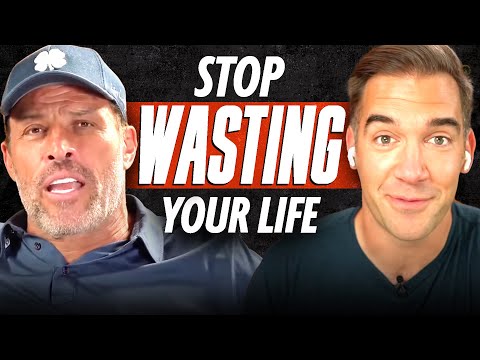
“About your biography is not your destiny, and it doesn't matter what you've been through. What you decide now is what's going to control your life, what you decide each day going forwards inside your life. And I look at them, seeing me, I can read their minds: this big tall white rich guy is going to tell me biography doesn't matter. So I said, you know, let me tell you my story, and I told them the whole story, way more than I'm telling you. And everyone was crying their eyes up. When they're done, I said, look where I am right now, because I wouldn't assemble the story that my past equals my future. The past only equals your future if you live there. If you're using a rear view mirror to guide yourself, you're gonna crash. So what you've been through is horrific, what you've been through is unjust. I'm on your side, but if you hang on to it you have no future and you have no…”Lewis Howes interview, 2021 · 19:53
The lesson
Robbins’s core claim in this chapter is that experience is filtered before it becomes emotion or action. You do not respond to all of reality; you respond to the slice you notice, then to the meaning you attach to it, and then to the action that follows from that interpretation123. That is why two people can face similar facts and live in very different emotional worlds.
The first decision is focus. Robbins says what you notice becomes your lived experience, so attention is never neutral245. If you train yourself to scan only for what is missing or wrong, your mind will always find evidence for stress or inadequacy; if you also notice what is working, what is available, or what can be appreciated, your state changes and so does your range of choices678.
The second decision is meaning. After you focus on something, you immediately decide what it means, and that meaning produces emotion3. Robbins argues that this inner story matters more than the event alone: beliefs and narratives can trap you in old reactions, but they can also be revised when you stop treating past interpretations as fixed truth101112. In his framing, the past has power only when you keep using it as the main lens for the present1312.
The third decision is what to do next. Once focus and meaning are set, behavior tends to follow, so change becomes more likely when you interrupt the pattern early and choose a better state on purpose1814. Robbins points to practical shifts like moving attention to appreciation, breaking blame, and making a new decision before a small reaction becomes a large one815.
The larger aim is not forced positivity but a more useful and truthful way of living. Robbins repeatedly ties better focus and meaning to contribution, service, and caring about something beyond your own mental loops1617. When your story becomes less about defending yourself and more about helping, growing, and adding value, your emotions and actions become stronger and steadier1819.
5 principles from Tony Robbins
Choose your focus deliberately
Your attention selects the reality you emotionally live in. Ask yourself several times a day: am I focused on what is wrong, or on what is useful, working, or worth appreciating right now?
“What's wrong is always available; so is what's right…”
Interrogate the meaning, not just the event
Events do not arrive with built-in emotional consequences; your interpretation shapes them. When you feel overwhelmed, name the meaning you are adding and test whether it is the only possible reading.
Do not let the past become your operating system
History matters, but Robbins argues it becomes destiny only when you keep reliving it and steering by it. Use the past for learning, not as proof that your future is already decided.
“The past only equals your future if you live there.”
Break the pattern early with appreciation
Small negative states are easier to shift before they become your whole mood or identity. When stress starts, redirect attention to something you appreciate to change state and widen your choices.
“You can't be grateful and angry simultaneously.”
Anchor your story in something larger than yourself
Obsessive self-focus shrinks perspective, while service and contribution expand it. Put your energy into helping, building, or serving something beyond your own insecurity.
“Life is not about me; it's about we.”
Moments to watch
In his own words
The quotes behind the lesson, word for word from the transcripts. Numbers match the lesson above.
“There are three decisions we make every moment of our lives.”
“You don't experience life; you experience the part of life you focus on…”
“You don't experience life; you experience the part of life you focus on, right? What's wrong is always available, so is what's right, right? And there are different kinds of focus. And my dad's focus that day was really on what he hadn't done, and I know that 'cause he kept muttering it. That he hadn't taken care of his family, there's no money for Thanksgiving, somebody had to give us charity. And then the second decision you make, about once you focus on something, is what does it mean?”
“…we don't experience life, none of us do; we experience the life we focus on…”
“Whatever we focus on, we experience in life.”
“What's wrong is always available; so is what's right…”
“So one pattern is of focus. Do you tend to focus more on what you have or what's missing? I'm asking your listeners right now and you: What do you tend to focus on, what you have or what's missing? What I have. What do you have? Great. When I ask this in a room, usually about 70% are focused on what's missing. Most achievers are focused on what's missing so they can go out and achieve more, right? Yeah. Nothing wrong with that, but when you stack these patterns together, it's really hard to be happy when you're constantly focused on what's missing. There's a time notes missing, so you go to work, but if you do it all the time, yeah, you can be achieving a ton like some of these billionaires and they're still voting saying, "What's…”
“Second of all, decide you're gonna kill that monster while it's little. You're not gonna wait till it's Godzilla taking the city. You're gonna break the pattern. You start to feel the stress, you see it as thoughts going by, and then you focus on something to appreciate, enjoy or love. Appreciation, love, and joy destroy suffering. You can't be grateful and angry simultaneously. As possible, you can't be worried and fearful and grateful simultaneously. So I tell people gratitude is one of the emotions to cultivate that'll destroy the suffering, and that's what we teach people to do.”
“The story, we all tell ourselves stories about things. Our narrative of our life controls our life more than anything else. And all the story is is a set of beliefs. >> And beliefs are nothing but things we've told ourselves over and over again with so much certainty that now we believe them. Like, for example, for yourself, if I can ask, can you think of any belief you may have had 10, 15 years ago that you back then you would have fought for that belief but today you're almost embarrassed you had that belief? >> Yes. >> Right. Most people can. So the fact that you believe it doesn't mean it's true. It just means you're certain.”
“The past only equals your future if you live there.”
“About your biography is not your destiny, and it doesn't matter what you've been through. What you decide now is what's going to control your life, what you decide each day going forwards inside your life. And I look at them, seeing me, I can read their minds: this big tall white rich guy is going to tell me biography doesn't matter. So I said, you know, let me tell you my story, and I told them the whole story, way more than I'm telling you. And everyone was crying their eyes up. When they're done, I said, look where I am right now, because I wouldn't assemble the story that my past equals my future. The past only equals your future if you live there. If you're using a rear view mirror to guide yourself, you're gonna crash. So what you've been through is horrific, what you've been through is unjust. I'm on your side, but if you hang on to it you have no future and you have no…”
“If you're using a rearview mirror to guide yourself, you're gonna crash.”
“The one power we have is the decision to change anything.”
“So don't get me wrong. I know some people are not a good influence; I'm not denying that. I'm just saying you're more than somebody's influence unless you obsess about it every moment and make them wrong so you can make yourself feel superior morally, psychologically, or spiritually. That's stop the pattern. We've all done it. Catch yourself because if you want joy, happiness, and freedom, and an extraordinary life, it will not come from blame. Never. There's no pride that comes from blame. I don't mean fake pride where you make to feel good; I'm talking about real pride. Pride is something you earn. Like, people tell me, "Oh, I have no self-esteem because my parents used to say this," or, "They'd say that." I'd say, "That's such—I’m not saying it's both—they didn't say that," I said, "That's why you need self-esteem. Self-esteem does not come.”
“Life is not about me; it's about we.”
“So I used to have these giant mission statements: change the world, all these things, and I do all those things. But now, it's like my mission statement is, "How can I help?" You know, and I get calls every day of my life. Somebody's got cancer or tumors or whatever because, you know, I've got so much expertise in they because I've interviewed the best on Earth, 150 of them. Or someone comes to me with a business thing, or it's something, a relationship, and or it's an athlete. And so along with what I do formally and what I do with my businesses, I have all this that's happening.”
“The quality of your life is really comes down to your capacity to add value.”
“Change your strategy, change your story, change your state, and you can pretty much change anything.”
Reflect
- What do you most often focus on in a difficult week: what is missing, what is wrong, or what is still working? How does that focus affect your emotions and decisions?
- Think of one recurring stress in your life. What meaning do you usually attach to it, and what is another meaning that would lead to better action?
- Where are you still using the past as a rearview mirror? What decision could you make now that would loosen its grip on your next step?
Check your understanding
Go deeper
 Tony Robbins on Mindset and Negative Thoughts: Focus Changes Everything2022 · 94 min · full transcript
 Tony Robbins on Parenting and State Management: Change Your Focus2021 · 146 min · full transcript
 Tony Robbins on Self-Esteem and Focus: Find Something Bigger2024 · 88 min · full transcript
 Tony Robbins on Hunger and Growth: Why Pain Fuels Success2024 · 133 min · full transcript
 Tony Robbins on Thinking Big: Change Your State, Story, Strategy2015 · 69 min · full transcript
- What did Tony Robbins say about focus and meaning?
- What did Tony Robbins say about the past and biography not being destiny?
- What does Tony Robbins say about the stories we tell ourselves?
- What did Tony Robbins say about how meaning shapes your life?
- What does Tony Robbins say people should focus on to be happier?