Relationships and Family
Love, blame, values, and contribution begin at home.
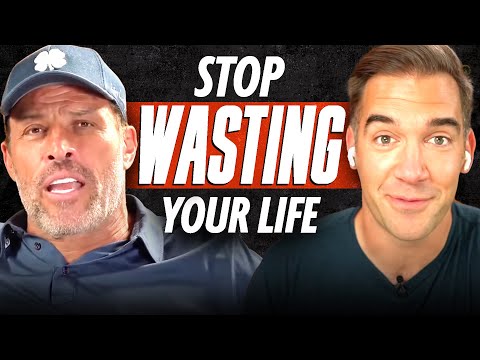
“So don't get me wrong. I know some people are not a good influence; I'm not denying that. I'm just saying you're more than somebody's influence unless you obsess about it every moment and make them wrong so you can make yourself feel superior morally, psychologically, or spiritually. That's stop the pattern. We've all done it. Catch yourself because if you want joy, happiness, and freedom, and an extraordinary life, it will not come from blame. Never. There's no pride that comes from blame. I don't mean fake pride where you make to feel good; I'm talking about real pride. Pride is something you earn. Like, people tell me, "Oh, I have no self-esteem because my parents used to say this," or, "They'd say that." I'd say, "That's such—I’m not saying it's both—they didn't say that," I said, "That's why you need self-esteem. Self-esteem does not come.”Lewis Howes interview, 2021 · 17:42
The lesson
Robbins treats relationships as something shaped less by circumstances than by the state, focus, and meaning each person brings into the room. If you focus on what is missing, what is wrong, or on old injuries, you will feel and act from that frame; if you focus on what is right, what you appreciate, and what you can choose now, you change the emotional tone of the relationship123. That is why he ties love and family life to mental discipline, not just emotion: unmanaged attention feeds conflict, while deliberate focus can interrupt it4.
A core move in Robbins’s view is to stop living through blame or biography. He argues that the past matters only if you keep rehearsing it, and that using old pain as your guide will distort present choices in love, parenting, and family life567. Blame may feel morally satisfying for a moment, but he says it does not produce freedom, joy, or real pride; change starts when you break the pattern and use your power to decide differently now89.
For handling emotional spirals at home, Robbins emphasizes catching the pattern early and shifting state before it grows. His practical method is to notice stressful thoughts, avoid feeding them, and redirect attention toward appreciation, love, or gratitude, because those states interrupt anger and suffering1011. This matters in family life because reactions spread quickly: if you want to help, lead, or care for others, you have to bring a better state yourself1213.
In parenting, Robbins says you cannot control every detail of a child’s future, but you can shape broad values. The values he returns to are love, balance, and contribution: life should not revolve around the isolated self, but around responsibility to others and a sense of giving1415. He also rejects the idea that self-esteem comes mainly from praise; instead, he ties it to doing hard, meaningful things, especially things larger than the self16.
This leads to his broader standard for family life: fulfillment comes less from what people get than from who they become and what they contribute. A relationship or household organized only around personal needs, entitlement, or achievement will be fragile, while one oriented toward shared values and service has more meaning and endurance171819. Even partnership choices fit this frame: on major life issues, alignment matters, because love alone does not erase deep value conflicts20.
5 principles from Tony Robbins
Change focus before you try to change the relationship
Robbins’s view is that people respond not to life in full but to the slice they are attending to. In conflict, ask what you are focusing on, what you are making it mean, and whether that focus is helping you love, understand, or solve anything.
“People don't experience life; they experience the life they focus on.”
Stop using the past as your guide
Past hurt can explain patterns, but it should not run present decisions. In practice, catch when you are replaying old injuries or assigning permanent meaning to them, and choose a response based on what you want to build now.
“The past only equals your future if you live there.”
Break emotional patterns early with appreciation
Robbins recommends interrupting stress before it becomes a full emotional takeover. When you feel irritation, fear, or resentment building at home, shift attention to something you appreciate or love so the state does not harden into conflict.
“Second of all, decide you're gonna kill that monster while it's little. You're not gonna wait till it's Godzilla taking the city. You're gonna break the pattern. You start to feel the stress, you see it as thoughts going by, and then you focus on something to appreciate, enjoy or love. Appreciation, love, and joy destroy suffering. You can't be grateful and angry simultaneously. As possible, you can't be worried and fearful and grateful simultaneously. So I tell people gratitude is one of the emotions to cultivate that'll destroy the suffering, and that's what we teach people to do.”
Teach values, not just comfort
For parenting, the goal is not to remove all difficulty but to shape a value system. Emphasize balance, shared responsibility, and contribution so children do not grow up centered only on what others owe them.
“But what you can shape is their value system, and not every individual value, but the global values that you know, that life is a balance. That, of course, you're gonna go to extremes, but balance is how the body maintains. It's how life gets imbalanced is like, look for that. It's like life is not about me; it's about we, that life is calling to you to give something. Don't ask what your country is asking for you. As you know, a democratic president once said, "What do you do for your country?" We kind of lost that theme, not only in our country but in our parenting. And so I see a lot of kids today that are like, "They're, what is my parent doing for me?" I could never imagine that thought in my life. My whole thing was like, not one of my, "What can I do for my parents?" was my focus. You know, "What can I do?" And all those little patterns lead to a life that is more meaningful and fulfilling.”
Build self-esteem through meaningful contribution
Robbins argues that confidence is earned through difficult action, especially when it serves something beyond the self. In family life, that means giving children and adults chances to help, follow through, and matter to others.
“So it's really self-esteem comes from doing incredibly difficult things, where you know you pushed yourself. It's not virtue signaling. It's not telling people about it. It's what you know inside your soul is true. And the more you do things that are incredibly difficult and especially things that are meaningful—meaning they're not just about yourself—the higher that esteem will be. I think the most important thing for self-esteem is to find something you care about more than yourself because as long as you're in your own head, the nature of the mind is reductionism, right? Good, bad, right, wrong, all those types of things. Of course, life is much more many different hues than that.”
Moments to watch
In his own words
The quotes behind the lesson, word for word from the transcripts. Numbers match the lesson above.
“People don't experience life; they experience the life they focus on.”
“What's wrong is always available; so is what's right…”
“You don't experience life; you experience the part of life you focus on, right? What's wrong is always available, so is what's right, right? And there are different kinds of focus. And my dad's focus that day was really on what he hadn't done, and I know that 'cause he kept muttering it. That he hadn't taken care of his family, there's no money for Thanksgiving, somebody had to give us charity. And then the second decision you make, about once you focus on something, is what does it mean?”
“If you don't use your mind, your mind will use you.”
“The past only equals your future if you live there.”
“If you're using a rearview mirror to guide yourself, you're gonna crash.”
“About your biography is not your destiny, and it doesn't matter what you've been through. What you decide now is what's going to control your life, what you decide each day going forwards inside your life. And I look at them, seeing me, I can read their minds: this big tall white rich guy is going to tell me biography doesn't matter. So I said, you know, let me tell you my story, and I told them the whole story, way more than I'm telling you. And everyone was crying their eyes up. When they're done, I said, look where I am right now, because I wouldn't assemble the story that my past equals my future. The past only equals your future if you live there. If you're using a rear view mirror to guide yourself, you're gonna crash. So what you've been through is horrific, what you've been through is unjust. I'm on your side, but if you hang on to it you have no future and you have no…”
“So don't get me wrong. I know some people are not a good influence; I'm not denying that. I'm just saying you're more than somebody's influence unless you obsess about it every moment and make them wrong so you can make yourself feel superior morally, psychologically, or spiritually. That's stop the pattern. We've all done it. Catch yourself because if you want joy, happiness, and freedom, and an extraordinary life, it will not come from blame. Never. There's no pride that comes from blame. I don't mean fake pride where you make to feel good; I'm talking about real pride. Pride is something you earn. Like, people tell me, "Oh, I have no self-esteem because my parents used to say this," or, "They'd say that." I'd say, "That's such—I’m not saying it's both—they didn't say that," I said, "That's why you need self-esteem. Self-esteem does not come.”
“The one power we have is the decision to change anything.”
“Second of all, decide you're gonna kill that monster while it's little. You're not gonna wait till it's Godzilla taking the city. You're gonna break the pattern. You start to feel the stress, you see it as thoughts going by, and then you focus on something to appreciate, enjoy or love. Appreciation, love, and joy destroy suffering. You can't be grateful and angry simultaneously. As possible, you can't be worried and fearful and grateful simultaneously. So I tell people gratitude is one of the emotions to cultivate that'll destroy the suffering, and that's what we teach people to do.”
“You can't be grateful and angry simultaneously.”
“You can't move people if you're not moved.”
“You can't touch people if you're not touched.”
“Life is not about me; it's about we.”
“But what you can shape is their value system, and not every individual value, but the global values that you know, that life is a balance. That, of course, you're gonna go to extremes, but balance is how the body maintains. It's how life gets imbalanced is like, look for that. It's like life is not about me; it's about we, that life is calling to you to give something. Don't ask what your country is asking for you. As you know, a democratic president once said, "What do you do for your country?" We kind of lost that theme, not only in our country but in our parenting. And so I see a lot of kids today that are like, "They're, what is my parent doing for me?" I could never imagine that thought in my life. My whole thing was like, not one of my, "What can I do for my parents?" was my focus. You know, "What can I do?" And all those little patterns lead to a life that is more meaningful and fulfilling.”
“So it's really self-esteem comes from doing incredibly difficult things, where you know you pushed yourself. It's not virtue signaling. It's not telling people about it. It's what you know inside your soul is true. And the more you do things that are incredibly difficult and especially things that are meaningful—meaning they're not just about yourself—the higher that esteem will be. I think the most important thing for self-esteem is to find something you care about more than yourself because as long as you're in your own head, the nature of the mind is reductionism, right? Good, bad, right, wrong, all those types of things. Of course, life is much more many different hues than that.”
“What you get doesn't make you happy.”
“Who you become makes you really happy…”
“…you gotta find what's gonna fulfill you…”
“You don't have to have all your goals aligned, but on major issues like a child or not, it's got to be aligned or you're not going to sustain that relationship. So whether it's a business or whether I use business because it's easier to modulate in your head, right? >> Or a relationship, it's the critical element there. And then the last part is, is the right team fit in a business. You can relate to this, I'm sure, cuz all those businesses you run, >> you know, you can have somebody's a superstar, but they're the wrong team fit. >> Oh yeah. >> They rub against everybody else. They piss everybody else off.”
Reflect
- In one important relationship, what do you focus on most right now: what is wrong, what is missing, or what you appreciate? How is that focus shaping your behavior?
- What family story or past hurt do you still use to explain your present reactions? What would it look like to stop letting that story guide your next decision?
- If you are raising children or influencing younger people, which three values are you actually reinforcing by your daily behavior: comfort, achievement, blame, balance, contribution, love, or something else?
Check your understanding
Go deeper
 Tony Robbins on Parenting and State Management: Change Your Focus2021 · 146 min · full transcript
 Tony Robbins on Mindset and Negative Thoughts: Focus Changes Everything2022 · 94 min · full transcript
 Tony Robbins on Self-Esteem and Focus: Find Something Bigger2024 · 88 min · full transcript
 Tony Robbins on Fulfillment and Service: Achievement Isn’t Enough2019 · 62 min · full transcript
 Tony Robbins on State Management: How to Rewire Your Mind2024 · 127 min · full transcript