Tony Robbins on Failure & Resilience
Tony Robbins treats failure as meaning made in a weak state, and resilience as the disciplined ability to change focus, regain state, choose a stronger story, and act anyway.
- Failure is not final unless you keep living in it and turning it into identity.
- Resilience starts with state: change your physiology, focus, and emotional pattern before trying to solve everything.
- Pain can become fuel when you choose empowering meaning and decisive action.
- You are not broken; you are conditioned, and conditioning can be changed.
- Lasting strength grows through contribution, appreciation, and leadership over your own mind.
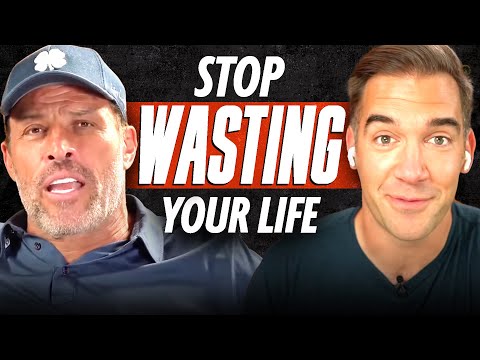
Failure becomes dangerous when you turn it into identity
Robbins’s basic move is to separate what happened from what you decide it means. He argues that people do not simply react to events; they react to what they focus on and the story they build around those events. That is why a setback becomes psychologically destructive when it gets folded into a personal narrative about who you are rather than treated as something that happened.12
This is also why he resists the idea that a hard past has to define a person. For him, the past gains power over your future only when you keep revisiting it as your reference point. Resilience begins when you stop using old pain as the lens for every new decision.34
He pushes this further by rejecting the premise that people are fundamentally damaged. His view is that many people feel broken because they have rehearsed limiting patterns for so long that those patterns feel like identity. But patterns can be interrupted, and identity can be rebuilt through new choices.678
“The past only equals your future if you live there.”Lewis Howes interview, 2021 · full transcript →
Resilience starts with state, not willpower alone
Robbins thinks most people try to solve failure from the wrong place. They search for a strategy while still flooded with fear, shame, anger, or exhaustion, and then wonder why they cannot think clearly. His answer is simple: change your state first, because your state shapes what you see, what you believe, and what you do next.910
That is why he emphasizes physical interruption when you feel stuck. He teaches that the fastest route into a different psychology is often through the body: movement, intensity, breath, cold, exertion. The point is not denial; it is to stop letting a collapsed physiology produce collapsed thinking.12
He also gives a practical rule for emotional recovery: feel the emotion, but do not build a home in it. Short-lived emotional honesty is healthy; recycling the feeling into endless suffering is not. Resilience means learning to reset before a bad moment becomes a bad day or a bad identity.14
Your focus and meaning decide whether pain weakens you or strengthens you
Robbins often frames life through three ongoing decisions: what to focus on, what meaning to give an event, and what action to take. In his view, failure is not just an external outcome; it is also a consequence of unmanaged focus and disempowering meaning. If you focus only on loss, you will experience life through loss.15161
That is why appreciation and gratitude matter so much in his approach to resilience. He does not present them as soft sentiments but as tools that break suffering patterns. When attention is dominated by what is missing, people may stay driven, but they become emotionally brittle; appreciation restores perspective and energy.1719
This also explains his idea that life can be interpreted as happening for you rather than to you. He is not saying pain is pleasant; he is saying that meaning is a choice, and empowering meaning creates better action. Resilient people are not people with no pain; they are people who refuse to let pain be the final interpretation.2015
Courage is acting while afraid, and hunger can turn hardship into growth
Robbins does not define resilience as comfort or certainty. In fact, he explicitly says there was never external certainty, which means waiting to feel safe before acting is a losing strategy. Resilience is the ability to move with fear instead of using fear as proof that you should stop.2122
He links this to hunger. In his account, hardship can create a deep drive to grow, contribute, and achieve, but only if that pain is metabolized into purpose instead of bitterness. Difficulty can produce weakness or strength depending on the meaning and discipline brought to it.232425
This is why he places such importance on decisiveness. Fear produces hesitation, and hesitation drains momentum; by contrast, commitment creates energy. Resilient people do not always know the perfect path, but they stop negotiating endlessly with themselves and take the next meaningful step.2627

“Courage does not mean you're not afraid. It means you're afraid, but you do it anyway.”Lewis Howes interview, 2024 · full transcript →
The strongest form of resilience leads beyond survival into service
For Robbins, bouncing back is not the end goal. He warns that outward success without inner fulfillment is its own kind of failure, which means resilience has to include not just performance but meaning, connection, and contribution. Real recovery is not merely getting back on your feet; it is becoming more useful, more alive, and less self-absorbed.2829
That is one reason he ties resilience to leadership. The quality of life rises with the ability to influence yourself first: your focus, emotions, standards, and actions. When people learn to lead themselves through pain, they are then able to steady and serve others rather than transmit their chaos.303132
His practical ideal is a person who can stop blame, reclaim choice, build self-respect through action, and turn hardship into something that benefits other people. In that frame, resilience is not just endurance. It is transformed pain put to work.733
Robbins on failure & resilience, in his own words
“The past only equals your future if you live there.”
“Courage does not mean you're not afraid. It means you're afraid, but you do it anyway.”
“You don't need to be fixed.”
Where to watch
 Tony Robbins on Mindset and Certainty: State Before Strategy2024 · 67 min · full transcriptBest single overview of his resilience model: state first, then story, then strategy, with courage in uncertainty.
 Tony Robbins on State Management: How to End Suffering Fast98 min · full transcriptMost practical for recovering fast from emotional setbacks through physiology, appreciation, and emotional reset.
 Tony Robbins on Parenting and State Management: Change Your Focus2021 · 146 min · full transcriptBest for his view that biography is not destiny and that the past only rules you if you keep living there.
 Tony Robbins on Hunger and Growth: Why Pain Fuels Success2024 · 133 min · full transcriptBest on turning pain into fuel through hunger, focus, meaning, and action.
 Tony Robbins on State Management: How to Rewire Your Mind2024 · 127 min · full transcriptStrong on how focus, shame, and conditioning shape experience, and why people do not need to be fixed.
Questions people ask
- How does Tony Robbins say you can change your emotional state?
- What did Tony Robbins say about the past and biography not being destiny?
- What does Tony Robbins say about the stories we tell ourselves?
- What does Tony Robbins say people should do when they feel stuck?
- Why does Tony Robbins say blame ruins happiness?
- What did Tony Robbins say about gratitude and suffering?
Sources
Every quote above, word for word from the transcripts. Numbers match the text.
“People don't experience life; they experience the life they focus on.”
“Our narrative of our life controls our life more than anything else.”
“The past only equals your future if you live there.”
“If you're using a rearview mirror to guide yourself, you're gonna crash.”
“You don't need to be fixed.”
“The one power we have is the decision to change anything.”
“The story, we all tell ourselves stories about things. Our narrative of our life controls our life more than anything else. And all the story is is a set of beliefs. >> And beliefs are nothing but things we've told ourselves over and over again with so much certainty that now we believe them. Like, for example, for yourself, if I can ask, can you think of any belief you may have had 10, 15 years ago that you back then you would have fought for that belief but today you're almost embarrassed you had that belief? >> Yes. >> Right. Most people can. So the fact that you believe it doesn't mean it's true. It just means you're certain.”
“…the most important thing to do is change your state first…”
“80% of success in life and in business is psychology…”
“If you don't use your mind, your mind will use you.”
“Second of all, decide you're gonna kill that monster while it's little. You're not gonna wait till it's Godzilla taking the city. You're gonna break the pattern. You start to feel the stress, you see it as thoughts going by, and then you focus on something to appreciate, enjoy or love. Appreciation, love, and joy destroy suffering. You can't be grateful and angry simultaneously. As possible, you can't be worried and fearful and grateful simultaneously. So I tell people gratitude is one of the emotions to cultivate that'll destroy the suffering, and that's what we teach people to do.”
“There are three decisions we make every moment of our lives.”
“Whatever we focus on, we experience in life.”
“You can't be grateful and angry simultaneously.”
“So one pattern is of focus. Do you tend to focus more on what you have or what's missing? I'm asking your listeners right now and you: What do you tend to focus on, what you have or what's missing? What I have. What do you have? Great. When I ask this in a room, usually about 70% are focused on what's missing. Most achievers are focused on what's missing so they can go out and achieve more, right? Yeah. Nothing wrong with that, but when you stack these patterns together, it's really hard to be happy when you're constantly focused on what's missing. There's a time notes missing, so you go to work, but if you do it all the time, yeah, you can be achieving a ton like some of these billionaires and they're still voting saying, "What's…”
“…life is always happening for us, not to us…”
“There was never any external certainty.”
“Courage does not mean you're not afraid. It means you're afraid, but you do it anyway.”
“…the number one ingredient is hunger…”
“Good times create weak people, weak people create bad times, bad times create strong people, strong people create great times.”
“…if you're real and raw and you truly serve, popularity doesn't matter…”
“Negotiation with yourself makes you weak.”
“They got to make some decisions, right? I mean, and what stops people from making decisions, you and I, is fear. People are afraid of making the wrong decision. Fear of not being perfect. Fear of the consequences of their decisions. But let's chunk it up a little bit. What do people really want? We started out, we were all here created by something. I, I like God is the term. Some people like the universe. I'm not here to argue with that whatsoever. We have to agree that something created us, and that something gave us choices, and choices are how we create. We co-create basically our lives. It's not your…”
“…success without fulfillment to me is the ultimate failure in life…”
“Life is not about me; it's about we.”
“The quality of your life I do really believe comes down to your level of leadership.”
“You can't move people if you're not moved.”
“You can't touch people if you're not touched.”
“So don't get me wrong. I know some people are not a good influence; I'm not denying that. I'm just saying you're more than somebody's influence unless you obsess about it every moment and make them wrong so you can make yourself feel superior morally, psychologically, or spiritually. That's stop the pattern. We've all done it. Catch yourself because if you want joy, happiness, and freedom, and an extraordinary life, it will not come from blame. Never. There's no pride that comes from blame. I don't mean fake pride where you make to feel good; I'm talking about real pride. Pride is something you earn. Like, people tell me, "Oh, I have no self-esteem because my parents used to say this," or, "They'd say that." I'd say, "That's such—I’m not saying it's both—they didn't say that," I said, "That's why you need self-esteem. Self-esteem does not come.”
How this guide was made: drafted with AI from the full transcripts of the recordings cited, then checked: every quotation must match a transcript word for word and be the speaker's own words, and an independent review gates accuracy. Methodology and corrections.


