Taste and Intuition
Great products come from judgment formed by art, experience, technology, and inner feel.
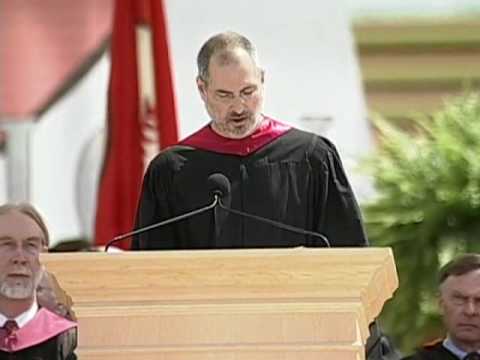
“I decided to take a calligraphy class to learn how to do this. I learned about serif and Sans serif type faces, about varying the amount of space between different letter combinations, about what makes great typography great. It was beautiful, historical, artistically subtle in a way that science can't capture, and I found it fascinating. None of this had even a hope of any practical application in my life, but 10 years later, when we were designing the first Macintosh computer, it all came back to me and we designed it all into the Mac.”Stanford University commencement address, 2005 · 11:03
The lesson
Jobs treated taste as something you build, not something you fake. For him, judgment came from collecting unusual experiences and then noticing the connections later. That is why he valued going off the well-worn path and trusting that seemingly impractical interests could matter in the future123.
His calligraphy story shows how intuition becomes product judgment. He followed curiosity into something with no obvious practical use, then later drew on that artistic training when shaping the Macintosh. The point is not that every side interest will pay off directly, but that broad experience sharpens your eye for what is worth making12.
Jobs also refused to separate technology from the humanities. He argued that programming teaches people how to think, and he described computer science as a liberal art rather than a narrow technical specialty. That view helps explain why he cared so much about tools that expand human expression: the machine matters, but mainly because it enables people to think, create, and communicate better45.
From there, taste becomes the ability to recognize what really matters in a product. Jobs said design is how something works, not decoration, and he admired people like Paul Rand who solved hard problems with work that was both emotional and deeply intellectual. Good judgment means seeing past surface options to the right solution, where form, function, and feeling reinforce each other67.
At Pixar, the same philosophy appeared in another form: technology had to serve story. Computers were powerful tools, but tools were not the point; without story and characters, the technology could not rescue the work. Jobs's deeper idea is that intuition and taste are not anti-technical—they tell you what the technology is for8910.
5 principles from Steve Jobs
Trust curiosity before you can justify it
Jobs followed interests that looked impractical at the time, then used them later in consequential work. Give some time to subjects that sharpen your eye or deepen your understanding, even before you can prove their payoff.
“I decided to take a calligraphy class to learn how to do this. I learned about serif and Sans serif type faces, about varying the amount of space between different letter combinations, about what makes great typography great. It was beautiful, historical, artistically subtle in a way that science can't capture, and I found it fascinating. None of this had even a hope of any practical application in my life, but 10 years later, when we were designing the first Macintosh computer, it all came back to me and we designed it all into the Mac.”
Build taste through a wider range of experiences
Jobs believed innovation comes from making connections others miss, and that requires a different set of experiences. If your inputs are identical to everyone else's, your outputs will be too.
“…you have to not have the same bag of experiences as everyone else does, or else you're going to make the same connections and then you won't be innovative…”
Treat computer science as a way of thinking
For Jobs, programming was valuable not only as a job skill but as mental training. Learn technical tools deeply enough that they change how you reason and what you can express.
“I think everybody in this country should learn how to program a computer.”
Judge design by whether it solves the real problem
Jobs valued work that joined emotion and intellect in a clear solution. When reviewing your own work, ask whether you are generating options or actually resolving the underlying problem.
“His work for me is very emotional, and yet when you study it, it's very intellectual for me.”
Make technology serve human expression
Jobs did not treat tools as the end goal. Whether in computers or filmmaking, the test was whether the technology helped people tell stories, think better, or create something meaningful.
“We look at it as these are just great, new, expensive pencils.”
In his own words
The quotes behind the lesson, word for word from the transcripts. Numbers match the lesson above.
“I decided to take a calligraphy class to learn how to do this. I learned about serif and Sans serif type faces, about varying the amount of space between different letter combinations, about what makes great typography great. It was beautiful, historical, artistically subtle in a way that science can't capture, and I found it fascinating. None of this had even a hope of any practical application in my life, but 10 years later, when we were designing the first Macintosh computer, it all came back to me and we designed it all into the Mac.”
“Of course it was impossible to connect the dots looking forward when I was in college, but it was very, very clear looking backwards 10 years later. Again, you can't connect the dots looking forward; you can only connect them looking backwards. So you have to trust that the dots will somehow connect in your future. You have to trust in something: your gut, Destiny, Life, Karma, whatever. Because believing that the dots will connect down the road will give you the confidence to follow your heart even when it leads you off the well-worn path. And that will make all the difference.”
“…you have to not have the same bag of experiences as everyone else does, or else you're going to make the same connections and then you won't be innovative…”
“I think everybody in this country should learn how to program a computer.”
“I view computer science as a liberal art.”
“We think design is how it works. And we labored a lot on this, because our pro customers want accessibility. They know there's a lot of great technology inside, but they want access to that technology instantly, to add memory, to add cards, to add drives. And so we think we've got the most incredible access story in the business. And you know what it's called? Let's get the video up here. It's called a door. We just open this thing here, and there it is.”
“His work for me is very emotional, and yet when you study it, it's very intellectual for me.”
“We look at it as these are just great, new, expensive pencils.”
“You got no story, you got no film.”
“…no amount of technology can turn a bad story into a good story…”
Reflect
- What interests or side pursuits in your life seem impractical now but may be shaping your taste or judgment?
- Where in your work are you focusing on tools, features, or process when the real issue is story, meaning, or human use?
- How could you broaden your 'bag of experiences' this year so your future decisions are not limited by a narrow path?
Check your understanding
Go deeper
 Steve Jobs on Connecting the Dots: Three Stories2005 · 22 min · full transcript
 Steve Jobs on Computer Science as a Liberal Art1984 · 20 min · full transcript
 Steve Jobs on Innovation and Creativity: Change the World1982 · 7 min · full transcript
 Steve Jobs on Apple’s Comeback: The making of a legend2011 · 16 min · full transcript
 Steve Jobs on Paul Rand: A Designer Who Solves Problems1993 · 8 min · full transcript
 Steve Jobs on Pixar and Storytelling: Technology in Service of Art1996 · 23 min · full transcript
 Steve Jobs on Pixar: Building a Studio1996 · 23 min · full transcript