Brand and Trust
Marketing is values, but the brand is earned through the customer’s experience.

The lesson
Jobs treats marketing as a question of values, not a contest of feature lists. In his view, people will not remember many details in a noisy market, so a company has to be unusually clear about what it stands for, and Apple’s message should not be built around specs comparisons or argument-by-comparison with rivals123. That is why the brand campaign mattered to him: it was meant to say who Apple was, who it served, and why that still mattered45.
But clear values are only the beginning. Jobs also says a strong brand needs continuing care, because even a famous brand can lose relevance if it is neglected3. For Apple, the core idea was not broad corporate self-praise; it was a belief about the kind of people the company exists for and the kind of work its tools should enable657.
Still, Jobs does not treat branding as something advertising can manufacture on its own. He argues that customers form their judgment of quality from direct experience, which means trust has to be earned in the product and the service, not just claimed in campaigns89. That is why he draws hard lines around quality and refuses to trade identity away for cheaper, weaker products101112.
This same logic shows up in how Apple presents products. Jobs focuses on the moment a customer opens the box and uses the product, asking what should actually be there rather than covering it with redundant labels and clutter1314. The brand is strengthened when the product feels considered and complete, because the experience confirms the values the marketing promised1511.
Retail extends that promise into the ownership experience. Jobs says selling the product is not enough; the store has to help people see the whole line, understand solutions, get support, and learn from knowledgeable staff161718. Apple Stores were designed to provide service while also being real businesses, and in Jobs’s view that combination of product, help, and ownership experience is how trust becomes durable1920219.
5 principles from Steve Jobs
Lead with values, not feature lists
If people will only remember a little, make sure they remember what you stand for. When you present your work, define the belief or purpose behind it before you explain the mechanics.
“To me, marketing is about values.”
Treat brand as a promise that needs upkeep
A strong name is not permanent; it stays strong only if you keep investing in clarity and relevance. Revisit whether your message still tells people who you are and why you matter.
“To me, marketing is about values. This is a very complicated world. It's a very noisy world, and we're not gonna get a chance to get people to remember much about us. No company is. And so we have to be really clear on what we want them to know about us. Now Apple, fortunately, is one of the half a dozen best brands in the whole world. Right up there with Nike, Disney, Coke, Sony. It is one of the greats of the greats, not just in this country, but all around the globe. And... But but but even a great brand needs investment and caring if it's gonna retain its relevance and vitality.”
Earn trust through the actual experience
Customers decide whether to trust you through what they use and what happens after they buy. Improve product quality, support, and service first, because those are what make the brand believable.
“…customers don't form their opinions on quality from marketing…”
Refuse compromises that break your identity
Not every sale is worth taking if it requires lowering standards below what you can stand behind. Set clear thresholds for quality so growth does not come from shipping things you would not proudly recommend.
“We just can't ship junk.”
Design for ownership, not just purchase
Think beyond the sale to setup, learning, support, and daily use. Organize touchpoints so customers can understand the product, try it, solve problems, and feel cared for after buying.
“We decided that selling our products was not enough.”
In his own words
The quotes behind the lesson, word for word from the transcripts. Numbers match the lesson above.
“To me, marketing is about values.”
“The way to do that is not to talk about speeds and feeds.”
“To me, marketing is about values. This is a very complicated world. It's a very noisy world, and we're not gonna get a chance to get people to remember much about us. No company is. And so we have to be really clear on what we want them to know about us. Now Apple, fortunately, is one of the half a dozen best brands in the whole world. Right up there with Nike, Disney, Coke, Sony. It is one of the greats of the greats, not just in this country, but all around the globe. And... But but but even a great brand needs investment and caring if it's gonna retain its relevance and vitality.”
“…the theme of the campaign is is think different.”
“Apple is for people who think differently.”
“Apple at the core, its core value is that we believe that people with passion can change the world for the better.”
“You just can't ignore them. Because they change things.”
“…customers don't form their opinions on quality from marketing…”
“…a brand is a simple thing, which is trust…”
“Our goal is to make the best personal computers in the world…”
“We just can't ship junk.”
“…there are thresholds that we can't cross because of who we are…”
“It's just that everybody knows we're using Intel processors, and so I think putting a lot of stickers on the box is just redundant.”
“We put ourselves in the customer's shoes and say, what do we want stuck on our product when we take it out of the box?”
“We like our own stickers better.”
“So, the first 25% shows the entire line of products.”
“The central half of the shop, literally half of the shop, is dedicated to solutions…”
“We decided that selling our products was not enough.”
“Every single one of our stores makes money.”
“…we wanted to provide great service to our customers…”
“…the buying experience and the ownership experience of owning a Mac is maybe the best of any product I know…”
Reflect
- What does your team want people to know about you in one sentence, apart from features or price?
- Where does your current customer experience break the promise your branding makes?
- What quality threshold should you refuse to cross, even if crossing it might increase volume or lower cost?
Check your understanding
Go deeper
 Steve Jobs on Marketing: Think Different1997 · 7 min · full transcript
 Steve Jobs on Think Different: Apple’s brand values1997 · 39 min · full transcript
 Steve Jobs on Apple Store Design: The First 25%2001 · 4 min · full transcript
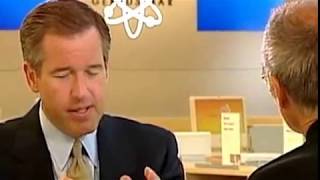 Steve Jobs on Apple Stores: The ultimate use of glass2006 · 10 min · full transcript
 Steve Jobs on Apple Retail Strategy: The Fifth Avenue Store2006 · 8 min · full transcript
 Steve Jobs on We Don't Ship Junk: Macs, Intel, and the iMac2007 · 4 min · full transcript
 Steve Jobs on Quality: Re-engineering the Basics1990 · 19 min · full transcript
 Steve Jobs on Quality: We Just Can't Ship Junk1995 · 2 min · full transcript