Steve Jobs on Apple Stores: The ultimate use of glass

What Jobs talks about
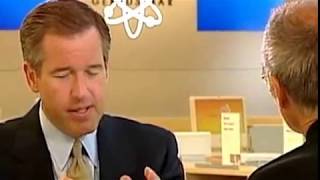
In this NBC interview at the Fifth Avenue Apple Store opening, Jobs describes Apple Stores as more than places to buy products. He says they are designed to give customers an amazing experience, get help from Mac experts, and learn how to use new digital tools.
He also explains Apple’s retail strategy: use the stores to build trust, support customers, and help Windows users switch to Mac. He points to the store’s glass-and-plaza design as the best store Apple has ever made.
Jobs closes by stressing that Apple’s work is forward-looking. He says he thinks less about legacy than about the next great product and the talented team building it.
Brian Williams interviews Jobs throughout.
In his words
“A brand is a simple thing, which is trust”
“We focus on the basics like that.”
“This is the best store we've ever had”
“This is the ultimate use of glass.”
“Our focus is always on the future”
Key points
- Apple Stores are about service, not just sales.
- The stores help customers learn, solve problems, and switch from Windows to Mac.
- Innovation makes some services unnecessary, but Apple uses stores to teach new things.
- A brand is trust built through great products and great customer experiences.
- The Fifth Avenue store is, in Jobs’s view, Apple’s highest achievement in retail design.
- Jobs keeps his focus on the future rather than on personal legacy.
Full transcript
What is this? This is the top of what? What is represented by this? You know, we opened our first retail store in Tok Apple exactly 5 years ago today. And that was in Cali 1 in California and 1 in Virginia, if I'm not mistaken. And we are very sure that we can provide an amazing experience of buying for our customers. And... So we don't just sell computers, but we have facilities in these stores, like a bar where there is a Mac expert to help you solve problems. Even if you have problems with products other than ours. And the formula is really successful. And we now have 147 stores, including one here in Manhattan.
And what is represented by this is actually a strategy that states we will not only sell products, we will help our customers and we will help customers using Windows, which can be said to be a lower-end product, to switch to Mac. And we will show them how to do it. And it works. And it works very well. So we can open the right store here in Viva Venue, a fairly large store, and know that the store will be supported by customers. And half of the computers we sell in our store now are actually for people who have never had a Mac before. They are Windows customers who switch to Mac. Almost 50%. So this really shows that some of these ideas are successful. And now we can apply it in a larger way here, in the heart of the United States.
You realize that you are taking a risk with services that are outdated. We don't do that anymore in the United States. We have stopped providing services. You think people are ready to see services revived. Yes, you know you don't need services if you don't innovate. If you do the same thing as you did five years ago, maybe you don't need it. A lot of services. And a lot of our customers don't innovate that much. But we do. And we are happy to present new things to people where you can really place your entire digital life on your computer. You know you can make a movie on your computer. You can make a blog and podcast on your computer. A lot of people don't know what a blog or podcast is. So they can come to the Apple Store and find out about all this fun and learn how to do it themselves if they want to.
They can learn how to have a video conference with their children or grandchildren. Things like that. So, as technology continues to evolve and allows us to do more things, we want to bring in our customers. Not just letting them use things that could have been done five years ago, but also things that can be found afterwards. You know, the negative side of innovation is that when you buy an iPod, you have to get the latest iPod. And is there any truth to that? Yes, there is. You know, we keep innovating and making better things. And if you always want the latest and best, you have to buy an iPod at least once a year. But a lot of our customers buy one every two years, or they buy it and then pass it on to their children.
And yes, we have lowered it so that the price is not too expensive. You know, the point where you will be satisfied. How many lives do we have to live on our computers? Well, it depends on what you want to do. What's interesting is that this technology that used to be obsolete, maybe five or six years ago, is now really developing again. Young people, especially, do amazing things with it. Has your technology ever combined and returned to what we have now? I mean, if the iPod receives a direct audio signal, we have to call it a radio. And if your iPod receives a direct TV signal, we have to call it a TV. Will everything return to one technology box?
There are a lot of technologies looking for customers. I mean, a lot of companies do something because it's technically possible. But in the end, no one cares. No one wants to buy it. So we see a lot of things like that. Technology looking for customers. And I think the hard part is finding out what can be done, but also what people really want to do. So the example we found on the iPod is that most of our customers don't care about having a radio in their iPod. In fact, the reason they buy iPods is because they don't want DJs at the radio station to determine the music they listen to. They want to determine it themselves. They are the ones who arrange their turnbooks. And that's why they buy iPods. So we have a radio feature that can be installed on your iPod, but most customers don't buy it because they want their turnbooks.
So it's much easier to create technology that people don't want than to create technology that they really want. Do you put pressure on the brand name? A friend of mine said today, in today's society, we have underestimated a lot of things. Apple is elegant. Is that really what is considered as elegance in the simplicity, beauty, and design in this country? Is that a tremendous pressure for you to keep an eye on the brand every day? You know me. People talk a lot about brands. For me, a brand is a simple thing, which is trust. Your customers trust you. And a brand is like a bank account. You can withdraw money, and you can transfer it.
So if a customer gets a great experience, they buy an iPod and like it. That's a transfer to our brand account in their bank account. What if they buy something from us and get a bad experience? So if we have a good brand, that means people trust us to make a great product, give them an amazing experience, and take care of them if there's a problem. And that's what we try to do. We focus on the basics like that. We don't spend a lot of time talking about brands. We spend a lot of time talking about how to make the best product in the world. How do we make the best shopping experience in the world? If there's a problem, how do we fix the product in 24 hours? You know, a week.
How do we take care of our customers? And if we do that, our customers will get a great experience with our product, and they will trust our brand. And we will own the brand. I think people who worry about their brands all day, and worry about their products, probably won't get what they want. How do you see all of this? Clearly with pride, but is this your Model T? Is this your outer space program? Yes. You know, we've learned a lot. We have 147 stores now. Most of them are in the US, but there are also some abroad. And we've learned a lot about what our customers like and what they don't. And this is the best store we've ever had. And in my opinion, this is the highest achievement that we can do.
And we want to express that as well. Like that dome. This is the ultimate use of glass. You know, there's almost no metal supporting it. This is a glass strip that supports glass. And some of these glasses, you know, glass as high as 32 feet, which was impossible to make two years ago. So, this is really ultimate. And we are very lucky because the biggest real estate developer in New York is a man named Harry McClough. And he bought GM's building a few years ago at an expensive price. He called us and said, I want you to be in my building. And we were considering opening a store in Finland. We said, of course, we're in. What do you think? He said, yes, there's a plaza in front of GM's building and there are a few stores below that plaza. Why don't you just stay there?
We said, below the ground? Are you crazy? But then we called him back the next day and said, wait, we have a crazy idea. If we can design that plaza, make it really good, and we can put a door in our store right in the middle of the plaza to go down to the store, maybe we'll be interested. He said, what do you think? We said, glass as high as three feet. And he really liked the idea. And we took care of the permit to the government of the city for a few years. And then, here we are. You really don't like introspection. I know that's about you. But I'm going to ask you to do a brief introspection about your position in the family of American thinkers and inventors. When you see a mosque in public, when you see a click, a pull, a logo, a garbage dump, all the things you've done that are part of our daily lives where you put yourself.
How do you look at yourself and your achievements? You know, I don't think like that. Great. Yes, you know. I'm a closed person. And when I think about the most valuable things in my life, I think about my family. And when we talk about our work, my colleagues and myself. When we finish something that we are proud of, we want to move on to the next thing. So, in my opinion, if you do something and the results are good enough, you have to continue doing other amazing things. What's next? So, even though you should be appreciated for saying that about your family in the middle of a society that doesn't always appreciate it, the fact that you have given us a chance to live right now is not the most important part of your life.
Yes, that's for other people to judge. I'm very lucky to be able to work with a group of very talented people. And we keep moving forward. We have some great ideas for our products. We will make it next year and next year, and we are trying hard for that. So, I think our focus is always on the future.
Transcribed from the audio with OpenAI Whisper. Timestamps link to the video above. Errors are possible.