Sam Altman on Human Values
Sam Altman’s view is that AI should reflect broadly shared human values, preserve user freedom where possible, and keep people firmly in control as systems grow more powerful.
- AI should serve people, not replace human judgment or concentrate power.
- He wants models to reflect a broad collective moral view, not his personal beliefs or a small elite’s preferences.
- Adult users should have wide latitude, but hard limits are justified for serious harms and vulnerable cases.
- Human values in AI are not solved once; they require iterative deployment, feedback, and adjustment.
- The deepest principle is human control: people should remain in charge of the future even as AI becomes more capable.
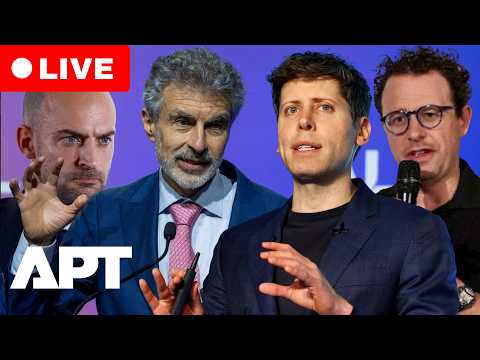
“AI should give people more power over their own lives, more freedom to live lives the way they want.”UN Security Council meeting, 2024 · 14:51
Human values start with a simple goal: AI should help people live the lives they choose
Altman’s baseline principle is that AI exists for human benefit, not as an end in itself. He frames the technology as a tool that should expand people’s freedom and power over their own lives rather than automate decisions away from them or simply accelerate machine processes for their own sake123.
That is why he talks less about AI as an independent moral agent and more about AI as infrastructure society must shape. He rejects mystical or spiritual interpretations of these systems and treats them as powerful tools whose design choices have social consequences5.
He wants AI to reflect a broad collective morality, not one person’s worldview
When Altman is asked whose morals AI should follow, his answer is not that the system should mirror his own values. He says the aim is to draw from the collective record of humanity and reflect the broader moral preferences of users as a whole, even when those preferences differ from his own67.
This leads him toward a more democratic picture of value-setting. He is skeptical of having a small group decide the rules for everyone and argues that AI can create a new way to learn what large numbers of people actually want from guardrails and behavior8.
That does not mean a perfect average or a final fixed answer. He expects the collective moral view to evolve over time, which means the behavior of AI systems should also remain revisable rather than frozen around one ideology or one era’s consensus7.
Freedom matters, but not without boundaries
Altman repeatedly argues that adult users should be treated like adults. His preference is for strong privacy, strong individual freedom, and wide room for people to use the tool as they wish within broad limits9.
At the same time, he does not think unlimited permissiveness is responsible. His comments point to a framework where systems should allow substantial user control while still blocking requests that clearly enable severe harm, and where edge cases often become harder after listening to real users explain what gets lost when a ban is too blunt9.
That balance also explains his interest in making models more steerable. He wants people to be able to shape how models behave for their purposes, while still keeping a guardrail structure in place instead of forcing users into a single rigid interaction style11.
Values in AI are shaped through feedback, not solved in advance
Altman’s practical view of alignment is that small amounts of human feedback can significantly change model behavior. He points to reinforcement learning from human feedback as a key mechanism for moving a model closer to what people actually want it to do1213.
That helps explain why he favors iterative deployment. Instead of assuming one team can define correct behavior in advance, he supports releasing systems, learning from use, and improving them as society discovers failure modes and tradeoffs in the real world14.
He also stresses how high the stakes are in seemingly minor product decisions. Because hundreds of millions of people interact with these systems, even small tweaks in tone or refusal behavior can scale into large cultural effects, which is why he treats ongoing correction as essential rather than optional15.
The hardest value problem is keeping humans in control as AI gets smarter
For Altman, the deepest human-values question is not just what an AI says in one conversation. It is whether people remain the ones steering the future as systems become more capable and more autonomous162.
He is explicit that current alignment methods are not enough for a truly super-powerful system. That is why he combines optimism about AI’s benefits with repeated warnings that this period requires unusual care, restraint, and the willingness to slow down rather than let competitive pressure dictate unsafe choices1819.
This concern also connects to power. He worries not only about technical loss of control, but about social loss of control if too few actors determine how advanced AI behaves for everyone else. His answer is a mix of safety, public input, accountability, and governance that keeps people rather than institutions or machines at the center1201621.
Altman on human values, in his own words
“AI should give people more power over their own lives, more freedom to live lives the way they want.”
“…we're really training this to be... the collective of all of humanity.”
“There's a lot. Look, I don't sleep that well at night. There's a lot of stuff that I feel a lot of weight on, but probably nothing more than the fact that every day hundreds of millions of people talk to our model. And I don't actually worry about us getting the big moral decisions wrong. Maybe we will get those wrong too. But what I worry, what I lose much sleep over, is the very small decisions we make about a way a model may behave... slightly differently, but it's talking to hundreds of millions of people. So then that impact is big.”
Where to watch
 Sam Altman on AI Morality: Privacy, Power, and Suicide2024 · 57 min · full transcriptBest for Altman’s most direct discussion of morality, privacy, user freedom, and who should decide AI’s guardrails.
 Sam Altman on AI Risks and Governance: Human Control First2024 · 159 min · full transcriptBest concise statement of his political philosophy: AI should empower people, avoid concentrated power, and preserve human control.
 Sam Altman on GPT-4 and AI Safety: Usability, Alignment, and AGI2023 · 144 min · full transcriptBest for understanding how alignment works in practice through RLHF and why usability and values are tightly linked.
 Sam Altman on AI Safety: Staying Human While Scaling Superintelligence2025 · 49 min · full transcriptBest for his long-term view that the core challenge is keeping people in charge as intelligence scales.
 Sam Altman on Global AI Governance: Trust, Safety, and AGI2024 · 61 min · full transcriptBest for how trust, reliability, and guardrails must evolve as AI becomes useful in more sensitive settings.
Questions people ask
- What did Sam Altman say about jailbreaking and model control?
- What did Sam Altman say about privacy and government access to AI chats?
- What did Sam Altman say about universal basic income and new jobs after AI?
- What does Sam Altman think ChatGPT should reflect morally?
- What did Sam Altman say about using public opinion to set AI safety rules?
- What does Sam Altman worry about most at OpenAI?
Sources
Every quote above, word for word from the transcripts. Numbers match the text.
“AI should be built for people, not simply to turn the crank of the machines faster for their own sake.”
“AI should give people more power over their own lives, more freedom to live lives the way they want.”
“…this will be the most powerful tool we have yet created to help us go go do that…”
“There's nothing to me at all that feels divine about it or spiritual in any way.”
“…we're really training this to be... the collective of all of humanity.”
“I think our. The world, like our user base, is going to approach the collective world as a whole. And I think... what we should do is try to reflect... the moral. I don't want to say average, but the collective moral view of that user base. I don't There's plenty of things that ChatGPT allows that I personally would disagree with. the, but, I don't, like obviously I don't wake up and say, I'm going to impute my exact moral view and decide that this is okay, and that is not okay, and this is a better view than this one, what I think ChatGPT should do is reflect that like weighted average or whatever of humanity's moral view, which will evolve over time. And we are here to serve our users.”
“Of course, but I'm much more interested in what our hundreds of millions of users want as a whole. I think a lot of the room has historically been decided in small elite summits. One of the cool new things about AI is our AI can talk to everybody on Earth, and we can learn the collective value preference of what everybody wants, rather than have a bunch of people who are, like, blessed by society to sit in a room and make these decisions, I think that's very cool. (Applause) And I think you will see us do more in that direction. And when we have gotten things wrong, because the elites in the room had a different opinion about what people wanted for the guardrails on image-gen than what people actually wanted, and we couldn't point to real-world harm, so we made that change. I'm proud of that.”
“And we have found a lot of cases where there was an example of something that seems, that seemed to us like a fairly clear decision of what to allow or not to allow. Where users convinced us like, hey, by blocking this thing that you think is an easy decision to make. you are not allowing this other thing, which is important. And there's a difficult trade off there... in general the attention that. So a principle that I normally like is to treat our adult users like adults. Very strong guarantees on privacy, very strong guarantees on individual user freedom. And this is a tool we are building... You get to use it within very broad framework.”
“Keep asking questions, prompting. We want users to have a lot of control and get the models to behave in the way they want within some very broad bounds. And I think the whole reason for jailbreaking is right now, we haven't yet figured out how to, like, give that to people. And the more we solve that problem, I think the less need there will be for jailbreaking. Yeah. It's kinda like piracy gave birth to Spotify. People don't really jailbreak iPhones that much anymore, and it's gotten harder for sure, but also, like, you can just do a lot of stuff now.”
“RLHF is how we align the model to what humans want it to do.”
“I think if I had to pick some moment from what we've seen so far, I'd sort of pick ChatGPT. You know, it wasn't the underlying model that mattered. It was the usability of it, both the RLHF and the interface to it.”
“I still believe in iterative deployment.”
“There's a lot. Look, I don't sleep that well at night. There's a lot of stuff that I feel a lot of weight on, but probably nothing more than the fact that every day hundreds of millions of people talk to our model. And I don't actually worry about us getting the big moral decisions wrong. Maybe we will get those wrong too. But what I worry, what I lose much sleep over, is the very small decisions we make about a way a model may behave... slightly differently, but it's talking to hundreds of millions of people. So then that impact is big.”
“…people always should be in control of the future…”
“This moment calls for extreme care.”
“We have to reject that logic even when it's convenient for any one actor.”
“We are not the heroes of the story.”
“The person I think you should hold accountable for those calls is me.”
How this guide was made: drafted with AI from the full transcripts of the recordings cited, then checked: every quotation must match a transcript word for word and be the speaker's own words, and an independent review gates accuracy. Methodology and corrections.
