Peter Lynch on Long-Term Investing: Buy Stocks, Not Hype

What Lynch talks about
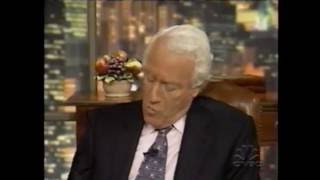
Peter Lynch gave this interview on Louis Rukeyser's Wall Street in 2002, discussing market cycles, valuation, investor trust after scandals, and why stocks should be judged over years rather than months.
Also known as: Pt 1 Louis Rukeyser's Wall Street; Louis Rukeyser's Wall Street.
Peter Lynch argues that the same investing rules still apply across market eras: know what you own, have a clear reason for owning it, and be able to explain it simply. He rejects hype and short-term thinking, saying stocks should be judged over years, not weeks.
He also addresses the scandal-filled market environment of 2002, saying trust will take time to rebuild and that abuses cannot be legislated away. Lynch believes punishment, closer oversight, and better board vigilance will help, but the real cure is time and stronger business performance.
On portfolio choices, Lynch says stocks still look better than money markets or Treasuries over a 10-year horizon. He frames stock ownership as ownership in real companies whose earnings should grow over time, which is why equities can outperform in the long run.
Rukeyser hosts and also includes panel commentary from Marty Zweig and Liz Ann Saunders before Lynch joins.
In his words
“The same rules applied 50 years ago applied 5 years ago, applied 20 years from now.”
“You have to know what you own, whether it's a fund or stock, and you have to have a reason for it.”
“You ought to be able to explain to an 11-year-old in 2 minutes or less why you own it.”
“You can't legislate integrity.”
“I think stocks over the next 10 years will do a lot better than 4.7 or 1.7.”
Key points
- The same investing principles apply across decades.
- You should know what you own and have a reason for it.
- A good stock thesis should be explainable to an 11-year-old in two minutes or less.
- Trust will take time to rebuild after major accounting scandals.
- You cannot legislate integrity, but surveillance and board oversight can improve.
- Stocks should be judged against long-term returns, not short-term fear.
- Lynch prefers equities over cash or Treasuries for a 10-year horizon.
Full transcript: Peter Lynch, Louis Rukeyser's Wall Street interview (2002)
It's time for your weekly visit with America's favorite economic and financial commentator for the past 32 years. This is Louis Rukeyser's Wall Street. Brought to you in part by A.G. Edwards, providing a full range of personalized financial, retirement, and estate planning services. A.G. Edwards, trusted advice, exceptional service. And by Occidental Petroleum, from exploring for new oil and natural gas resources to striving to protect the environment, Occidental Petroleum is bringing a new energy to energy solutions.
And by Oppenheimer Funds, skill, experience, strength. The strategy Oppenheimer Funds uses to achieve long-term performance. Oppenheimer Funds, the right way to invest. Tonight, Lou's panelists are Marty Zweig, Liz Ann Saunders. His special guest tonight is Peter Lynch, vice chairman, Fidelity Management and Research Company. Now, here's Louis Rukeyser. Good evening and welcome back. Well, folks, I have wonderful news to report about the stock market's performance in the first half of 2002. It's over. Trust me on that.
I read it in that authoritative financial publication, The Daily Disgrace. As if investors didn't already have enough to be outraged about, this was the week when we learned that WorldCom had made a very slight arithmetical error in its petty cash bookkeeping. A mere 3.8 billion dollars or so. Thereby also creating a minor language mistake where the company used the word profit, for example; it actually meant to say loss. Obviously, just an unfortunate slip of the tongue. Could happen to any of us. The Securities and Exchange Commission filed fraud charges against WorldCom, but George Orwell would have been bursting with author's pride.
After all, this kind of total language reversal is straight out of his classic satire 1984. And for a while there today, investors feared they might be reading a Xerox copy after the office equipment company said it expects to restate revenues by about 6 billion dollars over a five-year period. Just a pittance. Maybe somebody simply miscounted the paper clips. Interestingly, the exhausted market this week managed to survive all these all-too-familiar headlines, encouraging some observers to believe that it was finally, truly making a bottom. But skeptical investors have heard that
song too often of late, and the stench of scandal continued to permeate the market and an angry nation. So pervasive is the sense of distrust that many investors are asking whether there has ever been such a hostile and skeptical attitude before now. The answer, as it happens, and this apparently will surprise many of those without long experience in the market, is yes. Consider this incisive remark about the current state of affairs. The way things are going, the future tense of invest is investigate. A brand new thought this week? Well, not exactly.
As Ed Myers, a viewer in Blue Bell, Pennsylvania, reminds us, it was a gag used many years ago by the late comedian Milton Berle. And I'll bet even then it got more anguish groans than laughs. The reality is that the pattern, if not the dimensions, has been with us for many a market cycle. There's nothing like a bull market to bring out the crooks. And a bear market to start catching them. And so, as every congressman from Maine to Maui is vying to voice what looks to be fail-safe indignation on behalf of injured constituents, it might help put things in perspective to recall the old line that more investment clubs fail during bull
markets because that's when the treasurer takes all the money and absconds to Brazil. But the fact that cheating did not start when some current observers first noticed it, neither excuses the improprieties that have occurred nor restores the public trust that now lies in tatters. And so, as we set about the task of identifying and punishing those who have abused the system, the overriding question is the same one we have been dealing with every single week on this program. Whom can you really trust? Tonight, we'll consider that question and the question of how smart investors can not just survive, but go on to
thrive in the company of one of the most trusted names in finance, arguably the most successful mutual fund manager of all time, Peter Lynch. Meanwhile, though, understandably furious investors may agree with the proposal of another viewer, Joe Parker of Morgantown, West Virginia, for a new television show in which I would interview a different corrupt corporate executive or stock analyst every week. The program would be called, Joe suggested, Wall Street Reek. It's okay by me if that name isn't taken. In an indication that the sellers were at least getting tired, this was the first weekly gain for the broad market
since mid-May. Though late Friday concerns about an impending medical test announced by President Bush sent the Dow Jones Industrial Average into a tiny decline for the week. Nasdaq, the S&P 500, and the small-stock Russell 2000 all posted minor advances for the week, though Nasdaq is still down a terrifying 25% since New Year's Eve, making it the worst first half ever for the once-dominant, technology-driven index. Unlike stock investors who have seen declines in all the major indexes this year, Treasury bond buyers celebrated a happy end to a happy quarter, which saw yields on the benchmark 10-year note
fall by 3/5 of a point to 4.8%. The dollar continued to decline amid worldwide doubts about America's strength, with the greenback settling for a while to reach parity with the long-scorned euro. But central bank intervention not only gave the dollar a reprieve, but sent gold skidding to a six-week low. And in case you think you're alone in being scared these days, know that in Hong Kong, scientists have created a mannequin that actually perspires. It's filled with pipes containing heated water, and it's proved that in a financially muggy start to the summer of 2002,
even the mannequins are sweating. Marty Zweig, how's your brow? Oh, I'm sweating. It's that time of year anyway, it's humid. The market it is enough to make you sweat. My indicators are pretty good. My normal things, uh, interest rates are down quite a bit, which is good. And we have a lot of pessimism in the market, which is good. And that's the norm. The problem is you were citing you were citing before about the accounting. It's it's really something I haven't, uh, dealt with in my career. I know they had a lot of problems back in the '20s and into the early '30s and a lot of corruption, but I think this is killing off confidence in the market from a lot of people, and I don't know if it's all in the market. And the problem is every day
It seems like there's another one, and another one, and another one: Xerox and WorldCom and whatever. Well, sounds like you're not an aggressive buyer yet, despite your indicators. Well, I'm bullish, but I don't want to get too bullish. Uh, the other problem you have: valuations, which I still am not thrilled about. I do think earnings are going to come back, but, uh, PEs are so high, I wonder if maybe they'll come down, hopefully less than earnings go up, and so we might get a moderate rise in the market. Where would you be putting money now? Well, one stock or group that got killed in the last week or two were the tobaccos, and I found that if you buy Philip Morris or maybe some of the other tobaccos on these, uh, uh, uh, bad lawsuits against them, wh- whenever the lawsuits are negative, they usually
come down hard and they come back. So, you know, at least you're getting, uh, 10 times earnings and better than a 5% yield at Philip Morris, but you've got to kind of suck it up because the news isn't good there, either. And if you're wrong, you'll just make an ass of yourself. Now, what do you think it's going to take to restore the kind of confidence that would allow a real bull market to start again? It's going to be very tough. Of course, confidence, the good news is that confidence at a bear market bottom is never high, and this could be a double bottom in the market, the first bottom being in September, and we're near the lows, we're even lower than some of the averages now. I think we're going to need, uh, better corporate profits to get people back in. It's going to be tough. Liz Ann Saunders, what do you make of
it? Uh, you know, I read a great editorial, Lou, today in the Wall Street Journal by Burton Malkiel, and one of his paragraphs started with "Investing is an act of faith," which I thought was a great way to characterize this market, because much as Marty said, the typical fundamentals that tend to drive the market—economic growth and the translation of that to earnings growth and productivity and inflation and interest rates—all look good. But that doesn't mean the market's paying any attention to that. And I think that, much as you said earlier today when I was watching you, I think it's more a matter of time. And hopefully, the good news coming out in as close to a rapid a fashion as the bad news is coming out, and trying to turn some of this fear into greed, which tends to be a better emotion for the stock market. Would you be buying or selling right
now? Um, I'd definitely be more of a buyer than a seller. I think it's probably, uh, too late to wholesale sell here, and I think that's what a lot of investors are doing. And I would agree with Marty that from a, uh, you know, sentiment standpoint, I think you want to probably play contrarian in this market. But to precisely time when this thing hits bottom is a difficult thing. But, I yeah, I'd be a better buyer than a seller, for sure. And what would you buy? Um, I think that, you know, right now with long-term interest rates having gone down quite markedly, I think you might want to play that cycle a little bit. A company like Freddie Mac. I think the refinancing boom is going to be strong. That also tends to benefit the retailers, like a Target. I think we are in the first couple of years of a multi-year, very positive environment for defense stocks. So, I'd
pick Lockheed Martin there. All righty. As usual, no guarantees from the management. We were scheduled to have a third panelist tonight, as usual, Eddie Brown. But, unfortunately, terrible weather on the East Coast prevented his plane from getting here in time. Uh, Eddie was good enough to share with us what he would have recommended on both the buy and sell side tonight. Uh, he told us that his favorite stocks now included Pfizer and Kohl's Corporation. And that, in recent times, he has been selling some of the more volatile semiconductors and related companies, like Altera, Xilinx, and Atmel. And he says, "The reason we've sold being it will be a long road to recovery, and market demand is so weak, it will take too long for that to
come back." That's from our friend Ed Brown, who will be here in person, I hope, before too long. And if you ever want to communicate with us—and we'd love it if you would—it's an email address that even an accountant could get straight: Lou at cnbc.com. And now, let's go over and meet tonight's special guest, Peter Lynch. Peter, welcome. Hello, Greg. Happy to have you in my new environment. Fantastic. Peter Lynch is an authentic Hall of Fame investor. Under his management, from May 1977 to May 1990, the Fidelity Magellan Fund was the best-performing mutual fund in the world.
Since then, he has stayed active as a writer, teacher, and philanthropist, while also serving as vice chairman of Fidelity Management and Research. Peter, many viewers want to know whether this market is totally different, whether your old view that people should find, buy, and hold good stocks is no longer applicable. What do you think? I think the same rules applied 50 years ago applied 5 years ago, applied 20 years from now. Yeah. First of all, you have to know what you own, whether it's a fund or stock, and you have to have a reason for it. And you ought to be able to explain to an 11-year-old in 2 minutes or less why you own it. Saying, "And this sucker's going up," is not a good reason. I've tried that one. It doesn't work. Speak to the question of trust, which Marty just expressed considerable
Concern about it. I did at the opening. What do you think it's going to take to repair it? Time. I think this is really terrible this week, what you mentioned about WorldCom. Yeah. And Enron. I mean, these are real problems, but you just have to have faith. I mean, we've had this before. I think it's going to take time to heal. This is very serious. What do you think the antidote is to make sure we get rid of these abuses? I think, you know, people will be punished for it. I think there'll be surveillance. I think board of directors is going to be more careful. I think this — what's happened after you've had an incredible economic boom, a lot of easy money around — people push the envelope. It's sad. It's a... You can't legislate integrity. What would you say to investors now who say, "Peter, everything I own's gone down."
Uh, it's been going down now for a couple of years. People keep saying we're at a bottom. Right? Uh, should I get out and go into CDs, or gold bars, and, and opium, or whatever?" Right, right. Well, basically, you look now, you have three choices. I think if you're an investor, you can put your money in money market fund and get 1.7, 1.5, 1.6, and it's taxed at a 40% rate. Or you can buy a 10-year Treasury and get 4.7. That's taxed at 40% rate. Or you can have some equities. And I think stocks over the next 10 years will do a lot better than 4.7 or 1.7. So, I would have some of my money. Now, it's up to the person to decide how much they want to have in the stock market. For some people, 10% is aggressive. For some people, 50% is the right amount. It's a personal decision. And you can't go by these rules that if you're 25, you should be 100%. And if you're 45, you should be
50%. If you're 60, you should be zero. And he's burping a lot. I don't know what the rules are on people at 60, but they... That I hate those rules. I think they're pathetic. Why are you confident that stocks will be a lot higher in 10 years? Well, they're not lottery tickets. I mean, when you own a stock, it's a share of a company. And I think companies are going to make a lot more money in 10 years, a lot more money in 20 years. And that's... That's why they go up. That's the only reason. Some companies don't do well. Xerox has made lots less money than they did 30 years ago. It's a lot less. But, a lot, most more companies are
From YouTube captions, lightly punctuated for readability. Timestamps link to the video above. Errors are possible.
Cite this recording
Peter Lynch, “Louis Rukeyser's Wall Street interview (2002)”, Financial TV and radio interviews, 2002. Transcript and video: Thinkers Archive, https://thinkersarchive.com/peter-lynch/long-term-investing-louis-rukeysers-wall-street-2002/
Quoting a passage? Link to its exact moment: every timestamp above has its own anchor (for example https://thinkersarchive.com/peter-lynch/long-term-investing-louis-rukeysers-wall-street-2002/#t-139).