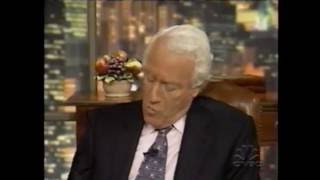
Peter Lynch on Avoiding Mistakes
Peter Lynch’s way to avoid investing mistakes is simple: know exactly what you own, buy for a business reason rather than a price move or forecast, and stay patient enough to let the facts play out.
- Know what you own and why you own it before you buy.
- Do not buy because a stock is moving, falling, or exciting; buy because the business case is sound.
- Research the company and balance sheet instead of forecasting the economy or market.
- Treat stocks as ownership in businesses, not as a game or lottery ticket.
- Keep a clear thesis and sell when that thesis changes, not because of noise.

“…the single single most important thing to me in the stock market for anyone is to know what you own…”National Press Club luncheon lecture, 1990 · 11:01
The first mistake is owning something you cannot explain
Lynch’s starting point for avoiding mistakes is brutally practical: if you do not understand the business, you are already at risk. He returns again and again to the idea that the most important rule is to know what you own and to have a plain-English reason for owning it. If you cannot explain the stock simply, your conviction is probably borrowed from price action, headlines, or someone else’s opinion.12
This matters because confusion leads to bad behavior. When investors do not know the story of the company, they are more likely to panic on a decline, chase a rally, or invent reasons after the fact. Lynch’s standard is simple enough to expose weak thinking: you should be able to explain the case clearly and quickly, including what kind of company it is and what is supposed to make the stock worth more over time.425
Do not buy for the wrong reason
Lynch warns that many costly errors come from lazy reasons for buying. A rising stock price is not a thesis, and neither is the idea that a stock has already fallen so much it must be cheap. His point is that the stock itself is not giving you information about its value just because it moved. You need a business reason the stock should be higher.678
That mindset also protects you from hype. Lynch rejects the idea of treating the market like a game, and he says stocks are ownership stakes in real businesses, not lottery tickets. Once you think like an owner, buying because a chart looks exciting or because everyone is talking about a name starts to look obviously reckless.1011
He also pushes investors to think in risk-reward terms. Even if a company is good, a stock that already discounts terrific outcomes leaves little room for error. Avoiding mistakes is not just finding something attractive; it is asking what you can make if you are right and what you can lose if you are wrong.1213
Research beats prediction
Another major source of mistakes, in Lynch’s view, is trying to predict the economy, interest rates, or the next move in the market. He says this is largely futile and a distraction from the work that actually matters. Time spent forecasting macro events is usually time not spent learning the company, its finances, and its competitive position.14151617
Instead, he wants investors to look at facts: what the company does, what the balance sheet looks like, and what specific business developments could make the stock worth more. That means checking for debt, cash, and obvious signs of financial weakness before committing money. A little basic work can screen out many avoidable losers.181920
This does not mean ignoring the world; it means refusing to pretend you can see around corners. Lynch’s edge comes from dealing with what is knowable now rather than building an investment case on forecasts about recessions or rates. That discipline reduces avoidable error because it keeps decisions tied to evidence inside the business.212223
Patience and stomach prevent emotional mistakes
Lynch thinks volatility is normal, not a signal that your process has failed. Investors make mistakes when they confuse movement with meaning and let discomfort force decisions. That is why he says the key organ in investing is the stomach: you need the temperament to sit through declines when the business case is still intact.2425
His practical test is whether the underlying company is still doing fine. If you understand the business and the balance sheet remains solid, a lower price can improve the opportunity rather than invalidate it. Market drops are unavoidable, and the investor who expects them is less likely to turn temporary volatility into permanent loss.2624
This is also why he tells people not to obsess over missed winners. Regret can push investors into chasing whatever has already worked. Lynch’s response is freeing: the only stocks that can hurt you are the ones you choose to own, so attention should stay on decision quality, not on every opportunity that got away.2728
Write down your reason for owning a stock
For Lynch, avoiding mistakes is not only about buying well; it is also about having a disciplined way to hold and sell. He says the reason you sell is tied to the reason you bought. That implies you should have a specific thesis from the beginning, not a vague hope that the stock will keep rising.5
This habit solves several common errors at once. It helps prevent selling a winner too early just because it has gone up, and it helps prevent holding a loser for no reason except that it is down. When the original business case is improving or still intact, price alone should not make the decision for you; when the case breaks, you have a rational basis to act.306
Lynch also keeps the workload realistic. You do not need to know thousands of companies, and you do not need dozens of huge winners. Following a manageable number of understandable businesses makes it easier to monitor your thesis and less likely you will make careless decisions.3133
Lynch on avoiding mistakes, in his own words
“…the single single most important thing to me in the stock market for anyone is to know what you own…”
“You ought to be able to explain to an 11-year-old in 2 minutes or less why you own it.”
Where to watch
 Peter Lynch on Stock Picking: Know What You Own1997 · 47 min · full transcriptBest overview of Lynch’s mistake-avoidance rules: know what you own, ignore forecasts, and do not anchor on price moves.
 Peter Lynch on Buy What You Know: research, patience, and avoiding losers2019 · 6 min · full transcriptMost direct warning against casual stock-picking, hype, and skipping basic research.
 Peter Lynch on Investing Fundamentals: Know the Business, Stay Patient2023 · 14 min · full transcriptStrong on practical checks before buying: the business, the balance sheet, and the real reason the stock should rise.
 Peter Lynch on Stock Picking: How Average Investors Can Win1990 · 61 min · full transcriptShows how Lynch turns common sense into a repeatable process for ordinary investors.
 Peter Lynch on Value Investing: Buy Great Businesses on Sale1997 · 13 min · full transcriptUseful for risk-reward thinking and for avoiding expensive, overhyped stocks with little margin for error.
Questions people ask
- How does Peter Lynch think about risk and reward when buying stocks?
- What did Peter Lynch mean by 'buy what you know'?
- What did Peter Lynch say about buying during market drops?
- What did Peter Lynch say about how to know if you should own a stock?
- What did Peter Lynch say about only buying what you know?
- What did Peter Lynch say about when to sell a stock?
Sources
Every quote above, word for word from the transcripts. Numbers match the text.
“…the single single most important thing to me in the stock market for anyone is to know what you own…”
“You ought to be able to explain to an 11-year-old in 2 minutes or less why you own it.”
“You really got to be careful.”
“I think the same rules applied 50 years ago applied 5 years ago, applied 20 years from now. Yeah. First of all, you have to know what you own, whether it's a fund or stock, and you have to have a reason for it. And you ought to be able to explain to an 11-year-old in 2 minutes or less why you own it. Saying, "And this sucker's going up," is not a good reason. I've tried that one. It doesn't work.”
“What is the reason the stock should be higher?”
“The stock's going up is not a good reason.”
“The stock doesn't know you own it.”
“Behind every stock there's a company; these are not lottery tickets.”
“I think the same rules applied 50 years ago, applied five years ago, apply 20 years from now. Yeah, first of all, you have to know what your own—whether it's a fund or stock—and have to have a reason for it, and you oughta be, I'll explain to an eleven-year-old in two minutes or less why own it. And "this sucker's going up" is not a good reason. I've tried that one; that doesn't work.”
“If I'm right, how much am I going to make? If I'm wrong, how much am I going to lose?”
“But let's say if a company—just think of this as being—you say to yourself, "I think this company's gonna earn something in the future." If it's already discounting that, if it's selling at a huge multiple, you say it's already, it has to work, and then it's only going to stay even. So you have to say yourself, "If I'm right, how much am I going to make? If I'm wrong, how much am I going to lose?" That's the risk-reward ratio in stock shop. We talk about, if I'm right, I hope I'm going to double, triple my money. If I'm wrong, maybe I lose 30, 40 percent. That's a favorable ratio. You say, if I'm right, the stock's not going to go up, it's already discounting terrific things.”
“It's futile to predict the economy, interest rates, and stock market.”
“I have no idea what the next thousand points going to do.”
“If you spend 13 minutes a year on economics, you've wasted 10 minutes.”
“…if you spend 14 minutes a year on economics, you've wasted 12 minutes…”
“Look at the company, look at the balance sheet.”
“Well, I think it bothers me that people are very dangerous when they invest. This word, "play the market," that's a dangerous term. But if you do some work, do some research, know what you own, look at the research, look at the balance sheet—if you can add eight and eight and get fairly close to 16, you find out this company has lots of debt, no cash, they're in trouble, you shouldn't own it. So, a little bit of research, people are careful. They buy a refrigerator, they can't really take a vacation, and they'll put five, ten thousand dollars some stock to hear on the bus or the party—that's dangerous.”
“…you have to do some more work. That's the important point.”
“Well, we've had 13 recessions since World War II, and we've had 13 recoveries. Maybe we're going to have one. If this is a recession, it's probably the most predicted one ever. You know, I never know when we're going to go. I'd love to know the future. I think it would help. I'd be a better investor. I'd pay five extra dollars for next year's Wall Street Journal; it would really help. I cannot predict the future. But this one, this recession, is so expected, so predicted, maybe it's coming. I don't know.”
“Here more, and I spend a little time singing what's going on in Russia or China. I just deal with facts. When the economy is going down, when economy is going the wrong way, I can deal with that. This whole health care reform bill drove a lot of drug stocks down to low levels. Like, it said myself, both sixty percent of Johnson & Johnson earnings are outside the United States. Their pharmaceutical drug business is all in patent, nothing's coming off patent. They only have five percent of sales from one product, which is Tylenol, which is already over the counter drug. And Sterling overseas, I just why does it suck up from 58 to 36 in these cuts? And these companies are already dealing in Japan and overseas with you already have the government.”
“Trying to predict the market is really a waste.”
“The key organ in your body in the stock market is your stomach.”
“…the key organ in your body and the stock market is your stomach, it's not the brain…”
“If you like a stock at 14 and it goes to 6, that's great. You understand the company, you look at the balance sheet, and they're doing fine. You're hoping to get to 22 with it. 14 to 22 is terrific. 6 to 22 is exceptional. So, you take advantage of these declines. They're going to happen. No one knows when they're going to happen. It'll be very—People tell you about it after the fact that they predicted it, but they predicted it 53 times. And, uh, so, you can take advantage of the volatility in the market if you understand what you own.”
“You cannot lose money in a stock you don't own.”
“One of my books listed on two pages. In the 13 years I ran Magellan, I listed, uh, I think about 200 stocks A through L on the New York Stock Exchange. They went up tenfold or more that I didn't own. While I ran Magellan, I had owned lots of stocks. I listed 200 stocks in April. I stopped at letter L. And I didn't own any of the shares. They went up tenfold or more, and I was able to do okay with Magellan. And people worry all the time about missing Microsoft, missing Western Digital, missing, uh, United Airlines. They spend all their time worrying about stocks they missed. You cannot lose money in a stock you don't own. That's very important. You have—the only way to lose money is buy stock, have it go down, and sell it. That's the only way.”
“…this sucker's going up" is not a good reason.”
“You have to look at 20 to find one.”
“You don't need a lot of five baggers to make a lot of money…”
How this guide was made: drafted with AI from the full transcripts of the recordings cited, then checked: every quotation must match a transcript word for word and be the speaker's own words, and an independent review gates accuracy. Methodology and corrections.