Peter Lynch on Stock Picking: Know What You Own

What Lynch talks about
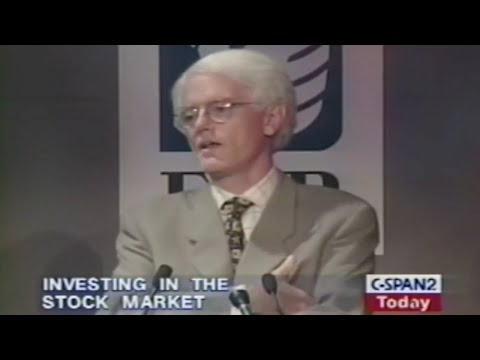
Peter Lynch gave this stock market lecture in 1997 on his investing approach, stressing that investors should understand the businesses they own rather than try to predict the economy or the market.
Also known as: Peter Lynch Lecture On The Stock Market; Peter Lynch on Stock Picking: Know What You Own.
Peter Lynch lays out the core rules of his investing approach: know what you own, focus on simple business stories, and ignore the urge to predict the economy or the market. He argues that successful investing comes from understanding companies, not from forecasting interest rates or GDP.
He also warns against common investor mistakes: buying because a stock has already fallen, selling because it has already risen, confusing price moves with wisdom, and chasing long shots. His examples range from Sallie Mae and Walmart to Polaroid, Kaiser Industries, and Toys "R" Us.
The lecture matters because Lynch repeatedly stresses discipline, patience, and flexibility. He frames investing as a practical business of facts, stories, and long-term observation rather than abstract theory or emotional reactions.
Lynch speaks throughout, with brief audience Q&A near the end.
In his words
“Know what you own”
“It's futile to predict the economy, interest rates, and stock market.”
“The stock doesn't know you own it.”
“You cannot lose money in a stock you don't own.”
“I don't believe in diversification at all.”
Key points
- Know what you own; if you cannot explain the business simply, you should rethink the investment.
- It is futile to predict the economy, interest rates, and the stock market.
- Use facts and business conditions, not forecasts, to evaluate stocks.
- Do not assume a stock cannot fall further just because it has already dropped a lot.
- Do not assume a stock cannot rise further just because it has already gone up a lot.
- Avoid long-shot stories with no sales or profits; write them down and check later instead of chasing them.
- Management matters, but the underlying story is usually more important and much easier to judge from the outside.
Full transcript: Peter Lynch, Stock market lecture (1997)
Thank you. You suddenly have this list. Can everybody hear me? Can everybody hear what I'm saying? There's a lot of microphones here. The, uh, this is what I'm going to cover today. This, this should be on your desk. These are the, these are the key points that I've been using for 25 years. I think they're true then. I think they're true today. I think they'll be true in 25 years. And I think that's what investing, uh, to successful investing is all about. And, uh, the first point is know what you own. I can't believe how many people own stocks and they couldn't describe to an 11-year-old in 2 minutes or less why they own this thing or what it is. They, they only, if you actually pin them down and you put a whip to them, they'd say the sucker's going up. But that's the only reason they have for owning it. The, uh
The, and this is the kind of, this is the normal kind of company that people buy. This is a, a very simple story. I own a lot of companies like this. They make a relatively mundane product. Uh, it's a 1-megabit SRAM CMOS bipolar risk floating-point data IO array processor with optimizing compiler, 16-bit dual-port memory, Unix operating system, four Whetstone megaflop polysilicon emitter with a high bandwidth, that's important. 6-GHz double metallization communication protocol, asynchronous backward compatibility, peripheral bus architecture, four-wave interleave memory, token ring interchangeable backplane. And they do it in 15 nanoseconds of capability. Now, if you want a piece of like that, you will never make money. Never.
Some of them have more Whetstones, less Whetstones, big megaflop. And what do you do if this thing goes from 12 to 9? Do you, do you buy more? Do you walk around the block? I mean, do you call your friends? I mean, what the hell do you do with something like that? People buy this stuff. I mean, I buy stuff like Dunkin' Donuts and, uh, Stop & Shop and CVS and made money in all those and Sallie Mae was just here, uh, you know, right before me. I mean, it's a stock I bought that, uh, that a great name. It was Student Loan Marketing. I mean, who would ever buy anything like that? It was a great name. If you heard the story, I think 100 people heard the story. In fact, I had dinner there last night with Al Lord and Ed Fox and Paul Carrey. We're all on that road show in 1983. I think if 100 people looked at Sallie Mae, they would have bought it. But, the 100 people wouldn't look at it because it, imagine loaning money to students.
Imagine doing anything with students that, uh, and, uh, it was a great story. It was simple and, uh, no one looked at it. So, that's the kind of stocks I like to buy. But, I'm telling you, people don't do this. And I'm talking sophisticated people, unsophisticated people, they don't know what the company is. What's the story? And it's very important to know it because it doesn't always work. And you have to keep posted. Uh, now, here's a big point. Remember this one. It's futile to predict the economy, interest rates, and stock market. I mean, people keep trying to do this. I mean, this would be useful. I would love to know when we get every recession. I'd love to know when interest rates are going to go up and down. I'd love to know when the stock market's going up. That would be helpful. I would like to get next year's Wall Street Journal. Uh
Unfortunately, you don't get it. I remember in 1982, we had, uh, a lot of people in this room were around for '82. We had, uh, 20% prime rate, 15% long governments, double-digit unemployment, double-digit inflation. I don't remember anybody telling me about that 1980. I don't remember anybody telling me about that 1981. But, '83, I remember they said, "Well, the economy's going to bounce back from every recession in '85." '85, they said we'd have a recession in '86. In '87, something happened in October '87. I forgot what, something happened in October '87. South East lost seven in a row. Some something bad in '87. They said for sure we'd have a recession in '88. And they said '89 for sure we'd have a recession. And then '90, we're supposed to have the so-called soft landing, which we never had. So, I've always said
if you spend 13 minutes a year on economics, you've wasted 10 minutes. And, uh, the, uh, and, uh, all need to know about the stock market is it goes up and it goes down and it goes down a lot. And that's all you need to know. Again, it'd be terrific to know what's going to happen to the economy, but I deal with facts. If inventories are going up, if copper prices are going down, if room occupancy has gone the wrong way, people are building too many hotels, I look at freight car loadings so I don't railroad stocks. I deal with facts. I don't deal with people telling me something's going to happen in the future. You might as well call a psychic hotline for that stuff. They, they get better average if they, uh, you got plenty of time. This is true with Sallie Mae, it was
true with Dunkin' Donuts, it was true with Stop & Shop. People are so, uh, insistent, and I'm that way, too. I have to fight it. They have to buy a stock. Let's say, let's say, let's say it's now, let's say it's now 5:01. I haven't found a stock yet today, you know, I got to find a stock before sunset, you know, at the, you could buy Walmart 10 years after Walmart went public. Let's say you're a very careful investor. You waited. You said, "I don't know if this company can make it." You waited for Walmart to roll it out. You could buy Walmart 10 years after they went public and made 30 times your money. 30 times your money. 10 years after they went public, they're only in 15% of the United States. One five. They hadn't saturated the one five. You could say, "Well, why can't they go to 17? Why can't they go to 19? I mean, why don't I
"Take a leap of faith here? Why can't they go to 26?" All they did for the next three decades was roll it out. You could buy Walmart. If the day they went public you bought it, you would have made 500 times your money. If you wait 10 years in Walmart, you made 30 times your money. You got plenty of time in this business. Uh, and now what I'd like to talk about is what I call the 10 most dangerous things uh people say about stocks. Uh, uh, here's a good one: it's gone down this much already, it can't go any lower. Uh, I remember Polaroid went from 140 to about 107, and people said, "If you ever get Polaroid under 100, you got to buy it. Just back up the truck, buy the stock, you know." Uh, stock would get to 110, then rally, you
know, fall to 103, then go to 112, go to 105. They said, "Gets under 100, buy Polaroid." Polaroid broke 100, people started buying it, and within 9 months the stock was 18. Uh, I saw the same thing with Avon Products. So, just saying you, you know, it's gone down this far, you know, how much lower? I mean, it's crazy, but you know, it can keep going. In fact, I tried this out at Kaiser Industries. I was a new analyst at Fidelity, and we were about to buy the biggest block ever of Kaiser Industries. The stock had gone from 29 to 17. We were about to buy the largest block ever in the history of the American Stock Exchange. We bought, I don't know, 10 or 15 million shares. At 15 and 3/4, I said, "My God, the stock's gone from 29 to 17. How much lower can it go?" So, we bought this
enormous block at 15 and 3/4. So, I called my mother, and I said, "Mom, I guess I got Kaiser Industries. It's 10." So, about 3 months later, said, "You got to buy this. It's gone from 29 to 10. How much lower can it go?" It went to 9, it went to 8, it went to 7, it went to 6, it went to 5, it went to 4. Now, fortunately, this happened very rapidly, or I'd be working at the Stop & Shop, uh, bagging behind the lines they sell at Fidelity. So, fortunately, this was compressed in only about 6 months. So, I had to go to Fidelity and say, "I was a little bit early on this at 15 and 3/4." I said, uh, but it, uh, we call this premature in the business. The, uh, uh, had a correction, which, you know, is a euphemism for losing a lot of money rapidly at the, uh, uh. So, I said, "Let's check this again. The stock's four.
They own 45% of Kaiser Aluminum. They own 59% of Kaiser Steel. They own 38% of Kaiser Cement. They own all of Kaiser Electronics, all of Kaiser Broadcasting, which had seven TV sets. They own Jeep. They had Kaiser Fiber Glass. I said about Kaiser Sand & Gravel, a bunch of other Kaisers, and they had no debt." Now, in this room, because I know Freeman Billings is very interested in financial stocks. No one's ever gone bankrupt without any debt. Now, that would take a real—I think you have to get some kind of distinguished service award if somebody did that. The—but they had no debt. I said, "It's not going to go to zero." You know, I was wrong when I said it can't go below 15. So, we hung on, and within 3 years they gave out the shares in Kaiser Steel, gave out the shares in Kaiser Cement, gave out the shares in Kaiser Steel and Aluminum, and they sold
off all the businesses. You got out at $55 a share. But if you didn't know the story, and the stock went from 15 to 11, and you're just saying, "How much lower can it go?" When it went to nine, went to eight, you, you would have gone. So, you can't just say it can't go any lower because I saw Taco Bell go from 14 to 1 in 1974, and they had no debt and making 60 cents a share. Uh, there's a corollary to that that's even more dangerous. If it's gone this high already, how can it possibly go lower? Uh, higher, sorry about that. Philip Morris, adjusted for splits, uh, sold for 12 cents in 1951. And then it goes to 60 cents in 1961. So, it goes up fivefold, and you say to yourself, "How much does it never sold
for that, but just for splits to say, how much higher can this go?" It's gone up fivefold. They missed the power of Marlboro. They missed the—there's 220 countries in the world. They missed the cash flow of the company. They missed everything. This stock was a 100-bagger after going up fivefold. But people sold it just saying, "How much higher can it go?" Can't go any higher. They did the same at Home Depot. They did the same at Toys "R" Us. I did the same thing at Toys "R" Us. Just saying it can't go any higher, it's gone this much already. That's very dangerous, and don't, don't use that one. And, uh, it's a very bad thing to do. Eventually, they always come back. Here's another one that sucks. Uh, that's a technical stock market term we just use only in the stock market. The, uh, RCA just about got back to its 1929
price when it was backed out by GE. Uh, Maytag never came back. International Harvester, even with its name changed and adjusted for splits, hasn't got all the way back yet. Western Union doubled its—those wonderful things, floppy disks. They don't have to come back. But they say eventually they always come back. Uh, not true. Uh, here's a great one: It's $3. How much can I lose? This is a great one. 'Cause yeah, I get—get out of. This is—I don't have a computer, and I can't do high-level math, but just do this one. Let's say you buy—your neighbor buys $10,000 of a stock at 50. The stock's now at three, and you put $25,000 in at three. If it goes to zero, who loses the most? A lot of people cannot answer this.
Question, you know. The, uh, I mean if you put a billion in at three, you can lose a billion. It's, you know, I mean they blow taps in lots of companies every year, you know, you just have—they can go to zero. Uh, the, uh, here's a good one. It helped me a lot. It's always darkest before the dawn. Uh, the, uh, this business is terrible. It's awful. You ought to buy the group. This is not a good way of making money. It, uh, the, uh, here's one you're probably talking about before lunch. Uh, freight car deliveries, uh, 1979 there was 96,000 freight cars delivered in the United States. Two years later it fell to 45,000, the lowest in 23 years. It goes from 96,000 to 45,000. People say the business is awful. It's
horrible, pathetic. Then it falls to 25,000. They say just load up. There's about 15 opportunities to lose money. There's about 15 suppliers of freight cars, 15 manufacturers. Business was awful. The last year we shipped 7,000 freight cars in the United States. The business just continued to be miserable. And, uh, I give you one that's even—there's even greater opportunity to lose money on. Uh, energy services industry. This we all had a great opportunity to get our heads handed to us. Uh, in 1982, there was 11,000 of those oil rigs drilling left, you know, drilling those holes all over Oklahoma and Texas and Colorado. We used to have the rig count every week. And the rig count fell from 11,000 in '82 it to 6,000 in '83. Then fell a little bit lower in '84. There was hundreds and hundreds of
companies here. Companies that made the muds and did the downhole stuff, the fracturing companies, the, the, the well companies, all the measuring companies, the Schlumberger, the bit companies. Lots of opportunities to lose money here. There's equal opportunity here for serious losses. And the people said, "Listen, the business is terrible. Let's buy this group." Well, the rig count was only 1,000 three years ago. So, it went from 11,000 to 6,000 to 5,000, then 8 years later it was under 1,000. The industry really started to turn about 2 years ago. So, just saying the business can't get worse, I—I was lucky enough in addition to have the metals industry and stuff at Alleghany, I had the textile industry. Which is a great group to follow because you follow companies like J. P. Stevens which was founded in the 18th century and, uh, WestPoint Pepperell was founded in
the 18th century. Burlington Industries is one of the new companies which was founded in 1904. These people have been through recessions, depressions, world wars. They've seen it all. There's a great expression in the textile industry: "It's always darkest before pitch black." Yeah. Now, that's a good one to remember because when business is terrible, it can get considerably terrible, you know, terrible to the power of six and, uh, it, uh, I love those numbers I fake out with. You ever watch—I love the show Jeopardy. You ever watch Jeopardy and people come out—they will know those numbers, you know, they'll know the numbers. And they'll know, you know, what, uh, what country, uh, Box, uh, took his first vacation in and they'll know Phil Rizzuto's batting average and what his wife's first name was and they'll know the stock symbols of Xerox before it was
Haloid or, you know, they know everything. And you watch the show and you feel like an absolute idiot watching the show because they answer all these questions. But they're smart. Almost. I've owned the stock before, King World. Right after—it—they show Wheel of Fortune. And they—what happens is they'll have this word up there and it'll be T H and there's a T and they say, "I'll buy a vowel." They say, "I'll buy a U." You know, it's a "Buy an I." And it—and you know, like Vanna spins the wheel and they buy the A and you know, you feel—you're redeemed by watching the Wheel of Fortune after feeling like an absolute jerk on the Jeopardy game and, uh, it's really smart that, uh, "When I rebound to 10, I'll sell." Uh, here's a great rule. Uh, somebody buys a stock at 10 and it falls to six. They say, "If it
gets back to 10, I'll sell." Now, I think the math for six and six—I can handle this little math. I think that's about a 66% return. You want to buy it if you think it's going back to 10; you ought to buy the hell of the damn thing. But they think if it gets back to 10, I'll sell. Now, what you ought to do is never put down a round number. He says, "I think the next 26 years the stock will be between five and nine and a quarter. It'll never get to 10." So maybe put nine and eight or eight and three quarters. But just saying the stock if it gets back to what I paid for it. This is a very important rule. This is a very—this is one of the key rules. The stock doesn't know you own it. Remember that. You could be a miserable person. You could have, uh, you know, never helped anybody, never done
anything right, had 67 spouses, never done anything right. If you owned Coca-Cola last 50 years, it's gone up 300-fold. You could be the greatest human in the world, help Special Olympics, help the mentally challenged, help poor people, help AIDS people. If you own Bethlehem Steel, it's lower than it was 30 years ago. It's not your fault. Don't take this personal, you know. But people treat stocks sometimes like their grandchildren or a puppy. I mean, they—they—they think—they think the stock knows who you are, you know, it's, you know. It doesn't work that way. It, uh, uh, let me worry. I own conservative stocks. Uh, I don't have to worry. I own conservative stocks. I mean Con Ed fell, uh, 80%, then tripled. Uh, Public Service Indiana went down 90%, Gulf States
Utilities Long Island Lighting. This may be oxymoron with quality Texas banks that went to zero. We had, uh, quality New England banks that went to zero. Uh, these are companies that have been around for 150 years, 120 years. See, I own conservative stocks. I don't have to worry. I've seen a lot of people who inherited stock from somebody. They'll say, you know, my mother said on her deathbed, "Don't sell the Long Island Lighting." You know, you always wonder, you know, is she—she's going to heaven or hopefully where she's going to heaven? You know, they'd talk about a little game or vacation or game of hearts they had or imagine talking on your deathbed about Long Island Lighting. You say, "Well, you know." But you get these stories all the time, and I think your mother would have noticed she wouldn't have sold it at 29, but she wouldn't—she wouldn't notice
that this little plant that was about 6 billion over budget, no one wanted it and wasn't working, and Long Island stopped growing. So, maybe she would have turned it to 22 or got out of it at 18. She wouldn't have let it go to four. You know, so just because you inherit some stock and it's so-called conservative like Eastman Kodak fell 75%, IBM fell 75%. Don't tell anybody you own a conservative stock. Companies are very dynamic. I don't buy that argument. Uh, here's a very dangerous one. Look at all the money I've lost. I didn't buy it. It, uh, people do this all the time. They say, "I didn't own Blockbuster. I didn't own Home Depot. I didn't own Toys "R" Us." I, Eric was very nice to say some nice things about when I came up here, and Manny has been nice to me. But I really
one of my books listed on two pages in the 13 years I ran Magellan, I listed, uh, I think about 200 stocks A through L on the New York Stock Exchange. They went up tenfold or more that I didn't own. While I ran Magellan, I had owned lots of stocks. I listed 200 stocks in April. I stopped at letter L. And I didn't own any of the shares. They went up tenfold or more, and I was able to do okay with Magellan. And people worry all the time about missing Microsoft, missing Western Digital, missing, uh, United Airlines. They spend all their time worrying about stocks they missed. You cannot lose money in a stock you don't own. That's very important. You have—the only way to lose money is buy stock, have it go down, and sell it. That's the only way.
And I swear to people that their spouse has to cut out the newspaper in the morning, cut out the Cs and person will look at the Ms. Oh my God, Microsoft's up, up three, you know, I had—I was going to buy 1,000 shares of Microsoft. I lost 3,000 Microsoft last night while I was sleeping, you know. We, uh, you know, I was going to buy 7,000 shares of National Semiconductor at 10. It's now 17. I just lost $49,000 on National Semiconductor. They do this all the time. They mean they have to cut holes in the Block. Thank God Blockbuster finally went away because that would be early in the alphabet. People would always be looking how much they lost in Blockbuster. Uh, I missed that one. I'll catch the next one. That usually does not work. Toys "R" Us, there was a lot of copycats of Toys "R" Us. There was Child World. There was Lionel. There were copycats of Home Depot. Buying the next of something usually
doesn't work. It's, uh, it's very bad. It's like buying on dips. I think it's always better buy from dips. That was always a better rule than buy on dips. Do you agree? You may have to explain this to some other people. Uh, this is another technical term you may have to explain after hours what a dip is at the... Usually I refer to it as plurals, dips. I never heard dip, you know, he's a dip or you know, she's a dip. They usually only use the plural tense for it. So, it's a—and it's a general non-specific. It—it's usually plural, dip is never used. Um, uh, stock has gone up, I must be right. Stock has gone down, I must be wrong. I'm convinced that people do this all the time. They buy stock at 10. They buy a little bit of it. It goes to 13. They now say they don't know anything more about it than they knew when they bought it at 10. They have no idea what this company does. but
it's going to 13 now. They take a second mortgage on the house and buy at 13. The best thing could happen for us is the stock to go directly from 10 to 4 for these folks, you know. It's going to go to 4 eventually, but it goes to 13 in the middle. They're convinced now. They bought 100 shares at 10. Now they buy 20,000 at 13. And all the fact this stock went from 10 to 13 is that it went up. The average movement of a stock in the New York Stock Exchange this century between its high and low has been 50%. The average stock in the New York Stock Exchange. That means a stock started the year at 20. Sometime during the year it sold 16. Sometime during the year it sold at 24. Might have finished the year at 21. Might have finished the year at 19. The average range of a stock in the New York Stock Exchange is 50% in 12 months between its high and low.
So stocks go up and down a lot within a year. And say this stock is going up means you're right, doesn't mean a damn thing. So don't buy off on that one. It, uh, that is not a good one. The, uh, avoid long shots. Uh, these are the companies that, uh, we have this very technical term for this, uh, called whisper stocks. They, uh, everybody familiar with whisper stocks? They're—they're great. Somebody calls you up and I'll say, "How are you, heart Caroline? How's Beth doing? See Annie? How's Mary? Have you played any golf?" And then I'll say, "I want to talk to you about International Oblivion." And the next—you can get—you don't want one of those.
You'll get a shorter term in those places where they... They have Nordic Tracks and they, uh, put them away and they don't... They don't have to make big rocks and the small rocks. They just watch movies and have Nordic Tracks, but they won't... They will not get these people if they whisper in the phone. And these are always these long shots. You know, these are the stocks that are going to, uh, grow hair and, uh, make your kid have better spelling, and your breasts going to prove, and you don't have to iron your pants. You know, it's one of those stocks and they always do everything for you. But they're missing; they don't have any sales yet. You know, that's the missing element to the story. The story is sensational. There's no profits there, no sales yet, but my God, if this works, if this works, it's going to be the next Xerox, you know, and, uh, and it's going to help more in space and everything. It's a very, very good deal. Now, this is not a long shot. This is a no shot. You have to separate these out. I've
tried 30 of these. I have never broken even on a long shot. Never. I made 25, 30 times my money in some stocks. I never thought anything about Sallie Mae or MBIA or Fannie Mae or some of the banks or Stop & Shop. I made 20 times my money, 30 times my money. I had no idea. I thought the stocks were going north. I had no idea. You look back 10 years later you say, my God, I made a lot of money in this thing. But once I went into thinking I can make four times my money, I've never broken even. So don't do the long shot, guys. They don't work. It, uh, the, uh, they simply don't work. Uh, and again, if a stock's three and it has huge potential, write down the story, take the stock symbol. If it's
going to 300, it's okay to buy it at 15. Check in later. Check a year later. See if it's still listed. See if you can still get a quote on it. See if they still have any earnings yet. But if it's going, write the story down. Some of these work. I haven't heard yet, but maybe they will work. But it's worth tuning in six months later. Don't buy it then. It, uh, uh... Importance of management... Management's the single most important thing in a company. But for an outsider to know great management versus good management versus terrific management versus average management, tough to do. Tough to do. 'Cause you only get an hour at people, sometimes a half an hour. And, uh, how do you know what decisions they didn't make? A lot of great companies have been made because the
company didn't make an acquisition. They didn't get rid of division. They don't put in the annual report, "We didn't get rid of the tubing division." You know, you don't hear about that. Somebody said, made a brilliant decision, "We're going to hold on to that thing. We're going to fix it," and it's doing great. Now, they might be doing great because some management eight years ago did it right or somebody did something right five years ago. That person isn't there anymore. Or they didn't make any acquisitions. Or they expanded at the right time. So, knowing what management, what they can add to it is the single most important thing, very hard to measure. I've always said, I'd like to have a company any fool can run because eventually one will. And, uh, you really want to do that. When I bought Toys "R" Us, they had the formula right.
Any four people in this room and me could have run Toys "R" Us. We wouldn't have done as well as they did. They're spectacular. But for the next 15 years, with no competition, with a great formula, we could have rolled with it. They probably wouldn't have done three times as good. They were the frosting on the cake, but they had the formula right, no competition, the department stores knew what they were doing, there was no copycats, and they were going to just roll with the next 25 years. Same with Circuit City. So, I want the story to be solid. If management can add anything on top of it, that's great. I want to buy the story. Assume management leaves next day and they're replaced by the next generation. That's fine with me. If management can add something to it, that's great. I'm not going to buy it because people say they have great management. Because you'll notice great management is always attached to stocks that have
been up for the last eight years. Because I looked at Reynolds Metals. I used to follow Reynolds Metals. The stock has had the same person run it for like 30 years. When the aluminum was tight, they'd say Reynolds Metals has great management. When the aluminum going oversupplies, these people are idiots. When the aluminum gets tight, they say these people are terrific. I mean, all to do with the price of aluminum. And they keep rating the management by how the stock's doing. It's very hard to measure management. It'd be wonderful to do. If you could spend months with them, really see them in action, then you'd know, but you don't really get that chance. Uh, be flexible. Uh, people have all these biases, all these prejudices. They want to buy high-growth industries, they won't buy financial companies, they won't buy savings and loans.
They won't buy, uh, companies that start with a letter R. I mean, I, you know, there's all these rules. They all hurt you. There are great stocks everywhere. There's stocks that are near bankruptcy, stocks in bankruptcies, stocks about to go in bankruptcy. There are companies on the new high list that are attractive. This company is on the new low list. They're all over the place. They're in growth industries, non-growth industries. Don't cut yourself off to one segment. People have way too many prejudices. Too many biases. And I always thought of it, I don't, I don't know if women in the audience see this many times, but I always thought these buy lists at some institutions. We don't have this at Fidelity. They have these buy lists. I think Kmart got on some of these companies' buy lists 3 years ago. You know, with the Mi- Microsoft may get on it about 12 years from now, but they, they have these buy lists. And I always thought the buy list is, uh,
You know, when you buy a new shirt, and you ever look in the pocket and you get the inspected by six or inspected by eight? You ever see those numbers? I mean, I always wondered about that. I always think of those buy lists at those institutions. I see that inspected by six and inspected by eight. In fact, I'm absolutely—if somebody calls me at any time of day, has anybody ever got a shirt inspected by one? I mean, do they retire these numbers? Do they have a meeting? I've never had a shirt inspected by one or by two. I think they must put the raise their numbers in a meeting up to the four or afters. But I always think every single time I get that number in the shirt, I think of these people working off a buy list of rapidly growing companies only to have unit growth rate of X or 6X or whatever the number is. It doesn't work. Uh, the uh another thing about it is math and
the kind of math you need to do is—I don't use a computer. I don't have a computer. Uh, I really was doing great math. I was—I remember 7 * 7 was 41 and 9 * 9 is 81, and you know, 12 * 12, I think it was 144. So, it was some big number. I got that one down cold. I said, "This is great. I love this stuff." And the barge left St. Louis going at 8 mph and the train left Pittsburgh and ha, this stuff is easy. And then one day, I think it was ninth grade, that was a grim day. Somebody introduced cosine. That day, I mean, remember cosine? I mean, has anybody used cosine the last couple years? I mean, you know, this is—let's have a show of hands. How many of you have used cosine the last 6 months? But I—I remember tangent and cotangent.
Why would you want to know about tangent? And then, remember the area under the curve? Remember that crazy calculus area under the curve? What the hell would you want to measure area under curve for, you know? The uh, that is such garbage, you know, you don't need this for the stock market. If you can measure if you can add eight and eight and get fairly close to 16, that's all you need. You know, you say, "$400 million in debt, no equity, no cash, losing money, forget it." You know, they got $300 million in cash, no debt, $200 million in net worth, they're losing $10 million a quarter, but they'll be around. That's all you need. You have to get—that's all you need. That—that is not that hard. If you made through fifth grade math, you can handle this stuff. And I had a a roommate in the army and, uh, it uh
It's a story I always remember. He was talking about he went to this very good school in, uh, in the South that I won't tell you the name of it, but it's in Atlanta and it rhymes with Roger Wreck. The uh, and they had this uh, my hero, uh, at the school, uh, was a very good football player. This was—this was—this is my friend, my roommate, telling me the story about this guy as a freshman at this great school. And he'd go to the line of scrimmage and he'd change the play. He couldn't figure this out. You know, I don't know if you realize how complicated football is. Half the plays are changed at the line of scrimmage. About 300 plays. You go there, think it's a run to the right, it turns out it's a screen pass to the left or it's a draw, it's all the blocking assignments have changed, all the passing's different. You can do—you have to instantly think, "Uh-oh, new play. What do I do in this new play?" Just like
that, and do it. He could not handle these deals. He just give me the ball, I'll tote it. And he'd go over about 8 yards. He was really good at this. Now, this is not why he's my hero. The reason he's my hero in a, in a classroom about this size is freshman year, he asked the question, "Does X always equal 7?" The uh, now, he—he never made it to the second semester. He never—he never made it to the varsity. He never made the NFL because he the damn X, he never could figure out X, you know. The uh, now, I always thought if you went, they could—they could resolve what the hell X equals. You know, they could say, "Give us 247 and a quarter." You know, they just finally resolve what X was. We could save all this time and do something useful, you know. You don't need it in the stock market.
But, uh, okay. Now, we'll get to the important stuff. There's always something to worry about. But, uh, this is the difference. This is what happens in the stock market because see, everybody's got the brainpower to do well in the stock market. Question is whether you have the stomach for it. That's the key organ in the body. There's always something to worry about. I grew up—I went to school—I grew up with a kid in the '50s. In the decade of the '50s, there's this big theory that the depression was caused by stock market crash. Totally wrong. Less than 1% of Americans owned stocks in '29. We had this big-time recession. In fact, it was a a depression. That's what—it wasn't caused by the stock market. With the economy went down, the Federal Reserve raised interest rates, and we had a big-time
depression. In fact, we had several depressions like that from 1850 on. We had—this is only one of about eight depressions since 1850. But people in the people thought the only reason we got out of the depression was World War II. And they said, "Once we get back, next time we have a recession, we're going to have a depression. And it's going to be a great depression." I never understood that adjective in front of depression. Now, you got to be crummy depression or bad depression, but it was always great depression. I never quite quite understood that one. The uh, so, people weren't buying stocks in the '50s 'cause they thought that another great depression is going to happen. In addition, people were very scared about nuclear warheads and nuclear war in the '50s. People were building fallout shelters, stocking up canned goods. There's something about going to Vermont, building a fallout shelter, putting canned goods in it that you don't buy Minnesota Mining or you don't buy
Eastman Kodak. I mean, just some of these things just don't work out with you. Buying lots of water, buying a shotgun, buying frozen food that will stay in the freezer with your own generator, and you're looking at growth stocks. Doesn't seem to work out that way, you know. And I remember in the '50s, I mean, I remember literally in classes, I was in elementary school in the '50s, and they'd come in, they'd have one of these air raid drills, somebody yell out, and they'd blow a whistle, and you'd get under your desk. Even then I says, I don't think this is going to do a lot of good, you know. I thought the... But people were worried about a depression and nuclear war in the '50s. And then they—I mean, the warheads, they couldn't do much damage back in the '50s. Now, one of these Stan countries, you know, these Kazakhstan and Kyrgyzstan, all these Stan guys that have spun off.
These, these free and willing spin-offs from the Soviet Union, the, the... They didn't lead it. It was a co-deal with somebody else. They, Goldman Sachs, and they got the... They, they're on the left side, though. The, uh, uh, every one of these little countries has enough warheads to blow the world up 88 times. I mean, who has built a fallout shelter there, you know? We stopped worrying about it. I mean, there's always something to worry about. In the '50s, it was depression and nuclear war. The '50s was the best decade this century for the stock market. Except for the '80s. Only slightly better. The '80s were only slightly better. People didn't expect a lot. We did okay. It wasn't a great, uh, decade. They just didn't expect much. We made it through. And, uh, stock market was terrific. Uh, do you remember when oil went from 4 to 40? Remember that? That period?
Oil went from four to 40, and the experts said it was going to go to 100, and all the countries of the world were going to go bankrupt. And then the big banks were going to go bankrupt, and we're going to have a great depression, and the stock market was going to go down, and you're going to wind up selling pencils and apples, you know. Well, I remember when oil went from four to 40, and the experts said it was going to go to 100. Within two years, oil was at 14. The experts, now much higher paid at this point, are saying it's going to go to four and we're going to have a depression. And people believed it again, you know. The, uh, I remember when the money supply was going too fast and they said we're going to have a depression. Then it was going too slow, we're going to have a depression. Remember the LDC debt? Remember the LDC debt? All the banks—our banks are very smart, they lent all their net worth to Zimbabwe and Botswana.
And Botswana and all these countries, Chile, a lot of countries I can't pronounce. This Chase Manhattan and Chemical and Manufacturers Hanover. These countries weren't doing so well. Then they were called undeveloped countries or less developed countries. Now you have to call them emerging countries. It's not politically correct to call anybody an undeveloped country. It's like I just found out the other day that the term for somebody that's overweight is laterally challenged. You have to say somebody's laterally challenged. Yeah, but these were LDC debt, they were all going to go bankrupt and we're going to have a depression. Uh, then the Middle East was going to rule the world, remember that one? The Middle East was going to rule the world, they weren't going to buy our bonds, and market crash, and we're going to have a depression. Then Japan was going to rule the world, remember that one? Japan was going to buy all the assets, and they weren't going to buy our bonds, and we're going to have a depression. Within three years, the Nikkei average went from 40,000 to
16,000. The banking system was in trouble, and people said Japan was going to collapse, and we're going to have a depression. I mean, people had on their prayer list at the end of the day they'd eliminate crippled children and Mother Teresa, and they're praying for Japan. I mean, you know. It's a country with a 15% savings rate, you know, it's bizarre, you know. Commercial real estate, global warming, uh, you know. And I think it's the older you get, the more nervous you get about these things. I think it's very valuable. I think why younger people are better investors is they're not worried. They haven't heard about all these crises. And then with children, I think if you don't have any kids, you ought to win some kids for the weekend. You know, get a 7-year-old and ask him if he knows about the money supply, you know, how fast it's growing. Ask him if he knows about the shape of the yield curve, is the wrong shape of the yield curve.
Or that we're 48.3 months into the economic recovery, and the average recovery lasts 52.3 months. You know, ask an 8-year-old if they know about that. 8-year-olds have a very high expectation about the next 20 years. That's what you need to do. The more you get away from 8-year-olds, the more you get away from 11-year-olds, the more you start reading these crazy things you read over the weekend, the, uh... In fact, from 1955 to 1985, the stock market, uh, went up a grand total of 1,000 points, but it was down 800 on Mondays. So, it was down; it was therefore up 1,800 on non-Mondays. It wasn't an accident the stock market went down October the 19th, 1987 was a Monday. People over the weekend become economists and portfolio strategists, you know.
I'm a real bull. If they take their lunch on the way to work, you know, at the... In fact, I knew very well the market was going down in October of 1987. Uh, Dave Ellison remembers it, that it was my first vacation I was going to take in 6 years. And we decided to go to Ireland, and uh, we stayed in all these little cottages and played golf. And I left on Thursday after the close of trade. Market was down 55 points, which wasn't a good start, but it was down 55 points. And we drove over there, and because of the time zone, we were able to do what we wanted to do and get down to Cork and called in. The market was down about 118. I said to Carol, "If the market goes down on Monday, we better go back." But we're already here, so uh, might as well stay for the weekend. So, as you know, the market went down 508 on Monday, so I flew home.
Because my fund had gone from, I think, from 13 billion to 9 billion in two working days, and I uh, it was uh, the trend here is not positive, like I could do something about it, you know. Like, you know. The uh, but there's something when they called, they wanted to say, "Well, what's he doing right now?" Well, he's on the 10th hole. He's even par on the front nine, but you know, he's in a trap right now. This could be a double bogey. This could be a quadruple bogey right here. Could could blow the entire front nine right here, you know. This is not what they wanted to hear, you know, at the uh... So, I have no idea when the market's going to go down and uh, no idea when it's going to go up. I'm totally shocked. The market was 4,000 2 and 1/2 years ago or a while ago. It was 8,000. Uh, I had no idea about this. Uh, very surprising to me. But I will guarantee you the market will be a lot higher in 15 years. It'll be a lot...
higher in 25 years. What it's going to do next one or two years, I don't have any idea. And if somebody in this room knows about it, they're not telling anybody. Or they're not in this room. They're down in Palm Springs somewhere, you know, at the... they made a billion dollars. Or if they know anything about interest rates, 'cause if interest rates you can be right five times in a row on 10 grand, you can have two billion. It's not that many people with two billion. There's a lot of people predicting interest rates. Did you ever think about that one? The uh... Just five times right in a row on 10 grand. Two billion. It uh, if you're right seven times in a row, you can have the GNP of uh, you know, the United Kingdom, you know, it's a big number. At the uh... So, I don't worry about that. I know we've had uh, 96 years, a century, and the market's fallen 53 times.
We've had 53 declines of 10% or more. So, 53 declines in 96 years, once every two years we have a 10% decline. Of the 53 declines, 15, 15 have been 25% or more. So, 15 in 96 years, but once every six years the market falls 25% or more. That's what we call a bear market, you know, you know that. And it's going to happen. It's, I don't care when it's going to happen. I would love to know. It obviously it'd be very useful to know when it's going to happen. Doesn't make a difference to me. Corporate profits will be a lot higher eight years from now, a lot higher 16 years from now, a lot higher or years from now. That's what I deal with. I'll be glad to answer your questions. It's great, uh, enjoyed it and uh want to start the questions. If I don't get the question, I'll read
the calendar of offerings for Friedman Billings for the next Monday. Okay. Do you like international stocks? Uh, uh, question is, I always, I found I was better overseas than I was domestically because there's just less coverage. There's fewer people following these companies. So, I think my big theory, and I think it's valid, if you look at 10 companies, you'll find one that's mispriced. You look at 20, you'll find two. You look at 100, you'll find 10. The person that turns over the most rocks wins the game. Overseas, the numbers are much better. There's just not that much coverage. So, I think international stocks are definitely worth looking at. When do you sell stocks?
When you sell a stock is exactly the reason you buy it. You write down the reason you bought it. I bought Subaru. Subaru was a distributor. They didn't... They didn't make any... They didn't actually make the cars. I think it was Fuji Heavy Industries made the cars. They distributed uh Subarus in the United States. The stock was uh, I think the stock was 80. It was up from 6 to 80. I was a little late on this, but it didn't bother me and I should never let that bother you. I didn't let it bother me. They had $40 a share in cash. They had a very low price car. It was well liked. It did well for about 5 or 6 years and I think the stock went from 80 to 320. The reason I sold Subaru, thank you. The reason I sold Subaru is Hyundai came in with a low cost car. Chrysler cut the price of Omni Horizon. Ford came out with a low price car at the end. All of a sudden, the Subaru was no longer unique.
If the car's not a buy, the stock's not a buy. That's what you're looking for. The reason you buy a stock, you keep it posted. If the reason changes, you go on to something else. Uh, what industries do you like best today and why? Uh, no idea. What's your favorite stock investment today? No idea. Uh, what I'd rather tell you is there are lots of great stocks out there and you'll find them. I mean, I could recommend a stock and three months later it could go up or it could go down. But the great stocks out there, imagine if you worked—I mean, I worked in the investment business. I missed Franklin. I missed Dreyfus. Franklin went up 300-fold. Dreyfus went up 50-fold. I missed Dreyfus twice. It was my industry. When Dreyfus went in the crash, this is bizarre. Dreyfus went
from 50 to 30. In the crash, it fell to 18. They had $17 a share in cash and no debt. It was selling for one. I did that math very rapidly. And the week of the crash, they were like 90% money market assets and bonds. So, their assets didn't go down in the week of the crash. Stock went from 50 to 18 with $17 a share in cash. So, I paid attention to my own industry. Imagine you've been in the retail industry. You would have seen Home Depot. You would have seen Circuit City. You would have seen all these great companies. These people are buying biotechnology stuff. It's crazy. Do you believe the S&P 500 market is expensive? Yes. Uh, which industries look the most attractive now? I would say if you look at the secondary stocks, we've had 3,000 companies come public
the last four years. That's two a business day. 3,000 companies. One-third of them are lower than the price they came public at. Some of these aren't accurate companies, but some are good companies and they had a glitch and no one cares about them. So, it's the secondary companies to me that is the research list. That's where I'd be looking today. Uh, uh, let's see. If you believe you should not overjudge on, please discuss the pros and cons of concentrating your investments versus diversification. Okay, very good question. I don't believe in diversification at all. I would own one stock if I could find one great stock. Diversification is a big mistake. I call it diversivication. It, uh, you buy this thing that might balance
this other thing and they both go down. It, uh, I got to get enough questions. I got enough questions coming at your 50th annual conference here, right now. I think we have—I think we have enough for the public. Thank you very much. Well, that's a pretty good one. So, I don't believe in diversification at all. I would own one stock. But what I do believe in is if I find 10 good stories, they're all equally attractive, I buy all 10. And I wait to see them unfold. It's like watching 10 poker games. Ten games of stud poker. You watch the cards turn over. Story three gets better. Story six slips. Story seven stays the same, but it goes up 50%. You sell seven and buy two. That's all I do. So, if they're equally attractive, I buy all 10. Then gradually some story says, "Oh my God, this is getting better and better." And guess
what? The stock just went down. So, you keep watching 10 stories and magically, because of that rule of stocks going up and down a lot, then you load up. You really, you know, take a big advantage. So, that either happens to be something that happens to the company or the market goes down and all stocks go down. Will you please, please cease writing articles on mutual fund conversions or cease writing articles? I'm not going to cease writing articles on mutual thrift conversions. It, uh, it gets me mad that 99% of people that have deposits in a thrift, when it goes public, this thing comes to them, throws it in the trash. I mean, they don't even look at it. I mean, it's, it's sad. They don't even consider buying it because they're used to getting something from the savings loan. They gave them a calendar and a free toaster. And now you have something
that has, you know, 75 pages of black ink and they have to put money up. So, I'm still trying to educate the public to take a look when thrifts come public. Uh, if you believe what you should know, you should own, you should know, could you discuss the pros and cons of kind of what you do? Oh, that one. That, uh, I love my answer. What's your opinion of Wayne Huizenga's style? Great style. Statistics show women control most of the money in the U.S. Where are they at this moment? No, where? No. Uh, this is a male that's trying to find these rich women. They're where are they at this lunch? Okay, all the women with this. Okay, I
think where are there some men trying to drill them? No, do, uh, looks like drill them. I can't believe it. Oh, tell them what to do. Okay. Don't know. I, uh, I've got three daughters. We've specialized in that gender and they're great and, uh, they're bright as hell and I think they're going to be terrific. So, I don't know why there's so many damn men in this room with the, with the, I think it'll even out over time. It takes a little while to catch up. I remember when our business school and Wharton had no women in it. Now they're 50%, so it's working the right way. Barton Biggs says we are in a bear market rally. Do you agree? I don't have the freaking idea what rally shmally. This is now. Here's something Manny Friedman I
Was going to Manny Friedman said this morning they're in the fifth inning of the current bull market. This is also the only difference. This is more current. Okay. How many banks will there be in 10 years? Okay. Uh, we still have 7,500 deposit takers in the United States. In England, they have seven commercial banks. They have three building loan societies. They total 10 deposit takers. In Canada, there are eight banks in the whole country. My town, we have over nine banks. A little town of 18,000, we have nine banks in our town. We have 7,500 deposit takers in the United States we call
credit unions. They all have their own audit, their own advertising jingle, their own software systems, their own board of directors, and unbelievable waste. So, how many banks will there be in 10 years? A lot less than there is now. And how many thrifts will there be? A lot less. This industry is going to have a serious consolidation. There's an unbelievable redundancy, waste, duplication, and it's going to shrink. And it works. Now, these stocks are, they use paper. It doesn't cost anything to do it. Okay, that's it. I appreciate very much. Thank you.
From YouTube captions, lightly punctuated for readability. Timestamps link to the video above. Errors are possible.
Cite this recording
Peter Lynch, “Stock market lecture (1997)”, 1997. Transcript and video: Thinkers Archive, https://thinkersarchive.com/peter-lynch/stock-picking-lecture-1997/
Quoting a passage? Link to its exact moment: every timestamp above has its own anchor (for example https://thinkersarchive.com/peter-lynch/stock-picking-lecture-1997/#t-138).