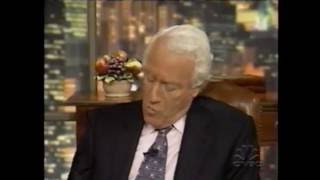
Peter Lynch on Risk
For Peter Lynch, risk is less about market swings than about owning businesses you do not understand, paying prices that leave no upside, or ignoring weak finances.
- Risk starts with not knowing what you own or why you own it.
- Volatility is normal and can help you if the business is sound.
- A stock is risky when price runs ahead of earnings and leaves little room for error.
- Weak balance sheets and deteriorating companies are real dangers.
- Trying to predict markets, rates, or the economy does not reduce risk.

“If I'm right, how much am I going to make? If I'm wrong, how much am I going to lose?”Charlie Rose interview, 1997 · 8:53
Risk begins when you buy something you cannot explain
Lynch’s first test of risk is simple: do you actually understand the company and your reason for owning it? If you cannot explain the business and the case for the stock clearly, you are taking a kind of risk that has nothing to do with day-to-day price movement. He insists that you should know what you own and have a concrete reason for owning it.13
That is why he pushes investors away from treating stocks like symbols on a screen. A stock represents a business, and buying without understanding that business turns investing into guessing. For Lynch, that kind of guessing is dangerous because it leaves you unable to judge whether a decline is a bargain, a warning sign, or something to ignore.45
Volatility is uncomfortable, but ignorance is worse
Lynch does not define risk mainly as volatility. He treats market declines as normal and says investors need the stomach to live through them. The emotional challenge is real, but a falling stock price by itself does not tell you whether the investment has become more dangerous.67
In fact, when you understand the company and its finances, volatility can work for you. He says declines are going to happen and that investors can take advantage of them if the business is still doing fine. That means the real question during a drop is not whether the chart looks scary, but whether the original business case still holds.89
This is also why he warns against anchoring on past price moves. A stock is not safe because it has already fallen, and it is not a good buy because it is going up. Price action alone does not reduce risk.1011
Overpaying creates risk because there is little room for error
Lynch ties risk closely to valuation. He wants stock prices to be judged against earnings and earnings performance, not excitement. When a stock already reflects great future results, even being right about the company may not lead to much upside.1213
That is why he frames risk as a practical upside-versus-downside question. Before buying, he asks how much he can make if he is right and how much he can lose if he is wrong. A stock selling at a huge multiple is risky because the market is already assuming a lot has to go right.141513
This approach makes risk less abstract. Instead of asking whether a stock feels hot or safe, Lynch asks whether the current price leaves a favorable payoff if the business performs well and a tolerable loss if it does not.13
Weak balance sheets make bad surprises more likely
Lynch repeatedly comes back to financial strength. He says to look at the company and the balance sheet, because weak finances can turn an ordinary problem into a permanent loss. Debt, lack of cash, and fragile net worth matter because they reduce a company’s ability to survive trouble.916
He presents this as basic homework, not advanced analysis. In his view, even simple work can reveal whether a company has lots of debt, no cash, and obvious signs of trouble. Risk rises sharply when investors skip that work and buy on tips, stories, or familiarity alone.1617
This is one reason he says avoiding deteriorating businesses is so important. A sound business with a solid balance sheet can endure volatility. A weak business may not.916
Forecasting the market does not protect you from risk
Lynch is blunt that predicting the economy, interest rates, or the next move in the stock market is futile or a waste. He does not think macro forecasts are a reliable way to control risk. Even if that knowledge would be useful, he does not believe investors actually have it.181920
Instead, he shifts attention to what investors can know: the business, its balance sheet, its earnings power, and the reason the stock should be higher over time. That keeps risk management tied to facts about the company rather than guesses about the next recession or market swing.92122
His long-term confidence comes from businesses growing profits over time, not from anyone’s ability to call the next thousand points in the market. That is why he can admit uncertainty about near-term markets while still being decisive about what makes a stock risky.232425
Lynch on risk, in his own words
“If I'm right, how much am I going to make? If I'm wrong, how much am I going to lose?”
“…stock market price ought to be dictated by earnings and earnings performance…”
Where to watch
 Peter Lynch on Investing Fundamentals: Know the Business, Stay Patient2023 · 14 min · full transcriptBest short explanation of practical risk checks: understand the business, inspect the balance sheet, and know why the stock should go higher.
 Peter Lynch on Buy What You Know: research, patience, and avoiding losers2019 · 6 min · full transcriptShows why casual stock-picking is dangerous and why basic research helps you avoid weak companies.
 Peter Lynch on Value Investing: Buy Great Businesses on Sale1997 · 13 min · full transcriptBest for Lynch’s risk-reward framing and his warning about stocks with huge expectations already priced in.
 Peter Lynch on Investing Basics: Know What You Own1994 · 61 min · full transcriptUseful for seeing how Lynch treats volatility as normal and even helpful when you understand what you own.
 Peter Lynch on High Stock Prices: What To Do When Valuations Run Hot1990 · 15 min · full transcriptBest on valuation risk: when prices run ahead of earnings, future returns and downside get worse.
Questions people ask
- How does Peter Lynch think about risk and reward when buying stocks?
- What did Peter Lynch mean by 'buy what you know'?
- What did Peter Lynch say about buying during market drops?
- What did Peter Lynch say about how to know if you should own a stock?
- What did Peter Lynch say about predicting recessions?
- What did Peter Lynch say about whether the rules of investing change over time?
Sources
Every quote above, word for word from the transcripts. Numbers match the text.
“I think the same rules applied 50 years ago applied 5 years ago, applied 20 years from now. Yeah. First of all, you have to know what you own, whether it's a fund or stock, and you have to have a reason for it. And you ought to be able to explain to an 11-year-old in 2 minutes or less why you own it. Saying, "And this sucker's going up," is not a good reason. I've tried that one. It doesn't work.”
“I think the same rules applied 50 years ago, applied five years ago, apply 20 years from now. Yeah, first of all, you have to know what your own—whether it's a fund or stock—and have to have a reason for it, and you oughta be, I'll explain to an eleven-year-old in two minutes or less why own it. And "this sucker's going up" is not a good reason. I've tried that one; that doesn't work.”
“Behind every stock there's a company; these are not lottery tickets.”
“You really got to be careful.”
“The key organ in your body in the stock market is your stomach.”
“The stock doesn't know you own it.”
“If you like a stock at 14 and it goes to 6, that's great. You understand the company, you look at the balance sheet, and they're doing fine. You're hoping to get to 22 with it. 14 to 22 is terrific. 6 to 22 is exceptional. So, you take advantage of these declines. They're going to happen. No one knows when they're going to happen. It'll be very—People tell you about it after the fact that they predicted it, but they predicted it 53 times. And, uh, so, you can take advantage of the volatility in the market if you understand what you own.”
“Look at the company, look at the balance sheet.”
“The stock's going up is not a good reason.”
“…this sucker's going up" is not a good reason.”
“…stock market price ought to be dictated by earnings and earnings performance…”
“But let's say if a company—just think of this as being—you say to yourself, "I think this company's gonna earn something in the future." If it's already discounting that, if it's selling at a huge multiple, you say it's already, it has to work, and then it's only going to stay even. So you have to say yourself, "If I'm right, how much am I going to make? If I'm wrong, how much am I going to lose?" That's the risk-reward ratio in stock shop. We talk about, if I'm right, I hope I'm going to double, triple my money. If I'm wrong, maybe I lose 30, 40 percent. That's a favorable ratio. You say, if I'm right, the stock's not going to go up, it's already discounting terrific things.”
“If I'm right, how much am I going to make? If I'm wrong, how much am I going to lose?”
“…if I'm right, how much am I going to make?”
“Well, I think it bothers me that people are very dangerous when they invest. This word, "play the market," that's a dangerous term. But if you do some work, do some research, know what you own, look at the research, look at the balance sheet—if you can add eight and eight and get fairly close to 16, you find out this company has lots of debt, no cash, they're in trouble, you shouldn't own it. So, a little bit of research, people are careful. They buy a refrigerator, they can't really take a vacation, and they'll put five, ten thousand dollars some stock to hear on the bus or the party—that's dangerous.”
“…you have to do some more work. That's the important point.”
“It's futile to predict the economy, interest rates, and stock market.”
“Trying to predict the market is really a waste.”
“So, that's the kind of stocks I like to buy. But, I'm telling you, people don't do this. And I'm talking sophisticated people, unsophisticated people, they don't know what the company is. What's the story? And it's very important to know it because it doesn't always work. And you have to keep posted. Uh, now, here's a big point. Remember this one. It's futile to predict the economy, interest rates, and stock market. I mean, people keep trying to do this. I mean, this would be useful. I would love to know when we get every recession. I'd love to know when interest rates are going to go up and down. I'd love to know when the stock market's going up. That would be helpful. I would like to get next year's Wall Street Journal. Uh…”
“What is the reason the stock should be higher?”
“Well, we've had 13 recessions since World War II, and we've had 13 recoveries. Maybe we're going to have one. If this is a recession, it's probably the most predicted one ever. You know, I never know when we're going to go. I'd love to know the future. I think it would help. I'd be a better investor. I'd pay five extra dollars for next year's Wall Street Journal; it would really help. I cannot predict the future. But this one, this recession, is so expected, so predicted, maybe it's coming. I don't know.”
“I have no idea what the next thousand points going to do.”
“I have no idea what the next thousand points gonna do.”
“Corporate profits will be a lot higher ten years from now.”
How this guide was made: drafted with AI from the full transcripts of the recordings cited, then checked: every quotation must match a transcript word for word and be the speaker's own words, and an independent review gates accuracy. Methodology and corrections.