Peter Lynch on Investing
Peter Lynch sees investing as owning understandable businesses, doing the homework, ignoring macro forecasts, and letting earnings drive results over time.
- Know what you own and why you own it
- Treat stocks as businesses, not as bets or lottery tickets
- Ignore market, interest-rate, and economic forecasting
- Focus on earnings, balance sheets, and a simple company story
- A few well-understood winners can matter more than constant activity

“…the single single most important thing to me in the stock market for anyone is to know what you own…”National Press Club luncheon lecture, 1990 · 11:01
Investing starts with knowing what you own
For Lynch, the first rule of investing is not about charts, forecasts, or clever trading. It is understanding the business behind the stock and having a clear, concrete reason for owning it12.
He thinks your explanation should be simple enough that a child could follow it. If you cannot explain what the company does and why it should do well, that is a warning sign that you do not understand the investment well enough34.
This is also why he rejects momentum-style thinking. Owning something because it seems to be going up is not a thesis; the thesis has to come from the company itself67.
“…the single single most important thing to me in the stock market for anyone is to know what you own…”National Press Club luncheon lecture, 1990 · full transcript →
A stock is a business, not a ticket in a game
Lynch repeatedly brings investing back to economic reality: behind every stock is a company. That means the investor’s job is to understand how the business makes money, where its sales come from, and what could make the story better or worse89.
He is especially hard on the idea of playing the market like a pastime. In his view, casual speculation becomes dangerous when people put real money into businesses they have not researched.
That business-owner mindset also helps with discipline. A falling stock price by itself tells you nothing about the company’s value; the stock does not care who owns it, so your decision has to rest on the facts of the business, not on your attachment to the position1213.

“Behind every stock there's a company; these are not lottery tickets.”Financial media interview, 2019 · full transcript →
Stop trying to predict the economy and the market
One of Lynch’s strongest views is that forecasting the economy, interest rates, or the next move in the market is mostly a waste of time. He says plainly that no one can predict the market in a reliable way, and he treats this kind of prediction as a distraction from real investing work141516.
Instead of guessing about big macro forces, he wants investors to focus on company facts. What matters is whether the business is improving, whether the balance sheet is sound, and whether the competitive story still holds9.
This does not mean the economy never matters. It means you should respond to what is actually happening in the business rather than pretending you can consistently foresee recessions, rates, or market turns ahead of time18.
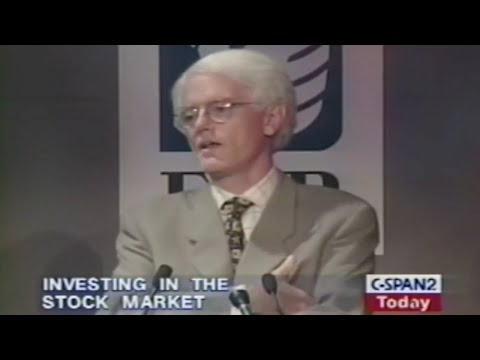
“It's futile to predict the economy, interest rates, and stock market.”Stock market lecture, 1997 · full transcript →
Look for earnings power, sound finances, and favorable odds
Lynch ties long-term stock results to what happens in the underlying business, especially earnings. He argues that stock prices should be grounded in earnings performance, and over several years business results and stock results are closely linked1920.
That is why research matters. He wants investors to check balance sheets, debt, cash, and the basic financial strength of the company before buying, because weak finances can sink an otherwise appealing story.
He also frames investing as a risk-reward exercise. You should ask what you can make if the thesis is right and what you can lose if it is wrong, while being wary of stocks already priced for perfection at huge multiples2122.

“…stock market price ought to be dictated by earnings and earnings performance…”Interview with Charlie Rose, 1990s · full transcript →
Use your edge, be selective, and stay patient through volatility
Lynch believes ordinary investors can do very well because they can start with what they already know from work, shopping, and daily life. But that edge only counts if it leads to further research rather than impulse buying23242526.
He does not think you need to know hundreds of companies. In his view, it is enough to follow a manageable handful closely, because a few good stocks can make a big difference and constant activity is not the point27282930.
Patience matters because volatility is normal. If the business remains sound, market declines can improve the opportunity rather than destroy it, and the investor’s real challenge is emotional stamina rather than IQ31323334.

“If you like a stock at 14 and it goes to 6, that's great. You understand the company, you look at the balance sheet, and they're doing fine. You're hoping to get to 22 with it. 14 to 22 is terrific. 6 to 22 is exceptional. So, you take advantage of these declines. They're going to happen. No one knows when they're going to happen. It'll be very—People tell you about it after the fact that they predicted it, but they predicted it 53 times. And, uh, so, you can take advantage of the volatility in the market if you understand what you own.”National Press Club luncheon, 1994 · full transcript →
Lynch on investing, in his own words
“…the single single most important thing to me in the stock market for anyone is to know what you own…”
“It's futile to predict the economy, interest rates, and stock market.”
“Behind every stock there's a company; these are not lottery tickets.”
“You ought to be able to explain to an 11-year-old in 2 minutes or less why you own it.”
“…stock market price ought to be dictated by earnings and earnings performance…”
“…the key organ in your body and the stock market is your stomach, it's not the brain…”
Where to watch
 Peter Lynch on Stock Picking: How Average Investors Can Win1990 · 61 min · full transcriptBest full statement of his investing philosophy: know what you own, ignore forecasts, and use company facts.
 Peter Lynch on Investing Basics: Know What You Own1994 · 61 min · full transcriptClear explanation of why downturns are normal and how patient investors can use volatility.
 Peter Lynch on Stock Picking: Build a Simple Story1990 · 51 min · full transcriptStrong guide to building a simple stock story and judging different kinds of companies.
 Peter Lynch on Buy What You Know: research, patience, and avoiding losers2019 · 6 min · full transcriptShort, sharp reminder that buy what you know means research, not familiarity alone.
 Peter Lynch on Value Investing: Buy Great Businesses on Sale1997 · 13 min · full transcriptGood on selectivity, risk-reward, and buying strong businesses when price gives you a better setup.
Questions people ask
- How does Peter Lynch think about risk and reward when buying stocks?
- How many stocks does Peter Lynch think an amateur investor can follow?
- What did Peter Lynch mean by 'buy what you know'?
- What did Peter Lynch say about buying during market drops?
- What did Peter Lynch say about how to know if you should own a stock?
- What did Peter Lynch say investors should focus on when following a stock?
Sources
Every quote above, word for word from the transcripts. Numbers match the text.
“…the single single most important thing to me in the stock market for anyone is to know what you own…”
“You have to have a reason why you think a stock will go up.”
“A good story is one that you could tell a fifth grader and he or she would understand.”
“You ought to be able to explain to an 11-year-old in 2 minutes or less why you own it.”
“…this sucker's going up" is not a good reason.”
“I think the same rules applied 50 years ago, applied five years ago, apply 20 years from now. Yeah, first of all, you have to know what your own—whether it's a fund or stock—and have to have a reason for it, and you oughta be, I'll explain to an eleven-year-old in two minutes or less why own it. And "this sucker's going up" is not a good reason. I've tried that one; that doesn't work.”
“Behind every stock there's a company; these are not lottery tickets.”
“Focus on the company. What is it making? Where's its money coming from? What is the competition doing? Ignore all the background noise. Just keep checking that fundamental story. See if it's valid, see if it's getting better, see if it's getting worse. Know what category your stock is in and how those stocks behave. If your stock isn't behaving as you expect, then try and find out why. The answer changes the story. Then think again. Keep your story up to date. Don't check on it three times a day, but don't just ignore it either. And checking the price of the stock does not count; it's checking the fundamental story.”
“The stock doesn't know you own it.”
“The stock does not know you own it.”
“It's futile to predict the economy, interest rates, and stock market.”
“No one can predict the market.”
“Trying to predict the market is really a waste.”
“So, that's the kind of stocks I like to buy. But, I'm telling you, people don't do this. And I'm talking sophisticated people, unsophisticated people, they don't know what the company is. What's the story? And it's very important to know it because it doesn't always work. And you have to keep posted. Uh, now, here's a big point. Remember this one. It's futile to predict the economy, interest rates, and stock market. I mean, people keep trying to do this. I mean, this would be useful. I would love to know when we get every recession. I'd love to know when interest rates are going to go up and down. I'd love to know when the stock market's going up. That would be helpful. I would like to get next year's Wall Street Journal. Uh…”
“…stock market price ought to be dictated by earnings and earnings performance…”
“There's a hundred percent correlation with what happens to a company's earnings over several years.”
“If I'm right, how much am I going to make? If I'm wrong, how much am I going to lose?”
“But let's say if a company—just think of this as being—you say to yourself, "I think this company's gonna earn something in the future." If it's already discounting that, if it's selling at a huge multiple, you say it's already, it has to work, and then it's only going to stay even. So you have to say yourself, "If I'm right, how much am I going to make? If I'm wrong, how much am I going to lose?" That's the risk-reward ratio in stock shop. We talk about, if I'm right, I hope I'm going to double, triple my money. If I'm wrong, maybe I lose 30, 40 percent. That's a favorable ratio. You say, if I'm right, the stock's not going to go up, it's already discounting terrific things.”
“Everyone can do well in the stock market.”
“Buy what you know. Buy in your industry. Buy what you know.”
“People don't understand their natural advantages and they don't use them.”
“…you have to do some more work. That's the important point.”
“You have to look at 20 to find one.”
“All you need is a few good stocks.”
“You don't need a lot of five baggers to make a lot of money…”
“You probably already know a few companies quite thoroughly. The amateur investor probably can follow between five and eight companies. They could lecture on these five or eight companies. They know them very well. There's 10 to 15,000 public companies in the United States. There's lots more overseas. So you don't have to be experts on lots of companies. You just have to know a few very well. It's a lot of fun. It only takes a few hours a month. It's not a full-time job.”
“The key organ in your body in the stock market is your stomach.”
“The key organ here is not the brain, it's the stomach.”
“If you like a stock at 14 and it goes to 6, that's great. You understand the company, you look at the balance sheet, and they're doing fine. You're hoping to get to 22 with it. 14 to 22 is terrific. 6 to 22 is exceptional. So, you take advantage of these declines. They're going to happen. No one knows when they're going to happen. It'll be very—People tell you about it after the fact that they predicted it, but they predicted it 53 times. And, uh, so, you can take advantage of the volatility in the market if you understand what you own.”
“…the key organ in your body and the stock market is your stomach, it's not the brain…”
How this guide was made: drafted with AI from the full transcripts of the recordings cited, then checked: every quotation must match a transcript word for word and be the speaker's own words, and an independent review gates accuracy. Methodology and corrections.