Trust and Purpose
Lynch’s lessons extend beyond picking stocks to trust, management, service, and productive enterprise.

“Volunteers have a dramatically lower rate of absenteeism, a much higher level of job satisfaction, much lower mortality rates. You'll be happy about that, and substantially less turnover than any other money else in the companies. And they're huge positive for the people they help. This is incredible, whether it has 50 employees or 50,000 employees. Let's get some more enthusiasm for volunteerism. It costs nothing to give an award for recognition for volunteer of the week, volunteer of the month, volunteer of the quarter, volunteer of the year. Costs nothing to do that.”Academy of Distinguished Bostonians induction speech · 6:33
The lesson
Lynch’s broader view starts with a simple habit: listen well and keep checking reality. He treats listening as a core leadership skill, not a soft extra, because good decisions depend on hearing what customers, competitors, suppliers, and colleagues are actually saying. That is also how you avoid complacency: you keep working, keep testing your view, and keep asking whether the business still has years of growth ahead rather than assuming everything is fine123.
That same discipline shapes how he thinks about leadership. Lynch draws a sharp line between persistence and stubbornness: strong leaders stay with hard problems, but they also remain open to new information. In practice, that means pushing forward without shutting out dissent, and creating room for useful ideas to reach you instead of being filtered away by hierarchy43.
Trust matters because markets only work well when people believe the system deserves confidence. Even when confidence in the system is shaken, Lynch does not abandon the long-term case for owning businesses: his core rules stay the same across eras—know what you own, know why you own it, and be able to explain it simply567.
He also sees business as a social institution, not just a machine for quarterly results. That is why he makes a practical case for volunteerism: it helps the people served, but it also strengthens companies through lower absenteeism, higher job satisfaction, and lower turnover. His advice is concrete—recognize volunteers, encourage participation, and treat service as part of a healthy culture rather than a side activity8910.
Underneath all of this is Lynch’s belief that productive enterprise creates real value for real people. Jobs come from companies, especially new and growing ones, so society benefits when people are willing to take informed risks and build useful things. That spirit is not limited to famous startup hubs or perfect conditions: you make progress with what you have, find practical tools, and keep showing up with energy over time111213.
5 principles from Peter Lynch
Listen before you conclude
Treat listening as part of the work of judgment. Whether you are evaluating a company or leading a team, keep gathering information from the people closest to the facts instead of relying on assumptions.
“And there's a real amazing difference between being persistent and being stubborn. And I think great leaders do say this: persistence is good, and stubbornness is terrible. But do great managers listen? Yes, they do. Absolutely, categorically. I've come to know and believe that listening is a principal, essential quality. And sometimes managers get so high up, the people around their mind give them ideas, that they're just filtering everyone else. They don't have a chance to listen. And the best manager will make sure they do hear.”
Be persistent, not stubborn
Stay committed to solving problems, but do not confuse commitment with refusing to update your view. If the facts change, a good leader adjusts without losing resolve.
“Persistence is good, and stubbornness is terrible.”
Keep your reasons simple and clear
If you cannot explain why you own something in plain language, your thesis is probably weak or secondhand. Use simplicity as a test of whether you truly understand the business and your reason for backing it.
“You ought to be able to explain to an 11-year-old in 2 minutes or less why you own it.”
Rebuild trust with time and behavior
Trust cannot be restored by slogans alone after serious abuses. Expect it to recover gradually through accountability, better oversight, and consistent behavior that earns confidence again.
“The same rules applied 50 years ago applied 5 years ago, applied 20 years from now.”
Treat service as productive, not peripheral
Volunteerism is not just morally admirable; Lynch argues it also improves organizational outcomes. Encourage and recognize service because it can help both the community and the workplace.
“Volunteers have a dramatically lower rate of absenteeism…”
Moments to watch
In his own words
The quotes behind the lesson, word for word from the transcripts. Numbers match the lesson above.
“Listening is a principal, essential quality.”
“So complacency is the, "I don't know, I'll agree, just everything's going right," you sort of forget to check the facts. You say things are starting to slip in the comments, not the fundamentals, they're starting to mature. They're saying competitors coming along. So being complacent is the worst one. And is that the one that happens most often? Yeah. Well, unless you're working hard. If you're working hard, you're always checking with competitors, you're checking with customers, suppliers, you're trying to do work to find out, is this company still early? Am I—does it have years and years of growth ahead of them? Then you stay with it. You know the stuff goes down.”
“And there's a real amazing difference between being persistent and being stubborn. And I think great leaders do say this: persistence is good, and stubbornness is terrible. But do great managers listen? Yes, they do. Absolutely, categorically. I've come to know and believe that listening is a principal, essential quality. And sometimes managers get so high up, the people around their mind give them ideas, that they're just filtering everyone else. They don't have a chance to listen. And the best manager will make sure they do hear.”
“Persistence is good, and stubbornness is terrible.”
“The same rules applied 50 years ago applied 5 years ago, applied 20 years from now.”
“You ought to be able to explain to an 11-year-old in 2 minutes or less why you own it.”
“I think the same rules applied 50 years ago applied 5 years ago, applied 20 years from now. Yeah. First of all, you have to know what you own, whether it's a fund or stock, and you have to have a reason for it. And you ought to be able to explain to an 11-year-old in 2 minutes or less why you own it. Saying, "And this sucker's going up," is not a good reason. I've tried that one. It doesn't work.”
“Volunteers have a dramatically lower rate of absenteeism…”
“It costs nothing to give an award for recognition for volunteer of the week…”
“Volunteers have a dramatically lower rate of absenteeism, a much higher level of job satisfaction, much lower mortality rates. You'll be happy about that, and substantially less turnover than any other money else in the companies. And they're huge positive for the people they help. This is incredible, whether it has 50 employees or 50,000 employees. Let's get some more enthusiasm for volunteerism. It costs nothing to give an award for recognition for volunteer of the week, volunteer of the month, volunteer of the quarter, volunteer of the year. Costs nothing to do that.”
“In life, you've got to find sticks.”
“Get there early, stay late and enjoy the ride.”
“What? The only thing that creates wealth, the only thing that creates taxes to pay for all these wonderful things, is jobs. There is something magic about jobs, and jobs come from companies. Start, that's what I should say. Small companies creating jobs create all the jobs, right? So that's what I'm talking. This is not voodoo economics. This is the real thing. You have to encourage people to take some risk, to put their money out and go start a business. It's a risky proposition.”
Reflect
- Where in your work or investing are you relying on a conclusion you have not recently checked against fresh facts or direct conversations?
- Think of a decision you feel strongly about. What would distinguish healthy persistence from plain stubbornness in that case?
- What is one way you could recognize or encourage service in a team, company, or community you are part of?
Check your understanding
Go deeper
 Peter Lynch on Investing and Education: Listening, Learning, and Long-Term Growth1993 · 26 min · full transcript
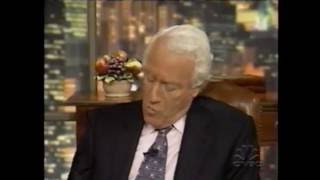 Peter Lynch on Long-Term Investing: Buy Stocks, Not Hype2002 · 15 min · full transcript
 Peter Lynch on Volunteerism: Why It Matters for Business8 min · full transcript
 Peter Lynch on Cul-de-Sac Startup: Three Principles13 min · full transcript