Forecasts Are Distractions
Lynch’s answer to macro prediction: stop guessing and study companies.
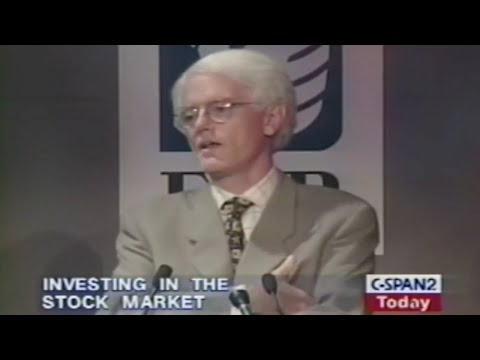
“So, that's the kind of stocks I like to buy. But, I'm telling you, people don't do this. And I'm talking sophisticated people, unsophisticated people, they don't know what the company is. What's the story? And it's very important to know it because it doesn't always work. And you have to keep posted. Uh, now, here's a big point. Remember this one. It's futile to predict the economy, interest rates, and stock market. I mean, people keep trying to do this. I mean, this would be useful. I would love to know when we get every recession. I'd love to know when interest rates are going to go up and down. I'd love to know when the stock market's going up. That would be helpful. I would like to get next year's Wall Street Journal. Uh…”Stock market lecture, 1997 · 2:18
The lesson
Lynch’s starting point is simple: most macro forecasts are not useful for stock selection. He treats predictions about recessions, interest rates, and the market as distractions because investors usually cannot act on them with reliable accuracy, even though those topics consume endless attention1234. His alternative is not ignorance, but a shift in attention: away from guessing the next headline and toward understanding the business you actually own or may buy5.
That shift matters because stocks are claims on real companies, not just moving prices. Lynch argues that the investor’s job is to know the company story in plain language and track the facts that drive its results, especially earnings and business conditions, rather than abstract economic theories78. In his framing, broad predictions about next year’s economy are much less valuable than direct evidence from companies, industries, and management about what is happening now9.
This also changes how you respond to volatility. If you do not understand the business, price declines invite fear and random decisions; if you do understand it, a decline can become something to evaluate against the balance sheet, operations, and original reason for owning it11. Lynch’s point is not that every fallen stock is attractive, but that price alone tells you very little without company knowledge, and market swings are inevitable whether or not anyone predicted them in advance1113.
Lynch also warns that speculation pulls investors away from this discipline. People chase tips, watch quotes, and treat stocks like short-term bets instead of ownership stakes in businesses, which leads them to focus on market noise rather than company evidence1415. His answer is practical: use your natural advantages, study businesses you can understand, write down why you own something, and keep checking whether the original business case is still true1617.
So the chapter’s core lesson is not merely 'ignore forecasts.' It is 'replace forecasts with work that is more connected to reality': know what you own, follow the business, and let company facts matter more than macro opinion59. For Lynch, the investor who spends less time predicting and more time understanding is better prepared for both opportunities and market declines111.
5 principles from Peter Lynch
Stop trying to predict the economy
Lynch’s view is that time spent forecasting recessions, rates, or the market is usually wasted because those variables are too hard to predict consistently. Instead of building decisions on guesses, redirect your effort toward business facts you can actually study and verify.
“I think it’s a waste to spend any time predicting the economy.”
Know what you own in plain language
Before buying a stock, be able to explain the business and why you own it simply. If you cannot describe how the company makes money and what must go right, you are too dependent on price movements and outside forecasts.
“…the single single most important thing to me in the stock market for anyone is to know what you own…”
Use company evidence, not macro noise
Give more weight to what companies, industries, and current business conditions are showing than to broad predictions about next year. Earnings, balance sheets, product strength, and industry observations are more actionable than headline speculation.
Treat volatility as a test of your understanding
A falling stock price does not by itself tell you whether the business case is broken. When prices move sharply, go back to the company, the balance sheet, and your original thesis rather than assuming the market has given you a forecast.
Use your natural advantage instead of tips
Lynch thinks investors often ignore the businesses and industries they already understand and replace that edge with speculation. Start with companies you can observe directly and analyze, rather than trading on rumors or short-term excitement.
“People don't understand their natural advantages and they don't use them.”
Moments to watch
In his own words
The quotes behind the lesson, word for word from the transcripts. Numbers match the lesson above.
“It's futile to predict the economy, interest rates, and stock market.”
“I think it’s a waste to spend any time predicting the economy.”
“…if you spend 14 minutes a year on economics, you've wasted 12 minutes…”
“So, that's the kind of stocks I like to buy. But, I'm telling you, people don't do this. And I'm talking sophisticated people, unsophisticated people, they don't know what the company is. What's the story? And it's very important to know it because it doesn't always work. And you have to keep posted. Uh, now, here's a big point. Remember this one. It's futile to predict the economy, interest rates, and stock market. I mean, people keep trying to do this. I mean, this would be useful. I would love to know when we get every recession. I'd love to know when interest rates are going to go up and down. I'd love to know when the stock market's going up. That would be helpful. I would like to get next year's Wall Street Journal. Uh…”
“…the single single most important thing to me in the stock market for anyone is to know what you own…”
“There's a hundred percent correlation with what happens to a company's earnings over several years.”
“People worry about too much money supply, what's happening to the price of oil, who's the president, who's being nominated for the Supreme Court, it's the ozone layer. It has nothing to do—McDonald's earnings go up, the next 10 years the stock will go. But what they will say to you, Peter, is that, as you know—and why am I telling you this? But it's fun to tell you this—they're telling you that these other things influence the amount of earnings of a particular company. If we're in a recession, people are not going to spend as much money on going to the movies or whatever they do. And therefore, you got to pay attention to these other things because they impact on earth. They are very important, but you have no idea of knowing what they're going to do. Alan Greenspan is the head of the Federal Reserve, right? He cannot predict interest rates.”
“I don’t remember anybody telling me about that. I never got any phone calls two years before that saying we’re going to have this incredible recession. I didn’t read about that anywhere, so I think it’s a waste to spend any time predicting the economy. When I talk to CEOs and they tell me the corporate business stinks, that’s economics to me. When I talk to General Motors, they say steel prices are going down, that’s economics. When somebody tells me next year we’re going to have a recession, that’s weather forecasting, you know, it’s totally useless.”
“If you like a stock at 14 and it goes to 6, that's great. You understand the company, you look at the balance sheet, and they're doing fine. You're hoping to get to 22 with it. 14 to 22 is terrific. 6 to 22 is exceptional. So, you take advantage of these declines. They're going to happen. No one knows when they're going to happen. It'll be very—People tell you about it after the fact that they predicted it, but they predicted it 53 times. And, uh, so, you can take advantage of the volatility in the market if you understand what you own.”
“The key organ in your body in the stock market is your stomach.”
“People don't understand their natural advantages and they don't use them. So that's—that's bad number one. But worse number two is they don't. If you don't think you're a good ice skater, or if you're convinced you're not a good cellist, you're not going to try it. But people are buying stocks anyway. They're not discouraged; they just think it's a gamble. Yeah, so therefore they go forward and they bet on one stock for a week and a half and it goes up and they—they make two dollars on it, then they sell it and they buy something else. When three years is over, all they've done is generate a lot of commissions. They've probably lost money. That's a mistake.”
“From when I started out, you would buy a small company, you'd buy an option, the money eventually would help the company. Now, it’s turned to people buying—you would actually own part of the company. If you wanted to speculate, now people are buying options on whether General Motors are going to go up or down. That doesn't benefit General Motors. That’s like betting whether BU is going to beat BC in a hockey game. None of the money gets to BU or BC. That’s what the stock market has become. People are buying options on whether Sears is going to go up or down the next three months. I mean, that’s a tragedy.”
“Buy what you know. Buy in your industry. Buy what you know.”
“People don't understand their natural advantages and they don't use them.”
Reflect
- What investing decision of yours has depended more on a macro view than on a clear understanding of one company’s business and earnings drivers?
- Pick one stock you own or follow. Can you explain in two minutes what the company does, why it might do well, and what facts would prove you wrong?
- If one of your holdings fell 30% tomorrow, what company facts would you check first before deciding whether to hold, buy more, or sell?
Check your understanding
Go deeper
 Peter Lynch on Stock Picking: Know What You Own1997 · 47 min · full transcript
 Peter Lynch on Investing Basics: Know What You Own1994 · 61 min · full transcript
 Peter Lynch on Stock Picking: Buy What You Understand1993 · 20 min · full transcript
 Peter Lynch on Investing Philosophy: The Market Is Not the Economy1990 · 7 min · full transcript
 Peter Lynch on Stock Picking: How Average Investors Can Win1990 · 61 min · full transcript
- What did Peter Lynch say about predicting recessions?
- What did Peter Lynch say about predicting the economy?
- What did Peter Lynch say about predicting the stock market?
- Why did Peter Lynch say you should ignore market predictions and focus on earnings?
- Why does Peter Lynch say it is futile to predict the economy and the stock market?
- What did Peter Lynch say about following Congress and government news when picking stocks?