Selling and Mistakes
Lynch’s discipline is not “never sell”; it is sell when the story breaks.
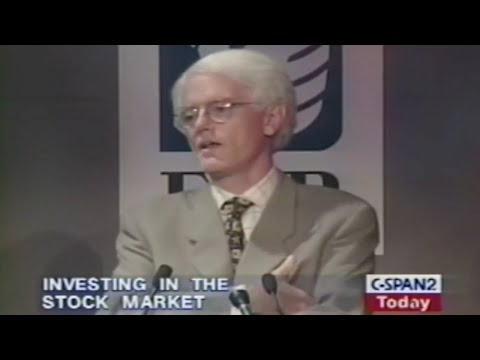
“When you sell a stock is exactly the reason you buy it. You write down the reason you bought it. I bought Subaru. Subaru was a distributor. They didn't... They didn't make any... They didn't actually make the cars. I think it was Fuji Heavy Industries made the cars. They distributed uh Subarus in the United States. The stock was uh, I think the stock was 80. It was up from 6 to 80. I was a little late on this, but it didn't bother me and I should never let that bother you. I didn't let it bother me. They had $40 a share in cash. They had a very low price car. It was well liked. It did well for about 5 or 6 years and I think the stock went from 80 to 320. The reason I sold Subaru, thank you. The reason I sold Subaru is Hyundai came in with a low cost car.”Stock market lecture, 1997 · 39:25
The lesson
Lynch’s rule on selling is simple: sell for the same kind of reason you bought. That means your decision should come from the company’s story, not from the stock chart or your emotions. He repeatedly centers the work on knowing what you own and keeping that story current, because the right question is whether the business case is still intact, improving, or worsening, not whether the price has recently risen or fallen.123
That is why he warns against using price movement as your guide. A falling stock is not automatically cheap, and a rising stock is not automatically finished. He stresses that investors should ignore market prediction and background noise, then check the company’s facts instead: what it makes, where the money comes from, what competition is doing, and whether the expected business behavior is still happening.4563
For winners, the main danger is complacency. If the company still has a long runway, you do not sell merely because the stock has gone up; you keep doing the work. Lynch describes staying with a company when the business remains in its earlier growth phase and continuing to test that view by checking customers, suppliers, competitors, and management commentary rather than staring at the quote screen.3
For losers, the main danger is stubbornness dressed up as patience. Lynch draws a sharp line between persistence and stubbornness, and he applies that line through research: if balance-sheet weakness, debt, cash problems, or a deteriorating business becomes clear, the stock should not be defended just because it is down. The practical edge comes less from predicting winners perfectly than from avoiding businesses whose fundamentals are getting worse.10
This discipline also helps with common emotional mistakes. You do not need to regret stocks you missed, because missing an idea costs nothing; owning a broken story is what hurts. And you should not treat investing like a game or average down blindly on a tip—the work is to know the business, write down the thesis, and revisit it when facts change.11121314
5 principles from Peter Lynch
Sell when the business story breaks
Write down why you own the stock in business terms, then revisit that exact thesis over time. If the reasons are no longer true or the expected improvement fails to appear, that is the sell signal.
“When you sell a stock is exactly the reason you buy it. You write down the reason you bought it. I bought Subaru. Subaru was a distributor. They didn't... They didn't make any... They didn't actually make the cars. I think it was Fuji Heavy Industries made the cars. They distributed uh Subarus in the United States. The stock was uh, I think the stock was 80. It was up from 6 to 80. I was a little late on this, but it didn't bother me and I should never let that bother you. I didn't let it bother me. They had $40 a share in cash. They had a very low price car. It was well liked. It did well for about 5 or 6 years and I think the stock went from 80 to 320. The reason I sold Subaru, thank you. The reason I sold Subaru is Hyundai came in with a low cost car.”
Do not confuse price action with fundamental change
A stock’s recent move does not tell you whether the company is healthier or weaker. Ignore forecasting and market noise, and check operating facts instead.
“The stock doesn't know you own it.”
Let winners run if the runway is still there
A gain alone is not a reason to sell. If the company is still early in its growth path and your checks with customers, suppliers, competitors, and results still support that view, continue to hold.
Avoid stubbornly holding deteriorating companies
Patience is useful only when the underlying case remains sound. If debt, lack of cash, competitive pressure, or weakening fundamentals show the business is getting worse, act on that evidence rather than defending the position.
Do the work before adding to a loser
A lower price is not proof of value. Before buying more, recheck the balance sheet, the business condition, and the original thesis so you are not turning a mistake into a larger one.
“…you have to do some more work. That's the important point.”
In his own words
The quotes behind the lesson, word for word from the transcripts. Numbers match the lesson above.
“When you sell a stock is exactly the reason you buy it. You write down the reason you bought it. I bought Subaru. Subaru was a distributor. They didn't... They didn't make any... They didn't actually make the cars. I think it was Fuji Heavy Industries made the cars. They distributed uh Subarus in the United States. The stock was uh, I think the stock was 80. It was up from 6 to 80. I was a little late on this, but it didn't bother me and I should never let that bother you. I didn't let it bother me. They had $40 a share in cash. They had a very low price car. It was well liked. It did well for about 5 or 6 years and I think the stock went from 80 to 320. The reason I sold Subaru, thank you. The reason I sold Subaru is Hyundai came in with a low cost car.”
“…the single single most important thing to me in the stock market for anyone is to know what you own…”
“Focus on the company. What is it making? Where's its money coming from? What is the competition doing? Ignore all the background noise. Just keep checking that fundamental story. See if it's valid, see if it's getting better, see if it's getting worse. Know what category your stock is in and how those stocks behave. If your stock isn't behaving as you expect, then try and find out why. The answer changes the story. Then think again. Keep your story up to date. Don't check on it three times a day, but don't just ignore it either. And checking the price of the stock does not count; it's checking the fundamental story.”
“The stock doesn't know you own it.”
“It's futile to predict the economy, interest rates, and stock market.”
“Trying to predict the market is really a waste.”
“Well, I think it bothers me that people are very dangerous when they invest. This word, "play the market," that's a dangerous term. But if you do some work, do some research, know what you own, look at the research, look at the balance sheet—if you can add eight and eight and get fairly close to 16, you find out this company has lots of debt, no cash, they're in trouble, you shouldn't own it. So, a little bit of research, people are careful. They buy a refrigerator, they can't really take a vacation, and they'll put five, ten thousand dollars some stock to hear on the bus or the party—that's dangerous.”
“You cannot lose money in a stock you don't own.”
“One of my books listed on two pages. In the 13 years I ran Magellan, I listed, uh, I think about 200 stocks A through L on the New York Stock Exchange. They went up tenfold or more that I didn't own. While I ran Magellan, I had owned lots of stocks. I listed 200 stocks in April. I stopped at letter L. And I didn't own any of the shares. They went up tenfold or more, and I was able to do okay with Magellan. And people worry all the time about missing Microsoft, missing Western Digital, missing, uh, United Airlines. They spend all their time worrying about stocks they missed. You cannot lose money in a stock you don't own. That's very important. You have—the only way to lose money is buy stock, have it go down, and sell it. That's the only way.”
“This word, ‘play the market,’ that's a dangerous term.”
“…you have to do some more work. That's the important point.”
Reflect
- Think of a stock, project, or decision you are currently holding onto. What was the original thesis, and what specific facts would prove that thesis is broken?
- Have you ever sold something mainly because it had gone up, or kept something mainly because it had gone down? What business evidence did you ignore?
- What 2-3 fundamental checks could you use regularly to stay persistent without becoming stubborn?
Check your understanding
Go deeper
 Peter Lynch on Stock Picking: Know What You Own1997 · 47 min · full transcript
 Peter Lynch on Investing and Education: Listening, Learning, and Long-Term Growth1993 · 26 min · full transcript
 Peter Lynch on Buy What You Know: research, patience, and avoiding losers2019 · 6 min · full transcript
 Peter Lynch on Stock Picking: Buy What Works, Sell What Breaks35 min · full transcript
 Peter Lynch on Stock Picking: How Average Investors Can Win1990 · 61 min · full transcript