Oprah Winfrey on Loneliness and Connection: Build Stronger Bonds

What Oprah talks about
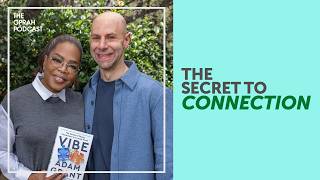
Oprah Winfrey interviewed Adam Grant in 2026 about loneliness, human connection, and practical ways to build deeper relationships in everyday life.
Also known as: How to Feel Less Lonely and Build Deeper Connections; Adam Grant on loneliness and connection.
Oprah talks with Adam Grant about why human connection is one of the most pressing problems in the world. They discuss loneliness, the habits that make relationships feel empty, and why many people struggle to create genuine bonds in everyday life.
Grant shares practical ideas from his book Vibe: the power of pebbling, asking better questions, and recognizing different kinds of relationships. The conversation also looks at how friction, honesty, and shared missions can strengthen teams, friendships, and marriage.
Oprah interviews Adam Grant, with guest examples and audience caller Tracy joining partway through.
In her words
“Human connection is one of the most pressing problems in our world.”
“Being personal says I see you.”
“What do you love to do?”
“We have choices in every interaction.”
Key points
- Loneliness is a signal to reconnect, but many people do not know how to turn that feeling into action.
- Small gestures like sending a thoughtful article or meme can be a meaningful bid for connection.
- Deep connection often starts with better questions, not small talk.
- Different relationships serve different purposes: allies, pals, and companions.
- A little friction or a hard conversation can actually strengthen trust when handled with care.
- Shared goals and mutual respect can help very different people work well together.
- Healthy relationships depend on accepting people as they are while setting clear boundaries.
Full transcript: Oprah Winfrey, Oprah podcast interview with Adam Grant (2026)
This episode of the Oprah podcast is presented by our partner AT&T. >> You say human connection is one of the most pressing problems in our world. (music) >> A lot of people are spending more time alone than they ever have at any point in their life, and they feel like their relationships [music] are empty, their interactions are missing something. And the evolutionary purpose of loneliness is actually to signal that we're being excluded, and that's supposed to prompt us to reach out, to connect, to reconnect, but a lot of people don't know how. >> So, you say that a little friction in a relationship can actually be beneficial. >> Brené Brown and I, we had a public feud and I swore Oprah that I would not talk to her ever again, and we didn't communicate for the next 4 years. >> Really? Hello and welcome. I'm glad to be here.
With the only Oprah podcast, and I know y'all are glad 'cause y'all love Adam Grant. How do we know? Because he had y'all looked at that last show, I have to tell you, so many people, like 4 million people, watched that last show that we did together. So, he's written a new book about trying to have good vibes. >> [laughter] >> He's a New York Times best-selling author, renowned organizational psychologist. Is that how you define yourself? >> As far as I know. >> Okay. Adam Grant is out with his ninth book now, *Vibe, The Secrets of Strong Connections in a Lonely World.* Love that title. And I welcome you again. >> Thank you, Oprah. Can I just take you everywhere? I just want to export your vibe to every interaction I have. >> I think we have a good vibe together,
but what would make you come up with this idea? What? How did this come to you? I was asking you before we even started, like, what is your process? You're one of the smartest thinkers on the planet. You are, and you know it, so don't even try to act like, "Oh, no, not me." So, you're one of the smartest thinkers on the planet, and so are you just thinking all the time? Are you writing things down in your computer when they—or you're in your on your iPad? Are—your notes filled with ideas? How do—How—How does it work? >> I mean, I'm definitely thinking and writing all the time. In fact, I carry a little notebook everywhere. And I can't read half of what I write, but >> Oh, so you're not doing it on your notes. >> I'm scribbling usually first and then typing. I think this—
came out of just having this whiplash experience of I—I go into an interaction and it's with somebody I know really well, and we get along great, and I just stumbled my way through it. And it was awkward and I felt like I was off. Why am I so bad at this? And then later that day, I met a stranger, and we had instant chemistry. And it just—it—it struck me that this is a big puzzle. Like, why is it so easy and effortless to vibe in certain situations and not in others, and how can we vibe with more of the people more of the time? >> Well, this is what struck me that on the very first page, prologue even, you write, "I love people, but for a long
time I struggled to connect with them." But something opened up for you when you're in a class with a professor, Brian Little. What happened? >> Well, I was—I was definitely a very shy, nerdy, introverted kid. And I think in a lot of my interactions, people would just roll their eyes. And actually, growing up, my friends called me Mr. Facts, Oprah. And this I don't think that was a compliment. >> Yeah. >> [laughter] >> They were making fun of me. And you know, I—I think that— >> Well, they were making fun of you, but they really—they there is a level of envy and—and respect in there, too. >> If that's true, I did not see it at the time. But I'll take your word for it. But, you know, I got—I got to college and I think I—you know, I had a bunch of friends, but it was sometimes hard to make a deep connection with other
people. And then I wandered into Brian Little's personality psychology class. And Brian is the most charismatic speaker I've ever seen. He electrified us with his knowledge. And then he revealed that he was an extreme introvert. So introverted that he would run to hide in the bathroom after lectures so he didn't have to interact with students. >> Wow. >> 'Cause he was going to get overwhelmed. And I saw that, and I said, "Okay, if Brian can learn to do this, maybe I could, too." And I noticed that he was creating an electric charge in our classroom. He was getting us so excited and so curious. >> In the class? >> There were—there were over 100. >> Oh, okay. So, this is a big class. >> Yeah, he was—he was giving lectures, and I made more good friends in that class than I had pretty much the rest of college.
>> Because of the vibe he created. >> The vibe he created, but also the way that he changed our interactions. So, he would come into a lecture and say, "Did you know it's physically impossible to lick your elbow?" And then people would start trying, and he'd say, "Oh, well, the extroverts are trying to lick their neighbor's elbow." And we'd burst out laughing, and he gave us the freedom and the courage to have deeper conversations with each other and to really connect in a way that we hadn't before. >> And so, when you were in that classroom, were you thinking, "I want to be like that, or I want to somehow figure out what that thing is?" >> Both. >> Both. >> Both. I wanted to try to figure out how to be more like Brian, but I also wanted to reverse engineer what was he doing to create that magical vibe.
>> And you say, You say, "Human connection is one of the most pressing problems in our world." For anyone listening, they're just—I have to say—trying to get through their own day. We know that. So, how can they recognize what they're missing from human connection? I think if you don't have it, do you know you don't have it? How is it, do you think, impacting just the everyday person? >> I think some people are acutely aware of it. >> Yeah. >> Um, we have a lot of people spending more time alone than they ever have at any point in their life, and they feel like their relationships are empty, their interactions are missing something. And the evolutionary purpose of loneliness is actually to signal that we're being
excluded, and that's supposed to prompt us to reach out, to connect, to reconnect. But a lot of people don't know how. And I think that's the real challenge that I wanted to take on with Vibe. >> Well, this is what you do, and early on in the book, you do that so well. You say, "Being personal says I see you." You say a powerful way to be personal is something you call pebbling. So, let's describe that for us. >> I love pebbling. >> Yeah. >> So, it's named after a mating ritual that some penguins do. What they'll do is they'll collect these smooth, shiny stones and then present them to a potential mate. And it's sort of a way of signaling, "Look, I—I'd be a good partner. We could build a nest together." >> Mhm. >> And I think the digital equivalent of pebbling today is when you send somebody
else an article you loved, a reel you watched, a meme that struck a chord with you. >> Pebbling. >> Yeah, that's a little pebble. And I want to be clear, Oprah. I'm not saying you should go and spam people with random junk from the internet, right? >> Right. >> A great pebble is you watched a show and it reminded you of somebody you haven't talked to in a few years. Or you realize somebody you just met would love it, and you send it to them. And that is a little bid for connection. It's a gesture of care, and you're flexing your memory. You're showing, "Look, I've paid enough attention to you to see what you would find interesting, and I wanted to take the time to share that with you." >> And isn't it even better if you actually say that? If you actually say, "This reminded me of you," or this, uh, inspired me because you did blah blah blah blah
blah for me, right? That even helps the vibe. >> The research on this shows that if you send somebody a pebble and you just say, "Hey, you know, I noticed this and I was thinking of you," it brings you closer together, and it can help you get back in touch if you've been out of contact. >> That. >> Are you a pebbler, Oprah? >> I'm a pebbler, but more often people are pebbling me. I get a lot of pebbles. >> Too many? >> Yeah, 'cause I can't—I can't keep up with all the pebbles. I'd never heard [music] of pebbling before, but it makes sense because so many of us, we do it. >> [music] >> It's a reminder that even the smallest gesture can create a meaningful connection, something [music] our partners at AT&T believe in, too. I've always believed that one of the greatest [music] gifts we can give
another person is our full attention. To really listen, to show up, and to let them know they've been heard. Genuine connection is something I believe in, and so do our partners at AT&T. It's not just [music] attention to the words that someone is saying, but what they're really trying to tell us. Because I've said [music] this for years, true communication is that moment when somebody knows they've been heard and seen. [music] That's what I value in every conversation here on the Open podcast. We talk, we listen, we ask the questions that can lead us to something deeper, an [music] exchange of ideas that I hope resonates with you. What we
do with that connection is what matters. (music) And sometimes that kind of connection begins with something very simple, picking up the phone to share good news, to hear [music] the voice of someone who's made a difference in your life, or just to say, "I'm here." Because AT&T is there [music] when the connection matters. And connecting changes everything. >> You write that when we don't manage the vibe, we make mistakes, and a vibe can become a matter of life and death. How so? >> I think the most striking study I've seen on this is Hackman and Pisano. What they do is they study cardiac surgeons, and they want to know, do you get better with practice? And most of us
would assume the answer is yes. Yes. But what they see is it doesn't seem to help a lot to have, you know, a dozen or a hundred surgeries under your belt. And they're trying to figure out why. What they realize is that surgeons operate at different hospitals throughout a week. And when they break down their data by hospital, what they see is every surgery you do at hospital A will reduce your patient mortality rate by about 1%. Tomorrow you go to hospital B, and it's as if you've never practiced before. You are starting over, you're a complete novice. And what's happening is at hospital A, that shared experience you have with nurses, anesthesiologists, technicians, you've had a chance to build up a vibe. You've learned each other's strengths and weaknesses, you've developed effective routines. And when you have to go to hospital B, you—you're missing
That vibe with a new team, it's as if you're a rookie all over again. >> Starting all over. >> Exactly. >> Well, you have a ritual to help people light a spark of connection in just 60 seconds. So, how does that work? >> Okay, this was invented by my mentor Jane Dutton. >> Okay. >> She calls it a rapid high-quality connection exercise. And she says, "Okay, you have 1 minute, turn to the person next to you, and try to build a connection with them." And that's it, 60 seconds. And then when I do this, I ask people to close their eyes and raise their hand if they think they vibed. And about 3/4 of people will raise their hands. >> Really? >> It's kind of magical. >> Yes. And are they saying anything in particular? Are they doing anything in particular? >> I think the most important thing is it's mutual.
They know that the other person is also looking to vibe. And I think that's missing in a lot of our interactions. We're trying to strike up a conversation with somebody we see as a potential friend, we don't know if they reciprocate, if they also want to bond. And so we hesitate, we resort to small talk, we chat about the weather or sports. I hate that. >> I hate it. >> Okay, I'm glad it bothers you, too. >> Whoa, I hate small talk. It just your eyes glaze over. I don't know what to do. Do I look at my shoe? What do I do? >> It feels like a complete waste of time in a lot of cases. And I think what happens is when you only have 60 seconds, you don't waste time on small talk. You jump right to deep talk. You start to ask instead of what do you do, you ask, "What do you love to do?" >> I think people should stop saying, "What
do you do?" People should just go to "What do you love to do?" Or "What is inspiring you right now?" Or "What's opening you up right now?" >> Let's ask a question that lights the other person up. >> That's right. A great example of a vibe is, uh, one that, uh, Adam gives in the book. He studied astronauts like Katie Coleman, and Katie's story is in the book Vibe, and she joins us. Hi, Katie. I read that you were traveling at how many miles per hour is in space headed toward disaster when you had to rely on the vibe? >> Well, the vibe, it's certainly true. Um, our launch, uh, before our launch, it, it was well known for two things. One, we had the first woman commander, Eileen Collins, be the commander. And second, we were launching a simply amazing telescope
that was going to let us, the whole world see black holes. But after we launched, in the end, the electrical short that happened 6 seconds after liftoff, it made us the most dangerous mission in the history of the Space Shuttle program that did not end in an accident. >> Wow, what year was this? When was this? >> This was in 1999 that we launched that telescope. >> Wow. >> And I mean, the punchline is that, you know, we, we really the first thing I thought about is that we just did that. We did that in the simulator just last week. We can do that. And, you know, if something breaks, we always have several of them, right? And so, we had enough to be going just, we're on course, we're on speed, but we are in the cockpit, we are all
doing our jobs, playing our roles, watching everything. And, and there's a lot of unspoken communication. And in those simulations, we have learned how to listen, how to talk, how to understand when somebody needs some more time to figure out what they're looking at, and then they're going to report. And I would say that it is that kind of vibe, so to speak, that we save lives in dangerous situations with. >> Had you all vibed before? Like, one of the things that I was fascinated with the Artemis 2 crew when I interviewed them here, they were sharing that they spent 3 years building the team so that they had a really great vibe by the time they, you know, were launched into space
together. So, did you all have a vibe before? >> We certainly did over time, but when, when you look at us, Eileen had a daughter, Jeff is a Navy person, our French, our French astronaut, French flight test engineer and and pilot, and then there's me, and then there's Steve Hawley that's actually older than all of us, but actually wiser, too. And so, we had so much to learn together. We were five very different people, but we had about a year and a half to learn about each other and to understand each other and and what we each were going to bring to the mission. And in fact, at one point I said to Eileen, I said, "You know, I know that I'm in charge of the telescope, but you know, I'm really
supposed to have a backup and I still, you know, I worry that the way our crew is configured, I worry that I don't have one." And she said, "Well, you know, Dr. You know that Dr. Steve has done a on a mission just like this before and he may not act like he's he's listening and he will never ever help you in the simulator, but he is there for you." And helping understand that was Dr. Steve's way of being there for me really helped me then just get right into my job and do it. >> What did you learn from Katie and the astronauts? >> Well, one of the the things I Hi Katie, great to see you. >> Hello. >> I love the book. >> [laughter] >> Uh thank you. Well, one of the things that that I learned from from Katie and her crew,
Uh, a different crew, actually. Was it... they had huge differences, Oprah. Uh, it sounds like a bad joke. An American and an Italian and a Russian are going to go to outer space together. >> Yeah. Yeah. >> And I don't think it was easy for them to bond. And one of the things they did was, across their differences, they found an uncommon commonality. They shared their origin stories, and they opened up about what was the defining moment when each of them knew they wanted to leave planet Earth. And all of a sudden they realized, "We share something that very few people can relate to." >> Yeah. You have that common common bond of all of you wanting to have that one goal. Yes. And did that make the shift, make the difference? Finding the common bond? >> Absolutely, but also the story behind, you know, looking, as Adam says in the
book, on my, uh, looking to the past perhaps for clues to how to relate to each other. >> Yeah. >> Is that understanding that for Dmitri, that moment to go, wanting to go to space, didn't happen for a long time, and he talked about being in Siberia and all, and the kinds of work he'd done that he cared about. And I realized that in all of that work, in all of that time, he had literally never worked with a woman before. And so, it was really just that we had to figure out that, because it was new for him. So, it was invaluable to do that experience. >> You're out in space with somebody who's never worked with a woman before? >> Wow. >> [laughter] >> Well, we know where... It's a... It's actually, I think, like any, any endeavor here on Earth, we, we don't pick our teams. >> No.
>> NASA does not exactly pick those teams, certainly for their personalities, or they'd probably do it all wrong, according to >> [laughter] >> Adam's book, right? If they were doing it, but which country, whose turn it is, within that country, which astronaut's career progression or skills, and certainly skills come first, should be on that mission. >> Yeah. >> Yeah. So, we don't pick our crews, and, and people look up to us. And so I like to try to help them understand that we make things work, and even though we're really different, we make them work because the mission that we have in common is actually what focuses us together and helps us not prioritize the stuff that doesn't, that we don't actually have in common. >> So, the way it's described in the book, it feels like the vibe that
you had created, uh, helped you avoid a disaster. Does that feel accurate to you? Yes. >> It does. Adam actually told in a way, two some different parts of our story, and one of them was that... So, there's Dmitri, the Russian, me >> Yeah. >> Um, Paolo Nespoli, Italian. >> The Russian seemed very difficult to get along with. I mean, I don't... I think I'm really good at vibing, but I think I'd have a hard time with the Russian, I would have to say. Yeah. >> [laughter] >> But then, with Paolo, we're, we're kind of different than the instructors. In fact, I was the... I was in charge of the capture of this big school bus-sized supply ship. And the instructors said, "Katie, do... Are you sure you want to do that with Paolo? Wouldn't you rather do it with Scott
Kelly?" And I said, you know, Paolo and I have a great relationship. I mean, we, even though we're really different, it's working. You know, he understands me, I understand him, and then we actually had a situation on orbit when we're about to... It's the second time ever to do this. I mean, it's like having a school bus approach something the size of a factory, and we're going to grab it with the Canadian robotic arm. Well, everything has to be just right. And as I start to go in and actually grab that thing, I am used to Paolo saying, "Good rate, I see you two pins away." And Paolo says nothing. And all of a sudden, I realized I haven't heard anything, and I don't have time to say, "Paolo, what's up?" And meanwhile, he, who can always do this,
we'd never seen the real visual from orbit of what this looks like to have, you know, this arm approaching and you're looking from this way. And so, he couldn't tell me how far away we were at first. And so, once he figured it out, he started to... That's a long way to say that there was sort of like a little stop where the whole world just stopped, and then we each— we each knew where each other was and completed the capture together safely. And everybody was breathing on the ground and up on orbit after we were done. >> So, Katie, what's your advice on creating a vibe between colleagues? I mean, you've done it on Earth and out there in space. What's your... What's your advice for how to do it well? >> I think connecting, finding a way to connect. And I love some of the
suggestions that Adam has in his book where I show a series of pictures when I talk about different ways. You know, there's some people it's easy to connect with, and some people you have to look harder because it's so easy to say, "Boy, not like me and not going to be on my team or not somebody I'm going to reach out to unless I really have to." And that's the way that we lose. And on a space crew, I think we have a real luxury that, like, there were six of us up there: three Russians, two Americans, one Italian. And we look around; it's... there's clearly no one else coming, and the mission is critical. We cannot afford to ignore each other's strengths just because we have a hard time seeing what they are for each other. >> How long were you out there?
>> Not long enough. I was up there almost six months, and then I would have spent another six months in a minute. And that just when you're up there, it feels like every day, every day, to the point we're learning new things about what we need for all of us to be leaving the planet when we want to. >> Don't you see the sunrise like 17 times a day or something? It's like you see the sunrise. >> 16, 16 times. You're in the right ballpark, absolutely. And [clears throat] you're going around the earth, and everyone that my overwhelming impression of looking down at the earth when we go around like that, you know, every hour and a half the earth is turning below us. We literally see every human on the planet, you know, everybody's down there. And I just think if only they could know how close they
are and how easily they could connect together we can, we can meet any challenge. >> Yeah, the thing that when the astronauts, the Artemis just went there, and one of the things that stuck with me is they said we are our own crew. When you look back and realize it, we are our own crew, but we have set up all of our own boundaries ourselves. >> When you come back to all of us, really are. >> Yeah, yeah. We are our >> of spaceship earth. >> We are crew. Thank you so much, Katie. In Vibe, Adam tells the story of NBA legend Joe Dumars, and as a native of Michigan >> [laughter] >> We have to say Joe Dumars. >> Joe Dumars.
I read Joe is your favorite player of all time. >> Joe is my all-time favorite player. >> Well, there he is. >> Hey Joe D. >> Hey Joe. >> What's up Adam? How are you? >> Hi Joe. >> Hi. Hi. How are you? >> I'm good. So you're known for handling, you know, some of the more volatile players I would say >> [laughter] >> in the NBA, raising them up to a higher potential. You know, that's one of my core beliefs. And so how have you been able to do that? >> I think first and foremost one of those things where you, you're bringing in all different backgrounds, cultures, >> Yeah. >> um, everything. You bringing them together, and you really have this one single goal to win.
>> And creative advice. >> is I would went to meet people where they are. >> Yeah. >> And not try to cookie-cutter an NBA team. You can't do that. And so, um, some of my teammates, like Dennis Rodman, guys who I signed in Detroit, uh, Rasheed Wallace, Ben Wallace, the outside world has looked at them as like some tough, difficult guys. Uh, my experience, and I shared this with Adam over the years, is some of the best teammates you could ever have. >> Really? >> And they're viewed as the most difficult guys, but they are the most selfless teammates you're ever going to see. And so, I just always found that you got to meet them where they are, and you can't try to put them in this box. Uh, because if you do, you can put them in there, but they're
not going to be at their best then. >> How did you approach that? Because yes, a lot of the world looks at the people you've worked with as being challenging, difficult, and your approach was what? I'm going to have no judgment? I'm going to, I'm going to meet you where you are and how you are. >> What was very evident from the very beginning with those guys is that two things. One, they were great teammates. And two, they really, really wanted to win. >> Mhm. >> So, all the other stuff, I just refused to allow the other stuff to get in the way. The other stuff was just their personality, what they like to do, what they don't like to do, and I just didn't put the importance on that. The fact that they were great teammates, and they were >> wanted to win. >> obsessed with winning, >> Mhm.
>> Uh, that took precedent over everything else for me. So, I could accept who they were, knowing that these guys will sacrifice anything. >> And so, what struck you about Joe's method? >> Joe, I thought what you did was brilliant. And, uh, I mean, we should really have Joe just describe it, but the principle I took away was he accepted their eccentricities, and he set boundaries for their behavior. And I never thought about that before that you can say, "Look, I accept that you might be the kind of person who's hot-tempered or you might have a meltdown, but here are the behaviors that are okay and not okay." And I think Joe, you did that brilliantly with Rasheed Wallace. >> Yeah, tell, tell, tell us about that, Joe. >> So, when we first acquired him, long ride from the airport in Detroit to the arena. And what I talked to him about was, "Look, I know you are going to get technical fouls. And you get two technical fouls, you're ejected from the game, right?"
>> Right. >> So, what I said to him was, "Look, you can get that first one the first three quarters of the game. Have at it. You want to get a tech during that time, that's great. No problem with me. What you can't do is two things. One, you can't get it in the fourth quarter when it's critical time. >> Right. >> And two, you can't get ejected from the game. So, what he's hearing from me at that point is, I'm not, you know, wagging my finger at him and telling him, 'You must act this way.' I just say, 'Look, I know who you are. I know you're going to get techs. Get them in the first three quarters. Don't get kicked out of the game and don't get
Them at crunch time." Uh, and so, I think Adam was just talking about that. Just that's meeting a person where they are and not, uh, trying to put them in a box that, you know, that they're not going to fit in. And if you do put them in that box, you're going to get half of what he really is. >> Wow. What else impressed you? >> I think just [laughter] the patience that Joe brought to the table. I think, you know, a lot of people would have just written those guys off and said, "I don't care how talented they are, they're toxic to my team." >> Putting up with that. >> Not worth the effort. And Joe looked at that and said, "Look, these these guys have been frenemies to a lot of people. I can turn them into allies." >> Yeah, and the fact, Joe, that you could see that what they really want is to win. >> Absolutely.
>> Yeah. >> Absolutely. I, I, I will say I think part of this, uh, I'm the youngest of seven kids. Guess what? When you're in the house full of kids, >> Yeah. >> you have to learn how to make things work. You have to learn how to get along. Everybody's not going to have the exact same personality. >> Yeah. >> And so, you, you know, it was instilled in me from a very, very young age, uh, that everybody's not the same and that doesn't mean that it's all bad. And so you try to find the best in everybody to make it work. >> So at a young age, you knew how to make strong connections in your house, in your community, with the people you needed in order to survive. >> Absolutely, 100%. >> You could have written this book. Thank you, Joe. Thank you for joining us. Thanks so much and good luck. Good luck.
The season with the with THE NEW ORLEANS PELICANS. >> THANK YOU. THANK YOU. Thank you. Thank you very much. >> So you say that a little friction in a relationship can actually be beneficial. How so? >> I was stunned, Oprah, by the experiments on this. There have been over a dozen experiments where people are asked to think of somebody in their life that they have some tough love to give or a difficult conversation they're avoiding. Could be a friend, a family member, or a colleague. >> Mhm. >> And they're just randomly assigned to go and have that conversation. And they've been avoiding it because they think it's going to destroy the relationship. What the data shows is the exact opposite happens. >> It does. >> Two weeks later, they feel closer to the person they've just confronted and the other person feels closer to them, too. Because they've made an investment in
Saying, "Look, I care enough about you and our relationship to be honest with you." And they're not trying to be brutal. They're trying to be clear and kind. >> Mhm. >> And doing that actually builds the resilience of the relationship. It's basically a commitment to saying, "Look, we, we care about each other enough that we can tell each other the truth." And I think, you know this well, that it's, it's surprisingly easy to have a hard conversation with somebody who is deeply invested in your well-being. >> It is. So on page five you write this. You say, "We're lonely because we're missing connection. And we're missing connection because we're struggling with its foundation interaction."
So Tracy is joining us now from Connecticut, and Tracy, you are feeling exactly this. He could be writing about you. >> Yes. Hi. >> Hi Ophelia. Hi Adam. >> Hi. >> For having me. >> Yes. >> The conversation about making meaningful connections in a lonely digital world really do resonate with me. I'm, I realized that my challenge isn't necessarily meeting people because I'm naturally social and I enjoy good conversation and I regularly attend events as well and do interesting things on my own. But I've noticed that when I'm actually out I often forget how to connect with people. So I'll attend an event and I'll go home, um, but I don't actually make a friendship. And so recently I decided to make a conscious effort to meet more people and build a
Stronger local community. And so I went out by myself recently and afterwards I discovered that there was a poetry event in my building when I got home. And so I went in and I asked if it was open to residents or if it was invite-only and, um, I was able to attend. And I thought it was such a simple thing, um, but it made me realize how many opportunities for connection can exist around me, um, if I actually look for them. And so the question I have for you, Adam, is in a world where we can constantly communicate online, you know, have hundreds or thousands of followers on social media and we're surrounded by people digitally, um, why can't it still feel so difficult to develop genuine friendships? >> Mhm. >> Uh, I love that question, Tracy.
>> Yeah. >> I mean, I, I actually think going and joining a poetry group is a great example of what I would recommend. I think the reason that so many people are struggling with interaction is they don't really know what kind of connection they're looking for. >> Yeah. >> And I found that there, there are three kinds of people in all of our lives and we need them all. >> Okay. >> So I call them allies, pals, and companions. >> Okay. >> An ally is somebody who shares your goals. You're on a mission together. A pal is somebody who shares your interests and hobbies. >> You have fun together. >> And a companion is somebody who shares your values. You have deep care and affection for each other. And I think it's helpful to be really clear about what kind of bond am I trying to form? And not wanting a, an ally to be a
Companion or a pal to be that, to actually understand that it's like the old adage about friends coming to your life for seasons and reasons. Right? Yes. >> Yes. And Tracy, I think your example is so great because you took an interest of yours, poetry, and you said, "Okay, I can go to a group where other people share that interest and I will find instant pals." >> Instant. >> And maybe there are some potential allies there, too, because there are people who might want to write poetry with you. >> Speaking for just millions of people who feel this way right now? Yes. >> Maybe a billion. >> Yeah, maybe a billion. And so, that process, that taking that action, has done what for you? >> Um, I think it made me feel a little bit more comfortable in my skin and talking
to other people and just really trying to figure out like, "Okay, I need to connect. How can I do this?" What it's given me the, um, I get the courage to do that. >> I think poetry is also really clever because it's vulnerable. It's emotional. It invites a level of companionship. When you've, when you're reading poetry with a group of people, you have the opportunity then to confide in each other, to console each other, to show compassion for each other. I think it opens up a channel of communication that we often don't have unless we know people really well. >> And I think poets speak their own language. I mean, I think poetry is obviously its own vibe, if we may say so. Don't you think so? >> Yes, I agree. >> Yeah. >> I married a poet. I cannot disagree with that.
>> Yeah, yeah, it is its own vibe and poets, poets relate to one another in a way that other people don't. You all see the world in a way that other people don't. >> Yes. Oh, definitely, definitely. I agree. >> Yeah. Well, thank you, Tracy. Thank you so much. Thank you for your question. >> Thank you. >> This caught my attention on page 18 where you say people are happier with their friends than spending time with their partners or their children. Really? >> Uh-oh. Yeah. >> Yeah, I can see that, but what did you find? >> Well, when I first read this evidence, I said, "Oh, no. People, you married the wrong person." >> No. >> You're really struggling to connect with your kids. >> For it was really interesting. >> Yeah, the reason is that we do different activities with our friends than we do with our partners and our kids.
>> Open to doing new things. >> We have way more pal interaction with our friends, right? We're usually trying to schedule fun, whether it's a karaoke night or a pickleball game. And unfortunately, a lot of our time spent with our partners and our kids is doing chores, nagging each other. And so, if we want to have a better vibe with members of our family, we should actually spend our time more like we would with our friends. >> Mhm. So, one of the things you also write about in Vibe is how quick we are to make judgments, snap judgments about people. Sometimes the second we meet them, and you see this online all the time. People are making judgments about stories they haven't even—They just read the headline and don't even know all the facts.
So, how did this show up in your life? And I thought what Joe was saying about not judging the players and understanding their traits and characteristics and personality, using that, and then setting limits. But I would just have to say, how did this show up in your life? >> It's shown up in my life over and over again. I've started out disliking somebody and said, you know what, that person is not for me. >> Yeah, this happened with Brené Brown. >> It did. >> That you're now doing a podcast with. >> I mean, Brené Brown and I met once speaking at an event, and then we had a public feud when I had quoted her in an article. I wrote an article, I quoted her. I thought it was a shout-out. It was out of context. She felt it misrepresented her work, and, you know, we ended up having this
this kind of heated debate back and forth. And I swore, Oprah, that I would not talk to her ever again. And we didn't communicate for the next 4 years. >> Really? >> Yeah, 4 years. And then I was in a really tough situation where I was trying to help the US Women's National Soccer Team improve their vibe. And I decided I needed to bring in some outside experts to help convince them that culture and team camaraderie really mattered. And I asked them who they wanted, and the number one pick was Brené Brown. >> Wow. >> And I reached out to her, and to her credit, she said yes right away. She showed up with >> She said yes to you. >> To me? >> Who she was not speaking to for 4 years. >> No, I mean, I didn't know it, but she also had a lot of animosity toward me, but I think we had a common mission, and that made us allies. And Brené is an
extraordinarily generous person, and she went above and beyond to try to help me and them, and I saw a different side of her, and I realized >> There are so many people >> That's so cool. Who clash in one context, but could click in another. >> Wow. And now, so how did the podcast come about? >> One thing led to another, we basically had a surprisingly positive interaction with the soccer team, and then we ended up going on each other's podcasts, and our audience said, "You two should do more together." >> Wow. And so now you are. So you wrote this because you felt a need in the world to share the secrets of strong connections in a lonely world. And you want the reader and those of us in the world to come
Away with what is the—the—the great takeaway? >> I think for me the biggest takeaway of Vibe is that we have choices in every interaction. >> Mhm. >> About what we ask and what we share. And I think so often people assume a Vibe is about matchmaking. They think, "Okay, like I need the equivalent of a dating algorithm to say, okay, are our traits compatible? Is my personality going to mesh with yours?" And that's wrong. Our separate traits do not dictate our shared vibe. Whether we connect is much more about the vibe we build than the one that we've tried to select for. >> Mhm. >> And I think that's good news, because it means we can build chemistry with people
that we didn't like. We can become close with people that we couldn't stand. And it's never too late, I think, to give people a chance at a second impression. >> So you've been married now, what, almost 20 years? >> 20 years, yeah. >> And how do these principles that you're so wise about, how does this play out in your actual personal relationship in marriage when you have a disagreement, for example? >> I mean, Allison is a master of this. So, we have a perpetual disagreement about being late. I run 5 to 10 minutes late for pretty much everything on a good day. >> Okay. >> Because I'm trying to cram too much into my day, and also I just get absorbed in a flow state, and I think those are precious and I lose track of time. And Allison believes it's a mortal sin to be late to anything ever. [laughter]
So, you can imagine how this goes. And after years of fighting about it, she said to me one day, she said, "Look, I know that you have a habit of running late, and let me just tell you, here are the situations where that is not okay. It's, you know, it's fine if you and I agreed we were going to watch a show together, and you come upstairs 10 minutes late. It is not okay if somebody's hosting a dinner party, and you make us late because the food is going to get burned or cold." And she did exactly what Joe Dumars was doing. >> I was just thinking that. >> She, Joe moved. She accepted my tendency, and she contained the damage. >> And she contained the damage, and it's working out for you. >> So far, so good. >> So far, so good. I thank you for coming again. Thank you. >> Honored to be here. Thank you for having me, Oprah.
>> The book is called Vibe: The Secrets of Strong Connections in a Lonely World, and it's available wherever you buy your books. And thank you to our partners at AT&T. Listeners, we're going to vibe together next time. Go well, everybody. Go well. We live in [music] a time of such digital disconnection, something we talk about often here on the Oprah podcast. [music] It's causing many people to feel cut off from the real world. If you're looking to build more meaningful relationships [music] in your life, grab a copy of Adam Grant's new book, Vibe: The Secrets of Strong Connections in a Lonely World, by simply scanning the [music] QR code right there on your screen. Our listeners tell us that the podcast [music] is resonating with you
and is serving as a bright spot in your day. That means a lot [music] to me. So, here's the thing. I would really appreciate it if you like and subscribe to the Oprah podcast on YouTube or wherever you [music] podcast. It's just a quick tap of the subscribe button, and that way [music] you won't miss an episode in your queue. You don't have to pay anything. I know subscribe [music] usually means you're paying something, but this time it means you just are notified when there's [music] something new. There are many more to come that we're excited about. So thank you for watching and listening.
From YouTube captions, lightly punctuated for readability. Timestamps link to the video above. Errors are possible.
Cite this recording
Oprah Winfrey, “Oprah podcast interview with Adam Grant (2026)”, 2026. Transcript and video: Thinkers Archive, https://thinkersarchive.com/oprah-winfrey/loneliness-connection-oprah-podcast-2026/
Quoting a passage? Link to its exact moment: every timestamp above has its own anchor (for example https://thinkersarchive.com/oprah-winfrey/loneliness-connection-oprah-podcast-2026/#t-135).