Oprah Winfrey on Mental Health
Oprah treats mental health as daily inner work: telling yourself the truth, setting boundaries, getting help, and choosing practices that help you feel more at home in yourself.
- Mental health is practical daily care, not just a crisis response.
- Healing starts with truth, self-observation, and seeing family patterns clearly.
- Boundaries matter, especially when relationships damage your well-being.
- Pain should be worked with, not become your identity.
- Connection, service, therapy, and openness help people recover a steadier sense of self.
Mental health is a daily practice of caring for your inner life
Oprah’s view is not that mental health is only about breakdowns, diagnoses, or emergency moments. She treats it as ongoing care for how you live, feel, and relate to yourself every day. Her emphasis is less on perfection and more on learning how to enjoy being alive and to protect that capacity.12
That is why she returns to habits of attention and purpose. She links emotional steadiness to living in a way that is aligned, useful, and consciously chosen rather than driven by old pain or chaos.3
Truth and self-observation are the starting point for healing
A core part of Oprah’s approach is becoming honest about what is actually happening inside you. She is drawn to openness because healing requires naming what has been hidden, whether that is shame, grief, loneliness, or the ways childhood still shapes adult reactions.56
She also treats self-observation as a skill. Instead of being swallowed by every feeling, she encourages noticing the pattern, tracing its roots, and understanding what the emotion is trying to show you. That creates room to respond rather than repeat.6
Boundaries are part of mental health, especially in families
Oprah does not frame family loyalty as an automatic good when a relationship is causing harm. Her conversations about estrangement and grief show that mental health sometimes requires accepting limits, releasing responsibility for other people’s lessons, and protecting your own well-being.89
This view is not casual or cold. It recognizes that family pain runs deep, and that healing often involves accepting that you cannot force change, repair, or insight in another person. Mental health depends on seeing that clearly instead of sacrificing yourself to impossible hopes.89
Healing means breaking shame and family patterns
Oprah often connects present suffering to unmet needs from earlier life. She pays close attention to the child who was unseen, the silence around feelings, and the way pain travels across generations if it is never examined.6
Her answer is not blame but repair. She pushes toward healing yourself so that the pattern does not keep repeating in your relationships, your self-concept, or your emotional life. The goal is to become more at home in yourself than you were before.611
Mental health improves when pain is met with help, discipline, and connection
Oprah’s conversations on recovery make mental health work feel practical and embodied. She values openness to therapy, medication, disciplined care, and the kinds of support that help a person regain stability instead of hiding suffering behind performance or image.12
She also links healing to contribution and connection. When people feel purposeful, useful, and honestly connected to others, pain is less likely to become their whole identity. For Oprah, recovery is not just feeling better; it is living in a way that gives something real back to the world.3
Where to watch
 Oprah Winfrey on Mental Health Recovery: Lady Gaga on pain, trauma, and healing2019 · 56 min · full transcriptBest for Oprah’s most direct engagement with trauma, recovery, therapy, medication, and healing in practice.
 Oprah Winfrey on Happierness: Faith, Service, and Emotional Self-Management2021 · 79 min · full transcriptBest for her broader framework of emotional self-management, purpose, and not becoming your feelings.
 Oprah Winfrey on Spiritual Hygiene: Truth, Boundaries, and Grief2024 · 55 min · full transcriptBest for understanding her focus on daily inner care, truth, grief, and boundaries.
 Oprah Winfrey on Heartbreak and Healing: Finding Your Way Home2025 · 61 min · full transcriptBest for how shame, childhood wounds, and openness shape adult healing.
 Oprah Winfrey on Family Estrangement: Why No Contact Is Spreading2025 · 74 min · full transcriptBest for her thinking on mental health in difficult family relationships and when boundaries become necessary.
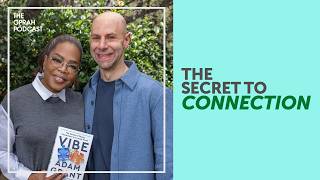 Oprah Winfrey on Loneliness and Connection: Build Stronger Bonds2026 · 39 min · full transcriptBest for her view that loneliness is a signal and that connection is part of mental well-being.
Questions people ask
Sources
Every quote above, word for word from the transcripts. Numbers match the text.
“If you don't enjoy your life, your mother's misery will.”
“You got to enjoy your life.”
“My prayer for myself since I was a little girl was, God, use me.”
“I wanted to be more open.”
“Nobody saw her. Nobody sees me. That was how I grew up, and I have come full circle to really thinking about the child and my mother: how nobody saw her, nobody comforted her. And I think our job is to heal ourselves so we don't continue the pattern, right? I didn't want to be—I admired my mother. She's still my greatest role model. Uh, I think about her probably every single day. I'm in conversation with her. And you were one of those daughters, like Gail, right? You—you were my two best friends, and I didn't have anything close to that kind of relationship with my mother. And both of you talk to your mothers every day, multiple times a day. And I could never—…”
“Somebody else can't learn their lessons in your life.”
“…forgiveness is giving up the hope that the past could be any different…”
“I feel more at home in myself today than I have ever felt in my entire life.”
“There's a discipline for passion…”
How this guide was made: drafted with AI from the full transcripts of the recordings cited, then checked: every quotation must match a transcript word for word and be the speaker's own words, and an independent review gates accuracy. Methodology and corrections.
