Oprah Winfrey on Happiness
Oprah sees happiness as a steady practice of gratitude, self-awareness, service, and living your calling with integrity rather than chasing constant good feelings.
- Happiness is a direction shaped by meaning, not nonstop pleasure.
- Lasting fulfillment comes from service, calling, and integrity.
- Gratitude deepens joy and keeps you grounded.
- Pain and setbacks can become wisdom, redirection, and strength.
- A meaningful life includes feeling at home in yourself and helping others feel less alone.

“My prayer for myself since I was a little girl was, God, use me.”Harvard Business School event, 2021 · 1:13:40
Happiness is something you build, not something you chase
Oprah’s view of happiness is practical and grown-up: it is not constant pleasure or the absence of difficulty. What matters more is living in a way that gives your life purpose, lets you use yourself well, and creates a deeper steadiness through change. That is why she speaks about being used for something larger than herself, not just feeling good in the moment.1
This makes happiness less fragile. If your standard is feeling up all the time, ordinary life will disappoint you. But if your standard is meaning, contribution, and alignment, then even hard seasons can still belong to a good life.12
Meaning comes from calling, service, and helping others
For Oprah, one of the clearest sources of meaning is service. She returns again and again to the idea that life opens up when you ask how your gifts can be used, and that each person has a real calling to discover and live.12
She also connects fulfillment to impact. Her deepest purpose in her public work was not fame itself, but helping people feel less isolated and more capable of changing their own lives. Meaning grows when what you do strengthens somebody else.3
This is also why she can detach from outcomes and still feel joy in the act of giving. When the point of the work is offering something useful, your satisfaction does not depend entirely on applause or success.4
Inner peace starts with being at home in yourself
Oprah links happiness to self-acceptance and emotional honesty. A meaningful life is not built on pretending, hiding, or living from shame; it is built on becoming more open and more settled inside your own life.56
That is why her language about healing matters. She recognizes how deeply shame can wound a person, but she also emphasizes the possibility of coming home to yourself after that wound. Happiness, in this sense, is not perfection. It is the hard-won feeling of inner belonging.76
This inward homecoming also has a practical side: if you do not heal yourself, you repeat old patterns. Meaning therefore includes doing the inner work that stops pain from being passed on.8
Gratitude turns success into fullness
Oprah treats gratitude as more than politeness or optimism. It is a way of seeing life that enlarges joy, keeps ambition from becoming emptiness, and helps you recognize what has already been given.91011
This is part of why her version of happiness does not depend only on achievement. She is thankful for opportunity, for the people who believed in her, and for the chance to do meaningful work. Gratitude keeps success connected to humility and wonder instead of entitlement.912
In her view, gratitude is also generative: it creates space for more life, more awareness, and more blessing. A person who practices gratitude does not just feel nicer; that person becomes more able to receive life fully.1110
Setbacks and integrity shape a meaningful life
Oprah does not define happiness as a smooth path. She insists that setbacks are not final verdicts on your worth, and can even redirect you toward better, truer work. That reframes disappointment from proof that life is broken into part of how life teaches.1314
Just as important, she believes meaning depends on integrity. You cannot build a good life by betraying yourself for status, approval, or success. The outer win is not worth it if it costs your inner ground.15
This combination of resilience and integrity gives her idea of happiness its backbone. You keep going, you learn from pain, but you do not sell yourself out in the process. That is how self-respect becomes part of joy.1315
Oprah on happiness, in her own words
“My prayer for myself since I was a little girl was, God, use me.”
“I feel more at home in myself today than I have ever felt in my entire life.”
Where to watch
 Oprah Winfrey on Happierness: Faith, Service, and Emotional Self-Management2021 · 79 min · full transcriptHer clearest account of happierness as meaning, faith, service, and emotional self-management.
 Oprah Winfrey on Calling and Integrity: Honor Your Path2007 · 93 min · full transcriptBest for understanding calling, integrity, gratitude, and why fulfillment requires self-definition.
 Oprah Winfrey on Heartbreak and Healing: Finding Your Way Home2025 · 61 min · full transcriptShows how healing shame and becoming at home in yourself connects to a deeper kind of happiness.
 Oprah Winfrey on Gratitude and Self-Belief: The road to national TV2010 · 40 min · full transcriptUseful for seeing how gratitude, self-belief, and purpose shaped her sense of a meaningful life.
 Oprah Winfrey on Life Lessons: Be Yourself, Dream Bigger1997 · 27 min · full transcriptStrong on becoming yourself, listening inwardly, and turning life lessons into wisdom.
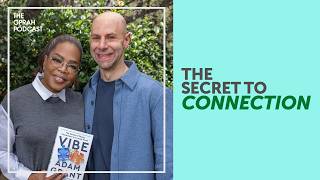 Oprah Winfrey on Loneliness and Connection: Build Stronger Bonds2026 · 39 min · full transcriptAdds the role of connection and relationships in a life that feels less lonely and more meaningful.
Questions people ask
- What did Oprah Winfrey say about betting on herself and owning her show?
- What did Oprah Winfrey say about breaking family patterns and healing childhood pain?
- What did Oprah Winfrey say about detaching from work?
- What did Oprah Winfrey say was the purpose of The Oprah Winfrey Show?
- What did Oprah Winfrey say about finding strength within yourself after heartbreak?
- What did Oprah Winfrey say about where she came from and how far she made it?
Sources
Every quote above, word for word from the transcripts. Numbers match the text.
“My prayer for myself since I was a little girl was, God, use me.”
“Every one of us has a calling.”
“I've been doing talk shows now for years, and one thing I've learned is that no matter how far down you go—and I tell you I have been down on my knees with the best of you—no matter how low you feel, this show, this show always allows people hopefully to understand the power they have to change their own lives. If there's one thread running through each show we do, it is the message that you, you are not alone. And if you feel you are alone, today's show may change all of that. Now, I don't have a lot of problems in my life. I have to tell you, things are going pretty good for me right now. But two things have bugged me for years. The first, my thighs. The second (laughter)”
“And then I decided that from all of my work going forward-- and that was in 1998 when it bombed-- I would no longer be attached to the work. I would allow myself to detach from it and just offer whatever I was doing, offer it. But how? How? I say, this is what I'm doing. This is what I would love for you to receive it, in the manner in which I'm giving it. If you don't receive that, then the joy for me was in the giving of it. Now, witness what just happened. This is a case study. This is a master class in how to use your pain to lift other people up. You just learned that Oprah Winfrey was depressed about a movie.”
“I wanted to be more open.”
“I feel more at home in myself today than I have ever felt in my entire life.”
“Shame filled my body, humiliation filled my soul.”
“Nobody saw her. Nobody sees me. That was how I grew up, and I have come full circle to really thinking about the child and my mother: how nobody saw her, nobody comforted her. And I think our job is to heal ourselves so we don't continue the pattern, right? I didn't want to be—I admired my mother. She's still my greatest role model. Uh, I think about her probably every single day. I'm in conversation with her. And you were one of those daughters, like Gail, right? You—you were my two best friends, and I didn't have anything close to that kind of relationship with my mother. And both of you talk to your mothers every day, multiple times a day. And I could never—…”
“I live in just, yeah, deep gratitude for the privilege and opportunity that he gave me.”
“I just want to acknowledge to the universe right now, to God in all his glory, my praise, my thanksgiving for this experience.”
“Blessings flow in the space of gratitude.”
“I just wanted to say to you that when you first came on the show, I said, "Mrs. Duncan, you have no idea what you've done for me." I now think you might have an idea. Well, thank you. But I am truly amazed that I, who started out in rural Mississippi in 1954 when the vision for a black girl was limited to being either a maid or a teacher in a segregated school, could end up here. It is no…”
“There is no such thing as failure.”
“We decided to do what we do best, and that is a show about and with everyday people. So, in the end, Don Johnson turned us down. And you know what? Doing a show about everyday people was the right call and it's still what we do 25 years later. >> AND THANK YOU, AMERICA. (cheering and applause) >> At the time, I GOTTA TELL YOU, at the time those rhinestone sunglasses were all the rage and they cost a fortune. That's why I wanted mine back.”
“Your integrity is not for sale.”
How this guide was made: drafted with AI from the full transcripts of the recordings cited, then checked: every quotation must match a transcript word for word and be the speaker's own words, and an independent review gates accuracy. Methodology and corrections.
