Oprah Winfrey on Relationships & Family
Oprah treats relationships and family as places where truth, boundaries, and healing matter more than appearances or obligation.
- Family roles do not excuse harmful behavior; safety and impact matter.
- Estrangement can be necessary, but repair starts with truth and honest questions.
- Many adult struggles trace back to unseen childhood pain and repeated family patterns.
- You cannot live someone else’s lessons for them; boundaries protect both love and self-respect.
- Real connection grows through openness, better conversation, and small acts of care.

“…the most important question to be answered here at the end of this show will be: why did they leave?”CBS primetime special follow-up interview, 2021 · 0:46
Ask what is really happening, not what family is supposed to look like
Oprah’s way into family conflict is to ask the central question instead of getting lost in appearances. In public family drama, she focuses first on why people leave, speak out, or pull away, because that gets closer to the real injury underneath the headlines1.
She also distinguishes between people and systems. In the royal interview follow-up, she stresses that conflict can come not only from relatives themselves but from the structure around them, which changes how responsibility should be understood2. That move matters in ordinary families too: sometimes the problem is not just one person, but a pattern, a hierarchy, or a long-protected way of operating2.
“…the most important question to be answered here at the end of this show will be: why did they leave?”CBS primetime special follow-up interview, 2021 · full transcript →
Boundaries matter more than role-based obligation
On estrangement, Oprah does not treat family ties as automatic reasons to stay available at any cost. Her framing gives weight to behavior, impact, and personal safety, which means a parent, child, or sibling relationship must be judged by what it is actually doing to a person, not by the title alone4.
At the same time, she does not present cutting off contact as emotionally simple. Her emphasis on forgiveness points to the inner work required even when distance is necessary: healing often begins when a person stops trying to rewrite what already happened4.

“…forgiveness is giving up the hope that the past could be any different…”The Oprah Podcast, 2025 · full transcript →
Family pain repeats until someone becomes conscious of it
A core Oprah theme is that adult heartbreak often has roots in childhood invisibility, loneliness, and silence. She highlights the way people carry old wounds into later relationships, then unconsciously recreate the same ache until they see it clearly and begin to heal it6.
She returns often to the responsibility of breaking the pattern. In reflecting on mother-daughter pain, she points toward self-healing as the way to stop handing the same wound to the next generation. Openness is part of that repair, because honest expression interrupts family habits built on suppression and shame76.
Love does not mean carrying someone else's life for them
Oprah’s view of healthy love includes firm limits. She insists that each person has their own lessons to learn, which means rescuing, over-functioning, or surrendering your life to another person is not the same as caring for them8.
That is why she ties boundaries to joy rather than guilt. She argues that you still have to claim your own life, your own happiness, and your own right to live fully, even in the shadow of family pain or inherited misery910.
Healing relationships starts with openness and everyday connection
Oprah values directness because false stories and unspoken feelings corrode trust. She notes how painful it is when people in a family or close circle keep repeating things that are not true, and she treats speaking openly as a way of reclaiming dignity and reality127.
But she also sees connection as something built in ordinary moments, not only dramatic confrontations. Her conversations about loneliness and community point toward stronger bonds through real conversation, small gestures of care, and the willingness to let yourself be seen713. The goal is not a perfect family image; it is to become more at home in yourself and therefore more capable of honest connection with others13.
Oprah on relationships & family, in her own words
“…forgiveness is giving up the hope that the past could be any different…”
“…the most important question to be answered here at the end of this show will be: why did they leave?”
“…there's the family and then there's the institution.”
“If you don't enjoy your life, your mother's misery will.”
Where to watch
 Oprah Winfrey on Family Estrangement: Why No Contact Is Spreading2025 · 74 min · full transcriptBest for Oprah’s clearest thinking on estrangement, no contact, forgiveness, and when family bonds are not enough.
 Oprah Winfrey on Heartbreak and Healing: Finding Your Way Home2025 · 61 min · full transcriptShows how childhood pain, shame, and silence shape adult relationships—and how healing begins.
 Oprah Winfrey on Spiritual Hygiene: Truth, Boundaries, and Grief2024 · 55 min · full transcriptBest for Oprah’s view that love needs truth, boundaries, and room for each person to live their own lessons.
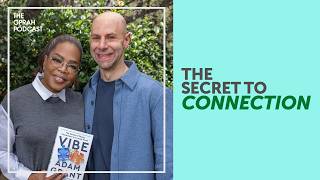 Oprah Winfrey on Loneliness and Connection: Build Stronger Bonds2026 · 39 min · full transcriptUseful for turning loneliness into stronger everyday connection through better questions and small bids for closeness.
 Oprah Winfrey on the Royal Family Interview: Why They Spoke Out2021 · 85 min · full transcriptIllustrates how Oprah separates family loyalty from damaging systems, false narratives, and institutional pressure.
Questions people ask
Sources
Every quote above, word for word from the transcripts. Numbers match the text.
“…the most important question to be answered here at the end of this show will be: why did they leave?”
“…there's the family and then there's the institution.”
“…forgiveness is giving up the hope that the past could be any different…”
“Shame filled my body, humiliation filled my soul.”
“I wanted to be more open.”
“Somebody else can't learn their lessons in your life.”
“If you don't enjoy your life, your mother's misery will.”
“You got to enjoy your life.”
“I think anybody—you can understand this if in your own office or in your own family somebody is saying things about you that are not true…”
“I feel more at home in myself today than I have ever felt in my entire life.”
How this guide was made: drafted with AI from the full transcripts of the recordings cited, then checked: every quotation must match a transcript word for word and be the speaker's own words, and an independent review gates accuracy. Methodology and corrections.

