Oprah Winfrey on Philanthropy
Oprah Winfrey sees philanthropy as using your gifts, platform, and presence in service of something larger so that people feel seen, supported, and empowered.
- Giving starts with calling: use what you have for something greater than yourself.
- Real philanthropy is not image or status; it is authentic power expressed through service.
- She ties lasting impact to touching lives, especially through education, hope, and making people feel remembered.
- Service is for everyone, not only celebrities or donors with money.
- Truth-telling and helping people connect to themselves are part of how she serves.
Philanthropy begins with a sense of calling
Oprah treats philanthropy less as a side activity and more as part of why a person is here. In her view, service is tied to purpose: each person has a calling, and one expression of that calling is to use your life for other people.
That is why her language about service is so broad. She is not only talking about formal charity or public generosity, but about orienting your whole life toward helping, lifting, and illuminating others in whatever way fits your gifts.
The point is not status but authentic power
Oprah draws a sharp distinction between being known and being useful. She argues that real power is not fame, money, or public image, but aligning your outward life with your deepest values and using what you have in service of something greater.
This makes her view of philanthropy moral as well as practical. A gift matters, but the deeper question is who you are being while you give: whether your personality, platform, and resources are serving the soul rather than the ego.
From that perspective, generosity is not mainly about recognition. It is about becoming truly empowered by opening the heart and sharing what has been entrusted to you.
Giving should help people feel seen and remembered
One of Oprah's most consistent instincts is that care becomes real when people feel noticed. Her story about childhood deprivation and her later efforts to help children shows that philanthropy, for her, is not only meeting material needs but restoring dignity and the feeling that someone remembered you.
That same logic helps explain why she talks about touching lives as the true measure of legacy. Impact is not abstract. It is personal, relational, and often felt in whether another person leaves with more hope, more worth, or more possibility than before.
She also connects this kind of help to education and consciousness. Her broader aim is not just relief in the moment, but growth: helping people connect to themselves and rise into a fuller sense of who they can be.
Service includes money, but it is bigger than money
Oprah does not reduce philanthropy to writing checks. She explicitly says support can include donating to organizations, but she presses further and asks how a person will use themselves and everything they have been given.
That widens philanthropy to include talent, voice, discipline, attention, leadership, and presence. In her framework, everyone has something to contribute because everyone has a self, a story, a capacity to serve, and a next right move.
This is an encouraging standard because it makes generosity actionable. You do not have to wait for perfect wealth or perfect certainty; you prepare, respond to opportunity, and offer what you can from where you are.
Speaking truth is also a form of philanthropy
Oprah's idea of helping others includes telling the truth in ways that free people, expose harm, and expand possibility. She calls truth-speaking one of the most powerful tools people have, and she treats it as a social good, not just a personal preference.
That matters for philanthropy because some of the deepest forms of service are not transactional. To tell the truth, create visibility, and help people feel less alone can change what others believe is possible for their own lives.
This also fits her larger sense that her contribution is to help connect people to themselves and raise consciousness. In that frame, media, speech, and listening can all become philanthropic tools when they are used to awaken, dignify, and empower.
Where to watch
 Oprah Winfrey on Authentic Power: The True Reward Is Giving2015 · 22 min · full transcriptHer clearest statement that real power means using what you have to serve something greater than yourself.
 Oprah Winfrey on Humanitarian Calling: We’re Here to Help Each Other2011 · 4 min · full transcriptA concise expression of her belief that human beings are here to help one another.
 Oprah Winfrey on Happierness: Faith, Service, and Emotional Self-Management2021 · 79 min · full transcriptShows how service fits into her larger view of meaning, faith, and a good life.
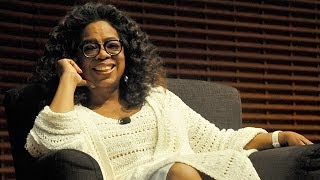 Oprah Winfrey on Purpose & Calling: Listen to Your Inner Voice2014 · 64 min · full transcriptExplains how purpose and inner calling shaped the way she used her platform.
 Oprah Winfrey on Speaking Your Truth: "A new day is on the horizon"2018 · 9 min · full transcriptShows why she treats truth-telling and representation as powerful acts of service.
 Oprah Winfrey on Calling and Integrity: Honor Your Path2007 · 93 min · full transcriptConnects integrity, gratitude, and calling to a life that gives back.
Questions people ask
- What did Oprah Winfrey say about how to use yourself to serve others?
- What did Oprah Winfrey say about true philanthropy?
- What did Oprah Winfrey say her real purpose is?
- What did Oprah Winfrey say about speaking your truth?
- What is Lady Gaga's commitment to mental health and kindness?
- What did Oprah Winfrey say about failure and setbacks?
How this guide was made: drafted with AI from the full transcripts of the recordings cited, then checked: every quotation must match a transcript word for word and be the speaker's own words, and an independent review gates accuracy. Methodology and corrections.