Practice Real Connection
Relationships require presence, accountability, boundaries, and better questions.

“Somebody else can't learn their lessons in your life.”Oprah podcast conversation with Iyanla Vanzant, New York City, 2024 · 0:00
The lesson
Oprah treats connection as something you practice, not something you assume will happen just because people are family or have known you a long time. In her conversations about estrangement and loneliness, the standard is not role or title but whether a relationship is truthful, safe, and life-giving. That is why she pushes you to look at the real pattern of behavior and its impact, while also refusing to pretend loss is painless when a relationship breaks.
She also draws a hard line between love and over-responsibility. You can care deeply about someone and still accept that you cannot live their life, learn their lessons for them, or sacrifice your own well-being to rescue them. Real accountability begins when you stop trying to manage another person's growth and start taking responsibility for your own happiness and the quality of your own days.123
That makes boundaries an act of clarity, not cruelty. Oprah's point is that family pain can run deep, so staying connected at any cost is not automatically noble; sometimes distance is necessary, and sometimes repair begins with honest limits. Forgiveness, in this frame, is not denying what happened but releasing the fantasy that the past can be remade, so you can decide what kind of contact, if any, is healthy now.45
She also points toward a more active way to build connection in everyday life. Loneliness is a signal, but the answer is not waiting for others to read your mind; it is making small bids for contact, asking better questions, and choosing relationships that fit different needs. Instead of expecting one person or one family system to supply everything, you can build a healthier circle by noticing who supports your growth, who brings ease, and where you can show up more honestly yourself.
5 principles from Oprah Winfrey
Judge relationships by reality, not role
Do not assume a relationship is healthy because it is family or long-standing. Look at the actual behavior, its impact on your life, and whether the connection allows truth and safety.
Stop carrying other people's lessons
You can support people without taking over their growth. Apply this by noticing where you are exhausting yourself trying to fix someone instead of letting them face their own consequences.
“Somebody else can't learn their lessons in your life.”
Use boundaries to protect your life
A boundary is not punishment; it is a decision about what contact you can sustain without losing yourself. Sometimes that means limiting access, changing expectations, or stepping back from recurring harm.
“If you don't enjoy your life, your mother's misery will.”
Practice repair without rewriting the past
Forgiveness does not require pretending nothing happened. It means letting go of the demand that the past be different so you can make a clearer decision about what is possible now.
“…forgiveness is giving up the hope that the past could be any different…”
Create connection through better bids and better questions
If you feel lonely, take that as a cue to act. Reach out in small thoughtful ways and ask questions that invite honesty, rather than relying on habit or surface talk.
In her own words
The quotes behind the lesson, word for word from the transcripts. Numbers match the lesson above.
“Somebody else can't learn their lessons in your life.”
“I am responsible for my own happiness…”
“You got to enjoy your life.”
“…forgiveness is giving up the hope that the past could be any different…”
“If you don't enjoy your life, your mother's misery will.”
Reflect
- Where in your life are you maintaining a relationship based on role or history rather than present reality?
- Who are you trying to rescue, and what would change if you let them learn their own lessons while you protected your peace?
- When you feel lonely, what is one better question or small bid for connection you could make this week?
Check your understanding
Go deeper
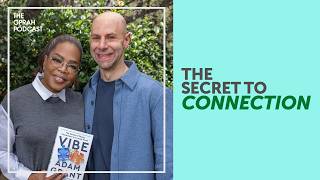 Oprah Winfrey on Loneliness and Connection: Build Stronger Bonds2026 · 39 min · full transcript
 Oprah Winfrey on Family Estrangement: Why No Contact Is Spreading2025 · 74 min · full transcript
 Oprah Winfrey on Spiritual Hygiene: Truth, Boundaries, and Grief2024 · 55 min · full transcript
 Oprah Winfrey on Self-Worth: Know Your Value2016 · 43 min · full transcript
 Oprah Winfrey on Purpose and Self-Worth: Michelle Obama on Becoming2023 · 53 min · full transcript