Lead With Values
Character, dignity, and truth matter in public life.

“…values and character matter most of all in leadership and in life…”Democratic National Convention speech, 2024 · 11:50
The lesson
Oprah treats values as more than private preferences. For her, character shapes leadership, public trust, and the kind of country people build together. That is why she argues that values and character matter in both leadership and ordinary life, and why she connects elections and public life to decency and respect rather than just policy or personality.12
She also ties civic responsibility to truth-telling. Oprah argues that speaking truth is a form of power, especially when institutions are under strain or people are tempted by silence, cynicism, or distortion. In her view, credible communication is not neutral performance; it is the work of exposing what is false, helping people face reality, and making public life more honest.345
That responsibility depends on seeing people clearly. Oprah says credible storytellers must capture the humanity of the people they cover, because truth without human recognition can become cold, and communication without truth becomes manipulation. This is why she frames media work as moral work: to tell stories in a way that deepens compassion while also strengthening accuracy and trust.65
Her idea of leadership also includes dignity and humility. In reflecting on Mandela, Oprah points to dignity under dehumanizing conditions and to humility that refuses to make history about personal ego. She presents reconciliation not as weakness, but as disciplined strength: the ability to exchange views, enlarge your life through dialogue, and keep reason ahead of bitterness when the stakes are highest.7
Finally, Oprah links public service back to self-command. A person who is ruled by comparison, resentment, or the need for approval cannot lead with steadiness. Her call to stop comparing yourself and to take responsibility for your own happiness suggests that integrity begins with inner grounding, which then makes freer, clearer service to others possible.89
5 principles from Oprah Winfrey
Treat character as public substance
Oprah's point is that leadership is not only about skill or messaging. Ask of yourself and others: do actions show decency, respect, and stable values when pressure rises?
“…values and character matter most of all in leadership and in life…”
Use truth as a civic tool
Truth-telling is not merely personal honesty; it helps correct corruption, denial, and confusion in public life. When you communicate, aim to clarify reality rather than flatter a side or feed noise.
“…what I know for sure is that speaking your truth is the most powerful tool we all have.”
Earn credibility by honoring people's humanity
Oprah argues that good communication joins factual seriousness with human recognition. In practice, represent people fully enough that listeners can understand not just what happened, but why it mattered to real lives.
“If you can capture the humanity of people, if you can just capture the humanity of the people of the stories that you're telling, you then get that much closer to your own humanity…”
Choose dignity and humility over ego
Strength is not loud self-importance. Oprah's example of Mandela shows that protecting dignity and practicing humility can widen the space for dialogue, reconciliation, and durable change.
“…that is what true humility is…”
Ground service in inner responsibility
Oprah connects public integrity to private discipline. If you stop measuring yourself against others and take responsibility for your own emotional footing, you are less likely to lead from insecurity.
“…stop comparing yourself to other people…”
In her own words
The quotes behind the lesson, word for word from the transcripts. Numbers match the lesson above.
“…values and character matter most of all in leadership and in life…”
“…decency and respect are on the ballot in 2024…”
“…what I know for sure is that speaking your truth is the most powerful tool we all have.”
“The truth exonerates and it convicts. It disinfects and it galvanizes.”
“…you will become the new editorial gatekeepers…”
“If you can capture the humanity of people, if you can just capture the humanity of the people of the stories that you're telling, you then get that much closer to your own humanity…”
“…that is what true humility is…”
“…stop comparing yourself to other people…”
“I am responsible for my own happiness…”
Reflect
- Where in your work are you tempted to value effectiveness, visibility, or winning over character, decency, and respect?
- Think of a conversation, post, presentation, or decision you influence. How could you make it more truthful and more humane at the same time?
- What personal insecurity—comparison, resentment, fear of approval—most interferes with your ability to serve others clearly?
Check your understanding
Go deeper
 Oprah Winfrey on Freedom and Democracy: Choose Common Sense2024 · 17 min · full transcript
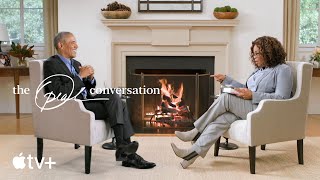 Oprah Winfrey on American Democracy: Obama on Biden and Harris2020 · 5 min · full transcript
 Oprah Winfrey on Prison Dignity and Reconciliation: Mandela's Lesson1994 · 5 min · full transcript
 Oprah Winfrey on Truth and Purpose: USC Annenberg Commencement Advice2018 · 23 min · full transcript
 Oprah Winfrey on Speaking Your Truth: "A new day is on the horizon"2018 · 9 min · full transcript
 Oprah Winfrey on Purpose and Self-Worth: Michelle Obama on Becoming2023 · 53 min · full transcript