Oprah Winfrey on Boundaries & No Contact
Oprah treats boundaries and even no contact as serious tools for truth, safety, and self-respect—not casual punishments—and she keeps the door open to healing that begins with honesty and self-work.
- Boundaries are about protecting your life and peace, not performing loyalty.
- No contact can be necessary, but it should be grounded in truth, impact, and safety.
- You cannot live someone else’s lessons for them or sacrifice your whole life to their pain.
- Healing often means ending old family patterns instead of repeating them.
- Forgiveness matters, but it does not erase the need for limits.
Boundaries start with telling yourself the truth
Oprah’s approach to boundaries begins with honesty. In her conversations about spiritual hygiene and estrangement, she keeps returning to the need to see clearly, especially inside family relationships where guilt, duty, and old wounds can blur judgment. A healthy limit starts when you stop pretending a harmful dynamic is acceptable just because it is familiar12.
That is why she frames boundaries less as a dramatic statement and more as a form of self-respect. If you are constantly shaped by someone else’s chaos, pain, or expectations, you lose contact with your own life. Her emphasis is to recognize what is yours to carry and what is not134.
No contact is not the first answer, but sometimes it is the necessary one
In her discussion of family estrangement, Oprah treats no contact as a real and growing response to deep relational harm. She does not reduce family ties to obligation alone; she puts weight on behavior, emotional impact, and personal safety. The core question is not whether someone has a family title, but whether the relationship is livable and truthful2.
At the same time, she does not romanticize cutting people off. Her framing suggests that no contact should not be used casually or as a trendy label for ordinary conflict. The harder work is to distinguish between discomfort, unresolved pain, and genuinely damaging patterns that require distance2.
You are not required to sacrifice your life to a family pattern
One of Oprah’s clearest ideas is that love does not mean surrendering your whole existence to another person’s unfinished business. She is direct that one person cannot do another person’s learning for them. That makes boundaries an act of realism: you can care, but you cannot heal someone by abandoning yourself1.
She pushes this further when she warns against living inside inherited misery. If a parent’s pain, disappointment, or dysfunction becomes the organizing force of your life, the pattern keeps winning. Her answer is not cruelty or indifference, but the refusal to let another person’s suffering consume your chance to live fully34.
Breaking family cycles may require distance, grief, and self-healing
Oprah often connects boundary-setting to intergenerational pain. She speaks openly about how not being seen in childhood can echo across generations, and how healing requires noticing the pattern instead of unconsciously passing it on. In that frame, a boundary is not only about the present conflict; it is also about refusing to repeat what injured you5.
That process can involve grief. Becoming more open, more at home in yourself, and less ruled by shame may mean mourning the family relationship you wanted but did not receive. Oprah’s language around home, openness, and freedom from humiliation points to a deeper goal than simple separation: a steadier self that is no longer organized around old wounds6.
Forgiveness and repair are possible, but they do not cancel boundaries
Oprah makes room for forgiveness, but not as a command to return to harmful dynamics unchanged. Her view of forgiveness is about releasing the demand that the past be different, which helps free your energy in the present. That can support peace whether reconciliation happens or not2.
So in practice, her view allows two things to be true at once: you can let go internally, and still keep firm external limits. Repair is meaningful only if it is built on honesty, accountability, and a different way of relating. Without that, forgiveness becomes another way of asking the injured person to absorb more pain21.
Oprah on boundaries & no contact, in her own words
“You got to enjoy your life.”
Where to watch
 Oprah Winfrey on Family Estrangement: Why No Contact Is Spreading2025 · 74 min · full transcriptBest for Oprah’s most direct thinking on family estrangement, no contact, obligation, and when distance may be justified.
 Oprah Winfrey on Spiritual Hygiene: Truth, Boundaries, and Grief2024 · 55 min · full transcriptBest for understanding why boundaries are part of truth-telling, self-care, and not living someone else’s life for them.
 Oprah Winfrey on Heartbreak and Healing: Finding Your Way Home2025 · 61 min · full transcriptBest for seeing how shame, childhood wounds, and healing shape the need for stronger emotional boundaries.
 Oprah Winfrey on Self-Worth: Know Your Value2016 · 43 min · full transcriptUseful for the self-worth side of boundaries: protecting your time, space, and sense of self.
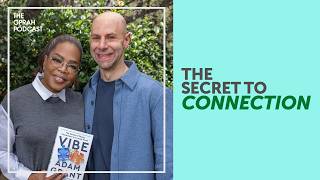 Oprah Winfrey on Loneliness and Connection: Build Stronger Bonds2026 · 39 min · full transcriptHelpful as a counterbalance: connection matters too, so boundaries should clarify healthy relationships rather than shut down all closeness.
Questions people ask
- What did Michelle Obama say she wanted to do after leaving the White House?
- What did Oprah Winfrey say about breaking family patterns and healing childhood pain?
- What did Michelle Obama say about becoming normal again after the White House?
- What did Michelle Obama say about raising her daughters?
- What did Oprah Winfrey say about finding strength within yourself after heartbreak?
Sources
Every quote above, word for word from the transcripts. Numbers match the text.
“Somebody else can't learn their lessons in your life.”
“…forgiveness is giving up the hope that the past could be any different…”
“If you don't enjoy your life, your mother's misery will.”
“You got to enjoy your life.”
“Nobody saw her. Nobody sees me. That was how I grew up, and I have come full circle to really thinking about the child and my mother: how nobody saw her, nobody comforted her. And I think our job is to heal ourselves so we don't continue the pattern, right? I didn't want to be—I admired my mother. She's still my greatest role model. Uh, I think about her probably every single day. I'm in conversation with her. And you were one of those daughters, like Gail, right? You—you were my two best friends, and I didn't have anything close to that kind of relationship with my mother. And both of you talk to your mothers every day, multiple times a day. And I could never—…”
“I wanted to be more open.”
How this guide was made: drafted with AI from the full transcripts of the recordings cited, then checked: every quotation must match a transcript word for word and be the speaker's own words, and an independent review gates accuracy. Methodology and corrections.
