Naval Ravikant on Science
Naval treats science as an open-ended search for better explanations, where truth grows through creativity, criticism, and error correction rather than consensus or rote observation.
- Science is about understanding reality through better explanations, not memorizing jargon or deferring to consensus.
- Knowledge grows by creative guesses and criticism; observation alone does not produce truth.
- Good explanations are testable, risky, and hard to vary, which is why science stays permanently open.
- This view leads Naval to rational optimism: reality is comprehensible, problems are soluble, and progress can continue indefinitely.

“Understanding is the thing to strive for, not the words.”Tim Ferriss Show interview, 2016 · 24:43
Science starts with understanding, not vocabulary
Naval’s first filter for science is whether you actually understand something from the ground up. He repeatedly contrasts real understanding with memorization, jargon, and the appearance of expertise. If you cannot explain an idea simply and re-derive it for yourself, you do not really know it yet.12
That standard matters beyond classrooms or credentials. For Naval, science is valuable because it improves judgment and helps you see the world more honestly, not because it gives you elite-sounding terms to repeat. He wants explanations that make reality clearer and decisions better.34
Science advances through conjecture and criticism
Naval rejects the idea that science is mainly built by collecting more and more observations. Repetition by itself does not explain anything. The real work is proposing guesses about reality and then subjecting those guesses to criticism.567
This is why he is drawn to Popper and Deutsch. On this view, people do not passively read truth off the world; they creatively generate explanations and then try to refute them. Science is a truth-seeking process, but a fallible one, where the best we have at any moment is our current best explanation.478
A good scientific theory is hard to vary and easy to challenge
Naval’s standard for a strong explanation is not just that it fits the facts after the fact. It should be vulnerable to failure. The theory should make narrow, risky claims about reality rather than flexing to accommodate every outcome.47
That is why falsifiability matters so much in his view. A claim becomes stronger when it can be tested and potentially shown wrong, and when you cannot casually tweak it to save it from criticism. Science earns trust not by declaring certainty, but by exposing explanations to error correction.597
Science is never settled, and that is a strength
Naval sees science as permanently unfinished. Even our best theories are provisional, which means science does not end in final certainty. It remains open to new conjectures, new criticism, and better explanations.1089
He treats slogans about settled science with suspicion when they imply that creativity can be closed off. For him, the openness of science is not a weakness or a source of despair. It is the reason progress remains possible, because every theory can in principle be improved.89
The same error-correction logic applies beyond laboratories
Naval does not confine the scientific spirit to formal science. He connects explanation and error correction to better judgment in life, to freer discussion, and to systems that improve by allowing criticism and turnover. The pattern is the same: let ideas compete, expose them to challenge, and keep what survives.49
That also explains why he values beginner’s mind and intellectual honesty. If all knowledge is corrigible, then learning requires the willingness to be wrong and start again. For Naval, science is not just a profession or a method; it is a way of thinking that can upgrade decisions across the board.153
Naval on science, in his own words
“Understanding is the thing to strive for, not the words.”
“…science is not simply about observing the same thing over and over again…”
Where to watch
 Naval Ravikant on Science and Rational Optimism: The Beginning of Infinity2021 · 66 min · full transcriptBest single overview of Naval’s scientific worldview: explanation, optimism, Popper, and why progress has no final endpoint.
 Naval Ravikant on Explanation and Error Correction: Science, Markets, Speech2021 · 61 min · full transcriptBest for understanding why Naval thinks science is about explanation and error correction rather than repeated observation.
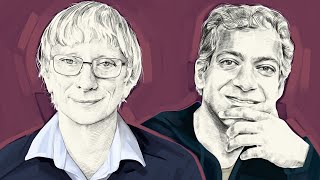 Naval Ravikant on Fabric of Reality: How Knowledge Grows2023 · 108 min · full transcriptShows how Naval connects science to knowledge growth, creativity, and a broader worldview about reality and human progress.
 Naval Ravikant on Happiness and Anxiety: Self-Reflection, Not Noise2016 · 122 min · full transcriptGrounds his science view in a practical habit of seeking real understanding instead of jargon, status, or consensus.
 Naval Ravikant on AI Creativity and Personhood: Why ChatGPT Isn't AGI2023 · 55 min · full transcriptApplies his standards of explanation and understanding to AI, creativity, and what current systems still lack.
Questions people ask
- What did Naval Ravikant say about David Deutsch's books changing how he thinks?
- What did Naval Ravikant say about good explanations in science and life?
- What did Naval Ravikant say about progress and the end of science?
- What did Naval Ravikant say about rational optimism?
- What did Naval Ravikant say about whether science is settled?
- What did Naval Ravikant say science is really for?
Sources
Every quote above, word for word from the transcripts. Numbers match the text.
“Understanding is the thing to strive for, not the words.”
“This is a very deep point. Yep. And I think that a lot of times that we just define something with another definition or we just throw out a piece of jargon as if that means we know something. And, you know, it's a difference between memorization and understanding. Understanding is a thing that you want. You wanna be able to describe it in 10 different ways in simple sentences from the ground up and rederive whatever you need. If you just memorize, you're lost. So I think this is one of the things that I get stuck on a lot, which is, just keep going back and reading the basics over and over trying to understand them. So don't necessarily have that tall edifice of knowledge that is very seductive in academia. But as anyone who's operated much in the real world knows, in the real world, you get paid for making good judgments and decisions based on the basics.”
“But overall, they sort of just upgraded my thinking, upgraded my brain into making better decisions and having a more honest view of the world. So to anybody who is a truth seeker, who is truth oriented and wants to make sense of the world and make better judgments and better decisions and, you know, what is life but a series of decisions, then I think you want to have the strongest thinking on your side. And I think these two books contain our best theories and combine them into a a single whole. So I can't recommend them highly enough.”
“…we are searching for the best explanation…”
“…science is not simply about observing the same thing over and over again…”
“All we can do is guess.”
“That Bayesianism is the way in which we can generate new explanations, or the way in which we can judge one explanation against another. In fact, the way in which we generate new explanations is creativity; in the way in which we judge one explanation against another is either experimental refutation or straightforward criticism of realizing that one of those explanations is just a bad explanation. Induction also says that prediction is the main reason for the existence of science, but it's not. It's explanation. You want an explanation of what's going on even if you can't necessarily predict with any certainty what's going to happen next.”
“This doesn't mean that general relativity is the final word in science. It means it is the best theory we have for now, and there's a whole bunch of reasons that we might think general relativity ultimately has to turn out false. We never have the final word, and that's a good thing. That's a really positive, optimistic thing because it means we can keep on improving. We can keep on making progress, and we keep on discovering new things. There is no end of science. The long-thought-about idea that so many have feared that one day progress will come to a halt, that science will end, in fact, we are at the beginning of…”
“Science has never settled. We should always be free to have new creativity, a new conjecture. You never know where the best ideas are going to come from, and you have to take everything that's made in good faith seriously. And so this idea that the science is settled or the science is closed is nonsense. And it implies that we can all agree upon the process with which we come up with new theories, rather through creativity and conjecture, and the door is always open for new people with new ideas to come in and do that.”
“There is no end of science.”
“Deutsch's worldview is that reality is comprehensible. Problems are soluble. It's a deeply rationally optimistic worldview. It believes in good explanations, good scientific explanations, and progress. Progress is inevitable as long as we...”
“All evils are due to lack of knowledge.”
“Unfortunately, the pessimism is self-fulfilling. All evils are due to lack of knowledge. Rational optimism is the way out. The data supports it. History supports it. And we can always come up with good explanations through creativity to improve our lives and everybody else's lives. So stay optimistic.”
“There are probably multiple reasons for that, but it's just easier to be a pessimist than an optimist. It's harder to guess how life is going to improve. It's easier to linearly extrapolate how it's going to get worse. You could also argue that the risk of ruin is so large that you can't come back from it; that maybe we're hardwired to be pessimists because if you're correct when you're optimistic, then you have a small gain, but if you're wrong when you're optimistic and you get eaten by a tiger, it goes to zero. So maybe we're hardwired to be pessimistic in that sense. If you're an academic of some kind, then being able to explain all of the problems that are out there and how dangerous these problems are and why you need funding in order to look at these problems in more depth, that appears to be the intellectually serious position.”
“The only way I'm going to learn it is by being a beginner…”
How this guide was made: drafted with AI from the full transcripts of the recordings cited, then checked: every quotation must match a transcript word for word and be the speaker's own words, and an independent review gates accuracy. Methodology and corrections.