Scale and Decentralization
Small units make mistakes smaller and accountability closer.

“When you can't avoid having mistakes, you want them to remain small. And typically, top-down things make large mistakes. This is what my idea of decentralization is: you have to decentralize the errors by making sure they remain small and distributed. Okay? But when you're willingly making errors because they're small and because they're not of huge cost, when you're willingly, then you want—you see, then you want to make error; you want to make a lot of errors because they're not as harmful. You see, and the payoff comes from it. But remember one thing: you saw my first graph where I was showing you the…”Stanford Entrepreneurial Thought Leaders seminar, 2012 · 41:44
The lesson
Taleb’s starting point is fragility under uncertainty: some systems are harmed by disorder, and the harm grows nonlinearly as shocks get larger. He defines fragility as a dislike of disorder and contrasts it with systems that can gain from variability123. That is why scale matters in his framework: when a system is large, optimized, and tightly managed, mistakes do not stay local; they spread and become harder to absorb45.
From there, decentralization is not mainly a political slogan but a way to control the size of errors. Taleb’s argument is that mistakes are unavoidable, so the practical question is whether they remain small and distributed or become large and systemic; top-down systems tend to make the second kind6. He repeatedly favors small over large because smaller units survive surprises better, while large units are disproportionately weakened by unexpected events7.
This is also why he prefers localism, city-states, cantons, and distributed arrangements to distant centralized control. Smaller units bring accountability closer: repeated interaction disciplines behavior better than one-off contact, and distributing power makes systems work better89. In political terms, he is less focused on public versus private than on whether decisions are made at a scale where consequences are visible and errors can be contained7.
A decentralized system should also preserve optionality instead of locking itself into one path. Taleb is not against planning as such; he is against plans with no exits, because uncertainty makes rigid long-range commitments dangerous10. Shorter, adaptable plans, redundancy, and spare capacity give a system both robustness and the ability to benefit from opportunities when conditions change1112.
The positive program is not to eliminate stress and variation, but to let systems learn from small stressors while avoiding ruin. Organic and durable things communicate with their environment through stressors, and systems should fail early and often enough to clean up continuously rather than build hidden fragility1314. In practice this means favoring many small experiments, buffers such as inventory or cash, and multiple ways of meeting a need rather than one efficient but brittle channel1512.
5 principles from Nassim Nicholas Taleb
Keep errors small and distributed
Assume mistakes will happen. Design teams, policies, and systems so failures stay local instead of becoming organization-wide or society-wide; this is Taleb’s core case for decentralization.
“When you can't avoid having mistakes, you want them to remain small. And typically, top-down things make large mistakes. This is what my idea of decentralization is: you have to decentralize the errors by making sure they remain small and distributed. Okay? But when you're willingly making errors because they're small and because they're not of huge cost, when you're willingly, then you want—you see, then you want to make error; you want to make a lot of errors because they're not as harmful. You see, and the payoff comes from it. But remember one thing: you saw my first graph where I was showing you the…”
Favor small units over oversized centralized ones
Scale changes risk: large organizations and governments can be weakened disproportionately by surprises. Smaller units are easier to correct, easier to monitor, and less likely to turn one error into a systemic breakdown.
“…anything that becomes complex becomes a lot more fragile to Black Swans…”
Preserve optionality with exits
Plan in a way that keeps alternatives open rather than committing to a single irreversible path. Shorter cycles, modular decisions, and reversible commitments are safer under uncertainty than one grand plan.
“I'm not quite opposed to planning. I'm opposed to, uh, planning like you're on a highway and with no exits; you suddenly have a problem, you can't exit. That's what I'm against. I'm in favor of planning if you have optionality to exit. See, an option benefits from uncertainty, you need options out. So, and there's something technical. A five-year plan is like a five-year option is not as good as a series of one-year plans, very adaptable. You're not—you can't take advantage of changes in the environment if you're planning.”
Build redundancy instead of optimizing everything
Slack looks inefficient in calm periods, but it is what allows survival and adaptation under stress. Cash, inventory, spare capacity, and backup channels make a system more robust and can create upside when others are squeezed.
“At the same time, we had a rise of leverage. I'm not just talking about financial leverage. Financial leverage is only five times what it was in 1980, which is very dangerous, but operational leverage. People have no slack in systems. People are over optimized. Companies are very large, so it means more fragile to contingencies, and you get squeezed. Uh, let me discuss two things. Let me discuss first the notion of operational leverage or operational optimization, what I call optimization.”
Use many small stressors and experiments
Systems learn through exposure, not through complete insulation. Encourage low-cost trial and error, frequent testing, and multiple varied approaches so the system can improve without risking ruin.
“The organic communicates with its environment via stressors and only via stressors.”
In his own words
The quotes behind the lesson, word for word from the transcripts. Numbers match the lesson above.
“…fragile is what doesn't like disorder.”
“The opposite would be something that gains from disorder.”
“…whatever is fragile doesn't like volatility…”
“…anything that becomes complex becomes a lot more fragile to Black Swans…”
“At the same time, we had a rise of leverage. I'm not just talking about financial leverage. Financial leverage is only five times what it was in 1980, which is very dangerous, but operational leverage. People have no slack in systems. People are over optimized. Companies are very large, so it means more fragile to contingencies, and you get squeezed. Uh, let me discuss two things. Let me discuss first the notion of operational leverage or operational optimization, what I call optimization.”
“When you can't avoid having mistakes, you want them to remain small. And typically, top-down things make large mistakes. This is what my idea of decentralization is: you have to decentralize the errors by making sure they remain small and distributed. Okay? But when you're willingly making errors because they're small and because they're not of huge cost, when you're willingly, then you want—you see, then you want to make error; you want to make a lot of errors because they're not as harmful. You see, and the payoff comes from it. But remember one thing: you saw my first graph where I was showing you the…”
“A small government works better, not because it's small government, but because it's-- you get the idea. Top down government doesn't work. Now you can have probably a dictatorship in a small village and it may work. So I cannot prove that it's not private versus public. For me, it's large versus small. Small has the ability to survive and a large gets disproportionately weakened by unexpected events. And thanks for linking it to epistemic opacity, because this idea of fragility being measurable solves the problem of opacity. I don't understand the environment, but I can pretty much figure out I'm fragile to it.”
“You do a lot better I think meeting a person a thousand times than meeting a thousand persons once.”
“Distributing the power makes make... Allows for things to work better.”
“I'm not quite opposed to planning. I'm opposed to, uh, planning like you're on a highway and with no exits; you suddenly have a problem, you can't exit. That's what I'm against. I'm in favor of planning if you have optionality to exit. See, an option benefits from uncertainty, you need options out. So, and there's something technical. A five-year plan is like a five-year option is not as good as a series of one-year plans, very adaptable. You're not—you can't take advantage of changes in the environment if you're planning.”
“…limit the losses, don't limit the gains…”
“Uh, okay, an antifragile system improves from stressors. So visibly, if they improve from stressors they had the structure, they probably have some amount of antifragility. But you need to be robust, so they probably moved towards robustness, and robustness requires, uh, some kind of redundancy, to have inventory. People think it's silly to have cash in a bank. You're more robust if you have cash in a bank, you see. And actually even antifragile because you can capture opportunities that way. So you see the idea of having more... Actually, I know, I wrote in a book. Actually, I wrote in this book about if you have excess inventory,…”
“The organic communicates with its environment via stressors and only via stressors.”
“It should fail early and frequently to clean up continuously.”
“What has survived time is giving us indication as to its ability to handle disorder.”
Reflect
- Where in your work or life are you relying on one large, centralized process when several smaller independent processes would contain errors better?
- What plans have locked you onto a highway with no exits? How could you redesign them into shorter, reversible steps with more optionality?
- What redundancy do you treat as waste—cash, time, inventory, relationships, backup tools—that might actually be buying robustness?
Check your understanding
Go deeper
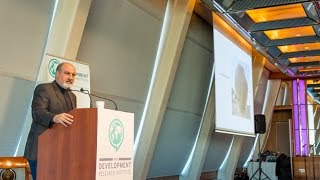 Nassim Nicholas Taleb on Fragility and City-States: Why small systems survive2021 · 62 min · full transcript
 Nassim Nicholas Taleb on Nation States: Why Small Units Work Better2022 · 68 min · full transcript
 Nassim Nicholas Taleb on Antifragility: Stress, Optionality, and Skin in the Game2012 · 79 min · full transcript
 Nassim Nicholas Taleb on Connectivity and Fragility: AI, Pandemics, and Tail Risks2023 · 84 min · full transcript
 Nassim Nicholas Taleb on Uncertainty And Antifragility: Learning from Disorder2007 · 63 min · full transcript
 Nassim Nicholas Taleb on Uncertainty and Robustness: Why Fragile Systems Break2007 · 52 min · full transcript