What did Nassim Nicholas Taleb say about small government and localism?
Taleb said his view is less about libertarian ideology and more about scale: small systems are more robust than large ones. He argued that top-down government fails more easily because large systems are disproportionately weakened by unexpected events. In that sense, he favored local, smaller-scale arrangements because they survive shocks better.
“A small government works better, not because it's small government, but because it's-- you get the idea. Top down government doesn't work. Now you can have probably a dictatorship in a small village and it may work. So I cannot prove that it's not private versus public. For me, it's large versus small. Small has the ability to survive and a large gets disproportionately weakened by unexpected events. And thanks for linking it to epistemic opacity, because this idea of fragility being measurable solves the problem of opacity. I don't understand the environment, but I can pretty much figure out I'm fragile to it.”
Key takeaways
- Prefer smaller systems when shocks matter.
- Judge institutions by their robustness, not their ideology.
- Large systems can fail badly when surprises hit.
Context
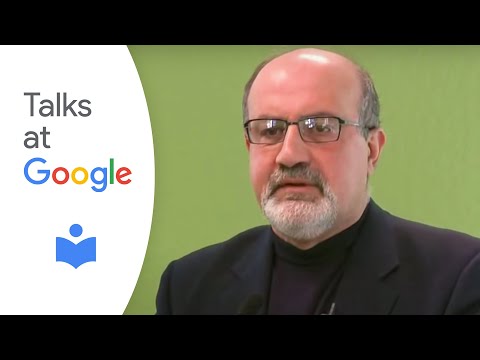
During the 2011 Google Talk Q&A, Taleb connected antifragility to political organization after a question about libertarianism and bottom-up governance. The quote above is taken word for word from the recording's transcript.
In the transcript
…I had a question about your view of libertarian movement, and how do you think that your idea of anti-fragility fits into those ideas of smaller government and more bottom up approach? NASSIM NICHOLAS TALEB: That's excellent. So what I'm showing here is actually-- I don't know if it's a libertarian view, but it's definitely a localist view in favor city-states, a lot more robust, because of the side effect.
A small government works better, not because it's small government, but because it's-- you get the idea. Top down government doesn't work. Now you can have probably a dictatorship in a small village and it may work. So I cannot prove that it's not private versus public. For me, it's large versus small. Small has the ability to survive and a large gets disproportionately weakened by unexpected events. And thanks for linking it to epistemic opacity, because this idea of fragility being measurable solves the problem of opacity. I don't understand the environment, but I can pretty much figure out I'm fragile to it.
Go ahead. AUDIENCE: So you said you didn't believe in forecasts, so I won't ask you to make a forecast. So what's in your portfolio? NASSIM NICHOLAS TALEB: I don't want to answer the details of it because I'm talking about my book and in a year it will change, so I can't talk about that. I'll tell you that if I were compelled to produce a forecast, but I…
Read the full transcript of Talks at Google, 2011 book launch lecture
Topics
What others said about politics & government
- What did Ray Dalio say about populism and revolution?
- What did Mark Zuckerberg say about censorship during COVID and the pressure from government?
- What did Yuval Noah Harari say about why the war in Ukraine matters globally?
- What did Marc Andreessen say about political religions like communism and fascism?
More questions about Nassim Nicholas Taleb
- What did Nassim Nicholas Taleb say about antifragility and volatility?
- What did Nassim Nicholas Taleb say about the idea that what doesn’t kill you makes you stronger?
- What did Nassim Nicholas Taleb say about ethics and skin in the game?
- When does Nassim Nicholas Taleb think military intervention is justified?
- What did Nassim Nicholas Taleb say about how governments handle crises?
- Does Nassim Nicholas Taleb think modern society is biased against variability?
All Nassim Nicholas Taleb answers · All Nassim Nicholas Taleb recordings
How this answer was made: the quote is checked word for word against the transcript of the recording and confirmed as the speaker's own words; the summary above it was drafted with AI from that transcript and quality-checked. Methodology and corrections.