Kobe Bryant on Mamba Mentality
For Kobe Bryant, Mamba Mentality is a way of pursuing big dreams through curiosity, obsessive preparation, non-negotiable standards, and the discipline to keep improving without fear of failure.
- It starts with protecting big dreams and imagination, even when the path is unclear.
- Its engine is curiosity: study why things work, not just what worked.
- It demands obsession with process, detail, repetition, and game-realistic preparation.
- It requires non-negotiable standards and self-discipline.
- It turns failure, pressure, and setbacks into fuel for growth and winning.

“Protecting your dreams, protecting your imagination. That's really the key.”USC talk with David Belasco, 2017 · 11:46
Mamba Mentality begins by protecting a dream worth chasing
Kobe did not frame Mamba Mentality as trash talk or intensity for its own sake. He tied it to protecting ambition and imagination, especially when the destination is bigger than your current map. In his view, if the dream is real, you will not have every step planned in advance, and that uncertainty is part of the journey rather than a reason to shrink the goal.12
That makes Mamba Mentality more than a sports slogan. It is a commitment to keep moving toward something meaningful before the route is fully visible, and to let purpose pull you through the ambiguity. He later described his focus shifting toward what comes next, which shows the mindset was never limited to basketball alone.3
“Protecting your dreams, protecting your imagination. That's really the key.”USC talk with David Belasco, 2017 · full transcript →
Curiosity is the core habit
When Kobe explained Mamba Mentality directly, he said the most important part was curiosity. He wanted to know why something succeeded or failed, not just whether it did. That mindset turns every result into information and every obstacle into a problem to solve.4
He broadened this beyond the court by treating the world as a source of instruction. Books, conversations, observation, and other disciplines all became tools for sharpening his craft. Mamba Mentality, then, is not narrow obsession; it is active learning directed toward mastery.5
This is also why he valued figuring things out more than obsessing over outcomes alone. The process of understanding is what creates wisdom, adaptability, and long-term growth.67

“The most important thing about it is curiosity.”Danny Morel interview and Q&A, 2019 · full transcript →
The standard is obsession with process and detail
Kobe consistently described his edge in terms of process. He said Mamba Mentality was about how he played, with close attention to detail, tactics, and strategy rather than just highlights or reputation. He wanted people to understand the craft underneath performance.89
That process had to be obsessive. He said you have to be obsessive about the process, and his examples show what he meant: repeated makes, game-specific reps, and training that mirrored actual situations so closely that performance became automatic under pressure.101112
This is why Mamba Mentality sounds demanding in his hands. It is not motivational fluff. It is the daily discipline of fundamentals, repetition, and precision until your preparation can carry you when emotions run high.1314

“You have to be obsessive about the process, you know?”Jimmy Kimmel Live interview, 2013 · full transcript →
No fear of failure, no negotiating with yourself
A big reason Kobe could work this way was his view of failure. He said it is okay to fail when you know you will still be loved, and he connected that kind of security to the courage to keep trying, learning, and stretching beyond comfort. Fear loses power when failure is survivable.1516
But acceptance of failure did not mean softness toward effort. He was blunt that he did not negotiate with himself. In practice, that means standards are not optional depending on mood, fatigue, or excuses.1714
This combination is central to Mamba Mentality: be unafraid of missing, but uncompromising about the work. You can fail at an attempt; you cannot allow yourself to drift from the standard.1514
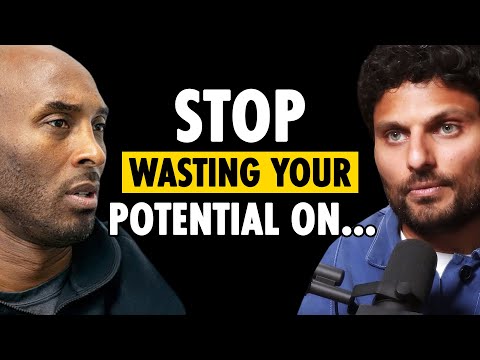
“Okay, it's okay to fail because you're going to be loved no matter what.”Interview with Jay Shetty, 2019 · full transcript →
Pressure, injury, and adversity are tests of preparation
Kobe did not treat adversity as an interruption to Mamba Mentality. He treated it as the place where the mentality proves itself. He said he looked at challenges that way, and after injury he emphasized endurance, conquest, and an unchanged focus on winning.181920
His comeback mindset shows the same pattern as his training mindset: vent if needed, regain perspective, then get to work with the same belief and conviction. Even pain and setbacks did not excuse him from the standard if winning still mattered.2122
Under pressure, his solution was not hype but presence. He stressed that the only thing that matters is what is directly in front of you, which fits his larger belief that calm execution comes from preparation you can trust.134
“We don't quit. We don't cower. We don't run. We endure and conquer.”Jimmy Kimmel Live interview, 2013 · full transcript →
Greatness is raising the standard for yourself and others
Kobe's later definition of greatness was not just personal domination. He increasingly described excellence as helping others reach their best, whether teammates on the floor or creators in other fields. Competition became a challenge to ask whether the work in front of you is truly your best.233
That is why his standards were cultural as well as individual. He believed excellence had to be lived so consistently that it gave you the right to demand it from everyone around you. Mamba Mentality is personal discipline first, then leadership through example, pressure, and clarity.25
Seen this way, Mamba Mentality is not merely relentless self-improvement. It is a way of building environments where seriousness, preparation, and high standards become normal.25
Kobe on mamba mentality, in his own words
“Protecting your dreams, protecting your imagination. That's really the key.”
“The most important thing about it is curiosity.”
“You have to be obsessive about the process, you know?”
“Okay, it's okay to fail because you're going to be loved no matter what.”
“I don't negotiate with myself.”
“We don't quit. We don't cower. We don't run. We endure and conquer.”
Where to watch
 Kobe Bryant on Mamba Mentality: Curiosity, Standards, and Purpose2019 · 55 min · full transcriptBest direct explanation of Mamba Mentality as curiosity, standards, calm under pressure, and purposeful preparation.
 Kobe Bryant on Mamba Mentality: Dream Big, Practice Hard2017 · 60 min · full transcriptShows how Kobe connects Mamba Mentality to big dreams, daily work, leadership, and life beyond basketball.
 Kobe Bryant on Mamba Mentality: Rest at the End2018 · 68 min · full transcriptExplains where the mindset came from: early failure, fundamentals, repetition, and inspiring others.
 Kobe Bryant on Obsession and Focus: The World Becomes Your Library2019 · 64 min · full transcriptBest for understanding Kobe's curiosity and how he used the whole world as a classroom.
 Kobe Bryant on Recovery and Winning: Mamba Mentality After Injury2013 · 56 min · full transcriptShows Mamba Mentality under stress through injury, rehab, obsession with process, and refusal to quit.
 Kobe Bryant on Mamba Mentality: How I Play2019 · 6 min · full transcriptA concise statement that Mamba Mentality is about process, detail, tactics, and strategy.
Questions people ask
- How does Kobe Bryant think about competitiveness at work?
- What did Kobe Bryant say his book Mamba Mentality is about?
- What did Kobe Bryant say led to his 81-point game?
- What is Kobe Bryant's 'mamba mentality' after injury?
- Where did Kobe Bryant's obsession with storytelling come from?
- What did Kobe Bryant say the Lakers stand for?
Sources
Every quote above, word for word from the transcripts. Numbers match the text.
“Protecting your dreams, protecting your imagination. That's really the key.”
“You shouldn't know every step of the way.”
“My passion and my focus started shifting towards what comes next…”
“The most important thing about it is curiosity.”
“…the world becomes your library to help you to become better at your craft.”
“The results don't really matter, it's the figuring out that matters.”
“We're drowning in information, starving for wisdom.”
“…if you want to learn about tactics and strategy about the game then I recommend that book…”
“It's about my process and my-- about the attention to detail of how to play the game. So if you're a fan of the game, if you want to learn about tactics and strategy about the game then I recommend that book. So-- Don't buy it for the mug on the front. That's really awkward, still, lookin' at that mug on the front. There's nothing awkward about that, but probably the girls that are playing against your daughter should read this. [ALL LAUGHING] Yeah, there you go.”
“You have to be obsessive about the process, you know?”
“…it was 1,000 makes a day in the summertime…”
“Well, it was 1,000 makes a day in the summertime, you know, and going through things just as I would during the game. So, you know, I knew exactly where my positions were within the triangle, where the shots would be coming from. So everything that I did throughout the course of my training was literally simulating that. So it was all game shot. So when they came into game, things were just automatic because I'd put my body through before. You know, sometimes you get in a gym, you work out and you work on ball-handling, you work on shooting, but none of it's really within a structure of which you will be doing in the game. For me, it wasn't like that. It was literally carbon copy of what I'd be doing. So it, by the time a season came around, was all just muscle memory.”
“…the only thing that matters is what's right in front of you…”
“I don't negotiate with myself.”
“Okay, it's okay to fail because you're going to be loved no matter what.”
“Whether you score zero or score 60, I'm going to love you no matter what.”
“I'm not negotiating with myself.”
“I look at it as a challenge…”
“We don't quit. We don't cower. We don't run. We endure and conquer.”
“I don't care about anything else on the basketball court but winning.”
“Forgive my venting, but what's the purpose of social media if I won't bring it to you real? No image. Feels good to vent, to let it out, to feel as if this is the worst thing ever. Because after all the venting, the real perspective sets in. There are far greater issues and challenges in the world than a torn Achilles. Stop feeling sorry for yourself. Find the silver lining and get to work with the same belief, same drive, and same conviction as ever. One day, the beginning of a new career journey will commence. Today is not that day. If you see me in a fight with a bear, pray for the bear. I've always loved that quote. That's…”
“If, and if winning is that important to you, then the injuries don't matter.”
“Yeah. No, it will. Like I said, basketball is different because it's such a direct competition. Um, what we do now, there isn't. The competitiveness that I bring to work every day is really helping people, in a sense, be competitive with themselves. Right? If you're—If you're animating something, or you're writing a screenplay, or you're composing a piece of music, is that the best you can do? Right? Don't ask me. Don't say, "Okay, do you approve?" Don't ask me. I'm not the musician. I'm not the composer. You know? Right? So, the competitiveness is more from an individual perspective. Are you—Is this the best you can do? And if the answer is yes, then off we go. So, it's—it's different. It's different.”
“Yeah, that's fine too. I mean, it's a certain personality that comes along with it. Means if it's a brand thing, the Lakers stand for excellence and stand for winning. We don't hang Division banners. I'm saying we don't do that, you know, you don't retire everyone's jersey, retire all the fan jerseys, you know what I mean? So, you know, if the person, the people that are here need to be able to live to that standard and hold themselves to that standard, which in turn then gives you the ability to hold everybody else to that same standard. If you can't do that, can't be right.”
How this guide was made: drafted with AI from the full transcripts of the recordings cited, then checked: every quotation must match a transcript word for word and be the speaker's own words, and an independent review gates accuracy. Methodology and corrections.