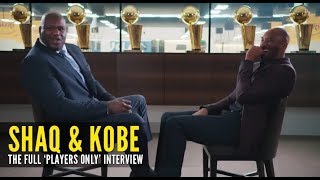
Kobe Bryant on Leadership
Kobe Bryant saw leadership as setting uncompromising standards, studying people deeply, and doing whatever best helps the team win.
- Leadership starts with your own standards and work habits.
- Great leaders make teammates better, not just themselves.
- You have to read people and lead differently in different situations.
- In pressure moments, a leader stays calm and sets the emotional tone.
- Winning is the test: do whatever the team needs.

Leadership begins with self-discipline
For Kobe, leadership does not begin with speeches. It begins with personal discipline so strong that other people can trust it. His standards were internal, daily, and non-negotiable, which is why he connected leadership so closely to process and repetition.12
That is also why his leadership had force. He believed a leader cannot ask others for commitment while cutting corners himself. The example has to be visible in preparation, patience, and the willingness to keep going when things get hard.34
The point of leadership is to raise other people
Kobe's view evolved over time. Early on, he was driven mainly by becoming the best player in the world, but later he came to see a higher form of greatness: helping teammates become the best version of themselves.
That shift changes what leadership means. It is not only personal excellence or domination. It is using your standards, knowledge, and competitive drive to elevate the group, so the team becomes stronger than what one star can do alone.5
He carried the same idea beyond basketball. In creative work, he pushed people to compete with themselves and produce their best work rather than depend on his approval, which shows that he saw leadership as drawing out excellence in others.6
“The key is not passing the ball.”Milken Institute conversation, 2015 · full transcript →
Good leaders read people and adapt
Kobe did not treat leadership as one fixed style. He said the job was to study people through reading, listening, observing, and asking questions, then decide when to push, when to teach, and when to step back.7
That makes his version of leadership highly situational. Some teammates need challenge, some need clarity, and some need trust. He learned from veterans and mentors by asking directly, and he passed that same habit forward by mentoring younger players himself.5
He also believed honesty was part of respect. If something was not good enough, a leader should say so clearly, because empty praise does not help people grow.8
In big moments, leaders control emotion
Kobe thought leadership is most visible under pressure. In tense moments, the leader's job is to suppress nerves, stay fearless, and keep everyone else steady.9
This is why preparation mattered so much to him. Calm is not accidental; it comes from having done the work so thoroughly that pressure does not change your behavior. He envisioned outcomes constantly and trusted preparation when the moment got chaotic.10
He admired models of purpose and composure under strain, and he connected leadership with doing what is right even when it is uncomfortable or costly.11

“…as a leader, you have to be able to suppress whatever nervousness you may be feeling…”SportsCenter sitdown with Dave McMenamin, 2013 · full transcript →
Leadership is judged by what helps the team win
Kobe was blunt that leadership has to connect to winning. He cared above all about winning, and that meant doing whatever the situation required rather than clinging to one image of yourself.1213
When he was exhausted and hurt in Game 7 of the Finals, he focused on rebounding and other ways to help instead of forcing the game to look the way he wanted. That shows a practical side of leadership: adjust, contribute, and accept the responsibility of the moment.141513
He also believed teams need role clarity and mutual respect more than friendship. A leader may be demanding or even combative, but the standard is whether that approach helps the group execute and win together.16

“You got to do whatever it takes.”NBA Finals Game 7 postgame press conference, 2010 · full transcript →
Kobe on leadership, in his own words
“…as a leader, you have to be able to suppress whatever nervousness you may be feeling…”
“I don't care about anything else on the basketball court but winning.”
“You got to do whatever it takes.”
“…you've got to do what's right…”
Where to watch
 Kobe Bryant on Mamba Mentality: Turning Pressure Into Greatness2015 · 54 min · full transcriptBest single conversation on how Kobe's idea of greatness shifted from self-mastery to making teammates better.
 Kobe Bryant on Injury, Leadership, and Legacy: Playing Fearlessly2013 · 29 min · full transcriptShows how he thought leaders should manage fear, nerves, and team emotion in pressure moments.
 Kobe Bryant on Mamba Mentality: Dream Big, Practice Hard2017 · 60 min · full transcriptExplains how practice, curiosity, and daily standards become tools for leading others.
 Kobe Bryant on Mamba Mentality: Rest at the End2018 · 68 min · full transcriptUseful for understanding how his thinking on failure, fundamentals, and inspiration shaped leadership.
 Kobe Bryant on Winning Through Pain: 2010 Finals Game 72010 · 10 min · full transcriptA concrete example of leadership through adjustment, toughness, and doing what the team needs to win.
Questions people ask
Sources
Every quote above, word for word from the transcripts. Numbers match the text.
“You have to be obsessive about the process, you know?”
“I don't negotiate with myself.”
“Rest at the end, not in the middle.”
“We don't quit. We don't cower. We don't run. We endure and conquer.”
“Well, the guys that came before did the same thing for me. You know, I've had really in-depth conversations with Jay West and talking about things. Same thing with MJ. You know, I've had great mentors, Elijah. I've had guys, all-time greats, Bill Russell, man. We talked a lot about how to win championships, how to lead. And so, I felt like it's my job to try to pass that information on to the next generation and then see the game develop and see it grow. You know what I mean? It's amazing to look back and see what some of these athletes are doing now, right? Whether it's the generation of James Harden, Luca Dončić now, and some of the players, like, it's fun to sit back and…”
“Yeah. No, it will. Like I said, basketball is different because it's such a direct competition. Um, what we do now, there isn't. The competitiveness that I bring to work every day is really helping people, in a sense, be competitive with themselves. Right? If you're—If you're animating something, or you're writing a screenplay, or you're composing a piece of music, is that the best you can do? Right? Don't ask me. Don't say, "Okay, do you approve?" Don't ask me. I'm not the musician. I'm not the composer. You know? Right? So, the competitiveness is more from an individual perspective. Are you—Is this the best you can do? And if the answer is yes, then off we go. So, it's—it's different. It's different.”
“The most important thing about it is curiosity.”
“Yeah, I, I, I do actually. Yeah, I mean, you know, like if, if you're doing something and it's not very well done— Uhhuh. I'm not going to say it's very well done, right? And that way people also know when you do say it is that you mean it. Yeah, you know, it's, it's, uh, you know, I always say like if you're having lunch or having dinner with somebody and I'm sitting across from you, for example—we're at a restaurant in front of all these fab people in a restaurant, right—and you're sitting there and eating across me you have something in your teeth.”
“…as a leader, you have to be able to suppress whatever nervousness you may be feeling…”
“Every day I envision it. Every day.”
“…you've got to do what's right…”
“I don't care about anything else on the basketball court but winning.”
“You got to do whatever it takes.”
“I was on E. I was really, really tired.”
“I was hurt. You be old all you want. I was hurt.”
“…you be captain of the ship, you go down with the ship…”
How this guide was made: drafted with AI from the full transcripts of the recordings cited, then checked: every quotation must match a transcript word for word and be the speaker's own words, and an independent review gates accuracy. Methodology and corrections.