Kobe Bryant on Failure & Resilience
Kobe Bryant treats failure, fear, injury, and criticism as raw material for growth: face them honestly, study them deeply, and keep working without negotiating with yourself.
- Failure stops being terrifying when your worth is not tied to the outcome
- Fear gets stronger when avoided, so resilience starts with confronting it directly
- Setbacks are problems to study, not identities to accept
- Resilience is daily discipline: keep working and do not bargain with your standards
- Pressure and pain are manageable when preparation is deep and the decision comes from within
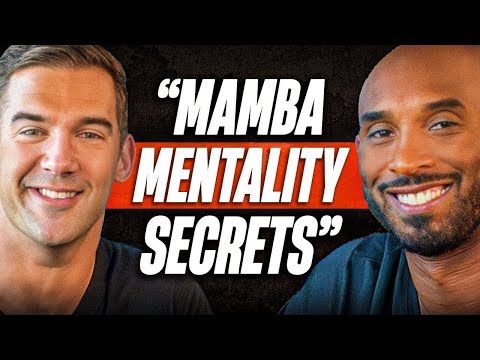
“Whether you score zero or score 60, I'm going to love you no matter what.”School of Greatness podcast interview with Lewis Howes, 2018 · 0:00
Failure loses its power when love and self-worth are secure
Kobe links resilience to a very basic emotional foundation: if failure does not threaten your worth, it becomes easier to face. He returns to the idea that a person can fail and still be loved, which removes some of the panic that makes people quit early12.
That changes the meaning of bad outcomes. Instead of seeing failure as proof that you are not enough, he treats it as part of learning, which is why he puts more value on figuring things out than on immediate results3.
In practice, this means separating identity from performance. A loss, a bad game, or a setback can hurt, but it does not have to define you, and that gives you room to respond with curiosity instead of fear132.
“Whether you score zero or score 60, I'm going to love you no matter what.”School of Greatness podcast interview with Lewis Howes, 2018 · full transcript →
Fear must be faced directly or it will control you
Kobe does not describe resilience as the absence of fear. He starts from the opposite assumption: everyone has fears and anxieties, so the real question is whether you confront them or let them quietly run your behavior4.
His warning is clear: ignored fears do not disappear. They grow, fester, and gain control, which means avoidance is not relief but surrender5.
That is why courage matters so much in his view. Resilience begins when you turn toward the thing that scares you, name it, and work through it rather than pretending it is not there6.

“When you ignore them, they fester, and they have control over you.”The Tonight Show Starring Jimmy Fallon, 2018 · full transcript →
Setbacks are lessons to study, not excuses to stop
Kobe's mindset is analytical as much as emotional. He is less interested in whether something worked than in understanding why it worked or failed, because that is where future improvement comes from73.
This is why he frames growth around curiosity. A setback is useful if it reveals a weakness, a bad assumption, or a detail you missed, and resilience means staying engaged long enough to learn from that information73.
He also values stories about people who break, develop, learn, and grow through real pain and failure, which shows how central this pattern is to how he understands progress itself.
Resilience is built through non-negotiable work habits
For Kobe, resilience is not mainly a mood. It is a standard of behavior: keep going, keep practicing, and do not relax your commitment halfway through the mission9.
That is where his famous refusal to bargain with himself comes in. He describes discipline as a refusal to negotiate with his own excuses, which turns resilience from a feeling into a decision repeated every day1011.
He also connects that standard to repetition and consistency. If the goal matters, casual effort will not get you there, which is why sustained work matters more than occasional bursts of motivation129.
Pain, pressure, and injury are part of the journey, not reasons to abandon it
Kobe's version of resilience includes staying composed under pressure. In big moments, he believes a leader has to suppress visible nervousness and create calm for others, which means emotional control is part of performance13.
He applies the same attitude to injury and pain. If the goal truly matters, pain does not erase the mission, even though it may force patience, adaptation, and a different timeline14.
At the same time, he does not confuse resilience with denial. Some decisions have to come from within, and real strength includes knowing when a chapter is over and being at peace with that choice151617.
Kobe on failure & resilience, in his own words
“Whether you score zero or score 60, I'm going to love you no matter what.”
“When you ignore them, they fester, and they have control over you.”
“What these young men have to learn through magic is how to have the courage to face those fears…”
Where to watch
 Kobe Bryant on Mamba Mentality: Rest at the End2018 · 68 min · full transcriptBest overview of how early failure shaped his confidence, work ethic, and long-term resilience.
 Kobe Bryant on Mamba Mentality: Curiosity, Standards, and Purpose2019 · 55 min · full transcriptShows how curiosity, standards, and preparation turn setbacks into improvement.
 Kobe Bryant on the Wizenard Series: Basketball Meets Fantasy2018 · 6 min · full transcriptBest short explanation of Kobe's view that fear must be confronted rather than ignored.
 Kobe Bryant on Injury, Leadership, and Legacy: Playing Fearlessly2013 · 29 min · full transcriptBest for seeing how he thinks about pressure, leadership, and injury recovery.
 Kobe Bryant on Purpose and Storytelling: Create from Truth2019 · 43 min · full transcriptExplains why failure becomes manageable when love, perspective, and learning matter more than results.
 Kobe Bryant on Retirement And Legacy: Peace, Pain, and Purpose2015 · 25 min · full transcriptUseful for understanding the difference between enduring pain and making an internal decision to move on.
Questions people ask
- What is Kobe Bryant's 'mamba mentality' after injury?
- Where did Kobe Bryant's obsession with storytelling come from?
- Why does Kobe Bryant say some kids don't like reading?
- What did Kobe Bryant say about throwing in the towel or giving up?
- What did Kobe Bryant say about recovery after his Achilles injury?
Sources
Every quote above, word for word from the transcripts. Numbers match the text.
“Okay, it's okay to fail because you're going to be loved no matter what.”
“Whether you score zero or score 60, I'm going to love you no matter what.”
“The results don't really matter, it's the figuring out that matters.”
“We all have fears, and we all have anxieties and things of that nature.”
“When you ignore them, they fester, and they have control over you.”
“What these young men have to learn through magic is how to have the courage to face those fears…”
“The most important thing about it is curiosity.”
“Rest at the end, not in the middle.”
“I'm not negotiating with myself.”
“I don't negotiate with myself.”
“Three days a week ain't gonna get you there, right?”
“…as a leader, you have to be able to suppress whatever nervousness you may be feeling…”
“If, and if winning is that important to you, then the injuries don't matter.”
“It has to be an internal decision.”
“I really feel at peace with it.”
“I stopped playing because I just didn’t want to do it anymore.”
How this guide was made: drafted with AI from the full transcripts of the recordings cited, then checked: every quotation must match a transcript word for word and be the speaker's own words, and an independent review gates accuracy. Methodology and corrections.