Kobe Bryant on Competition
Competition, for Kobe Bryant, is a total commitment to winning and improvement: prepare obsessively, embrace pressure, and do whatever the moment demands.
- Competition starts with absolute self-belief and zero fear of comparison.
- Winning matters more than image, friendship, or personal stats.
- Pressure, pain, and hostility are not excuses; they are part of the challenge.
- Great competitors adapt: if scoring is not there, they rebound, defend, lead, and make others better.
- The edge comes from study, honesty, and maximizing every ounce of your ability.

“I'm the best, Michael is second best, LeBron is third best.”The Late Late Show with James Corden, 2017 · 2:25
Competition begins with the belief that you belong at the top
Kobe’s competitive outlook starts with unapologetic confidence. When asked to rank himself against Michael Jordan and LeBron James, he put himself first without hedging, which shows that he saw competition as something you enter to win, not to sound humble.1
That mindset is tied to identity. He described himself as built for basketball and spoke as someone who expected to test himself against the highest standard available. Competition, in his view, is not just participation; it is a claim on excellence.2
“I'm the best, Michael is second best, LeBron is third best.”The Late Late Show with James Corden, 2017 · full transcript →
Winning outranks comfort, popularity, and even friendship
Kobe draws a hard line between getting along and getting results. He prefers productive tension over easy relationships, and he treats responsibility for outcomes as part of leadership.45
That helps explain why he could thrive in combative partnerships. His rivalry with Shaq was personal and intense, but it also sharpened both of them and coexisted with team success. For Kobe, competition inside a team is acceptable if it drives performance and stays connected to winning.67
He applied the same standard to individual feats. Even after scoring 81, he stressed that the points mattered because the team needed them to win. The achievement only counted because it solved the competitive problem in front of him.8

“Do you think I was pissed when you got number five? Of course you were. Oh, no doubt. I told my house up. No doubt. I bet you did. No, I went crazy. 'Cause when I got four and you got four, I was like, hey, I got four, he got four. I'm straight. When you got that fifth one, and then hold on. You said, "I just wanted to get one more than Shaq." Absolutely. Absolutely. TVs. Yeah. And I said, "You know what? There's nothing he can do about it, either." We know what it means as a team, but what about individually for you? I just got one more than Shaq. So, you can take that to the bank.”Interview with Shaquille O'Neal, 2018 · full transcript →
Real competitors embrace pressure and do whatever the game demands
Kobe does not talk about pressure as something to avoid. He treats it as the arena where competitiveness shows itself most clearly, seeing difficulty as a challenge rather than a burden.9
His Game 7 comments make that concrete. He wanted the title desperately, was exhausted, and was playing hurt, but his conclusion was simple: do whatever it takes. That is a practical definition of competition for him: when your preferred way is unavailable, find another way to help win.10111213
This is why his competitive image is larger than scoring. He valued the ugly parts of winning too: rebounding, enduring contact, and staying locked in when the game stopped being beautiful.13
Competition is not just aggression; it is adaptation and decision-making
Kobe’s mindset is often reduced to relentless attack, but he also describes competition as reading the situation correctly. He learned that greatness was not only about being the best player, but also about helping teammates become their best and understanding when to push versus when to trust others.14
That same balance appears in how he thought about great teams. He emphasized role clarity late in games and believed top players must know when to take over and when to create the right conditions for others to succeed. Competition, then, is not random intensity; it is disciplined judgment under stress.
His praise for clutch performers fits this pattern. Confidence matters, but so does the trust of teammates and the willingness to keep going after a rough stretch.
The deepest form of competition is with yourself
Kobe’s competitiveness was not limited to beating opponents. He wanted to maximize everything he had, which means the standard was internal as much as external.16
He carried that idea beyond basketball. In creative work, he described competitiveness less as defeating someone else and more as demanding your own best effort. The core question became whether this is truly the best you can do.17
That helps explain why he could use criticism, dark emotions, and resistance as fuel. He was trying to convert every friction point into improvement, not just every matchup into a win.18

“Yeah. No, it will. Like I said, basketball is different because it's such a direct competition. Um, what we do now, there isn't. The competitiveness that I bring to work every day is really helping people, in a sense, be competitive with themselves. Right? If you're—If you're animating something, or you're writing a screenplay, or you're composing a piece of music, is that the best you can do? Right? Don't ask me. Don't say, "Okay, do you approve?" Don't ask me. I'm not the musician. I'm not the composer. You know? Right? So, the competitiveness is more from an individual perspective. Are you—Is this the best you can do? And if the answer is yes, then off we go. So, it's—it's different. It's different.”USC talk with David Belasco, 2017 · full transcript →
Kobe on competition, in his own words
“I'm the best, Michael is second best, LeBron is third best.”
“I just wanted it so bad.”
“…these points tonight mattered. We needed them.”
“I look at it as a challenge…”
Where to watch
 Kobe Bryant on Competitive Mindset: Winning Beats Friendship2015 · 47 min · full transcriptBest single interview for how Kobe separates winning from friendship and thinks about competitive team dynamics.
 Kobe Bryant on Mamba Mentality: Turning Pressure Into Greatness2015 · 54 min · full transcriptShows how his competitive drive matured from personal domination into leadership, motivation, and making others better.
 Kobe Bryant on Winning Through Pain: 2010 Finals Game 72010 · 10 min · full transcriptThe clearest short example of Kobe’s competitive ethic under maximum pressure, fatigue, and pain.
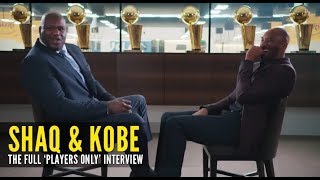 Kobe Bryant on Kobe-Shaq Rivalry: The Fire Behind the Dynasty2018 · 40 min · full transcriptExplains how rivalry, outsider energy, and friction with Shaq fueled his edge.
 Kobe Bryant on Competitive Mindset: Staying Hungry, Smart, and Honest2012 · 57 min · full transcriptBest for the day-to-day mechanics behind his competitiveness: study, detail, honesty, and maximizing potential.
Questions people ask
Sources
Every quote above, word for word from the transcripts. Numbers match the text.
“I'm the best, Michael is second best, LeBron is third best.”
“I was born to play basketball.”
“I'd much rather have the latter…”
“…you be captain of the ship, you go down with the ship…”
“Do you think I was pissed when you got number five? Of course you were. Oh, no doubt. I told my house up. No doubt. I bet you did. No, I went crazy. 'Cause when I got four and you got four, I was like, hey, I got four, he got four. I'm straight. When you got that fifth one, and then hold on. You said, "I just wanted to get one more than Shaq." Absolutely. Absolutely. TVs. Yeah. And I said, "You know what? There's nothing he can do about it, either." We know what it means as a team, but what about individually for you? I just got one more than Shaq. So, you can take that to the bank.”
“I got a kid that's going to give me 40 whenever he wants to.”
“…these points tonight mattered. We needed them.”
“I look at it as a challenge…”
“I just wanted it so bad.”
“I was on E. I was really, really tired.”
“I was hurt. You be old all you want. I was hurt.”
“You got to do whatever it takes.”
“The key is not passing the ball.”
“I would love for people to look at, you know, my career and say that, um, I maximized everything…”
“Yeah. No, it will. Like I said, basketball is different because it's such a direct competition. Um, what we do now, there isn't. The competitiveness that I bring to work every day is really helping people, in a sense, be competitive with themselves. Right? If you're—If you're animating something, or you're writing a screenplay, or you're composing a piece of music, is that the best you can do? Right? Don't ask me. Don't say, "Okay, do you approve?" Don't ask me. I'm not the musician. I'm not the composer. You know? Right? So, the competitiveness is more from an individual perspective. Are you—Is this the best you can do? And if the answer is yes, then off we go. So, it's—it's different. It's different.”
“I just refuse to believe that.”
How this guide was made: drafted with AI from the full transcripts of the recordings cited, then checked: every quotation must match a transcript word for word and be the speaker's own words, and an independent review gates accuracy. Methodology and corrections.


