Kobe Bryant on Greatness Comparisons
Kobe treated greatness comparisons as fun on the surface, but his deeper standard was simpler: figure out your own path, obsess over winning and growth, and leave an impact on others.
- Kobe could lean into rankings and boldly put himself first.
- He did not believe greatness was settled by copycat comparisons; each player had a different puzzle to solve.
- His main measure of greatness was winning, not talk.
- Later, he expanded greatness beyond individual status to helping teammates and the next generation.

“I'm Kobe Bryant. I mean, we're two different players…”Postgame press conference after 81-point game, 2006 · 6:33
Kobe never backed away from the debate
Kobe understood that fans love ranking all-time greats, and he was perfectly willing to step into that argument. In a light, entertainment-driven setting, he answered directly and put himself ahead of Michael Jordan and LeBron James, which shows how naturally competitive and self-believing he was.1
That answer matters because it was not timid or diplomatic. Kobe's instinct was to compete even inside a conversation, and greatness comparisons gave him another arena to do that.1
But he resisted simple one-to-one comparisons
Kobe also pushed back on the idea that greatness can be reduced to neat replicas. When discussing scorers and stars, he made the point that different players are different players, which cuts against lazy comparison culture.2
His clearest principle is that every great player faces a different situation and must solve a different puzzle. That means comparing resumes can be entertaining, but it misses the harder truth: greatness is built by mastering your own circumstances, not by reenacting someone else's path.3
“I'm Kobe Bryant. I mean, we're two different players…”Postgame press conference after 81-point game, 2006 · full transcript →
For Kobe, greatness started with winning
When Kobe talked seriously about basketball value, he kept returning to winning. He said he did not care about anything else on the court but winning, and after his 81-point game he stressed that the points mattered because the team needed them.45
This is the key to reading his views on comparisons. Spectacular numbers, famous moments, and all-time rankings were never enough by themselves; they had to serve the competitive purpose of helping the team prevail.45
That same mentality shows up in his recovery and work habits. He framed greatness as endurance, conquest, and obsession with the process, which means comparisons were secondary to the daily discipline required to actually achieve at the highest level.6
His standard evolved from being the best to making others better
Earlier in life, Kobe clearly chased the top spot and measured himself against peers and rivals. You can hear that edge in how he talked about titles relative to Shaq, and in the blunt confidence of ranking himself first.1
But later, he described a broader idea of greatness. He said his best work came when his focus shifted from only being the best player to helping teammates become their best, and he explained leadership as reading people and using the right approach for each person.
That change does not erase his competitiveness; it refines it. Greatness, in this later view, is not just personal supremacy but the ability to raise the level of the group.

“My passion and my focus started shifting towards what comes next…”Milken Institute conversation, 2015 · full transcript →
In the end, legacy mattered more than rankings
Kobe's deepest answer to greatness comparisons is his view of legacy. He said the true mark of a legacy is how well it impacts the next generation, and he also made clear that many of the usual status markers are not really what it is about.910
That shifts the question from Who ranks higher? to Who changed people? In this frame, greatness is measured not only by what you accomplished, but by what you pass on through example, mentorship, and standards.9
So if you want to apply Kobe's view, use comparisons carefully. Respect competitive confidence, judge performance by winning and work, and then ask the bigger question: did this person's excellence elevate others after them?19

“I think that's the true mark of a legacy: is how well it impacts the next generation.”Jersey retirement press conference, 2017 · full transcript →
Kobe on greatness comparisons, in his own words
“I'm Kobe Bryant. I mean, we're two different players…”
“I think that's the true mark of a legacy: is how well it impacts the next generation.”
Where to watch
 Kobe Bryant on Mamba Mentality: Turning Pressure Into Greatness2015 · 54 min · full transcriptBest for Kobe's mature definition of greatness: moving from individual status to helping teammates become their best.
 Kobe Bryant on Legacy and Next Generation: Jersey Night Reflections2017 · 17 min · full transcriptBest for his final measure of greatness and legacy: impact on the next generation.
 Kobe Bryant on Recovery and Winning: Mamba Mentality After Injury2013 · 56 min · full transcriptShows how winning, endurance, and obsession with process sat at the center of his standard.
 Kobe Bryant on Basketball Rankings: Jordan, LeBron, and Himself2017 · 13 min · full transcriptCaptures Kobe's unapologetic competitiveness in a direct Jordan-LeBron-Kobe ranking.
 Kobe Bryant on 81-Point Game: It Still Hasn't Sank In2006 · 15 min · full transcriptUseful for seeing how he treated even historic individual feats as meaningful mainly because they helped win.
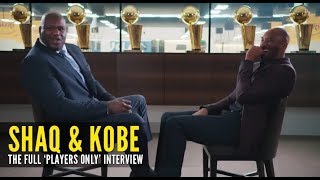 Kobe Bryant on Kobe-Shaq Rivalry: The Fire Behind the Dynasty2018 · 40 min · full transcriptAdds context on rivalry, mentorship, and how comparisons with peers fueled his drive.
Questions people ask
Sources
Every quote above, word for word from the transcripts. Numbers match the text.
“I'm the best, Michael is second best, LeBron is third best.”
“I'm Kobe Bryant. I mean, we're two different players…”
“Sounds like excuses to me. I mean, you gotta figure it out, right? If you really have an obsession to figure it out, you will figure it out, right? And every puzzle is constructed differently. A situation when he came into the league was different than mine. Mike's situation in Chicago was different than mine, right? Everybody has a different puzzle, man. You just gotta figure out your own puzzle.”
“I don't care about anything else on the basketball court but winning.”
“…these points tonight mattered. We needed them.”
“We don't quit. We don't cower. We don't run. We endure and conquer.”
“I think that's the true mark of a legacy: is how well it impacts the next generation.”
“…it's really not about those things.”
How this guide was made: drafted with AI from the full transcripts of the recordings cited, then checked: every quotation must match a transcript word for word and be the speaker's own words, and an independent review gates accuracy. Methodology and corrections.
