Jensen Huang on Digital Twins
Jensen Huang sees digital twins as the operating bridge between AI and the physical world, letting companies design, simulate, train, and run robots, factories, buildings, and vehicles before and during real deployment.
- Digital twins are how AI moves from perception into action in the physical world.
- Huang treats Omniverse as the main platform for building shared virtual worlds and digital twins.
- He says digital twins are used to design, train, simulate, and continuously monitor factories, robots, buildings, warehouses, and cars.
- For Huang, digital twins matter because safety, planning, and productivity improve when virtual and physical systems run together.
- Digital twins are part of a larger industrial shift in which AI factories produce intelligence and robotics becomes the next wave of AI.
Digital twins are Huang’s bridge from AI software to the physical world
Huang’s core idea is that AI is expanding beyond recognition and prediction into systems that must act in the real world. He links that shift directly to robotics and industrial automation, describing robotics as the next wave of AI and enterprise edge systems as the place where AI automates at the point of action.12
In that worldview, digital twins are not a side application of graphics. They are the environment where physical AI can be developed before it is trusted in reality, which is especially important because he repeatedly emphasizes safety in robotics.3
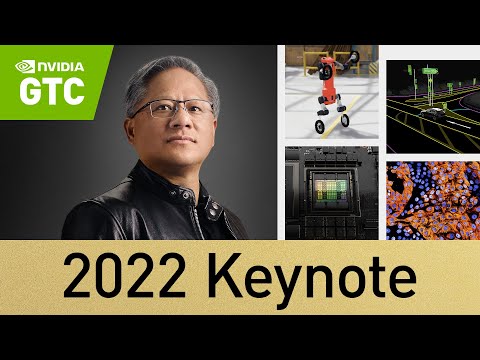
“The next wave of AI is robotics – AI planning actions.”NVIDIA GTC 2022 Spring Keynote · full transcript →
Omniverse is the platform he uses to define digital twins
When Huang talks about digital twins, he usually talks about Omniverse. He describes Omniverse as a platform for shared virtual worlds, metaverse applications, and digital twins, making it the software layer where simulation, collaboration, and operational data come together.678
He also connects this to open world-building standards and collaboration. His point is that virtual worlds need a common description layer so many tools, teams, and systems can work from the same environment rather than passing fragmented files back and forth.910
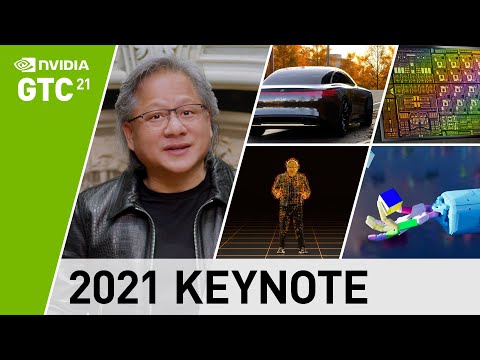
“Omniverse - NVIDIA's platform for creating and simulating shared virtual worlds.”GTC Spring 2021 keynote, virtual · full transcript →
A digital twin is useful because it covers the whole lifecycle, not just design
Huang’s definition is broad and operational. He says digital twins are where companies will design, train, and continuously monitor future robots, factories, buildings, warehouses, and cars, which means the twin is not just a 3D mockup but a living system connected to real operations.11
He extends that idea across the workflow from design and engineering to manufacturing planning and operations. His argument is that once teams work on the same ground truth, they cut down on data conversion, coordination errors, and organizational friction while gaining much more productivity.10
That same lifecycle logic shows up in his factory examples. He describes virtual factories whose AI and software are the same as those used in the real factory, with the virtual and physical systems operating in a loop as digital twins connected to planning systems, throughput simulations, and operator dashboards.12
Simulation is how robots and factories learn before reality bears the cost
Huang treats simulation as essential for physical AI. He says robots need a digital twin in which they can learn how to be effective robots, and factories need digital twins as well, making simulation a core computer in the physical AI stack rather than a visualization add-on.
This matters because real-world testing is expensive, slow, and risky. His examples imply that digital twins let companies test layouts, throughput, autonomous behavior, and multi-robot coordination before changing a live facility or releasing machines into environments where safety and uptime matter.312
He even generalizes the idea across domains. In robotics, the factory in Omniverse can be the twin; in autonomous driving, the twin can be built from the fleet’s collected experience, showing that for Huang the twin is the learning and validation space for any AI that interacts with the physical world.
Digital twins fit inside Huang’s larger idea of an industrial AI era
Huang does not present digital twins as an isolated product category. He places them inside a broader industrial transition in which companies manufacture intelligence, data centers become AI factories, and AI becomes a new kind of work rather than just a software tool.14151617
That larger frame explains why he pairs digital twins with accelerated computing. His argument is that the move from general-purpose computing to accelerated computing, combined with the move from hand-written software to AI, creates the computational base needed for large-scale simulation, robotics, and industrial digital systems.18192021
So for Huang, digital twins are strategic infrastructure. AI factories produce the intelligence, while digital twins provide the virtual operating ground where that intelligence can be embodied in machines, spaces, and workflows.22811
Huang on digital twins, in his own words
“Omniverse is about – digital twins, virtual worlds, and the next evolution of the internet.”
“Omniverse - NVIDIA's platform for creating and simulating shared virtual worlds.”
“The next wave of AI is robotics – AI planning actions.”
“Safety is the #1 priority in robotics,…”
Where to watch
 Jensen Huang on Accelerated Computing: The Stack Behind AI2020 · 105 min · full transcriptBest single recording for Huang’s concrete definition of what digital twins are for: designing, training, and continuously monitoring real-world systems.
 Jensen Huang on AI Factories and Digital Twins: Hopper and Omniverse2022 · 101 min · full transcriptBest for seeing how he connects digital twins to AI factories, robotics, and the next wave of industrial AI.
 Jensen Huang on AI Factories: Grace, Omniverse, and the Future2021 · 108 min · full transcriptBest for understanding Omniverse as a shared virtual world platform and why that matters for robotics and factory simulation.
 Jensen Huang on Accelerated Computing and AI: GTC 2022 Keynote2022 · 98 min · full transcriptUseful for seeing digital twins placed inside NVIDIA’s broader accelerated computing and Omniverse vision.
 Jensen Huang on Generative AI and Graphics: The Next Stack2024 · 59 min · full transcriptHelpful for understanding how Huang links graphics, generative AI, simulation, and open standards for virtual worlds.
Questions people ask
- What did Jensen Huang say Omniverse is for?
- What did Jensen Huang say about Omniverse in the workflow?
- What did Jensen Huang say about digital twins in manufacturing?
- What did Jensen Huang say about self-driving trucks and digital twins?
- What did Jensen Huang say about the computers needed for physical AI?
- What did Jensen Huang say about the factory of the future?
Sources
Every quote above, word for word from the transcripts. Numbers match the text.
“The next wave of AI is robotics – AI planning actions.”
“The next wave of AI is enterprise and industrial edge, where AI will automate at the point of action.”
“Safety is the #1 priority in robotics,…”
“Omniverse - NVIDIA's platform for creating and simulating shared virtual worlds.”
“Omniverse is a platform for building and operating metaverse applications.”
“Omniverse is about – digital twins, virtual worlds, and the next evolution of the internet.”
“Open USD is the HTML of virtual worlds.”
“Once you get Omniverse connected into your workflow, your ecosystem, from the beginning of your design to engineering to manufacturing planning, all the way to digital twin operations, Once you connect everything together, it's insane how much productivity you can get. And it's just really, really wonderful. All of a sudden, everybody's operating on the same ground truth. You don't have to exchange data and convert data, make mistakes. Everybody is working on the same ground truth.”
“Omniverse digital twins are where we will design, train, and continuously monitor robotics, factories, buildings, warehouses, and cars of the future.”
“They'll come in all sizes and shapes - box movers, pick and place arms, forklifts, cars, trucks. In the future, a factory will be a robot, orchestrating many robots inside, building cars that are robots themselves. We can use Omniverse to create a virtual factory, train and simulate the factory and its robotic workers inside. The AI and software that run the virtual factory are exactly the same as what will run the actual one. The virtual and physical factories and their robots will operate in a loop. They are digital twins. Connecting to ERP systems, simulating the throughput of the factory, simulating new plant layouts, and becoming the dashboard of the operator - even uplinking into a robot to teleoperate it.”
“Companies are manufacturing intelligence and operating giant AI factories.”
“Their data centers are becoming AI factories.”
“AI is not a tool. AI is work.”
“I call it an AI factory.”
“…the engine propelling this rocket is accelerated computing, and its fuel is AI.”
“Accelerated computing starts with NVIDIA CUDA, general-purpose programmable GPUs.”
“Remember at the core of this is two or two platform transitions from general purpose computing to accelerated computing. NVIDIA CUDA and those suite of libraries called CUDA-X has enabled us to address practically every industry and we're at the inflection point. It is now growing as a virtual cycle would suggest. The second inflection point is now upon us. The second platform transition AI from classical handwritten software to artificial intelligence. two platform transitioning happening at the same time which is the reason why we're feeling such incredible growth.”
“At the core, the first thing that's actually happening is the end of CPU scaling and the beginning of accelerated computing data processing. just text completion, speech recognition, all of those kind of basic AI things that are, that are used, recommender systems, that are used and, and data centers all over the world. They are moving- everyone is moving from CPUs to accelerated computing because, they want to save energy. Accelerated computing helps you save so much energy 20 times, 50 times, and doing the same processing. So the first thing that we have to do, you know, as a society is accelerate up every application we can. If you're doing Spark data processing, run it with accelerated Spark so that you could reduce the amount of energy necessary by 20 times.”
“NVIDIA Omniverse is a platform for virtual worlds, digital twins, and robotic systems - the next wave of AI. Just as Tensorflow and PyTorch are essential frameworks for perception-oriented AI, Omniverse will be integral for action-oriented AI. And as DGX is the infrastructure of AI factories, OVX will be the infrastructure of digital twins. OVX runs Omniverse digital twins for large-scale simulations with multiple autonomous systems operating in the same space-time. The backbone of OVX is its networking fabric.”
How this guide was made: drafted with AI from the full transcripts of the recordings cited, then checked: every quotation must match a transcript word for word and be the speaker's own words, and an independent review gates accuracy. Methodology and corrections.
