Jensen Huang on Career And Resilience
Jensen Huang sees career resilience as choosing a hard craft, thinking from first principles, and letting pain, setbacks, and long time horizons make you stronger.
- Pick a craft and stay with it long enough to become exceptional
- Expect pain and struggle; they build resilience, agility, and character
- Use first principles and work backward from the future you believe in
- Don’t wait for permission or a proven market; if the conviction is real, build it
- Run toward big technology shifts early, especially when they reshape how work gets done
Resilience starts by accepting that hard work should feel hard
Huang’s core view is that a meaningful career is not supposed to be comfortable all the time. He treats pain and struggle as part of the process of becoming capable, not as proof that you chose wrong12.
That makes his advice unusually direct: don’t build your expectations around ease. Build them around growth through difficulty, because the traits that matter most later, especially resilience and agility, are forged under pressure2.
Find a craft, then give it enough years to matter
For Huang, career success is less about chasing titles and more about finding a craft you can commit to deeply. A craft gives your work direction, standards, and a reason to keep improving even when progress is slow3.
He also ties resilience to time horizon. The image of tending a garden for 25 years captures how he thinks about mastery: important work compounds when you stay with it long enough, instead of constantly resetting your path4.
Applied personally, that means asking not just what opportunity is hot now, but what discipline, problem set, or way of building you would still care about years from now34.
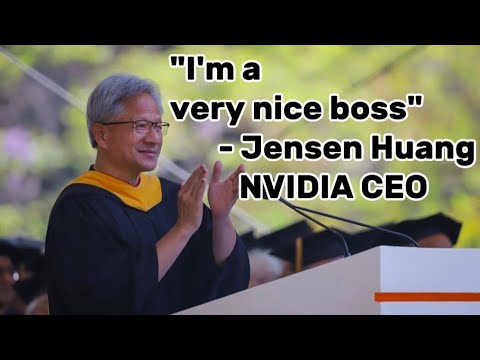
“I hope you find a craft.”Caltech commencement address, 2024 · full transcript →
Use first principles and work backward from the future
Huang does not describe career decisions as reacting to the present moment. He prefers to imagine a future worth creating, then work backward to identify what skills, technologies, and bets would matter in that world.
That method depends on first principles rather than hearsay. If you truly believe a future is coming, and the belief is grounded in fundamentals, then the right response is not passive agreement but committed action.
This is a practical resilience tool. When conditions change or consensus is weak, first-principles thinking gives you a steadier compass than fashion or short-term validation.
Don’t just enter markets; sometimes you must create them
Huang’s career advice is inseparable from his entrepreneurial lesson that the most important opportunities may not look obvious at first. NVIDIA’s path required creating technology and creating demand at the same time, rather than waiting for certainty8.
That is a resilient mindset because it reduces dependence on external validation. If the problem is real, the future is credible, and you are suited to the work, then difficulty is part of the opportunity, not a reason to retreat8.
For an individual career, this can mean building expertise before everyone else agrees it matters, or committing to a field before the career ladder is fully visible8.
Run toward major shifts early, especially AI
Huang believes resilient careers are built by engaging major technology shifts early instead of standing back. His advice on AI is especially urgent: move now, because the underlying change is real and large enough to reshape industries and software itself910.
He frames modern AI as a sustained capability leap, not a fad. That matters for careers because it means adaptation is not optional; people who learn to work with these systems will be better positioned than those who delay119.
In practice, his view suggests learning the tools, understanding how they change your field, and using them to expand what you can build or contribute910.
Resilient organizations trust people with the truth
Huang’s view of resilience also extends to how teams are led. He favors broad information sharing and treats trust as a prerequisite for people doing hard work well12.
That helps explain why he resists overly private management styles. If everyone can learn from problems and feedback, the organization becomes more adaptive, less fragile, and less dependent on a few gatekeepers14.
For a career, the lesson is to seek environments where information is shared, context is explained, and people are trusted to think. Those settings build stronger judgment and make you more resilient over time12.
Huang on career and resilience, in his own words
“I hope you find a craft.”
Where to watch
 Jensen Huang on AI and Resilience: Find Your Craft2024 · 32 min · full transcriptBest single talk for Huang’s direct advice on pain, resilience, craft, long horizons, and why graduates should move fast on AI.
 Jensen Huang on Leadership and Craft: Pain, Tenure, and AI2024 · 65 min · full transcriptBest for understanding why Huang links struggle to greatness and how that belief shapes his leadership style.
 Jensen Huang on First Principles: Build the Future Backwards2024 · 56 min · full transcriptBest for his method: first principles, working backward from the future, and creating markets instead of waiting for them.
 Jensen Huang on Artificial Intelligence: How AI Became Real2025 · 148 min · full transcriptBest for seeing how conviction and persistence played out in the long arc from GPUs to the AI era.
Questions people ask
Sources
Every quote above, word for word from the transcripts. Numbers match the text.
“I wish upon you plenty of pain and suffering.”
“Your pain and suffering will strengthen your character, your resilience, and agility, and they are the ultimate superpowers.”
“I hope you find a craft.”
“I have cared for my garden for 25 years. I have plenty of time.”
“We had to go invent this new market.”
“…run, don't walk, and engage the AI revolution…”
“We are now creating software that no humans can write.”
“AI is a 100 times more capable today.”
“I believe that I can trust you with the information.”
“I really discourage one-on-ones.”
How this guide was made: drafted with AI from the full transcripts of the recordings cited, then checked: every quotation must match a transcript word for word and be the speaker's own words, and an independent review gates accuracy. Methodology and corrections.