Andrew Huberman on Relationships & Family
Huberman treats strong relationships as something you should feel clearly in your body, protect with explicit agreements, and sustain through trust, self-regulation, and a preference for peace over drama.
- A good relationship should feel like a complete internal yes, not a negotiated half-fit.
- Explicit expectations build trust; hidden expectations create resentment and betrayal.
- Peace, loyalty, and clarity matter more than surface traits or status.
- You need to regulate your own emotions instead of asking others to constantly stabilize you.
- Social connection is powerful because reward and meaning depend on context, memory, and state, not isolated signals.

“…if it's not a hundred percent in you, it ain't happening…”Lex Fridman Podcast #393, 2023 · 0:00
The right relationship should feel like a full yes
Huberman’s standard for a serious relationship is not mild compatibility or a list of pros and cons. He frames it as a complete inner alignment: if it is not fully there in you, it should not move forward. He links that judgment to signals that can show up before conscious reasoning catches up, because he believes the deeper parts of the mind often register the truth first.12
That view makes relationships less about persuading yourself and more about noticing whether your whole system is on board. In practice, that means treating hesitation, chronic unease, or repeated internal conflict as information instead of something to explain away. For Huberman, the aim is not to force a fit but to recognize the one that brings real peace.23
“…if it's not a hundred percent in you, it ain't happening…”Lex Fridman Podcast #393, 2023 · full transcript →
Trust grows from peace, not from drama or constant testing
Huberman’s picture of a healthy bond centers on peace. He does not describe the goal of relationship life as intensity, status, or endless negotiation; he describes it as feeling at peace. That shifts attention toward whether a person and a family system feel stable, loyal, and psychologically quiet rather than exciting in a chaotic way.3
That same orientation shows up in how he thinks about communication more broadly. He favors conversation without traps or ambushes, and he respects correction, apology, and honest updating when something is wrong. Applied to family or partnership, that means less scorekeeping and fewer gotcha moments, and more direct repair when trust is strained.67
“…what we want is to feel at peace…”Lex Fridman Podcast #393, 2023 · full transcript →
Self-regulation is part of being a good partner or parent
Huberman emphasizes that adults need the ability to calm themselves rather than outsourcing that job completely to other people. He recommends learning to steady the mind, actions, and voice so you are not always looking outside yourself for soothing. He sees that skill as essential not only for taking care of yourself but also for taking care of others well.8
He also gives a concrete example from his own routine: before important conversations, he checks his emotional state and tries not to bring anger into the interaction. Instead, he deliberately reconnects to the part of the work he loves most. That is a useful relationship practice too: notice what mood you are bringing into the room, set aside displaced frustration when you can, and lead with the part of you that is most grounded and generous.9

“There isn't just one, but at least in the top five is master, or at least be good at, autonomic self-regulation. Know how to calm yourself down. Don't expect looking to anything external to soothe yourself. It puts you in a terrible position to be a caretaker of yourself and other people. Right? So learn how to self-soothe. Learn how to calm your mind, steady your actions, steady your voice. There are tools to do that; we talk about on the podcast but elsewhere. Have that in place. I also think that…”Lex Fridman Podcast #164 / #277, 2023 · full transcript →
Relationships are shaped by context, learning, and reward
Huberman’s discussion of reward points to a broader truth about connection: people do not experience closeness, affection, and social cues in isolation. Reward systems depend on context, prior learning, memory, and current state. That helps explain why the same text, gesture, silence, or family ritual can feel comforting in one context and threatening in another.10
This also fits his resistance to one-size-fits-all interpersonal rules. Different people respond differently to pressure, ambiguity, and care, and the same behavior can help one person while overwhelming another. So for Huberman, good relationships require attention to the individual, the history, and the state they are in, not just the visible behavior.10
Huberman on relationships & family, in his own words
“…if it's not a hundred percent in you, it ain't happening…”
“Covert contracts are the signature of everything bad.”
“Overt contracts are the signature of all things good.”
“…what we want is to feel at peace…”
“There isn't just one, but at least in the top five is master, or at least be good at, autonomic self-regulation. Know how to calm yourself down. Don't expect looking to anything external to soothe yourself. It puts you in a terrible position to be a caretaker of yourself and other people. Right? So learn how to self-soothe. Learn how to calm your mind, steady your actions, steady your voice. There are tools to do that; we talk about on the podcast but elsewhere. Have that in place. I also think that…”
“And then I—I check my emotional state. I want to make sure that I'm not angry about anything. And certainly if I am, that I'm going to set it aside for the podcast, because that's not a place for my whatever I might be dealing with. I also really start to feel into the parts of the research and the papers I found that I really love because that's the part of me that I—I like the most, frankly.”
Where to watch
 Andrew Huberman on Relationships & Trust: Overt vs. Covert Contracts2023 · 132 min · full transcriptHis clearest relationship framework: full-body yes, trust, loyalty, peace, and the difference between overt and covert contracts.
 Andrew Huberman on Unlearning Habits: Rewire the Mind2022 · 189 min · full transcriptUseful for understanding how ambiguity, pressure, and deeper tendencies shape how people function inside relationships and family life.
 Andrew Huberman on Food, State, and Relationships: how he gets in the zone2023 · 205 min · full transcriptShows the self-regulation side of relationships: checking emotional state, setting aside anger, and arriving in a better state for connection.
 Andrew Huberman on Science Communication: Mistakes, Controversy, and Trust2023 · 107 min · full transcriptBest for his trust philosophy in conversation: no gotchas, correct mistakes directly, and avoid polarization.
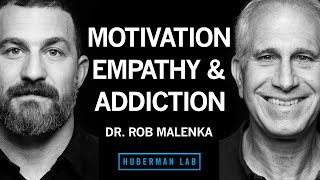 Andrew Huberman on Dopamine and Social Reward: Reward, Learning, and Context2021 · 170 min · full transcriptExplains why social reward and bonding are so dependent on context, memory, and current internal state.
Questions people ask
Sources
Every quote above, word for word from the transcripts. Numbers match the text.
“…if it's not a hundred percent in you, it ain't happening…”
“…the subconscious is the supercomputer of the brain…”
“…what we want is to feel at peace…”
“Covert contracts are the signature of everything bad.”
“Overt contracts are the signature of all things good.”
“We've never done a gotcha on my podcast.”
“If you make a mistake, it's substantive and relate to data. You you you apologize and correct the mistake, use it as teaching moment.”
“There isn't just one, but at least in the top five is master, or at least be good at, autonomic self-regulation. Know how to calm yourself down. Don't expect looking to anything external to soothe yourself. It puts you in a terrible position to be a caretaker of yourself and other people. Right? So learn how to self-soothe. Learn how to calm your mind, steady your actions, steady your voice. There are tools to do that; we talk about on the podcast but elsewhere. Have that in place. I also think that…”
“And then I—I check my emotional state. I want to make sure that I'm not angry about anything. And certainly if I am, that I'm going to set it aside for the podcast, because that's not a place for my whatever I might be dealing with. I also really start to feel into the parts of the research and the papers I found that I really love because that's the part of me that I—I like the most, frankly.”
“They don't work in isolation.”
How this guide was made: drafted with AI from the full transcripts of the recordings cited, then checked: every quotation must match a transcript word for word and be the speaker's own words, and an independent review gates accuracy. Methodology and corrections.