The Andrew Huberman Course
After graduating, you will understand Huberman’s core operating system for sleep, stress, focus, motivation, health, relationships, and evidence-based self-experimentation.
- 10 chapters
- 81 verbatim quotes
- 29 recordings

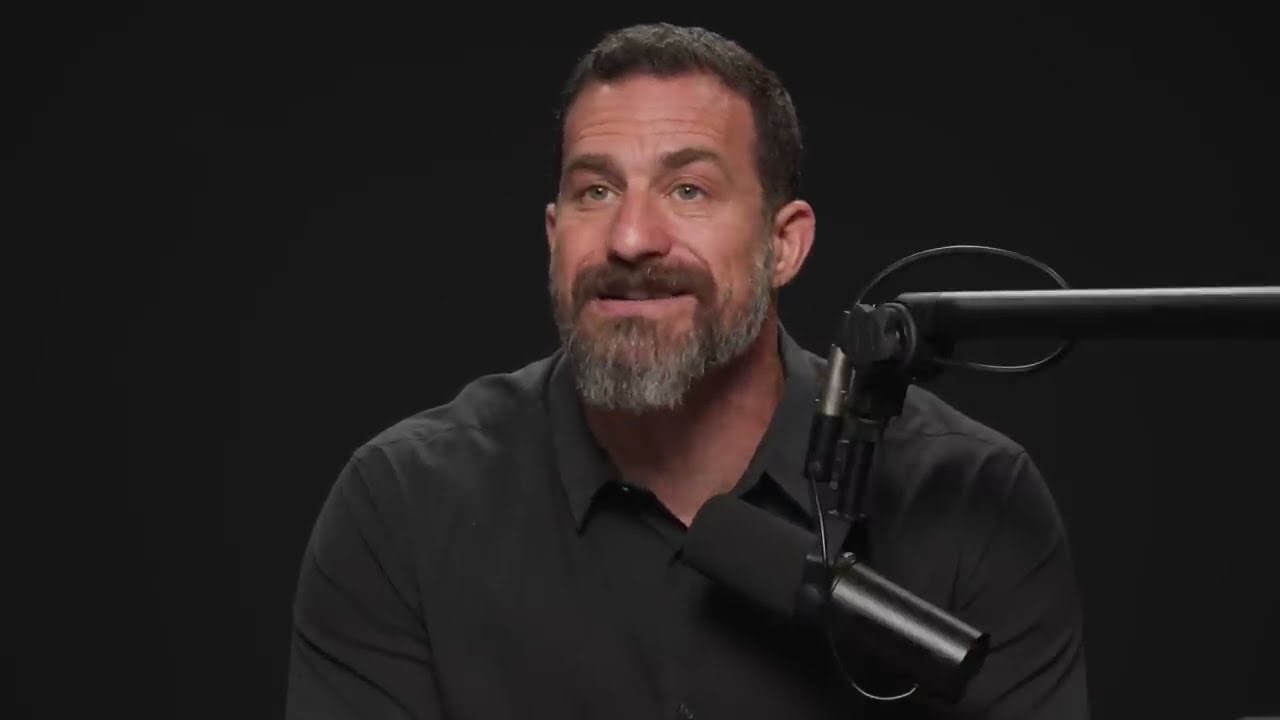
“Eyes are literally going to change their focus. My world will become more like portrait mode. I'll see you, and everything else will become blurry. When I'm calm, I actually have panoramic vision. I can see everything around me. So, I better. So, my state, my internal state of alertness or sleepiness impacts all this. And in sleep, which is kind of the opposite extreme of stress, I'm not in relation to anything outside me. I'm not perceiving anything. I'm sensing things. It's non-negotiable. I'm not having real thoughts, but the thoughts are kind of disoriented in space and time. And behavior is done. You're lying down; you're sometimes paralyzed in sleep. So, when I say states, it's really about this dynamic shift between what we're perceiving and how we're perceiving it.”Joe Rogan Experience #1513, 2023 · 5:53
About this course
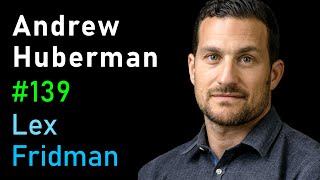
Andrew Huberman is a neuroscientist and professor of neurobiology and ophthalmology at Stanford School of Medicine. He is also the host of Huberman Lab, a long-form science podcast focused on the brain, body, health, and performance.
Huberman’s distinctive contribution is translating neuroscience into practical protocols: light, sleep, breathing, exercise, food timing, learning, and behavior change. His teaching repeatedly returns to one idea: your mental life is inseparable from your biological state.
This course is built from real recordings and already-answered questions. Each chapter gives you the most important Huberman ideas in sequence, starting with the nervous system and ending with how to think scientifically about tools, risks, and claims.
Curriculum
- States Before ToolsLearn Huberman’s master lens: mind and body are one system.
- Sleep and LightThe daily clock that sets nearly everything else.
- Stress and ResilienceStress is not the enemy; loss of control is.
- Dopamine and DriveMotivation is a system of wanting, pursuit, and baseline.
- Focus and LearningAttention, testing, errors, and rest create durable change.
- Food and TimingMetabolism depends on when, what, and how consistently you eat.
- Training for LongevityFitness is adaptation by design, not random effort.
- Substances and TradeoffsEvery chemical tool has mechanism, dose, timing, and cost.
- Mind and RelationshipsBehavior change and trust both require awareness, not just willpower.
- Scientific JudgmentUse science carefully without becoming timid or cynical.
- GraduateFinish every chapter to earn your certificate.








has graduated from The Andrew Huberman Course, completing all 10 chapters on Andrew Huberman's ideas, in his own words.
- Your mind is not separate from your body; changing physiology can change perception, emotion, thought, and action.
- Sleep and circadian timing are the foundation: morning light, lower evening activation, and regular timing make other tools work better.
- Stress is a useful mobilization system, but health and performance depend on being able to downshift when the demand is over.
- Dopamine is mainly about motivation, pursuit, and anticipation, so repeated large peaks can reduce baseline drive and enjoyment.
- Learning requires focused attention, errors, active testing, and consolidation through sleep or deep rest.
- Behavior change works best when you change the underlying state or tendency, not when you rely only on willpower.