Andrew Huberman on Learning & Education
Huberman sees learning as a neuroplastic process that depends on focused attention, effortful retrieval, and sleep-based consolidation rather than passive rereading.
- Learning is about reducing forgetting, not just taking in information.
- Focused attention and effort during study matter, but durable changes are consolidated later, especially during sleep.
- Testing yourself is one of the strongest ways to retain what you study.
- Getting answers wrong can still improve learning if you correct them against the right answer.
- Sleep, NSDR, and well-managed stress support the brain states that make learning possible.

“The best way to learn is to think about offsetting the natural forgetting of new information.”Huberman Lab podcast, 2022-11 · 8:00
Learning means fighting forgetting
Huberman’s central shift is to stop thinking of studying as pouring information into the brain and start thinking of it as preventing new information from fading. That leads him away from passive rereading and toward strategies that repeatedly bring information back to mind.1
This view makes education more active and more measurable. If the goal is retention, then the key question is not whether material feels familiar in the moment, but whether you can recall it later without prompts.12
“The best way to learn is to think about offsetting the natural forgetting of new information.”Huberman Lab podcast, 2022-11 · full transcript →
Attention and effort are the entry point for plasticity
Huberman treats learning as a neuroplastic process that starts with alertness and attention. If you are not sufficiently awake and engaged, the brain is less able to mark information as important enough to encode well.3
He is especially clear that effort matters. The strain of trying to understand, retrieve, or hold focus is not a side issue; it is part of the mechanism by which learning happens.4
That is why he puts so much emphasis on being alert enough to attend to what you want to learn. Great sleep, and in some cases NSDR, help create the mental state in which focused study is actually possible.3
Testing yourself beats rereading
Huberman’s most practical recommendation is retrieval practice: test yourself. The act of trying to pull information out of memory strengthens retention far more effectively than just reviewing it passively.2
He presents this as a repeatable rule: the more often you are tested or test yourself on information, the better you retain it. That applies whether the testing is formal, like flashcards and quizzes, or informal, like recalling key ideas from memory before looking back at notes.2
He also recommends returning to material later rather than only focusing on one study session. In his framework, what matters is not the feeling of fluency during review, but successful later recall.13
Mistakes can help if you correct them
Huberman does not frame errors as proof that learning failed. In his studying discussion, he argues that getting answers wrong can still improve memory if you then compare your response with the correct one and make the correction.
That matters for education because it changes the role of quizzes, practice tests, and self-checks. Their value is not just grading performance; it is creating opportunities for retrieval, error detection, and updating.2
This also fits his broader emphasis on effort. Struggling, checking, and revising are not inefficiencies to avoid but features of durable learning.4
Sleep is when learning gets stabilized and connected
Huberman draws a strong distinction between what happens during study and what happens afterward. He says the neural changes underlying learning do not mainly occur during the period of intense focus itself, which means offline periods are essential.6
Sleep plays the biggest role here. He describes sleep as especially important both before learning, when it helps the brain acquire and imprint new memories, and after learning, when it helps consolidate and connect those memories.
This is why he repeatedly treats sleep as foundational rather than optional. If sleep is probably the most effective way to reset brain and body health, then it also supports the attention and consolidation that make education work.3
Use stress and recovery to support focus, not sabotage it
Huberman does not portray stress as purely harmful. Acute stress can sharpen focus, and he even describes stress as the most powerful nootropic, which underscores that arousal can improve performance when it is well-timed and not excessive.7
But his real point is regulation. You need enough activation to engage with hard material, and then you need the ability to come back down so stress does not erode sleep, attention, or recovery.8
That is where tools like longer exhales, the physiological sigh, and NSDR fit into learning. They help shift state quickly, making it easier to regain calm, restore focus, or recover after cognitive effort.9
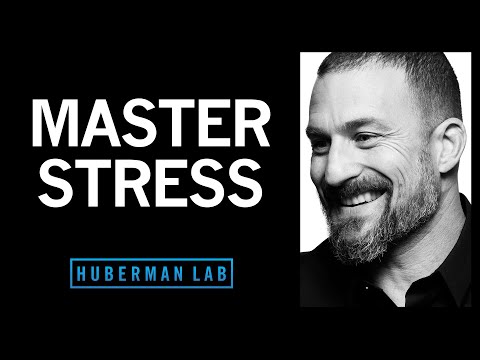
“We need to learn how to turn off our stress response.”Huberman Lab podcast, 2021 · full transcript →
Huberman on learning & education, in his own words
“The best way to learn is to think about offsetting the natural forgetting of new information.”
“…the actual changes in the nervous system, the strengthening and weakening predominantly of connections between neurons that underlie learning, do not occur during the focusing and learning…”
Where to watch
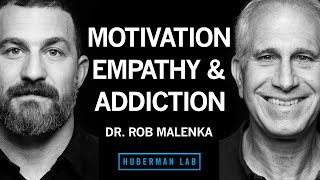
 Andrew Huberman on Studying & Learning: Test Yourself to Remember2022 · 102 min · full transcriptHis clearest teaching on how to study: self-testing, attention, effort, mistakes, sleep, and NSDR all tied to memory.
 Andrew Huberman on Sleep Biology: Your Unique Sleep Needs2022 · 180 min · full transcriptBest for understanding why sleep before and after study improves memory acquisition, consolidation, and linking ideas.
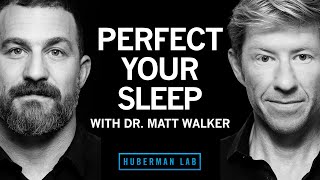 Andrew Huberman on Sleep Optimization: The Science & Practice2021 · 186 min · full transcriptExplains why sleep is so foundational for brain function and why cutting sleep undermines learning capacity.
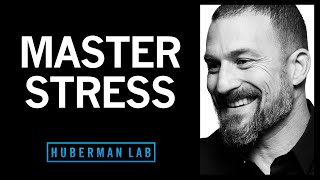 Andrew Huberman on Stress Management: Tools to Downshift Fast2021 · 98 min · full transcriptUseful for learning how to use stress for focus and then turn it down so it does not interfere with performance and sleep.
 Andrew Huberman on Sleep and Wakefulness: Caffeine, Light, and NSDR2023 · 207 min · full transcriptAdds practical tools for daytime alertness and recovery, especially NSDR and sleep-wake habits that support focus.
Questions people ask
- What did Andrew Huberman say are the most important things for learning?
- What did Andrew Huberman say about having a wind-down routine for sleep?
- What did Andrew Huberman say is the fastest way to calm down from stress?
- What did Andrew Huberman say about taking breaks from a long podcast or lesson to learn better?
- What did Andrew Huberman say about building something new over time?
Sources
Every quote above, word for word from the transcripts. Numbers match the text.
“The best way to learn is to think about offsetting the natural forgetting of new information.”
“The more times you test yourself or that you are tested on material, the better your retention of that material.”
“The most important components to learning are that you be alert so that you can attend, so you can pay attention to the material you're trying to learn, and then testing yourself later, and of course, the other component, which is getting sufficient amounts of great sleep each night. And I highly recommend doing NSDR.”
“…effort is the cornerstone of learning.”
“…the actual changes in the nervous system, the strengthening and weakening predominantly of connections between neurons that underlie learning, do not occur during the focusing and learning…”
“The most powerful nootropic or smart drug is stress.”
“We need to learn how to turn off our stress response.”
“If you want to calm down quickly, you need to make your exhales longer and or more vigorous than your inhales.”
How this guide was made: drafted with AI from the full transcripts of the recordings cited, then checked: every quotation must match a transcript word for word and be the speaker's own words, and an independent review gates accuracy. Methodology and corrections.