Andrew Huberman on Muscle & Longevity
Huberman treats skeletal muscle as a major driver of longevity because it supports metabolic health, glucose control, physical function, and resilience across aging.
- Muscle is not just aesthetic; it is central to healthy aging and metabolic health.
- Resistance training needs progressive overload and a real plan to keep producing adaptation over time.
- Protein quality and getting enough protein per meal matter for maintaining and building muscle.
- Meal timing affects the metabolic conditions that support muscle and long-term health.
- The best longevity-oriented program is the one you can do consistently while still training hard enough to adapt.

“It's not really about restricting your feeding. It's about accessing the beauty of the fasted state…”Huberman Lab Podcast #41, 2022 · 1:20:26
Muscle is a longevity tissue, not just a cosmetic one
Huberman’s view is that skeletal muscle matters for far more than appearance. He highlights muscle as central to longevity, metabolism, and healthy aging, with importance tied to muscle quality and function, not simply size.
A key reason is metabolic control. Healthy muscle helps dispose of glucose and supports insulin sensitivity, which makes muscle a major regulator of whole-body health as people age.
To keep muscle, you need resistance training that actually progresses
Huberman repeatedly emphasizes that exercise outcomes depend heavily on programming. For muscle and longevity, the crucial principle is progressive overload: if training does not advance in some way, adaptation stalls.
That makes planning important. He and Andy Galpin stress that a written training plan, even a simple one, works better than training randomly, and that poor adherence plus lack of progression are the biggest reasons people fail to improve.
He also frames exercise methods as flexible so long as the core principles are respected. The big ideas are few and the specific methods are many, which means people can tailor training to their abilities and schedule without losing the main benefit1.
Protein is a core lever for muscle preservation and healthy aging
Huberman connects muscle longevity to nutrition, especially protein intake. He highlights protein quality as important, with special emphasis on leucine-rich dietary protein and on making the first meal count for muscle protein synthesis.
He also discusses a practical per-meal target rather than only a daily total. In this conversation, 30 to 50 grams of high-quality protein per meal is emphasized, with about 50 to 55 grams as a practical ceiling for muscle protein synthesis in a single meal.
Meal timing shapes the metabolic conditions that support muscle
Huberman’s view of eating is not just about calories. He argues that timing changes the body’s fed and fasted states, influencing glucose, insulin, inflammation, sleep, and other health markers that affect long-term muscle maintenance and overall health3456.
He also warns against treating one feeding window as universally magical. What matters is choosing an eating window that is consistent and placed during the more active phase of the day, rather than drifting late into the night.
For glucose control specifically, he points to simple movement after meals. Even a light walk after eating can help clear glucose faster, linking ordinary activity to the metabolic environment that preserves health over time.
Longevity training should be balanced, sustainable, and specific
Huberman does not reduce longevity to lifting alone. He recommends balancing resistance training with conditioning, and in one practical baseline he leans roughly 60/40 toward strength while still preserving enough cardio for broader health and work capacity.
Just as important, the program has to be doable. He argues there is no single optimal fitness protocol, and the best plan is the one you can follow consistently while still training hard enough to force adaptation8.
That is why he favors practical templates over perfection. A general weekly structure can cover strength, hypertrophy, endurance, speed, power, and mobility, and it can be customized to the person rather than copied rigidly8.
Huberman on muscle & longevity, in his own words
“It's not really about restricting your feeding. It's about accessing the beauty of the fasted state…”
“…we should really think about fed and unfed states…”
“The key word here is conditions. If I can emphasize anything today, it's that what you eat and when you eat it set conditions in your body, and those conditions can be very good for you, or very bad for you, depending on when you eat. In fact, when you eat is as important as what you eat. I'll repeat that, when you eat is as important as what you eat, at least as it relates to health parameters, in particular, liver health and mental health.”
Where to watch
 Andrew Huberman on Muscle Health: The Organ of Longevity2021 · 184 min · full transcriptBest single episode for why Huberman sees muscle as central to longevity, glucose control, protein needs, and healthy aging.
 Andrew Huberman on Training Program Design: Optimize Fitness & Longevity2021 · 186 min · full transcriptBest for turning the muscle-longevity idea into an actual training plan built on adherence and progressive overload.
 Andrew Huberman on Strength Training: Build Muscle, Endurance, and Power2021 · 211 min · full transcriptBest for understanding the training variables that determine whether resistance work actually builds strength and muscle.
 Andrew Huberman on Fasting And Time-Restricted Eating: Timing Matters2022 · 146 min · full transcriptBest for how meal timing, fed and fasted states, and glucose control support muscle maintenance and long-term health.
 Andrew Huberman on Science-Based Exercise: Build Strength, Cardio, and Resilience2021 · 161 min · full transcriptBest for balancing strength training with conditioning in a way that supports performance, aesthetics, and longevity.
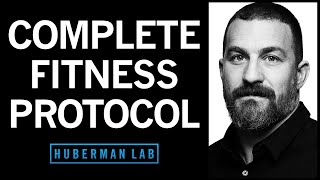 Andrew Huberman on Fitness Protocols: Tools to Optimize Physical Health2021 · 118 min · full transcriptBest for a practical weekly exercise template that includes strength, hypertrophy, endurance, and metabolic health.
Questions people ask
- What did Andrew Huberman say about the best supplements for performance?
- What did Andrew Huberman say about when you eat versus what you eat?
- What did Andrew Huberman say everybody should know about strength training and exercise adaptations?
- What did Andrew Huberman say about the best time to eat during time-restricted feeding?
- What did Andrew Huberman say about training harder for a shorter time?
Sources
Every quote above, word for word from the transcripts. Numbers match the text.
“…concepts are few, methods are many…”
“…when you eat is as important as what you eat…”
“It's not really about restricting your feeding. It's about accessing the beauty of the fasted state…”
“…we should really think about fed and unfed states…”
“The key word here is conditions. If I can emphasize anything today, it's that what you eat and when you eat it set conditions in your body, and those conditions can be very good for you, or very bad for you, depending on when you eat. In fact, when you eat is as important as what you eat. I'll repeat that, when you eat is as important as what you eat, at least as it relates to health parameters, in particular, liver health and mental health.”
“…there's no real optimal fitness protocol.”
How this guide was made: drafted with AI from the full transcripts of the recordings cited, then checked: every quotation must match a transcript word for word and be the speaker's own words, and an independent review gates accuracy. Methodology and corrections.