Andrew Huberman on Caffeine & Alertness
Huberman’s view is that caffeine can improve alertness, but it works best when it is timed around the biology of adenosine, circadian light signals, and sleep rather than used to bulldoze through fatigue.
- Caffeine increases alertness mainly by blocking adenosine, a key driver of sleepiness.
- He places caffeine inside a bigger wakefulness system: light is the strongest cue for when you feel awake or sleepy.
- He points to delaying caffeine 60 to 90 minutes after waking as a way some people can reduce the afternoon crash.
- He treats sleep as the real foundation of daytime energy, performance, and focus.
- If you are tired from poor sleep, he favors protecting your schedule and using tools like NSDR rather than simply piling on more caffeine.

Caffeine helps alertness by masking sleep pressure, not by replacing sleep
Huberman explains alertness through the biology of adenosine. As you stay awake, adenosine builds and creates the pressure to sleep, and caffeine works by blocking adenosine receptors rather than by restoring the brain and body the way sleep does.12
That distinction matters because feeling more awake after caffeine is not the same thing as having truly recovered. In his broader framework, sleep remains the most effective reset for brain and body health, so caffeine is a tool for managing alertness, not a substitute for sleep.34
“Adenosine creates a sort of sleep drive or a sleep hunger…”Huberman Lab podcast, 2022 · full transcript →
For wakefulness, light comes first
Huberman repeatedly emphasizes that the strongest controller of when you want to be awake and when you want to be asleep is light. He recommends getting sunlight in your eyes as close to waking as possible, and he also describes bright morning light as a major driver of wakefulness and circadian timing.567
This changes how to think about caffeine. In his view, caffeine is not the primary lever for setting alertness across the day; it works best when it supports a well-set circadian system rather than trying to overpower a poorly timed one. Morning light helps establish the hormonal and neural conditions for alertness, while late light can make sleep worse and create the very fatigue people then try to solve with more caffeine.567
He links the afternoon crash to timing, not just to low willpower
Huberman discusses the common afternoon dip as something that fits normal wakefulness biology, not just a motivation problem. He connects daytime fatigue to adenosine dynamics and notes that caffeine can contribute to a later crash because it blocks the receptors for the sleep pressure that has been building.28
His practical advice is that delaying caffeine 60 to 90 minutes after waking can help some people reduce the afternoon energy dip. The logic is that you are working with, rather than immediately overriding, your natural morning wakefulness signals.
That advice also fits his larger emphasis on morning light and circadian alignment. If you anchor wakefulness early with bright light and then use caffeine with better timing, you may rely less on repeated stimulation later in the day.67
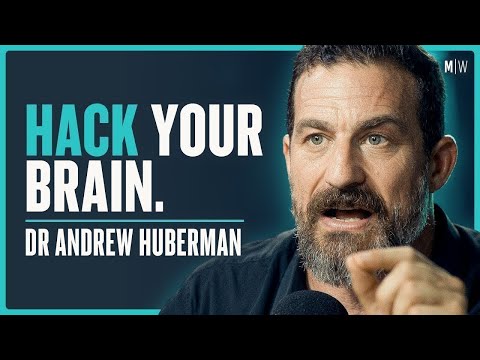
“That's pretty much everybody who doesn't get tired in the middle of the afternoon.”Lex Fridman Podcast interview, 2023 · full transcript →
Using more caffeine to patch bad sleep is not his main strategy
When sleep has gone badly, Huberman does not frame extra caffeine as the smart first move. In discussing recovery from a poor night, he specifically warns against trying to get through the day by consuming extra caffeine, alongside other compensation behaviors like sleeping in or going to bed early the next night.
The reason is consistent with his overall model: sleep and wakefulness are tightly linked, and attempts to force alertness can further disrupt the rhythm you are trying to restore. He describes sleep as foundational for health and performance, which is why preserving that foundation matters more than chasing short-term stimulation.34
If you want steady alertness, combine caffeine with sleep, NSDR, and learning-friendly habits
Huberman’s advice on alertness is not just about staying awake; it is about being able to focus and perform. He says the most important components for learning include being alert enough to attend and getting sufficient great sleep, and he also recommends NSDR as a support for attention and recovery.91011
He presents NSDR as a way to reset your ability to be awake, improve emotional stability, and support sleep later at night. That makes it an alternative or complement to caffeine when the goal is better attention without further disrupting nighttime sleep.1211
The practical takeaway is simple: use caffeine to support alertness, but build the day around morning light, sufficient sleep, and tools that restore focus rather than constantly borrowing it from later hours.5612
“So we talked about light, we talked about activity and timing of light, we talked about the usefulness of naps, and these things that I'm calling non-sleep deep rest, which include meditation, yoga nidra, and hypnosis, non-sleep deep rest, or what I, hereafter, we will refer to as NSDR, not to be confused with EMDR. I don't think I've ever heard NSDR, so I'm planting a flag for NSDR, non-sleep deep rest, as a way to reset one's ability to be awake after you emerge from NSDR, so to get some more wakefulness and ability to attend, some emotional stability, reset, as well as make it better and easier to fall asleep when you wanna go to sleep at night.”Huberman Lab podcast, 2022 · full transcript →
Huberman on caffeine & alertness, in his own words
“Adenosine creates a sort of sleep drive or a sleep hunger…”
Where to watch
 Andrew Huberman on Sleep and Wakefulness: Caffeine, Light, and NSDR2023 · 207 min · full transcriptBest overview of how caffeine, adenosine, morning light, the afternoon crash, and NSDR fit together for daily alertness.
 Andrew Huberman on Sleep and Wakefulness: How to Set Your Clock2022 · 82 min · full transcriptBest for understanding the core biology: adenosine, sleep pressure, and why light is the master controller of wakefulness.
 Andrew Huberman on Sleep Optimization: Tools for Timing and Recovery2022 · 102 min · full transcriptMost practical sleep-and-wake toolkit, especially for using morning sunlight and daily timing to improve alertness.
 Andrew Huberman on Sleep Optimization: The Science & Practice2021 · 186 min · full transcriptBest for seeing why sleep quality and timing matter more than trying to rescue performance with stimulants.
 Andrew Huberman on Studying & Learning: Test Yourself to Remember2022 · 102 min · full transcriptUseful if your real goal is focus and learning, not just feeling awake.
Questions people ask
Sources
Every quote above, word for word from the transcripts. Numbers match the text.
“Adenosine creates a sort of sleep drive or a sleep hunger…”
“Adenosine is an incredibly interesting molecule.”
“…sleep is the foundation of mental health, physical health, and performance of all kinds…”
“…sleep is the absolute foundation of your mental health, your physical health, and your performance in all endeavors…”
“…the most powerful thing that's governing when you want to be asleep and when you want to be awake is light…”
“What you want to do is get sunlight in your eyes as close to waking as possible.”
“…view bright sunlight within the first 30 to 60 minutes after waking…”
“That's pretty much everybody who doesn't get tired in the middle of the afternoon.”
“The most important components to learning are that you be alert so that you can attend, so you can pay attention to the material you're trying to learn, and then testing yourself later, and of course, the other component, which is getting sufficient amounts of great sleep each night. And I highly recommend doing NSDR.”
“…the actual changes in the nervous system, the strengthening and weakening predominantly of connections between neurons that underlie learning, do not occur during the focusing and learning…”
“…non-sleep deep rest or NSDR…”
“So we talked about light, we talked about activity and timing of light, we talked about the usefulness of naps, and these things that I'm calling non-sleep deep rest, which include meditation, yoga nidra, and hypnosis, non-sleep deep rest, or what I, hereafter, we will refer to as NSDR, not to be confused with EMDR. I don't think I've ever heard NSDR, so I'm planting a flag for NSDR, non-sleep deep rest, as a way to reset one's ability to be awake after you emerge from NSDR, so to get some more wakefulness and ability to attend, some emotional stability, reset, as well as make it better and easier to fall asleep when you wanna go to sleep at night.”
How this guide was made: drafted with AI from the full transcripts of the recordings cited, then checked: every quotation must match a transcript word for word and be the speaker's own words, and an independent review gates accuracy. Methodology and corrections.