Work and Reinvention
The future demands mental flexibility, not just more information.
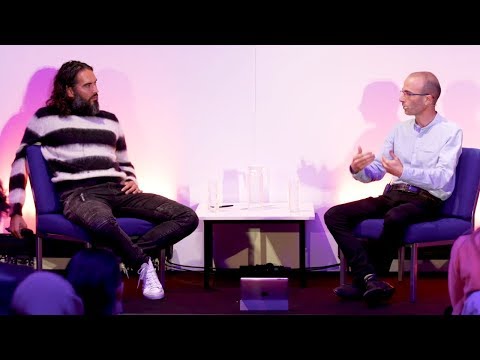
The lesson
Harari’s starting point is that the future of work is being reshaped by artificial intelligence, and not just in a narrow technical sense. He argues that the deeper disruption comes as AI becomes powerful enough to predict choices, influence behavior, and outperform humans in more tasks, which raises the possibility not only of unemployment but of human irrelevance123. That is why he treats the future as something to prepare for, not a fixed prophecy to passively await, and why he warns that the changes ahead are still in their early stages4.
In this view, the main danger is not simply that workers will be exploited in old ways, but that many people may no longer be economically useful to the system. Harari explicitly warns about the emergence of a large class of people rendered irrelevant by automation and data-driven systems56. This shifts the policy question: instead of asking only how to preserve existing jobs, societies need to ask how to protect human dignity, security, and participation when careers become unstable or disappear7.
That is why Harari thinks education must change. If algorithms can store information, detect patterns, and increasingly guide decisions, then schooling cannot focus mainly on memorization or one-time professional training. He argues that education should prioritize emotional intelligence, mental balance, and self-knowledge, because these are the foundations for adapting when the world changes faster than any single skill set can keep up89.
From there, reinvention becomes the central practical ability. Harari says people will need to reinvent themselves repeatedly throughout life, not just retrain once for a new role10. This requires inner work as well as external learning: no institution or algorithm can fully do it for you, because at some point you must examine yourself, understand your own mind, and make choices about who to become next1112.
Harari also places this challenge in a broader social context. Automation and AI may widen inequality between countries and concentrate power in a few places, so adaptation is not only an individual task but a collective one3. Because these technologies affect labor markets, political power, and human agency across borders, he argues that societies need cooperation at national and global levels if they want technology to serve humans rather than the other way around1314.
4 principles from Yuval Noah Harari
Prepare for repeated reinvention
Do not assume one education or one career will last for life. Build habits that let you learn, unlearn, and take on new roles as conditions change.
“…you need to walk the last mile yourself…”
Educate for mental balance, not just information
Information alone is less valuable when algorithms can process vast amounts of it. What becomes more valuable is emotional intelligence, self-knowledge, and psychological stability under change.
“…the most important goals of education in the 21st century are probably to develop your emotional intelligence and your mental balance…”
Protect humans, not only jobs
Some jobs may disappear faster than new ones appear, so success cannot mean preserving every existing role. The deeper goal is to safeguard dignity, agency, and social belonging even when work is unstable.
“…a new massive class of useless people: the useless class…”
Keep technology in service of human goals
Harari’s concern is not technology itself but losing control over who it serves. In work, education, and politics, judge systems by whether they strengthen human autonomy rather than make people more dependent or manipulable.
“…what does it mean to live in a world in which increasingly, we rely on the recommendations of algorithms…”
In his own words
The quotes behind the lesson, word for word from the transcripts. Numbers match the lesson above.
“…we are now facing which is the rise of artificial intelligence…”
“…humans will soon be hackable animals…”
“Now the gap may reopen and be much worse than ever before because of the rise of AI and because AI is likely to be dominated by just a small number of countries. So that's one issue. AI inequality. And the other issue is AI and human agency. Or even the meaning of human life. What happens when AI is mature enough and you have enough data to basically hack human beings. And you have an AI that knows me better than I know myself, and can make decisions for me, predict my choices, manipulate my choices, and authority increasingly shifts from humans to algorithms.”
“We haven't seen nothing yet.”
“…a new massive class of useless people: the useless class…”
“…a new massive class the useless class…”
“What we need to protect is not the jobs, it's the humans…”
“…the most important goals of education in the 21st century are probably to develop your emotional intelligence and your mental balance…”
“No, I don't think that knowing yourself is necessarily all about intelligence. Certainly not in the narrow sense of intelligence. If you include emotional intelligence and so forth, then yes. But in the more narrow sense of IQ, I think this is not-- there are many very intelligent people in the world who don't know themselves at all, which is an extremely dangerous combination. Now some people explore themselves through therapy. Some use meditation. Some use art. Some use poems.”
“…the ability to reinvent themselves repeatedly throughout their lives…”
“…you need to walk the last mile yourself…”
“And maybe the two most important influences is that first it enabled me to have more clarity and more focus. And certainly when you write about such big subjects like trying to summarize the whole of history in 400 pages. So having a very, very focused mind is very important, because the great difficulty is that everything kind of distracts you. You start writing about the Roman Empire and you say, well, I have to explain this and this and this and this, and you end up with 4,000 pages. So we have to be very-- what is really important, and what can be left outside? And the other thing is that at least the meditation that I practice, which is with passive meditation, it's all about really knowing the difference between the fictions and stories generated by our mind and the reality.”
“…we need global cooperation like never before…”
“The key is to remember that we created them to serve us, and not that we are here in order to serve them.”
Reflect
- What part of your current work depends mostly on pattern recognition, routine judgment, or information recall—and how might you prepare if that part becomes automated?
- Which practices in your life actually build self-knowledge or mental balance, rather than just adding more information?
- If you had to reinvent yourself professionally within five years, what capabilities would matter most across many possible futures?
Check your understanding
Go deeper
 Yuval Noah Harari on Future of Education: Learning to Reinvent Yourself2018 · 60 min · full transcript
 Yuval Noah Harari on AI and Human Futures: Homo Deus Debated2015 · 91 min · full transcript
 Yuval Noah Harari on AI, Biotech, and Meaning: Google Talk2018 · 59 min · full transcript
 Yuval Noah Harari on Internet and Society: Global Cooperation vs Fragmentation2017 · 94 min · full transcript
 Yuval Noah Harari on Artificial Intelligence: The Future of Humanity2015 · 28 min · full transcript