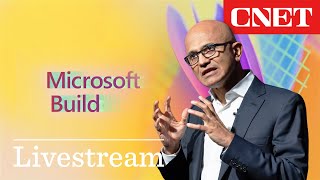
Satya Nadella on OpenAI Partnership
Satya Nadella sees the OpenAI partnership as a smart way to accelerate a major AI platform shift while keeping Microsoft focused on infrastructure, enterprise deployment, customer choice, and broad economic impact.
- Nadella views the OpenAI partnership as a smart bet on the company leading this AI generation.
- He treats the partnership as part of a bigger Microsoft strategy: build the full stack from infrastructure to copilots.
- He does not frame AI as one lab winning; he stresses choice, diffusion, and independence across models.
- The point is real productivity and economic impact, not AI for its own sake.
- As models grow more powerful, Microsoft’s role includes safety, control, and zero-trust safeguards for enterprise use.

“I think the company of this generation has already been created, which is OpenAI…”BG2 podcast interview, 2025 · 0:00
He partnered with OpenAI because he believed it had created the defining AI company of this era
Nadella’s view is straightforward: Microsoft backed OpenAI because he saw it as the breakout company of the current AI wave. He describes OpenAI not as a side experiment but as the company of this generation, which makes the partnership a strategic choice about where the center of gravity in AI had moved.1
He also presents the decision as disciplined rather than emotional. His broader strategy rule is to do more of what works, less of what fails, and avoid acting out of envy, which suggests the OpenAI deal fit his pattern of recognizing where Microsoft had permission to win and where a market was truly shifting.234
That makes the partnership look less like a one-off investment and more like a platform-shift call. Nadella says the launch of ChatGPT marked a dramatic step-change in computing and that every layer of the software stack would be changed, so partnering closely with the company driving that shift fit Microsoft’s long-term playbook.56
“I think the company of this generation has already been created, which is OpenAI…”BG2 podcast interview, 2025 · full transcript →
For Microsoft, the partnership works because it feeds a full-stack strategy
Nadella does not talk about AI as only a model race. He repeatedly frames Microsoft as a platform company whose goal is to build the complete stack, from infrastructure to data to tooling to application extensibility, so others can build on top of it. In that context, OpenAI strengthens the model layer inside a much broader Microsoft system.78
This is why he connects AI models to Azure, copilots, data, and enterprise workflows. He says every Microsoft product will have some of the same AI capabilities, which shows the partnership matters because it can be distributed through the company’s existing products and cloud platform at scale.9
His picture of the market is not that value sits only with the model creator. He argues that AI value will accrue heavily to infrastructure, hyperscalers, and enterprise deployment, which helps explain why Microsoft’s partnership logic goes beyond owning a frontier lab and toward turning model breakthroughs into widely used systems.7
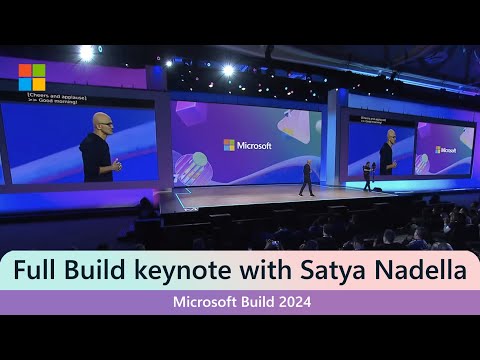
“We're introducing more than 50-plus new products and partnerships to create a new opportunity for you. We’ve always been a platform company and our goal is to build the most complete end-to-end stack from infrastructure, to data, to tooling to the application extensibility so that you can apply the power of this technology to build your own applications. And so today I want to highlight our top news for this event across every layer of this Copilot stack. So let's dive right in with infrastructure. You know, we have the most complete scalable AI infrastructure that meets your needs in this AI era. We're building Azure as the world's computer. We have the most comprehensive global infrastructure with more than 60-plus datacenter regions, more than any other cloud provider.”Microsoft Build keynote, 2024 · full transcript →
He thinks the real prize is diffusion: getting AI into work, software, and the economy
Nadella’s standard for judging AI is practical impact. He says the world needs something that truly changes the productivity curve, and his benchmark for success is whether AI contributes to broad economic growth rather than only producing technical milestones.1011
That is why he talks so much about copilots. He describes this period as the age of copilots and treats Copilot as a new interface for accessing organizational and world knowledge and acting on it. The OpenAI partnership matters in his framework because it helps power this new user experience across work.121314
He is also clear that deployment is the hard part. He compares the next phase to lean for knowledge work, meaning the opportunity is not just generating answers but redesigning workflows, meetings, documents, decisions, and knowledge processes so AI actually changes output.1514
This is why he keeps returning to broad impact. He says the goal is not technology for its own sake but what people can do with it, across roles, sectors, and countries.161718
He does not want customers locked into one AI source, even with OpenAI as a key partner
One of the most important parts of Nadella’s view is that partnering deeply with OpenAI does not mean believing one model provider should control the future. He argues for broad diffusion, competition, and choice, and his advice to enterprises is to use all models while remaining independent of all of them.1920
That principle explains how he thinks the relationship fits Microsoft strategy. Microsoft can work closely with OpenAI while still building a platform where customers can evaluate multiple models, switch among them, and optimize for their own outcomes.21
He makes this even more concrete by saying every firm will have private evaluation benchmarks that reflect its core intellectual property. In other words, the durable advantage is not blind dependence on a single lab; it is the ability to measure outcomes, preserve control, and keep improving systems against enterprise-specific standards.2221
This also fits his desire to make AI a straightforward software business rather than a network-effects intelligence business. The partnership can be powerful without becoming a monopoly theory of value.23
He believes the partnership only works if AI stays safe, controlled, and enterprise-ready
Nadella’s enthusiasm for AI is paired with a stronger stance on control. He says AI should serve humanity first and remain in human control, which is especially important as powerful models move into real work and agentic systems.2419
He also says safety is the most important feature of Microsoft’s AI platform. That matters for understanding the OpenAI partnership because Microsoft’s role is not just to surface model capability, but to wrap it in the operational controls enterprises need.25
His thinking has become more explicit over time. He says he no longer assumes alignment will simply emerge and instead argues for engineered zero-trust environments that can contain malfunctioning agents before they cause harm.2627
So in Nadella’s framework, the partnership succeeds when frontier model capability is combined with identity, monitoring, policy, evaluation, and enterprise sovereignty. The value is not only intelligence; it is intelligence made governable inside real organizations.2722
Nadella on openai partnership, in his own words
“I think the company of this generation has already been created, which is OpenAI…”
“My advice is more like use all, but be independent of all.”
“…we need something that truly changes the productivity curve…”
Where to watch
 Satya Nadella on AI Phase Shifts: OpenAI, Agents, and the Next Stack2025 · 85 min · full transcriptBest for why Nadella believed OpenAI mattered strategically and how he thinks about platform shifts and permission to win.
 Satya Nadella on AI Competition: Safety, Openness, and Enterprise Control2025 · 37 min · full transcriptBest for understanding why a close partnership with OpenAI still fits Nadella’s emphasis on choice, control, and model independence.
 Satya Nadella on Copilots and Azure AI: Ignite's age of copilots2023 · 63 min · full transcriptBest for seeing how the partnership shows up in Microsoft’s product strategy through copilots, Azure AI, and enterprise customization.
 Satya Nadella on AGI and Quantum Computing: Refounding the Future2025 · 77 min · full transcriptBest for Nadella’s economic view: where AI value accrues, why deployment matters, and what success should look like in the real world.
 Satya Nadella on Open vs Closed AI Models: Who Wins2025 · 24 min · full transcriptBest for his latest thinking on trust, zero-trust architecture, and why powerful models need external safeguards.
Questions people ask
- What did Satya Nadella say about AI being in human control?
- What did Satya Nadella say about Microsoft’s OpenAI deal?
- What did Satya Nadella say about using multiple AI models?
- What does Satya Nadella say about strategy and permission to win?
- What is Satya Nadella's strategy for Microsoft's AI stack?
- What did Satya Nadella say about the three ways enterprises will use AI?
Sources
Every quote above, word for word from the transcripts. Numbers match the text.
“I think the company of this generation has already been created, which is OpenAI…”
“…do more of the former and less of the latter…”
“…you shouldn't do things out of envy…”
“Sometimes it's okay to fast follow, and it worked out. But you shouldn't do things out of envy. That was one of the hardest lessons, I think, we've learned. Uh, do it because you have permission to do this, and you can do it better. Like, both of those matter to me. The brand permission, like, uh, you know, Geoffrey Moore once said this to me, which I say, "Hey, why don't you go do things which your customers expect you to do?" I love that, right? Which is cloud was one such thing, which is the cust you know, in fact, when I first remember showing up in Azure, people would tell me, "Oh, it's a winner-take-all.”
“We went from the bicycle to the steam engine with the launch of ChatGPT.”
“Every layer of the software stack is going to be changed forever.”
“We're introducing more than 50-plus new products and partnerships to create a new opportunity for you. We’ve always been a platform company and our goal is to build the most complete end-to-end stack from infrastructure, to data, to tooling to the application extensibility so that you can apply the power of this technology to build your own applications. And so today I want to highlight our top news for this event across every layer of this Copilot stack. So let's dive right in with infrastructure. You know, we have the most complete scalable AI infrastructure that meets your needs in this AI era. We're building Azure as the world's computer. We have the most comprehensive global infrastructure with more than 60-plus datacenter regions, more than any other cloud provider.”
“We create technology so that others can create more technology.”
“…every product of Microsoft will have some of the same AI capabilities…”
“…we need something that truly changes the productivity curve…”
“The real benchmark is, is the world growing at 10%.”
“This is the Age of copilots.”
“Copilot will be the new UI that helps us gain access to the world's knowledge and your organization's knowledge.”
“People who use Copilot are spending less time searching for information, they're holding more effective meetings, they're able to collaborate on work artifacts, whether they are Word documents, spreadsheets, emails. All of them have richer context about their role, about their organization so that they can collaborate much more and stay in focus. And of course, we're just getting started. The way to think about this is Copilot will be the new UI that helps us gain access to the world's knowledge and your organization's knowledge. But most importantly, it's your agent that helps you act on that knowledge.”
“This is like lean for knowledge work in particular.”
“It's not for technology's sake, but it is for that broad impact.”
“At the end of the day, though all of this innovation will only be useful if it's empowering all of us in our careers, in our communities, in our countries.”
“After all, the big winners are going to be people like yourselves who are going to build these applications, not just people who create platforms like us. The winners need to be across every sector of the economy in every part of the world. That's our goal. For us, it's never been about the technology. It's about what people can do with it. And that's what is core to our mission. And I want to leave you with this one real, powerful example. Earlier this year, World Bank conducted a study for students in Nigeria using Copilot. What they found was pretty remarkable. By their analysis, it was the best, most effective educational intervention involving tech.”
“Let's start with the common sense part first, which is we should do what it takes to build stuff that serves humanity first, and is in human control. You know, it's kinda crazy that we have to start with that level of common sense, but I think it's a good place. Then, when I think about pacing, whatever, the first thing that at least I believe is the broad diffusion of this technology is the most critical thing. Because the benefits of this tech showing up everywhere is really what it's all about. Right? So at the end of the day, if you sort of say serving humanity, let it actually reach humanity, right, in ways that it serves humanity. And that means you've got to have choice, you have to have competition, you have to have all kinds of business models, whether they're open weights, close weights, what have you.”
“My advice is more like use all, but be independent of all.”
“My advice is more like use all, but be independent of all. So for example, my acid test is you should always eval max evals that matter to you. Right? So what's the outcome you want? You should go run that outcome through all the models. Then here's the test I would do. I would pull out a model and see whether I can retain the eval. If I can't, that means you really are dependent on something that may or may not be yours. Right. Right? That's... So so my fundamental enterprise architecture would say you should have a model system that fundamentally allows you to be able to continuously hill climb on your own on evals that are yours, while using all models, closed, open. If you want, you can even fine tune any of these models, but you can even substitute models.”
“…every firm will have a private eval benchmark, which is their core IP.”
“I want to turn this into just a simple, straightforward software business as opposed to a network effects intelligence business.”
“…we should do what it takes to build stuff that serves humanity first, and is in human control…”
“Safety is the most important feature of our AI platform.”
“…the biggest change now I have is I used to always think that alignment will just fall out. I no longer believe that.”
“…let's create an engineered zero trust environment that can contain any malfunctioning agent before it does any harm.”
How this guide was made: drafted with AI from the full transcripts of the recordings cited, then checked: every quotation must match a transcript word for word and be the speaker's own words, and an independent review gates accuracy. Methodology and corrections.