Satya Nadella on Human Agency
Satya Nadella sees human agency as the point of technology: tools, especially AI, should expand people’s ability to learn, choose, create, and achieve more rather than put them on autopilot.
- AI is a tool meant to expand human ambition and capability, not diminish it.
- Human agency requires humans staying in the loop, especially in work and decision-making.
- Technology matters when it helps more people achieve more, not when it merely shows off technical novelty.
- Agency also means control: people and enterprises should have choice, independence, and sovereignty over how AI is used.
- A culture of learning, inclusion, and empathy is what lets people use powerful tools well.
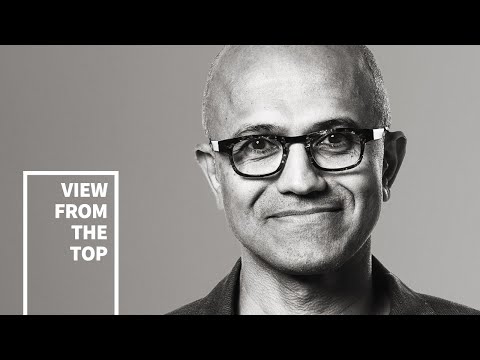
Human agency is the purpose of AI, not a side effect
Nadella’s core idea is simple: AI should be understood as a tool that strengthens what people can do, not as a force that makes people less important. He argues that many discussions about AI underestimate people’s ability to adapt, direct, and benefit from powerful new technology. In his view, even dramatic technical advances matter most when they help humans pursue larger goals.12
That is why he connects AI back to a broader mission of empowerment. He consistently frames technology as valuable when it helps every person and organization achieve more, across work, communities, and countries. Human agency, for him, is not abstract independence; it is practical power to act, learn, and make progress.34
Agency means humans stay in the loop
Nadella does not describe good AI as autopilot. He emphasizes systems that help people start, draft, reason, and move faster while preserving human oversight and judgment. The point is to reduce friction without removing responsibility.7
This matters because he expects AI to reshape basic human activities such as learning, getting information, and conducting commerce. When tools become this pervasive, keeping people in control is not just a design preference; it is a condition for trustworthy use. That is why he says technology should serve humanity first and remain under human control.8910
Technology should raise people’s capacity, not just automate tasks
Nadella often talks about productivity, but not in a narrow sense of replacing effort with automation. He wants technology to change the productivity curve by helping people and organizations do more with less, which means amplifying capability rather than simply demanding more labor. In that framing, AI is powerful because it expands what people can produce, solve, and discover.111213
He also treats this as a broad-based opportunity, not a benefit reserved for elites. He points to a future in which AI support can reach people in many roles and contexts, from knowledge work to education, mentoring, and access to expertise. Human agency grows when useful intelligence becomes widely available and practically usable.314
Real agency requires choice and independence
For Nadella, empowerment is hollow if users and enterprises do not actually control their tools. That is why he stresses broad diffusion, competition, and choice instead of dependence on any single provider or model. Agency includes the power to decide how systems are used, what outcomes matter, and whether one can switch tools without losing control.101516
His advice to use many models while staying independent shows how operational he is about agency. He wants organizations to evaluate systems by their own outcomes and preserve architectural freedom. In this view, agency is not only psychological or cultural; it is built into technical design, governance, and market structure.1516
Human agency depends on culture: learning, empathy, and inclusion
Nadella’s view of agency is not just about tools. People need the habits and environment to use powerful tools well, which is why he emphasizes becoming learn-it-alls instead of know-it-alls. A growth mindset makes agency larger because it treats new technology as something people can learn to use, not something that leaves them behind.17
He pairs that with inclusiveness and empathy. If the real currency of culture is inclusiveness, then agency grows when more people can participate, contribute, and be respected. His account of empathy begins with respect for other people’s views and histories, suggesting that human agency is strengthened in organizations where people are seen clearly and developed continuously.181920
“Let's not be know-it-alls, let's be learn-it-alls.”Stanford GSB conversation, 2018 · full transcript →
Builders expand agency when they create tools others can build on
Another recurring theme is that technology has its highest value when it enables more creation downstream. Nadella says the job is not to celebrate technology for its own sake, but to build platforms and tools that let others make things and make things happen. Human agency, in this sense, includes the agency of developers, partners, and organizations who can create new value on top of shared infrastructure.212223
This is also why he talks about platform shifts with excitement rather than fear. New interfaces, reasoning engines, and AI capabilities matter because they widen what builders can create and what users can accomplish. The best technologies multiply the agency of everyone connected to them.

“We want to make things so that others can make things and make things happen.”Microsoft Build keynote, 2016 · full transcript →
Nadella on human agency, in his own words
“I think that's what AI is about, right? I think that people have different notions of AI, but my fundamental view still is, even with all of the advances not taking away from it, is it's still a tool. That’s– I fundamentally believe that we sometimes shortchange human ambition, human agency's ability to deal with unbelievable new technology that comes along once every 10 years, once every 100 years, once every millennium, whatever. Like, even the most magical technology has been used only to help humans achieve bigger and greater things.”
“We want to make things so that others can make things and make things happen.”
“Let's not be know-it-alls, let's be learn-it-alls.”
Where to watch
 Satya Nadella on AI Revolution: Human Agency and the Future of Work2025 · 24 min · full transcriptBest single statement of Nadella’s view that AI should enlarge human ambition and agency rather than replace it.
 Satya Nadella on AI Competition: Safety, Openness, and Enterprise Control2025 · 37 min · full transcriptShows how agency becomes concrete through human control, choice, diffusion, and enterprise independence.
 Satya Nadella on Artificial Intelligence: The AI Advantage for Partners2023 · 35 min · full transcriptExplains his human-in-the-loop view of AI at work and why AI should assist rather than run on autopilot.
 Satya Nadella on Leadership and Empathy: Build a Learn-It-All Culture2018 · 54 min · full transcriptConnects human agency to culture, learning mindset, inclusiveness, and empathy in leadership.
 Satya Nadella on OpenAI Tools: AI Will Transform Every Microsoft Product2023 · 32 min · full transcriptFocuses on productivity gains and how AI can expand what ordinary workers and users can do.
 Satya Nadella on Developer Platforms: Cloud, AI, and Windows2016 · 20 min · full transcriptUseful for understanding his long-running belief that platforms should empower others to create more.
Questions people ask
- What did Satya Nadella say AI should do for people and society?
- What did Satya Nadella say about AI being in human control?
- What did Satya Nadella say about Microsoft’s mission in the age of AI?
- What did Satya Nadella say about the purpose of technology?
- What did Satya Nadella say about using multiple AI models?
- What did Satya Nadella say leaders need to do for employees?
Sources
Every quote above, word for word from the transcripts. Numbers match the text.
“We sometimes shortchange human ambition, human agency's ability to deal with unbelievable new technology…”
“I think that's what AI is about, right? I think that people have different notions of AI, but my fundamental view still is, even with all of the advances not taking away from it, is it's still a tool. That’s– I fundamentally believe that we sometimes shortchange human ambition, human agency's ability to deal with unbelievable new technology that comes along once every 10 years, once every 100 years, once every millennium, whatever. Like, even the most magical technology has been used only to help humans achieve bigger and greater things.”
“At the end of the day, though all of this innovation will only be useful if it's empowering all of us in our careers, in our communities, in our countries. That's our mission. We want to empower every person and every organization across every role and business function with a copilot. Just imagine if 8 billion people always have access to a personalized tutor, a doctor that provided them medical guidance, a mentor that gave advice for anything they need. I believe all that's within reach. It's about making that impossible, possible.”
“So this is going to be available, to really accelerate scientific discovery. So I want to close out by talking about sort of our core mission, right. This was a preview of what you'll see throughout this week across all of the three platforms. But at the same time, our mission is to empower every person and every organization on the planet to achieve more one community and one country at a time. As we enter this middle innings of AI, it's up to us to empower human achievement. That's why over the past year, we have helped train over 23 million people in AI and digital skills, and we are very committed to working to help millions more learn how to use AI, because learning these skills will change people's lives.”
“It’s not about autopilot, remember, it’s about putting humans in the loop…”
“How I educate myself. How I get information. How I conduct commerce. All of these things are going to be changed.”
“…we should do what it takes to build stuff that serves humanity first, and is in human control…”
“Let's start with the common sense part first, which is we should do what it takes to build stuff that serves humanity first, and is in human control. You know, it's kinda crazy that we have to start with that level of common sense, but I think it's a good place. Then, when I think about pacing, whatever, the first thing that at least I believe is the broad diffusion of this technology is the most critical thing. Because the benefits of this tech showing up everywhere is really what it's all about. Right? So at the end of the day, if you sort of say serving humanity, let it actually reach humanity, right, in ways that it serves humanity. And that means you've got to have choice, you have to have competition, you have to have all kinds of business models, whether they're open weights, close weights, what have you.”
“…we need something that truly changes the productivity curve…”
“We need to stop the endless productivity paranoia.”
“When it comes to doing more with less, AI is the ultimate amplifier. It's going to change what an application looks like, what the design language of an application is, and how it gets built and how it gets delivered. We are committed to making the promise of AI real for you and doing this responsibly. We've built the next-generation supercomputers in Azure that are being used by US Open AI as well as customers like Meta to train some of the largest, most powerful AI models. Azure provides almost 2x higher compute throughput per GPU and near-linear scaling to thousands.”
“It enables us to move at scale, reaching more customers than we ever did before. I can really fill that gap of hyper personalization for everyone. It's making everybody's lives a lot better and we haven't even gotten started.”
“My advice is more like use all, but be independent of all.”
“My advice is more like use all, but be independent of all. So for example, my acid test is you should always eval max evals that matter to you. Right? So what's the outcome you want? You should go run that outcome through all the models. Then here's the test I would do. I would pull out a model and see whether I can retain the eval. If I can't, that means you really are dependent on something that may or may not be yours. Right. Right? That's... So so my fundamental enterprise architecture would say you should have a model system that fundamentally allows you to be able to continuously hill climb on your own on evals that are yours, while using all models, closed, open. If you want, you can even fine tune any of these models, but you can even substitute models.”
“Let's not be know-it-alls, let's be learn-it-alls.”
“The real currency of a culture is inclusiveness.”
“It's a great question, because in fact, it is such a big word, and it is hard. In fact, even recently at Microsoft, we realized that it's important for us to even understand what are the necessary conditions to even develop empathy. So one of the words we have put into our sort of parlance is respect. For example, if you don't start from a place so having some respect for the other person's views, where they come from, their complete history, it's really hard to develop empathy.”
“And as leaders, we need to re-recruit our employees. Re-recruiting doesn't end when the job offer is accepted. Leaders must continuously help their employees learn new skills or risk losing them. Employees must be empowered and energized to do meaningful work so that they can thrive. To do so, organizations require a new system to build human, social, and knowledge capital across the entire organization. You need to help people feel aligned to the company's mission, purpose, and business priorities. You need to help them connect with each other where they are and wherever they are working. You need to help them continuously build new skills in the flow of work, and you need to have all these things working in harmony to have a workforce that thrives.”
“We want to make things so that others can make things and make things happen.”
“We create technology so that others can create more technology.”
“At the end of the day, it's not about innovation, that is only useful for a few. It's about really being able to empower that everyone, And it comes down to you all as developers and builders of this new world. For us, it's never, never about celebrating tech for tech's sake. It's about celebrating what we can do with technology to create magical experiences that make a real difference in our countries, in our companies, in our communities. Already, this new generation of AI is having an incredible impact, thanks to all of you, the passion you bring and the hard work you put in.”
How this guide was made: drafted with AI from the full transcripts of the recordings cited, then checked: every quotation must match a transcript word for word and be the speaker's own words, and an independent review gates accuracy. Methodology and corrections.
