Developer Platform Playbook
Build the tools that help others build.

“It is not about any one piece of technology you hear about or even the platform itself, it is about the value that you can build, you can compound, you can create on top of the platform. That's what the conference will be about and that's what we will focus on. Let's take a look at this AI stack this conference is going to unpack in a great amount of detail. It starts with ubiquitous compute fabric that expands the edge and the cloud. You then have this layer which is the emerging layer where you have the models, you have context, you have the tools, the models can access, and then you have the run time where you deploy the agents and applications that you build on top of the content player and model layer.”Microsoft Build keynote, 2026 · 1:34
The lesson
Nadella treats developers as the center of Microsoft’s strategy because platform shifts are won by the people who build on top of them, not just by the companies that supply the underlying technology. Across these talks, he frames AI and the agentic web as a stack-wide change, not a feature upgrade, so the main question for developers is how to participate in the new ecosystem and turn the shift into useful products and workflows123. That is why Microsoft keeps showing the full stack together: developer tools, cloud, runtimes, business software, and devices.
The playbook starts with a platform mindset. Nadella repeatedly argues that the point is not any single model, app, or breakthrough, but the value developers can create and compound on top of a broad platform56. In practice, that means building tools and rails that help others go from idea to code, code to cloud, and cloud to the world, while keeping the stack open enough for many kinds of applications and agents789.
That is why developer flow matters so much in this strategy. If every layer of the stack is changing, then the first bottleneck to remove is friction in how software gets built: environment setup, collaboration, coding assistance, deployment, and operations1011. Nadella’s view is that the platform should both lower the barrier to entry and expand what top builders can do, which is why tools like Copilot, Codespaces, Dev Box, GitHub, and Azure are presented as one connected system rather than isolated products1213.
A second part of the playbook is to build across the whole computing surface, not just the cloud. Nadella describes cloud as a form of computing rather than a single destination, and he extends the same logic to edge and device intelligence, where models and agents can run in parallel with cloud workloads141516. For developers, this means designing applications and agents to use the right mix of infrastructure, models, context, tools, and runtimes instead of assuming one place or one model will do everything1718.
Finally, the chapter’s strategic test is usefulness. Nadella consistently pushes developers past admiration of technology toward building what the world actually needs, with broad impact rather than narrow novelty19202122. In his framing, the best developer platform is not the one with the flashiest demo; it is the one that gives more people the ability to build, deploy, and apply intelligence in ways that matter to their organizations and communities2324.
5 principles from Satya Nadella
Think in platforms, not point products
Do not optimize around one model, one app, or one AI feature. Build on a stack that lets value accumulate through tools, data, runtimes, and distribution, so your product can improve as the ecosystem changes.
“…the value that you can build, you can compound, you can create on top of the platform…”
Remove friction from developer flow
If the goal is more creation, the platform must reduce setup, handoff, and deployment pain. Prioritize tools and processes that keep developers moving from idea to working software with less interruption.
“And so it's an exciting time. And in fact, every layer of the software stack is going to be changed forever. And no better place to start than the actual developer stack, right? We as developers, how we build is fundamentally changing. In fact, when I think about how we build, I look, I think about first CodeSpaces, right? Being able to set up that environment in seconds versus minutes, a Dev box, you know, instead of waiting for a day for your managed Dev box to be set up, you have it in less than an hour.”
Build across edge and cloud
Do not assume intelligence belongs only in a datacenter. Design for a mix of local and cloud execution, choosing where models, agents, and context should run based on the job.
“That's the beginning of unmetered intelligence having the models and agents using the models work in parallel to what you are doing in the cloud. That's what the platform enables as first class. Let's move to the cloud. The driving equation for us remains the same, which is tokens per dollar per watt. How do we optimize around this? When we think about the systems problem we think about electrons coming on one end and tokens on the other end and how do we think about the systems optimization end-to-end.”
Lower the floor and raise the ceiling
Great developer platforms help newcomers do useful work quickly while giving advanced builders more power. When evaluating tools, ask whether they expand who can build and also expand what the best teams can achieve.
“It's lowering both the floor and raising the ceiling at the same time…”
Aim at real-world need, not tech theater
The hardest strategic question is not whether something is possible, but whether it should be built and who it helps. Use platform shifts to solve meaningful problems with broad impact, not just to showcase the latest technology.
“What can we build, and more importantly, what does the world need us to build?”
Moments to watch
In his own words
The quotes behind the lesson, word for word from the transcripts. Numbers match the lesson above.
“Every layer of the software stack is going to be changed forever.”
“…how do you all participate fully in this frontier intelligence ecosystem…”
“…we're just about getting into these middle innings of another platform shift…”
“It is not about any one piece of technology…”
“…the value that you can build, you can compound, you can create on top of the platform…”
“We want to make it easy for you to go from idea to code, and code to cloud, and cloud to the world.”
“We want to make things so that others can make things and make things happen.”
“…building out this open agentic web at scale…”
“And so it's an exciting time. And in fact, every layer of the software stack is going to be changed forever. And no better place to start than the actual developer stack, right? We as developers, how we build is fundamentally changing. In fact, when I think about how we build, I look, I think about first CodeSpaces, right? Being able to set up that environment in seconds versus minutes, a Dev box, you know, instead of waiting for a day for your managed Dev box to be set up, you have it in less than an hour.”
“Working on apps and meetings should be multiplayer.”
“It's lowering both the floor and raising the ceiling at the same time…”
“So that was a quick, comprehensive, whatever you want to call it, walk through the full stack and how we're creating new opportunity for you across the agentic web. We're taking, really, a systems approach, a platform approach, which you can expect from Microsoft across every layer of the stack, whether it's GitHub and GitHub Copilot, enabling an open ecosystem for the software development lifecycle, Microsoft 365 Copilot and Teams and Copilot Studio, enabling agents for every role and business process, and an agent factory in Foundry, enabling you to build any AI app, any agent, using any data, all running on world class infrastructure.”
“Cloud is not a single destination; cloud is a new form of computing.”
“That's the beginning of unmetered intelligence…”
“That's the beginning of unmetered intelligence having the models and agents using the models work in parallel to what you are doing in the cloud. That's what the platform enables as first class. Let's move to the cloud. The driving equation for us remains the same, which is tokens per dollar per watt. How do we optimize around this? When we think about the systems problem we think about electrons coming on one end and tokens on the other end and how do we think about the systems optimization end-to-end.”
“It is not about any one piece of technology you hear about or even the platform itself, it is about the value that you can build, you can compound, you can create on top of the platform. That's what the conference will be about and that's what we will focus on. Let's take a look at this AI stack this conference is going to unpack in a great amount of detail. It starts with ubiquitous compute fabric that expands the edge and the cloud. You then have this layer which is the emerging layer where you have the models, you have context, you have the tools, the models can access, and then you have the run time where you deploy the agents and applications that you build on top of the content player and model layer.”
“But still, picking a model can be a bit of a chore, and you need to be able to route your queries to the right one fast. And so we are making that easier, too. Our new model router will automatically choose the best OpenAI model for the job. No more sort of those manual model selections. An approach today, though, goes from having apps that you built or agents you build only bind to one model to truly becoming multi-model.”
“What can we build, and more importantly, what does the world need us to build?”
“The question is not just what we can build, but what the world needs us to build.”
“It's not for technology's sake, but it is for that broad impact.”
“At the end of the day, it's not about innovation, that is only useful for a few. It's about really being able to empower that everyone, And it comes down to you all as developers and builders of this new world. For us, it's never, never about celebrating tech for tech's sake. It's about celebrating what we can do with technology to create magical experiences that make a real difference in our countries, in our companies, in our communities. Already, this new generation of AI is having an incredible impact, thanks to all of you, the passion you bring and the hard work you put in.”
“Our job is to make the second story true…”
“After all, the big winners are going to be people like yourselves who are going to build these applications, not just people who create platforms like us. The winners need to be across every sector of the economy in every part of the world. That's our goal. For us, it's never been about the technology. It's about what people can do with it. And that's what is core to our mission. And I want to leave you with this one real, powerful example. Earlier this year, World Bank conducted a study for students in Nigeria using Copilot. What they found was pretty remarkable. By their analysis, it was the best, most effective educational intervention involving tech.”
Reflect
- Where is friction slowing your own path from idea to shipped work, and what platform or process change would remove the biggest bottleneck?
- Are you building around one impressive technology, or around the compounding value users can create on top of your product?
- What does the world actually need from your current project, beyond what is merely possible to demo?
Check your understanding
Go deeper
 Satya Nadella on Developer Platforms: Build What the World Needs2022 · 44 min · full transcript
 Satya Nadella on Developer Platforms: Cloud, AI, and Windows2016 · 20 min · full transcript
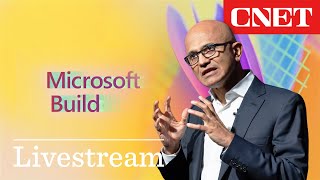 Satya Nadella on AI Platform Shift: Build 2023 Vision2023 · 133 min · full transcript
 Satya Nadella on AI Transformation: Build the Future Stack2024 · 53 min · full transcript
 Satya Nadella on the Frontier Ecosystem: Build Across Edge and Cloud2026 · 143 min · full transcript
 Satya Nadella on Agentic Software Development: Build the Full Stack2025 · 119 min · full transcript
- What did Satya Nadella say about building on top of Microsoft’s AI platform?
- What did Satya Nadella say about how AI is changing software development?
- What did Satya Nadella say about the agentic web and Microsoft’s platform strategy?
- What did Satya Nadella say about the current moment in developer technology?
- What did Satya Nadella say about the opportunity for developers at Microsoft Build 2026?