Build the Brand
Differentiation, humor, vulnerability, and feminine energy became strategic advantages.

“What would it look like for me? Like what? And that's part of why I was really careful about getting investors. I was like, I'd rather bootstrap it and kind of honor this divine feminine and this knowing inside of me along with my masculine, but I didn't want to squash the feminine to get to where I wanted to be. And so I was very intentional about trying to create Spanx with a lot more feminine energy, which at the time — it's getting better, but at the time feminine was really seen as a weakness, in my opinion. It felt like it wasn't taken seriously, and I saw it as a superpower.”Midlife Chrysalis podcast interview, 2025 · 59:05
The lesson
Blakely built Spanx’s brand by starting from a real consumer frustration and staying anchored in that point of view. Instead of inventing from trend forecasts or category conventions, she began with a problem she personally had and kept asking why the category worked the way it did1234. That matters for branding because a memorable brand is easier to create when the founder can explain exactly what is broken, who it is for, and what better outcome it creates.
Her differentiation was not vague image-making; it was product clarity plus simple language. She emphasizes being obsessive about what makes the product different and being able to explain it quickly, which suggests that branding starts with a sharp promise before it expands into marketing or PR5. For Blakely, the message also centered on how the customer feels, not just what the product technically does, which helped Spanx stand apart in a stale category7.
She also made voice a strategic advantage by rejecting polished corporate distance. Blakely argues that customers want authenticity rather than glossy messaging, and she was open about being a small founder instead of pretending to be a larger company8910. That kind of vulnerability built trust: the brand sounded like a real person talking to customers, not a company performing at them.
Blakely’s use of humor and feminine energy further separated Spanx from standard business playbooks. Her comments show a willingness to be playful, informal, and unconcerned with old rules, while also treating feminine instinct as a strength rather than something to hide111213. In practice, that meant building a brand voice and company identity that felt more human, intuitive, and emotionally aware than the categories she entered.
Finally, she protected the brand by staying close to its communication and by focusing herself where she added the most value. She preferred passionate in-house storytelling and later hired around her weaknesses so she could keep contributing in areas like inventing, selling, and promoting14151617. The broader lesson is that a strong brand often comes from founder-level clarity and conviction early on, then grows better when the founder delegates everything that dilutes that strength.
5 principles from Sara Blakely
Start branding from a real problem
Begin with a frustration you understand firsthand, then define the brand around the better solution you wish existed. This makes your message more specific and more believable because it comes from lived experience rather than abstract positioning.
“I am just a frustrated consumer.”
Differentiate obsessively and say it simply
Do not assume customers will infer why your product matters. Force yourself to explain, in plain language and quickly, what is different, why the old option falls short, and why the customer should care.
“…differentiate yourself and be obsessive about it…”
Talk to customers, not at them
Use a voice that feels human and direct instead of polished and distant. Honest communication builds trust, especially when you resist pretending your company is bigger or more perfect than it is.
“…customers want to be talked to and not talked at…”
Treat feminine energy and intuition as strengths
Blakely’s approach suggests that empathy, intuition, and emotional awareness can be strategic advantages, not liabilities. If your instincts reveal what customers feel and need, build that into both the product and the brand voice.
“I saw the feminine as a superpower.”
Protect your strengths by hiring around your weaknesses
A founder may have to do everything at first, but brand-building improves when you free yourself to spend more time on the work only you can do. Delegate the functions that drain you so your strongest voice stays present where it matters most.
“…as soon as you can afford to hire your weaknesses or the things you don't enjoy as much, do it…”
Moments to watch
In her own words
The quotes behind the lesson, word for word from the transcripts. Numbers match the lesson above.
“I am just a frustrated consumer.”
“Well, I for me everything starts with a problem and it's usually a problem that I'm experiencing. Um I couldn't find a solution of what to wear under white pants. I got frustrated with the undergarment options and then with sneaks obviously high heels are very uncomfortable and have been for like hundreds of years and I really wanted to take a new fresh approach at that. I think it's interesting that both of the industries that I decided to go in and try to disrupt were were really kind of on the decline.”
“I think the latter. I'm always asking why in everything.”
“I think the latter. I'm always asking why in everything. It's like why is it like this? Why? Why? Why? How long has it been this way? Why hasn't it? who was the first to think of this? Could it be better? So, I think it's more about not accepting the status quo. And you know, I want to just mention I've been working on my mindset since I'm 16 years old. I started listening to tapes. I'm dating myself uh by Dr. Wayne Dyer and it was how to be a no limit person. But it was really talking about visualizing what you want, manifesting it, law of attraction, not fearing failure, not caring what other people think about you. And um that is really important especially as women for us to find that confidence because if you are going to say I want to buck the whole system. That's scary. You have to have a lot of inner strength and a and a very strong inner compass to be able to stand in that space.”
“…differentiate yourself and be obsessive about it…”
“I HAVE BEEN ADVOCATING FOR WOMEN THROUGH PRODUCT. THAT'S HOW I FEEL. AND THE TEAM AT SPANX FEELS THAT WAY. WHEN I STOOD IN THE MANUFACTURING PLANTS TWO YEARS AGO, I WAS ONE OF THE ONLY WOMEN IN THE PLANT. THEN WE'RE MAKING UNDERGARMENTS. I'M LIKE WE'RE NOT COMFORTABLE IN THEM. SPANX HAS BEEN TAKING THE POSITION OF FOCUS ON HOW SHE FEELS FIRST IN EVERYTHING WE MAKE. EVERY PROTOTYPE. SOMETIMES IT TAKES MANY, SOMETIMES WE NEVER LAUNCH A PRODUCT. WE'RE ALWAYS HOW DO YOU FEEL. WE WANT WOMEN TO HAVE THAT SPANX FEELING.”
“…customers want to be talked to and not talked at…”
“…you don't have to apologize for being out of your home or your apartment or being small…”
“I think customers want to be talked to and not talked at. And I think a lot of companies talk at a customer and it's very sort of glossy speak and it doesn't seem real. And from day one, I just, I never tried to hide that I was the girl in my apartment with the red backpack. It's like, this is who I am. And, um, I find that people end up rooting for you and opening more doors if you're really honest early on. Some people start businesses and try to come across that they're much bigger than they are because they feel like that's the only way they're going to be taken seriously.”
“I just didn't know I was going to start with their butt.”
“I saw the feminine as a superpower.”
“What would it look like for me? Like what? And that's part of why I was really careful about getting investors. I was like, I'd rather bootstrap it and kind of honor this divine feminine and this knowing inside of me along with my masculine, but I didn't want to squash the feminine to get to where I wanted to be. And so I was very intentional about trying to create Spanx with a lot more feminine energy, which at the time — it's getting better, but at the time feminine was really seen as a weakness, in my opinion. It felt like it wasn't taken seriously, and I saw it as a superpower.”
“…as soon as you can afford to hire your weaknesses or the things you don't enjoy as much, do it…”
“I hired my day-to-day CEO about two years into starting Spanx…”
“11 years old, and we've never advertised and we've never had PR outside of Spanx. I interviewed a lot of PR firms here in New York. I flew up here. I went back and forth. It was a very mixed decision for me throughout, and I just kept coming back that it was better for me to have somebody in-house that I knew really believed in the product and was really passionate about it and wasn't necessarily being paid to tell somebody about it. So, I always, in business, I always put myself in the very end person's, um, thought process. So in that, I was, I was thinking, okay, if I'm the newspaper and I get a call from a PR agency that I know has called me for seven other products in the past, and…”
“I always say, as soon as you can afford to hire your weaknesses or the things you don't enjoy as much, do it. And anytime that you can delegate and clone yourself kind of and try to get some additional support, it's a great moment in a small business. You know, I hired my day-to-day CEO about two years into starting Spanx. And up until that point, you know, when you have no money, you're every department. So, um, I got to learn very quickly what I'm really better at, what I'm not as good at, what I enjoy doing, what I don't enjoy doing. And I couldn't wait to hire someone to fill in my weaknesses, and just focus on my strengths.”
Reflect
- What stale rules or assumptions define your category today, and which of them are you accepting without questioning?
- Can you explain in 30 seconds why your product or work is different, why the usual option is weaker, and why that difference matters to a customer?
- Where are you still using polished or defensive language instead of a more honest voice that would help people trust you?
Check your understanding
Go deeper
 Sara Blakely on Startup Tips: Hire Weaknesses, Stay Clear2012 · 4 min · full transcript
 Sara Blakely on Entrepreneurship: Start Small, Think Big46 min · full transcript
 Sara Blakely on Betting on Yourself: Build What Women Need2025 · 21 min · full transcript
 Sara Blakely on Brand Building: The Skinny on Spanx2019 · 18 min · full transcript
 Sara Blakely on Entrepreneurship and Leadership: Building Spanx2023 · 22 min · full transcript
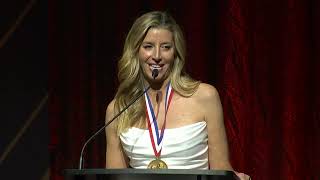 Sara Blakely on Inventing With Confidence: Hall of Fame Induction2023 · 6 min · full transcript
- How does Sara Blakely say entrepreneurs should differentiate their product?
- What did Sara Blakely say about cussing and humor?
- What did Sara Blakely say about building Spanx with feminine energy?
- Why did Sara Blakely keep PR in-house at Spanx?
- What does Sara Blakely think leaders should post on social media?
- What did Sara Blakely say about designing products for women?