Alignment and Dissent
Set context, invite disagreement, then let informed decision-makers move fast.
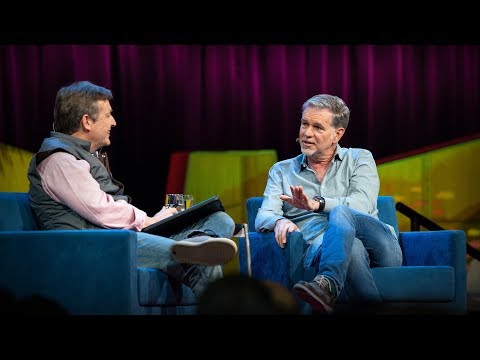
“Yeah, absolutely. We did have one advantage, which is we were born on DVD, and we knew that that was going to be temporary. No one thought we'd be mailing discs for 100 years. So then you have a lot of paranoia about what's coming next, and that's part of the founding ethos, is really worrying about what's coming next. So that's an advantage. And then in terms of the culture, it's very big on freedom and responsibility. I pride myself on making as few decisions as possible in a quarter.”TED talk, 2017 · 4:56
The lesson
Hastings tries to solve a hard organizational problem: how to move fast without losing coherence. His answer is high alignment with loose coupling. Leaders create shared context so people understand what matters, and then they avoid making every decision themselves because speed matters in fast-changing markets and over-control slows adaptation123.
That approach depends on treating creative work differently from factory work. Hastings argues that creative organizations need inspiration, judgment, and room to act, not layers of supervision and process. If managers respond to every problem by adding controls, they may reduce short-term errors but they also make the company rigid when the environment changes456.
Loose coupling does not mean everyone does whatever they want. Hastings pairs freedom with strong context: work with exceptional people, make expectations clear, and trust decision owners to use judgment. He wants managers to teach, set direction, and build an environment where talented people can solve hard problems without being micromanaged789.
A key part of alignment is active dissent before commitment. Hastings does not want agreement that comes from hierarchy or politeness; he wants people to surface objections early, especially because power dynamics make honest feedback harder. That is why he emphasizes creating safety and rewards for speaking up, and even using deliberate practices to draw out opposing views before a decision is made1011.
The point is not endless debate. Once context is clear and dissent has been aired, informed decision-makers should move. Hastings's model works when people are proud of the organization, personally humble, and focused on producing important work rather than protecting turf or waiting for permission1213.
4 principles from Reed Hastings
Give context instead of control
Set priorities, explain what matters, and make sure people understand the situation. Then let the person closest to the decision act, rather than routing everything upward.
“Yeah, absolutely. We did have one advantage, which is we were born on DVD, and we knew that that was going to be temporary. No one thought we'd be mailing discs for 100 years. So then you have a lot of paranoia about what's coming next, and that's part of the founding ethos, is really worrying about what's coming next. So that's an advantage. And then in terms of the culture, it's very big on freedom and responsibility. I pride myself on making as few decisions as possible in a quarter.”
Manage creative work with judgment, not factory rules
If the work depends on ideas and adaptation, too much process can damage performance. Use just enough structure to avoid chaos, but not so much that people lose initiative.
“In a factory, you control people, you supervise them, but in creative work, you want to inspire them, you want to excite them. And that's completely different. And yet many people still run creative firms almost as if they wanted to be a factory. I know because I did it in our first company in pure software. Every time something went wrong, I would put a process in place to try to make sure that thing didn't go wrong again. And that works in the short term, but it makes you very rigid. And then the market shifted. In that case, it was C++ to Java, but they all shift in some way. And we were unable to adapt,…”
Farm for dissent before committing
Do not mistake silence for alignment. Ask people directly what they would do differently, reward honest pushback, and surface disagreement while there is still time to improve the decision.
“But in particular in feedback, because of the power dynamics, you really have to create an openness for people to give you feedback by giving them psychological rewards. That was so great, by lauding them. And we do things to farm for dissent. So let's say there's a decision about, you know, what should we do about the pandemic, and, you know, what should we, you know — then we would open it up for discussion, and then we want each person to weigh in with: do they think it's a good idea or bad idea to say, close down or whatever the issue is. Another thing we do is run an exercise: what would be different if you were CEO instead of me? And it's a…”
Pair freedom with strong talent and clear expectations
Autonomy works best when the team is excellent and the standards are understood. Freedom is not the absence of accountability; it is trust placed in capable people to use good judgment.
“Yeah, up until 2002, all we focused on was survival. And then once we got public and, and we're profitable we started thinking, wow, this thing might last. And the, the cruelest irony would be to not want to work there. You know to let it become a place we didn't want to be. And so we tried to think through what do we really care about? We realized what we really care about is working with incredible people on hard problems and that, that was the essence. So we should organize everything around supporting that of working with, you know, just incredibly talented people. And so that led us to freedom and responsibility, because incredible people don't wanna be micro managed.”
In his own words
The quotes behind the lesson, word for word from the transcripts. Numbers match the lesson above.
“Yeah, absolutely. We did have one advantage, which is we were born on DVD, and we knew that that was going to be temporary. No one thought we'd be mailing discs for 100 years. So then you have a lot of paranoia about what's coming next, and that's part of the founding ethos, is really worrying about what's coming next. So that's an advantage. And then in terms of the culture, it's very big on freedom and responsibility. I pride myself on making as few decisions as possible in a quarter.”
“That's the bitch about the internet -- it moves fast, you know?”
“We want our leaders to be great teachers…”
“…for creative work there's a different model.”
“In a factory, you control people, you supervise them, but in creative work, you want to inspire them, you want to excite them. And that's completely different. And yet many people still run creative firms almost as if they wanted to be a factory. I know because I did it in our first company in pure software. Every time something went wrong, I would put a process in place to try to make sure that thing didn't go wrong again. And that works in the short term, but it makes you very rigid. And then the market shifted. In that case, it was C++ to Java, but they all shift in some way. And we were unable to adapt,…”
“If you over manage, for example, a tight process or specific hours that you have to be in the office or a wide variety of things, you filter out performance and creativity. And the looser that you can run, the more creative that the organization will be. So we talk about it as managing on the edge of chaos. You don't actually wanna fall into chaos. Okay? In chaos, the product barely gets released. It's full of bugs. People are upset. Payroll's not made. Lots of bad things happen. But it's getting us close to that edge of chaos where there's last minute saves and a lot of dynamism as you can possibly tolerate as opposed to, say, a semiconductor factory, which is trying to reduce variation and reduce error to get rid of variants.”
“It's very big on freedom and responsibility.”
“Yeah, up until 2002, all we focused on was survival. And then once we got public and, and we're profitable we started thinking, wow, this thing might last. And the, the cruelest irony would be to not want to work there. You know to let it become a place we didn't want to be. And so we tried to think through what do we really care about? We realized what we really care about is working with incredible people on hard problems and that, that was the essence. So we should organize everything around supporting that of working with, you know, just incredibly talented people. And so that led us to freedom and responsibility, because incredible people don't wanna be micro managed.”
“…the macro thing is, use good judgment.”
“…we want to get people to realize if it's about helping each other, you have wide license, to be honest…”
“But in particular in feedback, because of the power dynamics, you really have to create an openness for people to give you feedback by giving them psychological rewards. That was so great, by lauding them. And we do things to farm for dissent. So let's say there's a decision about, you know, what should we do about the pandemic, and, you know, what should we, you know — then we would open it up for discussion, and then we want each person to weigh in with: do they think it's a good idea or bad idea to say, close down or whatever the issue is. Another thing we do is run an exercise: what would be different if you were CEO instead of me? And it's a…”
“…we really want people to focus on ideas, on generating important work…”
“…you want to be super proud of the organization and personally humble…”
Reflect
- Where in your work are decisions waiting for approval that could move faster if leaders provided better context instead of tighter control?
- Think of a recent decision your team made. What specific practice could have surfaced more honest dissent before commitment?
- What process in your environment prevents mistakes but may also be making the group slower, less creative, or less adaptable?
Check your understanding
Go deeper
 Reed Hastings on Culture and Talent Density: Context, Not Control2016 · 81 min · full transcript
 Reed Hastings on Freedom & Responsibility: How Netflix Runs Creative Work2017 · 62 min · full transcript
 Reed Hastings on Netflix Culture: Why Rules Need Reinvention2018 · 38 min · full transcript
 Reed Hastings on Netflix Culture: Freedom, Candor, and Bold Bets2017 · 21 min · full transcript
 Reed Hastings on Netflix Culture: Freedom, Candor, and Talent2019 · 24 min · full transcript