Underdogs and Games
Change the contest, and weakness may become strength.
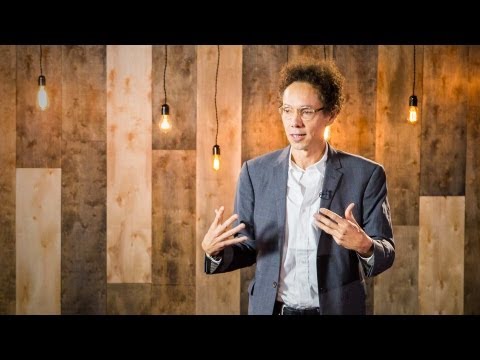
“The very thing that was the source of his apparent strength was also the source of his greatest weakness.”TED Talk, 2010 · 15:08
The lesson
Gladwell’s core move in this chapter is to question the way a contest is defined. In the David and Goliath story, the point is not simply that a weaker person found courage. It is that David refused to fight by the dominant side’s rules and used the method that fit his own abilities instead, revealing that apparent strength can hide real vulnerability1234.
That same logic applies beyond a single battle. Gladwell argues that outcomes often reflect opportunity, timing, and accumulated practice as much as raw talent, so the winners of a system may simply be the people best positioned by its design567. If that is true, then being an underdog is not just about having less ability; it is often about entering a game whose rules favor someone else’s pathway to success.
This is why he is so critical of youth sports. Adult-style competition tends to sort kids too early, reward early maturers, and tell most participants that they do not matter. Gladwell’s alternative is to build formats for ordinary participants and development, where more people count and the structure gives late bloomers and non-stars a reason to stay involved89101112.
His comments on running and endurance sports extend the same critique. If a sport is presented only as race-day performance, then it serves the small number of people at the top and makes the rest of the experience invisible. Gladwell argues that the training, preparation, and day-to-day process are where most athletes actually live, so redesigning attention around that broader experience would make the sport more meaningful and legible to more people13141516.
Underneath all of this is a broader question: who is a system built to serve? Gladwell pushes against prestige-driven definitions of success and against institutions that optimize for a tiny elite while ignoring everyone else17. The lesson is practical: when you seem weak, do not ask only how to improve within the existing game; ask whether the game can be reframed so your strengths count and more people can flourish.
4 principles from Malcolm Gladwell
Refuse the wrong contest
If the standard way of competing suppresses your strengths, do not accept it as neutral. Look for a form of attack, contribution, or evaluation that matches what you can actually do well.
“I cannot wear this for I have not proved it…”
Build youth competition for participation and growth
Children should not be dropped into miniature elite systems that reward only the top few. Design teams, scoring, and selection so that more kids matter, improve, and want to continue.
“Kids sports must look and be structured completely differently from elite sports.”
Sell the process, not just the peak moment
In sports and other fields, the visible performance is only a small part of the real experience. If you want broader engagement, make preparation, habits, and development easier to see and value.
“Performance is an individual act. Actual racing is just a tiny part of the experience of being an athlete.”
Define success more broadly than prestige
Systems often push people toward rankings and brands rather than fit, joy, or durability. Choose measures of success that reflect what serves actual participants, not just what flatters the hierarchy.
“I don't measure my success in terms of much money I make.”
Moments to watch
In his own words
The quotes behind the lesson, word for word from the transcripts. Numbers match the lesson above.
“I cannot wear this for I have not proved it…”
“This is an incredibly devastating weapon.”
“The very thing that was the source of his apparent strength was also the source of his greatest weakness.”
“Giants are not as strong and powerful as they seem.”
“…luck is a huge theme in this book.”
“…expertise is reached only after a minimum of 10,000 hours of practice…”
“The first in a cohort to reach 10,000 hours has a huge advantage.”
“Kids sports must look and be structured completely differently from elite sports.”
“The stupidity with which we conduct any kind of competition among pre-adults drives me to distraction.”
“We're doing it for the ordinary athlete who wants to get out and have fun in this.”
“So your 20th runner matters as much as your first runner. Now, that changes the psychological makeup of the sport dramatically. Right now, if I'm the 20th best runner at a high school, what's my motivation for joining the cross country team? It's zero, I don't count, I don't even score in meets, I'm way, way behind the first person. But now under this system, the 20th person, we are as passionately interested in how well they run as we are in the first. And the the fact that we have to get away I think at earlier levels of sports at all levels, we can't impose adult models of hyper competitiveness on kids.”
“…the people who were the absolute best at the age of in their teen a they're teenagers remained in the world of running.”
“Performance is an individual act. Actual racing is just a tiny part of the experience of being an athlete.”
“We're selling it all wrong.”
“Don't sell the racing, sell the training.”
“How can you follow running if you don't know what the runners are doing?”
“I don't measure my success in terms of much money I make.”
Reflect
- Where in your work or life are you competing by someone else’s preferred rules, and what would it look like to redefine the contest around your actual strengths?
- Think of a team, classroom, or community you belong to. What rule or metric currently serves the top few, and how could it be redesigned so more people count?
- What do you currently treat as individual merit that may really depend on luck, timing, or access to practice?
Check your understanding
Go deeper
 Malcolm Gladwell on David and Goliath: The power of hidden strengths2010 · 16 min · full transcript
 Malcolm Gladwell on Sports and Competition: Reimagining Who Sports Serve2023 · 116 min · full transcript
 Malcolm Gladwell on Running Optimization: Sell the Training2026 · 76 min · full transcript
 Malcolm Gladwell on Success and Opportunity: The Ideas Behind Outliers2008 · 15 min · full transcript
 Malcolm Gladwell on Talking to Strangers: Trust, Bias, and Judgment2019 · 60 min · full transcript